

Tested Applications
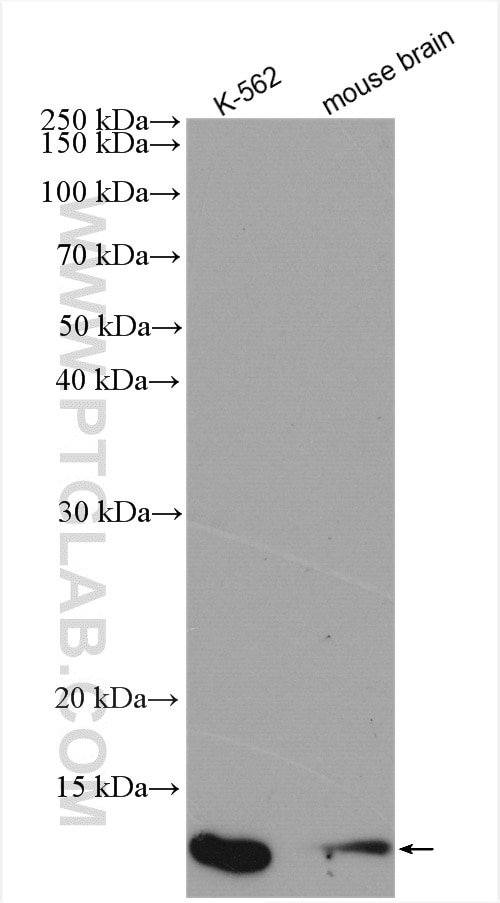
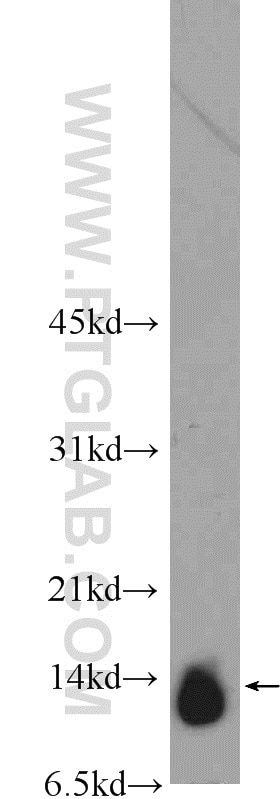
| Positive WB detected in | K-562 cells, mouse brain tissue |
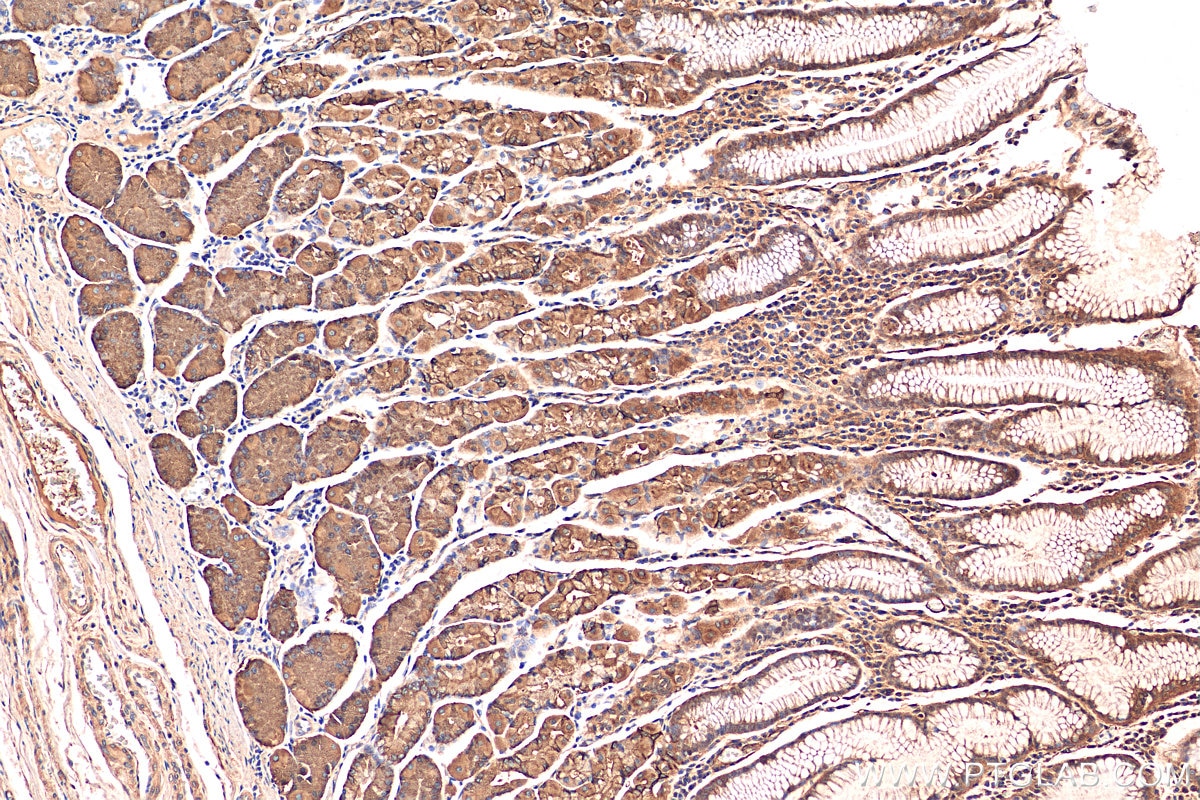
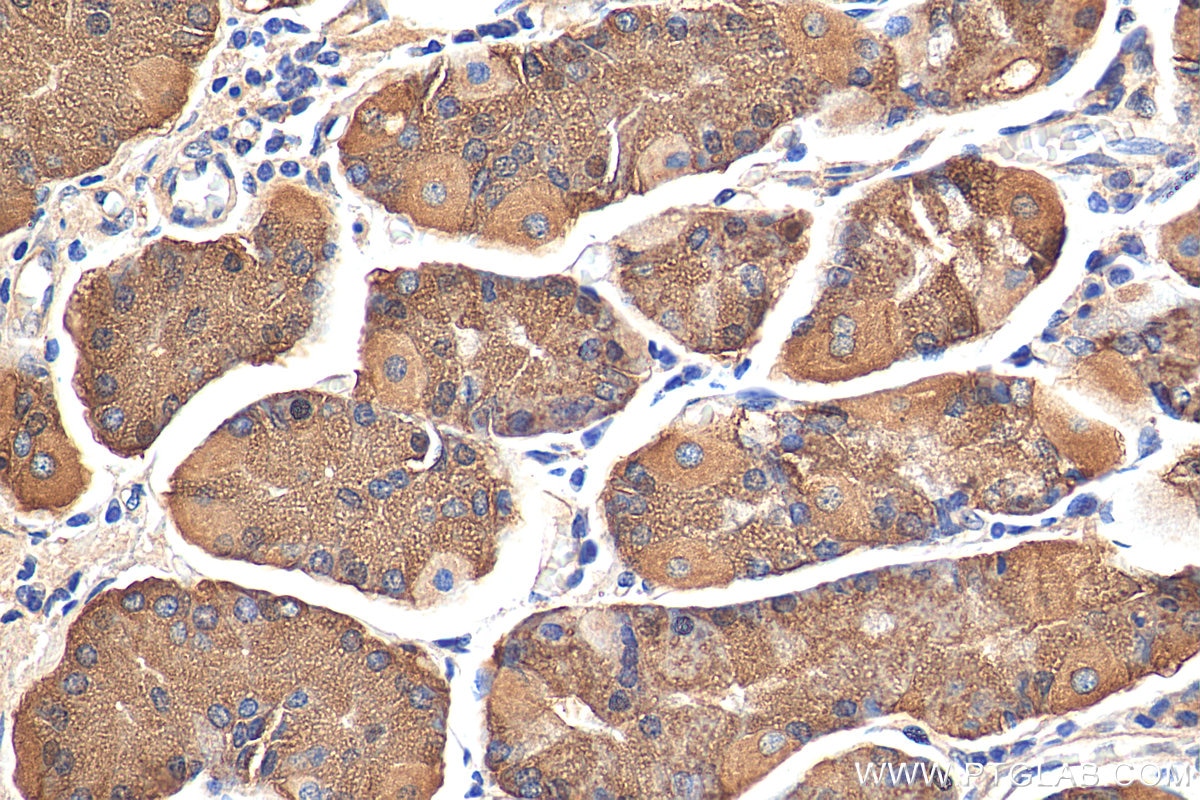
| Positive IHC detected in | human stomach tissue Note: suggested antigen retrieval with TE buffer pH 9.0; (*) Alternatively, antigen retrieval may be performed with citrate buffer pH 6.0 |
Recommended dilution
| Application | Dilution |
|---|---|
| Western Blot (WB) | WB : 1:1000-1:8000 |
| Immunohistochemistry (IHC) | IHC : 1:50-1:500 |
| It is recommended that this reagent should be titrated in each testing system to obtain optimal results. | |
| Sample-dependent, Check data in validation data gallery. | |
Product Information
25514-1-AP targets MICOS13 in WB, IHC, ELISA applications and shows reactivity with human, mouse samples.
| Tested Reactivity | human, mouse |
| Cited Reactivity | human, mouse |
| Host / Isotype | Rabbit / IgG |
| Class | Polyclonal |
| Type | Antibody |
| Immunogen |
CatNo: Ag22003 Product name: Recombinant human C19orf70 protein Source: e coli.-derived, PET30a Tag: 6*His Domain: 1-118 aa of BC042386 Sequence: MVARVWSLMRFLIKGSVAGVAVYLVYDQELLGPSDKSQAALQKAGEVVPPAMYQFSQYVCQQTGLQIPQLPAPPKIYFPIRDSWNAGIMTVMSALSVAPSKAREYSKEGWEYVKARTK Predict reactive species |
| Full Name | chromosome 19 open reading frame 70 |
| Calculated Molecular Weight | 118 aa, 13 kDa |
| Observed Molecular Weight | 13 kDa |
| GenBank Accession Number | BC042386 |
| Gene Symbol | C19orf70 |
| Gene ID (NCBI) | 125988 |
| RRID | AB_2880112 |
| Conjugate | Unconjugated |
| Form | Liquid |
| Purification Method | Antigen affinity purification |
| UNIPROT ID | Q5XKP0 |
| Storage Buffer | PBS with 0.02% sodium azide and 50% glycerol, pH 7.3. |
| Storage Conditions | Store at -20°C. Stable for one year after shipment. Aliquoting is unnecessary for -20oC storage. 20ul sizes contain 0.1% BSA. |
Background Information
C19orf70, also named as QIL1 and protein P117, belongs to the UPF0433 family. This antibody is specific to C19orf70.
Protocols
| Product Specific Protocols | |
|---|---|
| IHC protocol for MICOS13 antibody 25514-1-AP | Download protocol |
| WB protocol for MICOS13 antibody 25514-1-AP | Download protocol |
| Standard Protocols | |
|---|---|
| Click here to view our Standard Protocols |
Publications
What published studies show
The MICOS13 (C19orf70) polyclonal antibody (Cat# 25514-1-AP) has 7 citations across Cell Metabolism, EMBO Journal, Cell Reports, mBio, iScience, Cytotherapy, and bioRxiv. All cited applications are Western blot in human and mouse. Research fields span mitochondrial cristae structure and the MICOS complex, ceramide-mediated kidney injury, obesity, Listeria infection, mitochondrial bioenergetics, stem cell therapy for cognitive decline, and protein domain characterization.
| Species | Application | Title |
|---|---|---|
EMBO J Individual cristae within the same mitochondrion display different membrane potentials and are functionally independent. | ||
Cell Rep Mitochondrial GCN5L1 coordinates with YME1L and MICOS to remodel mitochondrial cristae in white adipocytes and modulate obesity | ||
mBio Listeria monocytogenes Exploits Mitochondrial Contact Site and Cristae Organizing System Complex Subunit Mic10 To Promote Mitochondrial Fragmentation and Cellular Infection.
| ||
Cytotherapy Stem cells from human exfoliated deciduous teeth affect mitochondria and reverse cognitive decline in a senescence-accelerated mouse prone 8 model. | ||
iScience Protease OMA1 modulates mitochondrial bioenergetics and ultrastructure through dynamic association with MICOS complex. |
Reviews
What customers say
The single review reports a 5-star rating for this antibody used in Western Blot at a 1:1000 dilution on adult mouse heart tissue extracts. The reviewer noted that the antibody performed very well, producing reliable results in their WB experiments. Overall, the feedback is positive, highlighting strong performance and specificity for the intended application.
The reviews below have been submitted by verified Proteintech customers who received an incentive for providing their feedback.
Zee (Verified Customer) (01-28-2020) | This antibody worked very well in adult mouse heart extracts when I performed western blot.
|





