
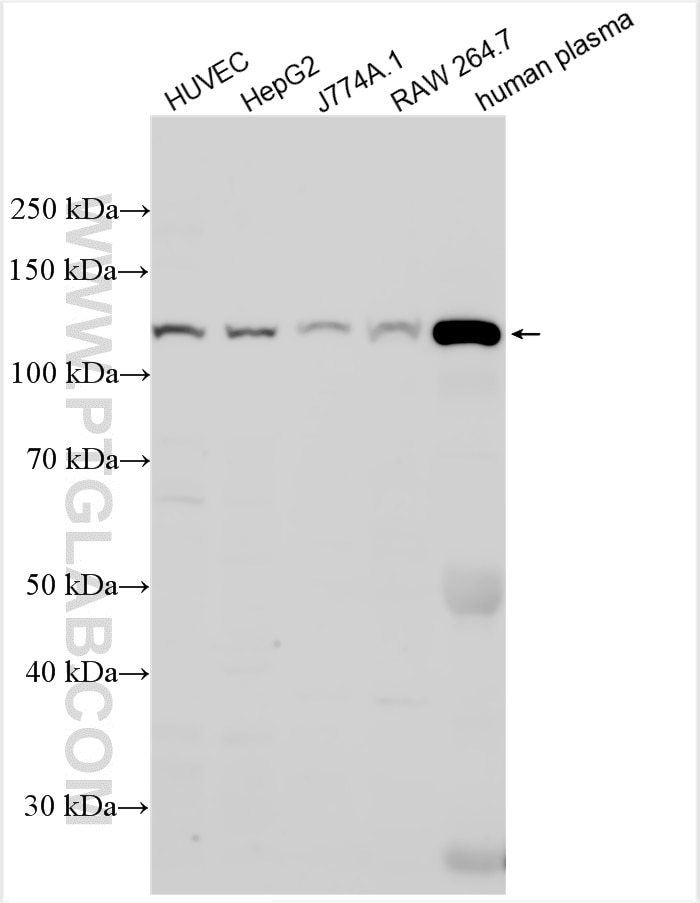
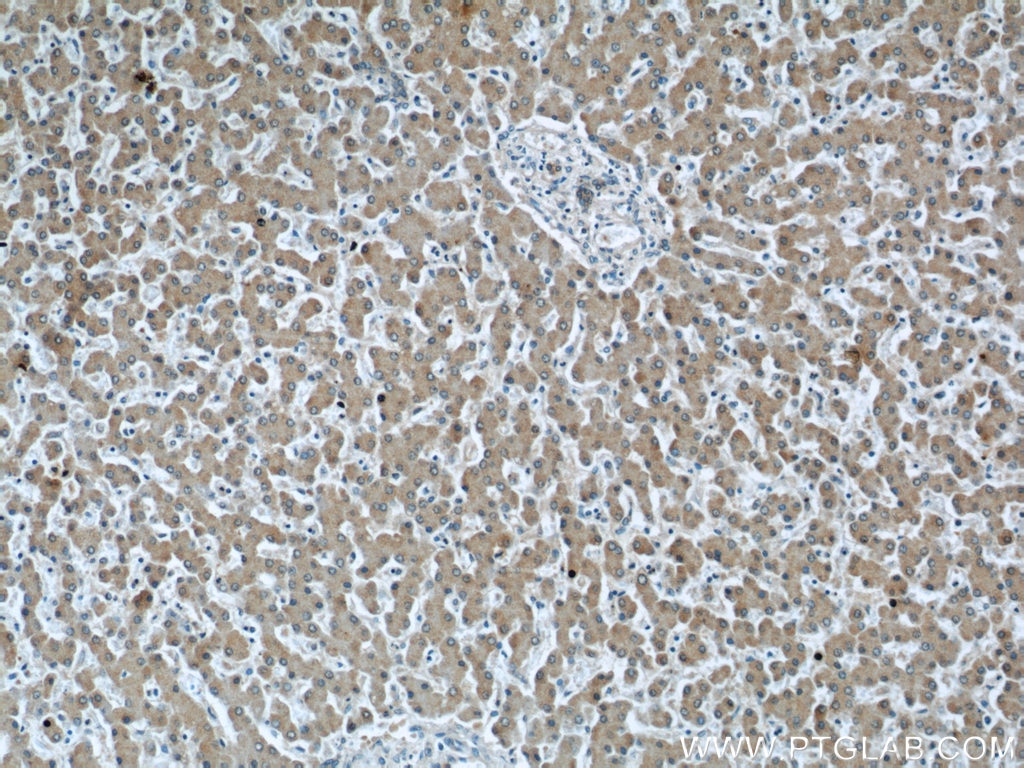
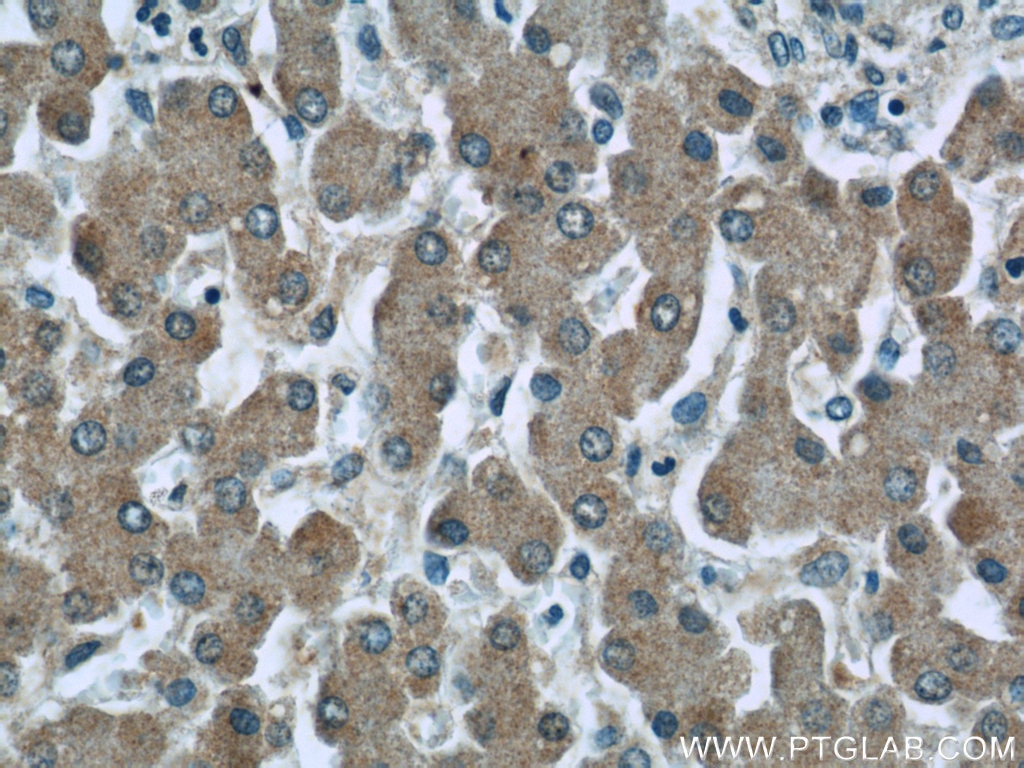
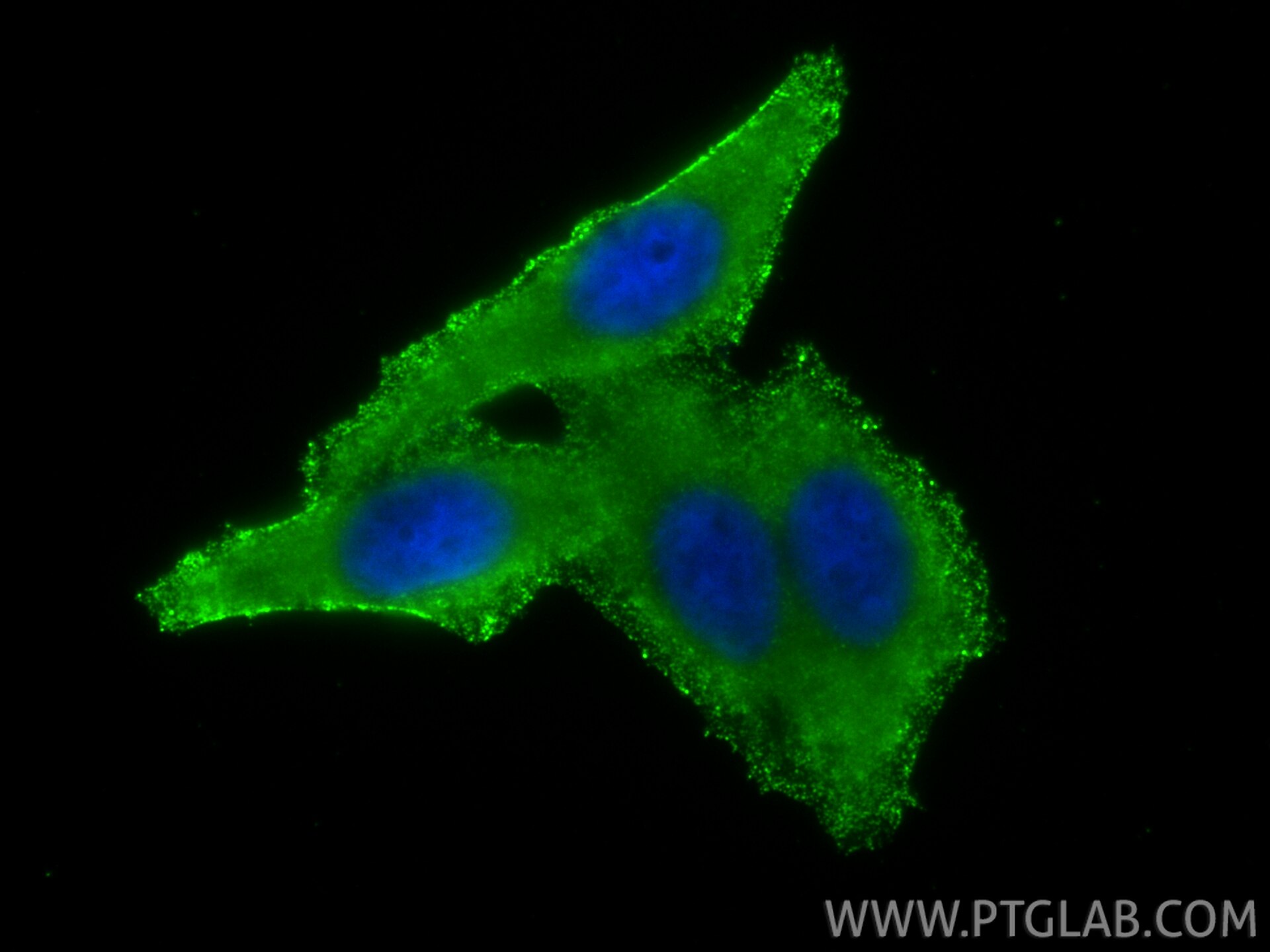

Tested Applications
| Positive WB detected in | HUVEC cells, human blood, human plasma, HepG2 cells, J774A.1 cells, RAW 264.7 cells |
| Positive IHC detected in | human liver tissue Note: suggested antigen retrieval with TE buffer pH 9.0; (*) Alternatively, antigen retrieval may be performed with citrate buffer pH 6.0 |
| Positive IF/ICC detected in | HepG2 cells |
Recommended dilution
| Application | Dilution |
|---|---|
| Western Blot (WB) | WB : 1:1000-1:8000 |
| Immunohistochemistry (IHC) | IHC : 1:20-1:200 |
| Immunofluorescence (IF)/ICC | IF/ICC : 1:200-1:800 |
| It is recommended that this reagent should be titrated in each testing system to obtain optimal results. | |
| Sample-dependent, Check data in validation data gallery. | |
Product Information
66157-1-Ig targets C3/C3b/C3c in WB, IHC, IF/ICC, ELISA applications and shows reactivity with human, mouse samples.
| Tested Reactivity | human, mouse |
| Cited Reactivity | human, mouse, rat |
| Host / Isotype | Mouse / IgG1 |
| Class | Monoclonal |
| Type | Antibody |
| Immunogen |
CatNo: Ag15955 Product name: Recombinant human C3 protein Source: e coli.-derived, PET28a Tag: 6*His Domain: 1314-1663 aa of BC150179 Sequence: ESASLLRSEETKENEGFTVTAEGKGQGTLSVVTMYHAKAKDQLTCNKFDLKVTIKPAPETEKRPQDAKNTMILEICTRYRGDQDATMSILDISMMTGFAPDTDDLKQLANGVDRYISKYELDKAFSDRNTLIIYLDKVSHSEDDCLAFKVHQYFNVELIQPGAVKVYAYYNLEESCTRFYHPEKEDGKLNKLCRDELCRCAEENCFIQKSDDKVTLEERLDKACEPGVDYVYKTRLVKVQLSNDFDEYIMAIEQTIKSGSDEVQVGQQRTFISPIKCREALKLEEKKHYLMWGLSSDFWGEKPNLSYIIGKDTWVEHWPEEDECQDEENQKQCQDLGAFTESMVVFGCPN Predict reactive species |
| Full Name | complement component 3 |
| Calculated Molecular Weight | 1663 aa, 187 kDa |
| Observed Molecular Weight | 115 kDa |
| GenBank Accession Number | BC150179 |
| Gene Symbol | C3 |
| Gene ID (NCBI) | 718 |
| RRID | AB_2881553 |
| Conjugate | Unconjugated |
| Form | Liquid |
| Purification Method | Protein G purification |
| UNIPROT ID | P01024 |
| Storage Buffer | PBS with 0.02% sodium azide and 50% glycerol, pH 7.3. |
| Storage Conditions | Store at -20°C. Stable for one year after shipment. Aliquoting is unnecessary for -20oC storage. 20ul sizes contain 0.1% BSA. |
Background Information
The complement system is an important effector that bridges the innate and adaptive immune systems (PMID: 20010915). The third component of complement, C3, plays a central role in the activation of the complement system. Its processing by C3 convertase is the central reaction in both classical and alternative complement pathways (PMID: 11414361). Human C3, composed of α and β chains (115 and 75 kDa, respectively), is cleaved into C3a and C3b by C3 convertase. C3b is further cleaved into iC3b, C3c, C3dg and C3f. This antibody raised against 1314-1663 aa of human C3 protein recognizes the C3 alpha chain, C3b alpha' chain, and C3c alpha' chain fragment 2.
Protocols
| Product Specific Protocols | |
|---|---|
| IF protocol for C3/C3b/C3c antibody 66157-1-Ig | Download protocol |
| IHC protocol for C3/C3b/C3c antibody 66157-1-Ig | Download protocol |
| WB protocol for C3/C3b/C3c antibody 66157-1-Ig | Download protocol |
| Standard Protocols | |
|---|---|
| Click here to view our Standard Protocols |
Publications
What published studies show
Anti-C3 antibody (Catalog No. 66157-1-Ig) has 24 total citations. Journals include ACS Nano, EBioMedicine, J Neuroinflammation, Free Radic Biol Med, Brain Behav Immun, Int J Oral Sci, Virulence, Front Immunol, Clin Sci (Lond), Glia, Exp Neurol, Neurochem Int, CNS Neurosci Ther, Int J Mol Sci, Mol Immunol, Redox Rep, Chin Med, Clin Kidney J, Adv Biotechnol, Mol Cell Probes, and Transl Cancer Res. Research fields span neuroinflammation, spinal cord injury, complement biology, periodontitis, depression, Parkinson's disease, diabetes, cardiac transplantation, autoimmune diseases, infectious disease, and cardiovascular pathology.
| Species | Application | Title |
|---|---|---|
Int J Oral Sci Author Correction: Fibroblast derived C3 promotes the progression of experimental periodontitis through macrophage M1 polarization and osteoclast differentiation | ||
Int J Oral Sci Fibroblast derived C3 promotes the progression of experimental periodontitis through macrophage M1 polarization and osteoclast differentiation | ||
ACS Nano Nanoparticle-Assembled Multifaceted Hydrogel Therapy Promotes Functional Recovery After Spinal Cord Injury. | ||
J Neuroinflammation Regulatory T cells promote microglia-mediated synapse engulfment and functional recovery via the OPN-CD74 axis after spinal cord injury in mice. | ||
J Neuroinflammation Apelin alleviated neuroinflammation and promoted endogenous neural stem cell proliferation and differentiation after spinal cord injury in rats. | ||
EBioMedicine The complement C3-microglial axis in depression of Parkinson's disease: from mechanism to therapeutic intervention. |
Reviews
What customers say
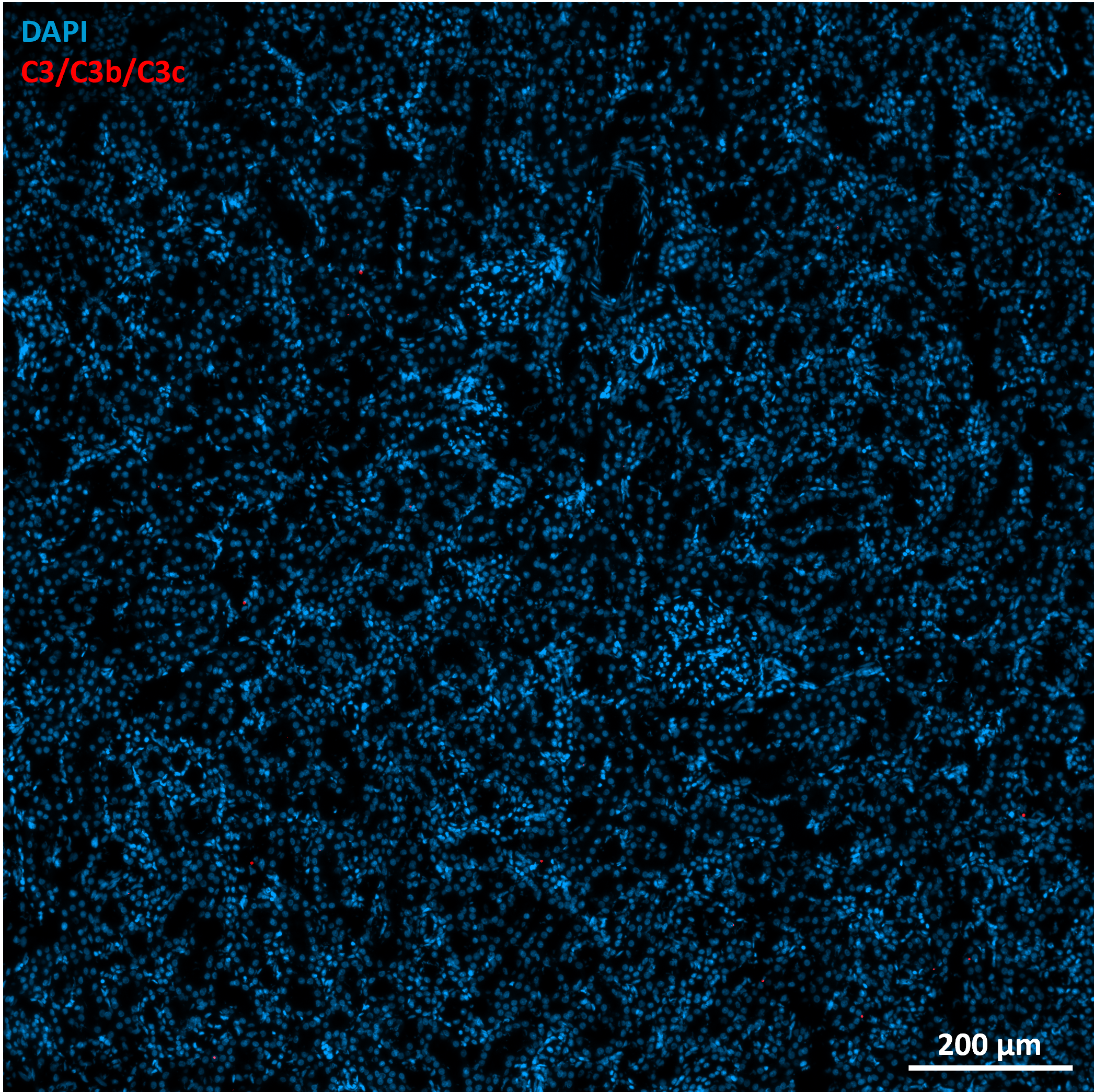
Two reviews were found. One user (2019) gave a 5-star rating for Western Blot at 1:4000 dilution on synovial fluid, describing the results as "spectacular" with clear, distinct bands and recommending the antibody for C3 identification. Another user (2024) provided a 1-star rating for Immunofluorescence at 1/200 on rat kidney tissue in an LPS induction model, sharing a detailed protocol including PFA fixation, Triton X-100 permeabilization, and donkey serum/BSA blocking, but did not include explicit comments about performance.
The reviews below have been submitted by verified Proteintech customers who received an incentive for providing their feedback.
Marion (Verified Customer) (08-01-2024) | LPS induction model Fixative: Paraformaldehyde 4% Permeabilization: 10 min; RT; 0.2% Triton X-100 Blocking: 2 h; RT; 10% Normal donkey serum; 1% BSA Primary antibody: 1 night; 4°C Secondary antibody: ab150112 (Abcam); 1h30; RT Antibodies diluted in blocking solution
 |
Neil (Verified Customer) (05-10-2019) | The Western Blot came out spectacularly! I saw the bands I expected to see, and everything was clear and distinct. I would recommend this to anyone looking to identify C3.
|





