
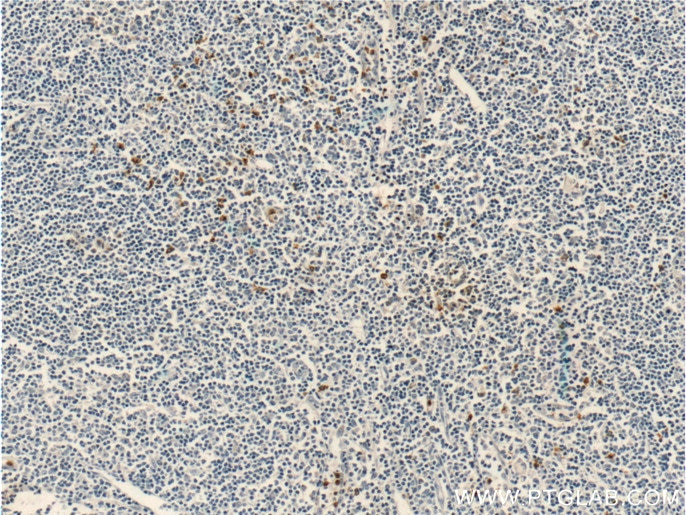
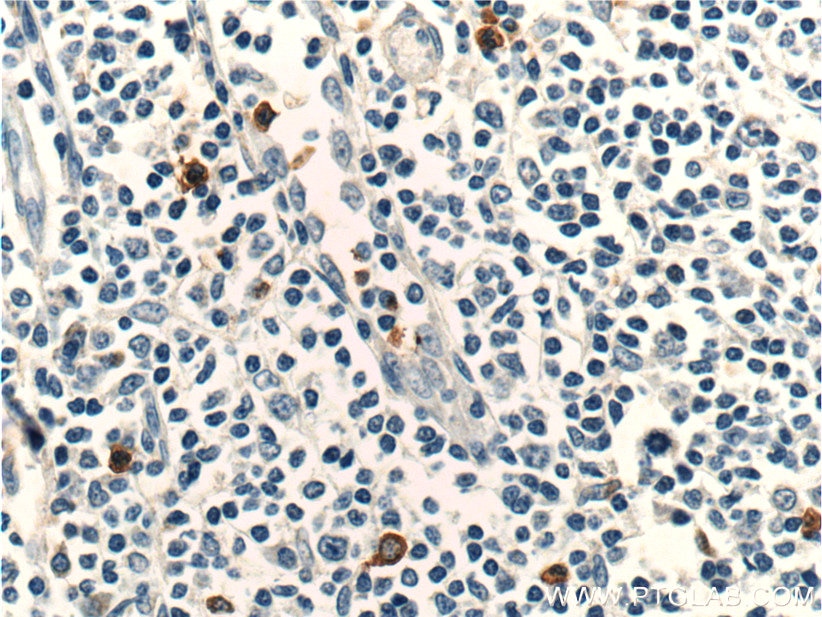
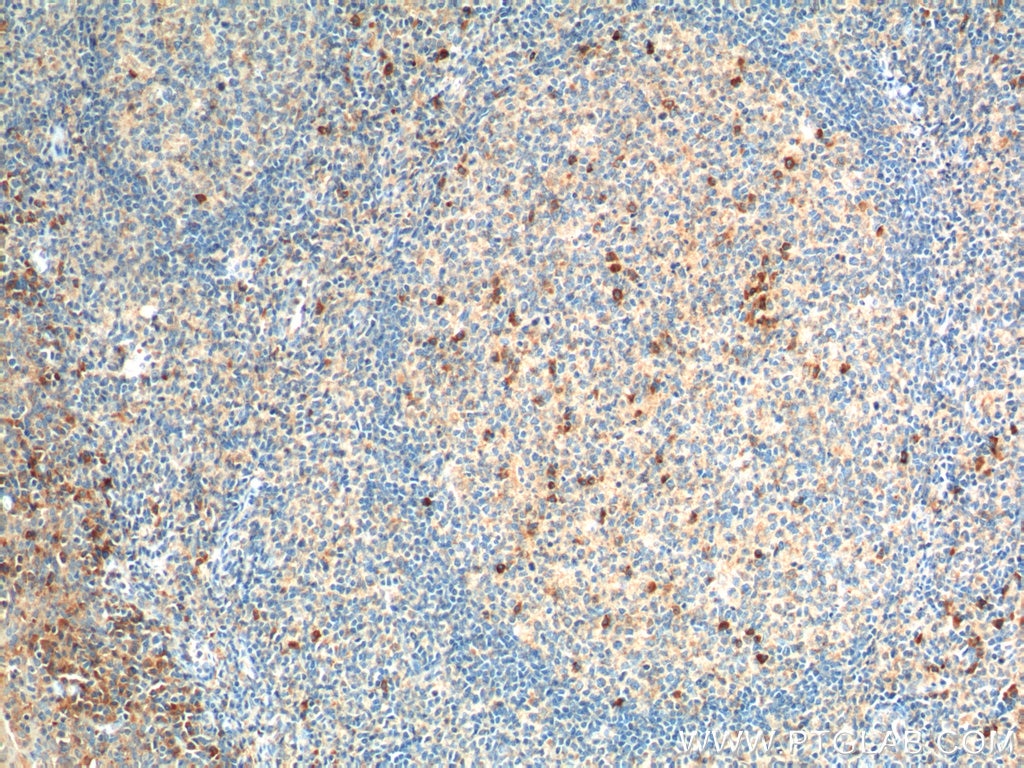
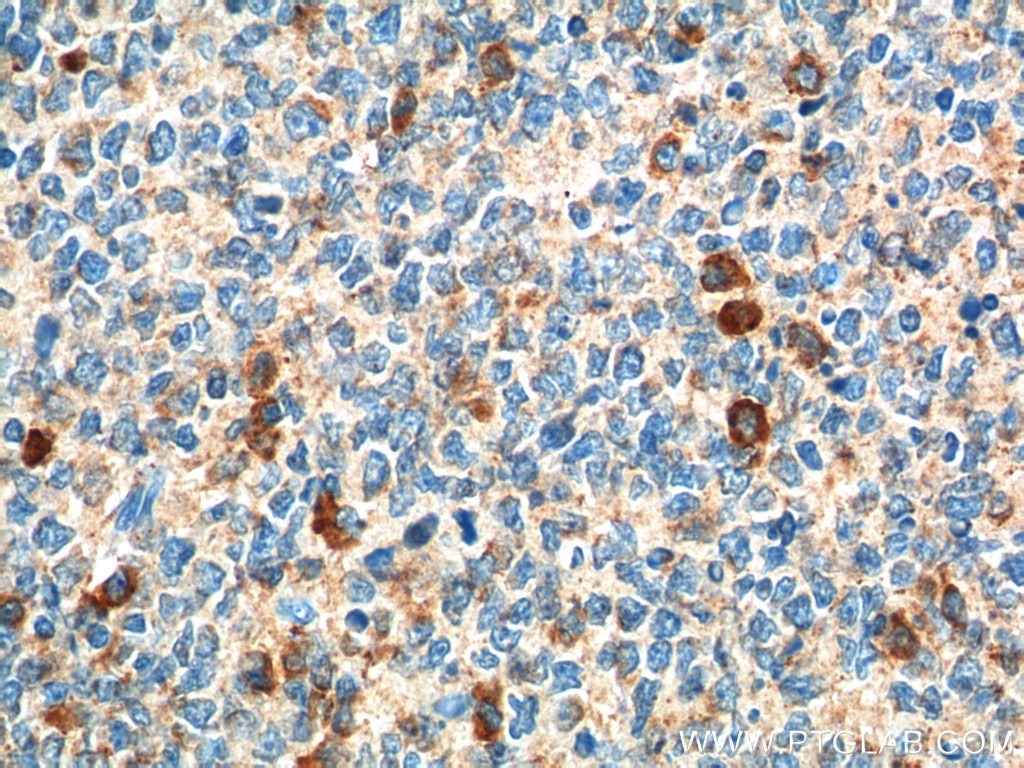
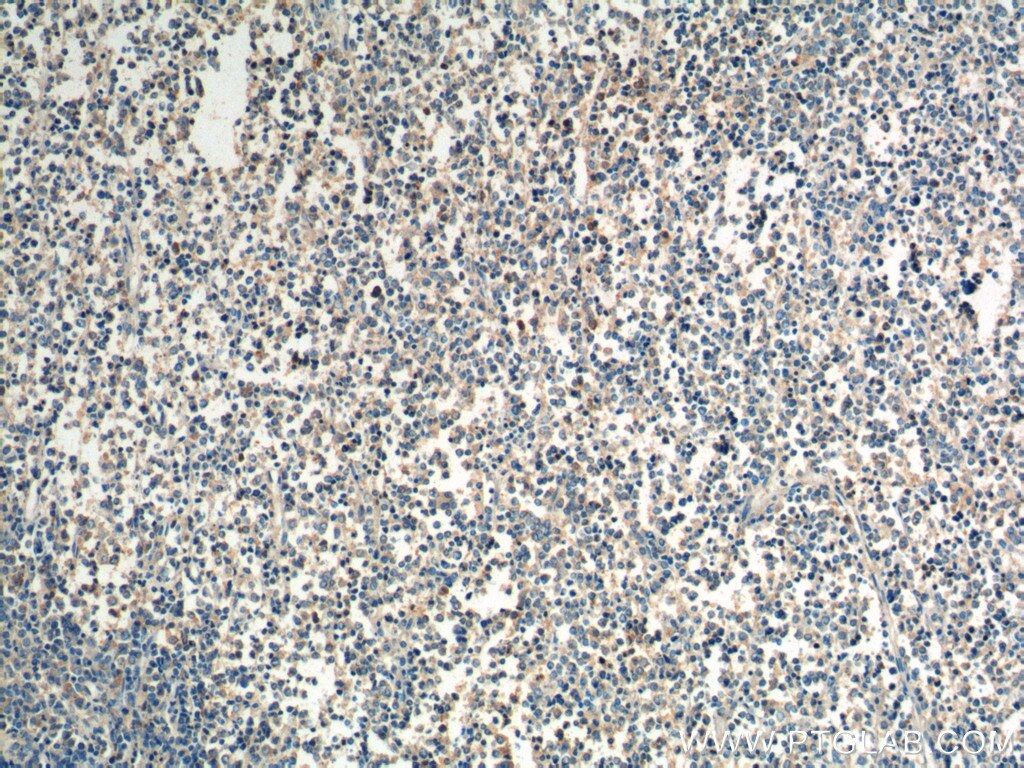
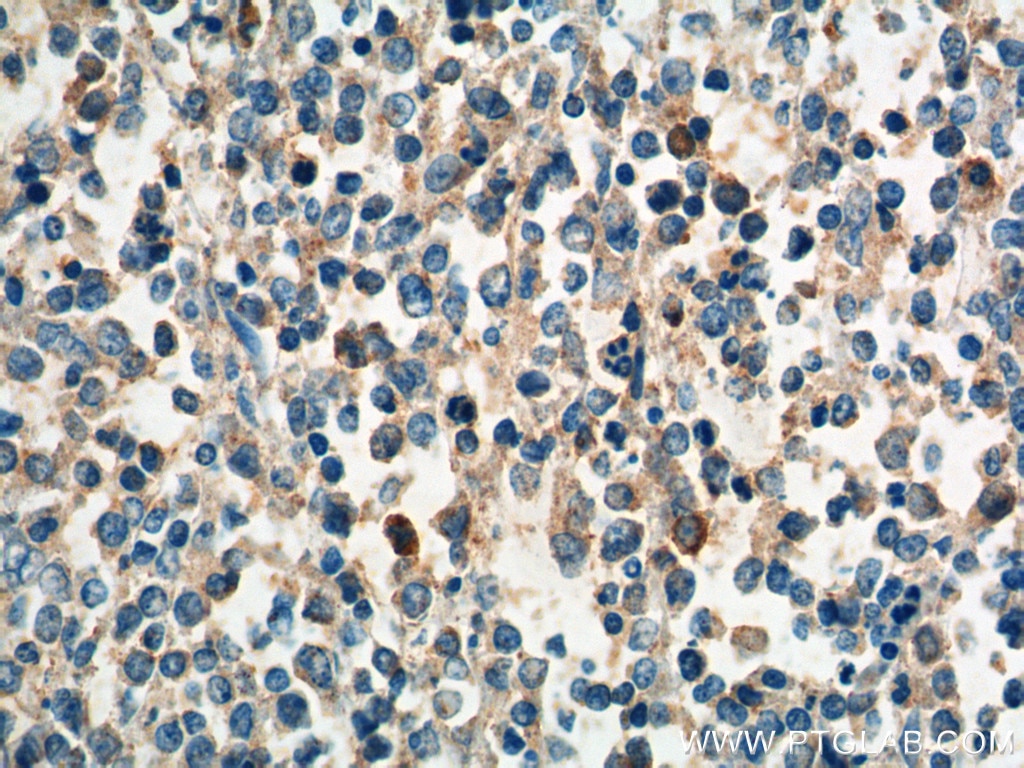

Tested Applications
| Positive IHC detected in | human tonsillitis tissue, human lymphoma tissue Note: suggested antigen retrieval with TE buffer pH 9.0; (*) Alternatively, antigen retrieval may be performed with citrate buffer pH 6.0 |
Recommended dilution
| Application | Dilution |
|---|---|
| Immunohistochemistry (IHC) | IHC : 1:100-1:400 |
| It is recommended that this reagent should be titrated in each testing system to obtain optimal results. | |
| Sample-dependent, Check data in validation data gallery. | |
Product Information
22351-1-AP targets CCR3 in IHC, IF, ELISA applications and shows reactivity with human samples.
| Tested Reactivity | human |
| Cited Reactivity | human, mouse |
| Host / Isotype | Rabbit / IgG |
| Class | Polyclonal |
| Type | Antibody |
| Immunogen |
CatNo: Ag17926 Product name: Recombinant human CCR3 protein Source: e coli.-derived, PGEX-4T Tag: GST Domain: 310-354 aa of BC110297 Sequence: KYLRHFFHRHLLMHLGRYIPFLPSEKLERTSSVSPSTAEPELSIV Predict reactive species |
| Full Name | chemokine (C-C motif) receptor 3 |
| Calculated Molecular Weight | 355 aa, 41 kDa |
| GenBank Accession Number | BC110297 |
| Gene Symbol | CCR3 |
| Gene ID (NCBI) | 1232 |
| RRID | AB_2879085 |
| Conjugate | Unconjugated |
| Form | Liquid |
| Purification Method | Antigen Affinity purified |
| UNIPROT ID | P51677 |
| Storage Buffer | PBS with 0.02% sodium azide and 50% glycerol, pH 7.3. |
| Storage Conditions | Store at -20°C. Stable for one year after shipment. Aliquoting is unnecessary for -20oC storage. 20ul sizes contain 0.1% BSA. |
Protocols
| Product Specific Protocols | |
|---|---|
| IHC protocol for CCR3 antibody 22351-1-AP | Download protocol |
| Standard Protocols | |
|---|---|
| Click here to view our Standard Protocols |
Publications
What published studies show
The CCR3 polyclonal antibody (Cat# 22351-1-AP) has 4 citations published in Theranostics, International Immunopharmacology, Scientific Reports, and Oncology Reports. The associated research fields include vascular biology and transplant immunology (allograft neointimal lesions), dermatology (atopic dermatitis), otolaryngology (chronic rhinosinusitis), and oncology/immunotherapy (bladder cancer and mast cell infiltration). Applications cited are primarily IHC and IF in human and mouse samples.
| Species | Application | Title |
|---|---|---|
Theranostics CD34+ PI16+ fibroblast progenitors aggravate neointimal lesions of allograft arteries via CCL11/CCR3-PI3K/AKT pathway | ||
Int Immunopharmacol Emu oil alleviates atopic dermatitis-like responses by inhibiting Cdc42 signaling of keratinocyte | ||
Sci Rep Immuno-transcriptomic analysis based on machine learning identifies immunity signature genes of chronic rhinosinusitis with nasal polyps | ||
Oncol Rep SYNPO2 promotes the development of BLCA by upregulating the infiltration of resting mast cells and increasing the resistance to immunotherapy |







