



Tested Applications
| Positive WB detected in | A431 cells, mouse skin tissue, rat skin tissue, HepG2 cells |
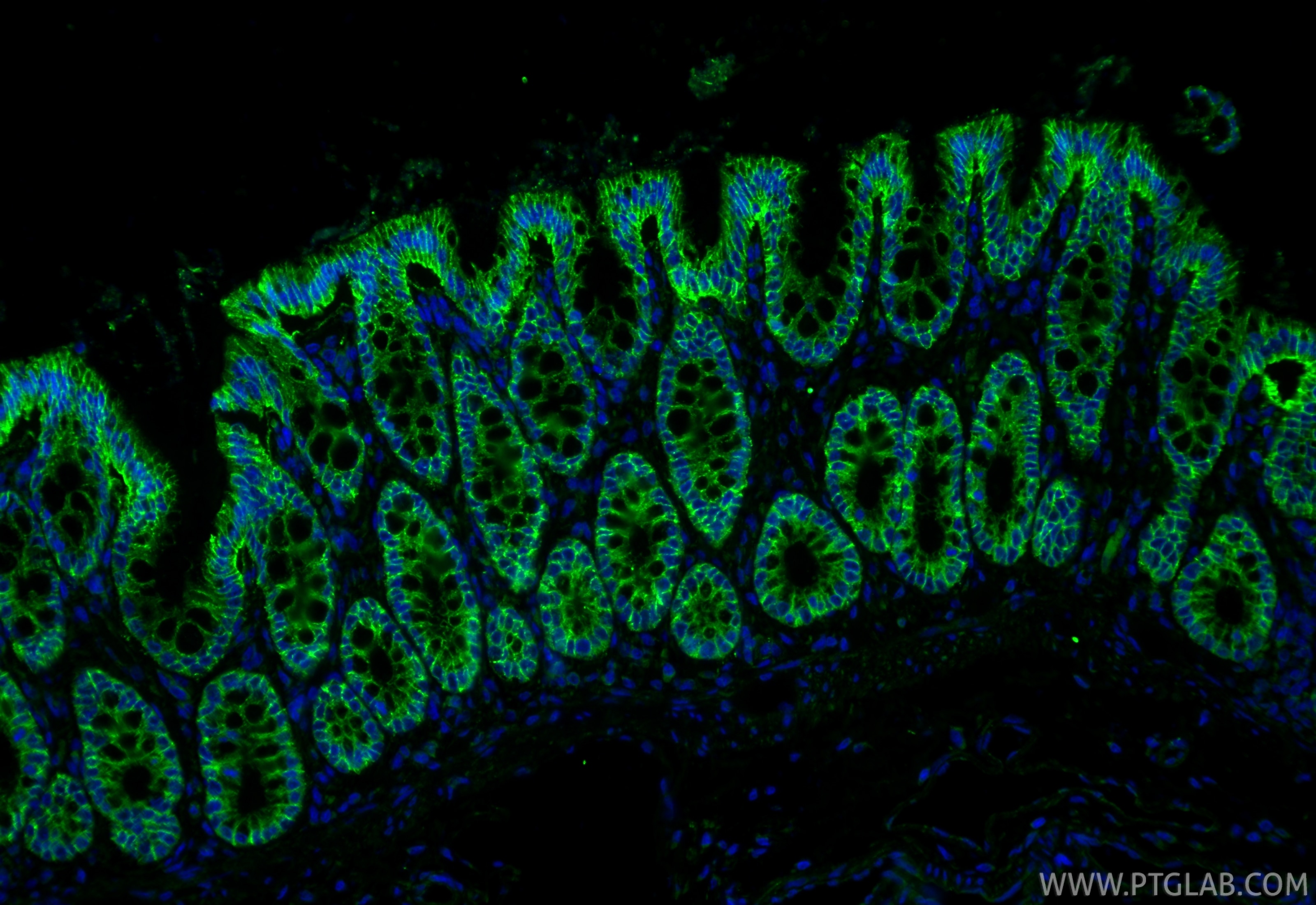
| Positive IHC detected in | human colon cancer tissue, human skin cancer tissue, mouse colon tissue, mouse skin tissue Note: suggested antigen retrieval with TE buffer pH 9.0; (*) Alternatively, antigen retrieval may be performed with citrate buffer pH 6.0 |
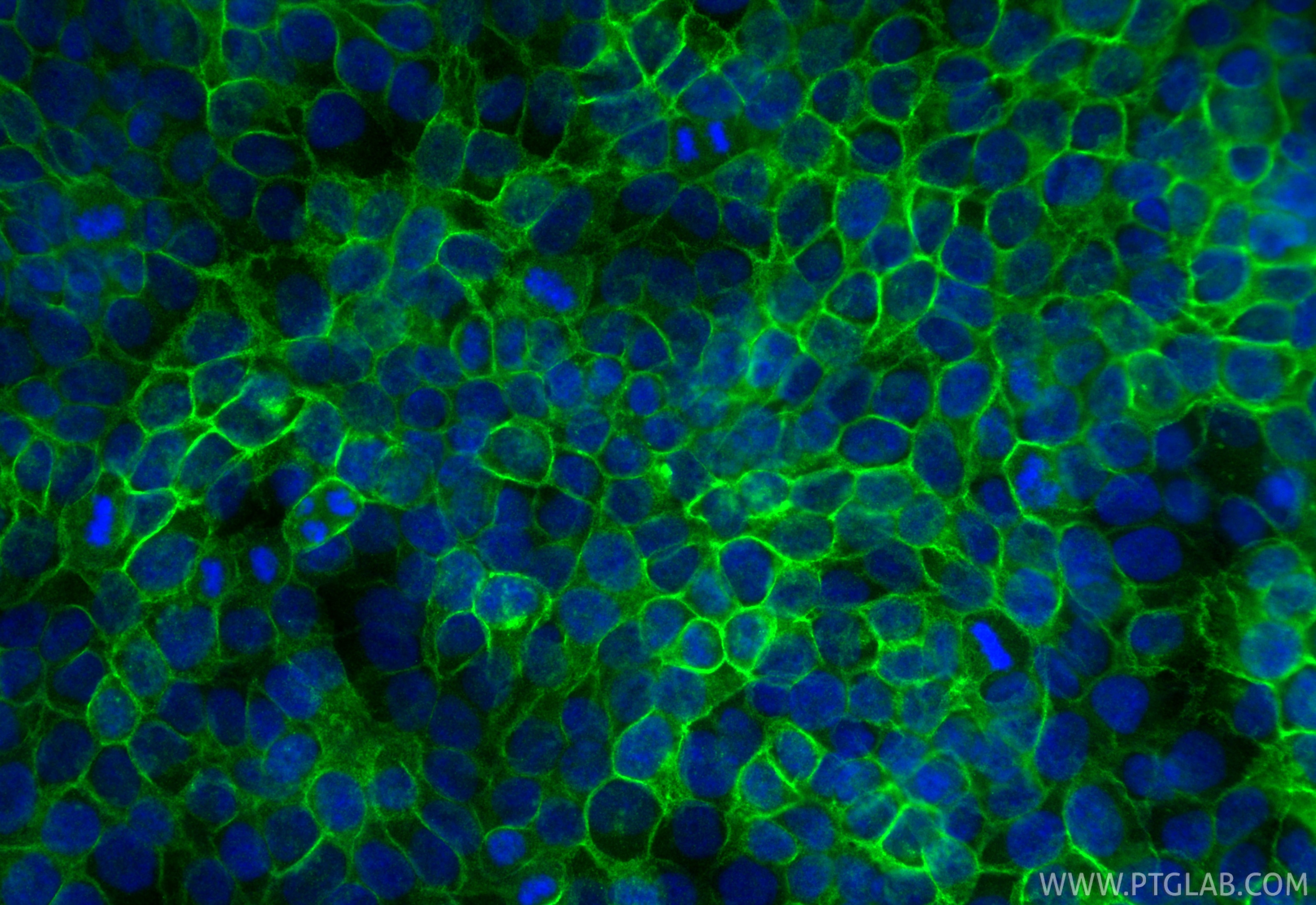
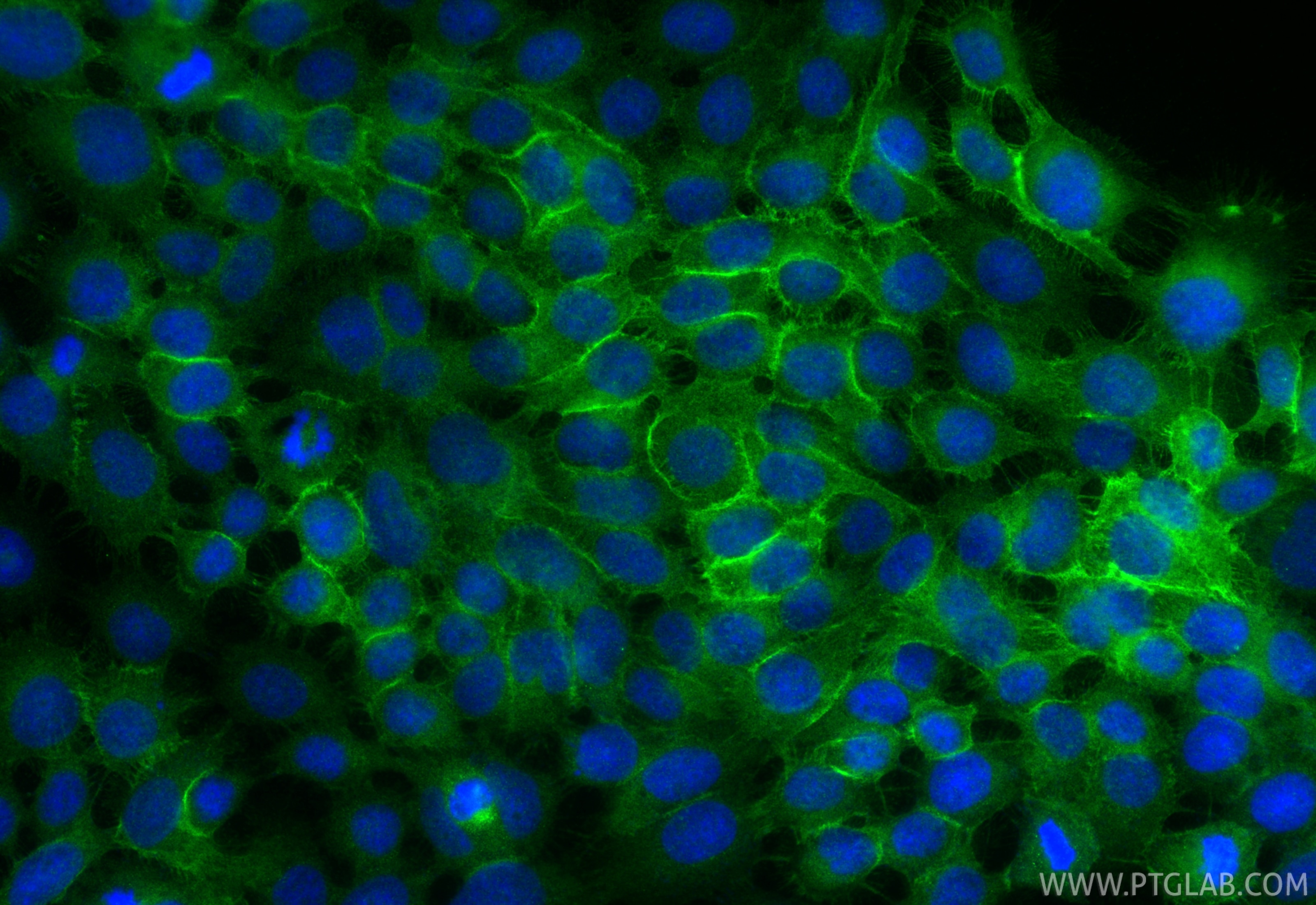
| Positive IF/ICC detected in | HaCaT cells, A431 cells |
Freshly prepared samples are recommended.
Recommended dilution
| Application | Dilution |
|---|---|
| Western Blot (WB) | WB : 1:1000-1:6000 |
| Immunohistochemistry (IHC) | IHC : 1:500-1:2000 |
| Immunofluorescence (IF)/ICC | IF/ICC : 1:400-1:2000 |
| It is recommended that this reagent should be titrated in each testing system to obtain optimal results. | |
| Sample-dependent, Check data in validation data gallery. | |
Product Information
28674-1-AP targets Claudin 1 in WB, IHC, IF/ICC, ELISA applications and shows reactivity with human, mouse, rat samples.
| Tested Reactivity | human, mouse, rat |
| Cited Reactivity | human, mouse, rat, pig, canine, bovine, sheep, goat, sus scrofa domesticus (domestic pig) |
| Host / Isotype | Rabbit / IgG |
| Class | Polyclonal |
| Type | Antibody |
| Immunogen |
CatNo: Ag29269 Product name: Recombinant human Claudin 1 protein Source: e coli.-derived, PGEX-4T Tag: GST Domain: 102-211 aa of BC012471 Sequence: MKCMKCLEDDEVQKMRMAVIGGAIFLLAGLAILVATAWYGNRIVQEFYDPMTPVNARYEFGQALFTGWAAASLCLLGGALLCCSCPRKTTSYPTPRPYPKPAPSSGKDYV Predict reactive species |
| Full Name | claudin 1 |
| Calculated Molecular Weight | 211 aa, 23 kDa |
| Observed Molecular Weight | 20-23 kDa |
| GenBank Accession Number | BC012471 |
| Gene Symbol | Claudin 1 |
| Gene ID (NCBI) | 9076 |
| RRID | AB_2881190 |
| Conjugate | Unconjugated |
| Form | Liquid |
| Purification Method | Antigen affinity purification |
| UNIPROT ID | O95832 |
| Storage Buffer | PBS with 0.02% sodium azide and 50% glycerol, pH 7.3. |
| Storage Conditions | Store at -20°C. Stable for one year after shipment. Aliquoting is unnecessary for -20oC storage. 20ul sizes contain 0.1% BSA. |
Background Information
Claudins are a family of proteins that are the most important components of tight junctions, where they establish the paracellular barrier that controls the flow of molecules in the intercellular space between the cells of an epithelium. 23 claudins have been identified. They are small (20-27 kilodalton (kDa)) proteins with similar structures. They have four transmembrane domains, with the N-terminus and the C-terminus in the cytoplasm. Claudin-1 is an integral membrane protein expressed primarily in keratinocytes and normal mammary epithelial cells. Claudin 1 forms tight junctions with other claudin proteins and plays an important role in the intestinal epithelial barrier.
Protocols
| Product Specific Protocols | |
|---|---|
| IF protocol for Claudin 1 antibody 28674-1-AP | Download protocol |
| IHC protocol for Claudin 1 antibody 28674-1-AP | Download protocol |
| WB protocol for Claudin 1 antibody 28674-1-AP | Download protocol |
| Standard Protocols | |
|---|---|
| Click here to view our Standard Protocols |
Publications
What published studies show
The Claudin 1 Polyclonal antibody (catalog number 28674-1-AP) has accumulated 358 citations. These appear across numerous journals, including Cell Metabolism, Immunity, Cell Host & Microbe, Nature Microbiology, Nature Communications, Advanced Science, Cell Death & Differentiation, Phytomedicine, Journal of Ethnopharmacology, Frontiers in Immunology, International Journal of Biological Macromolecules, Food & Function, and International Journal of Molecular Sciences, among others. Research fields center on gut microbiota, intestinal barrier function, and inflammatory bowel disease/colitis, with additional work in metabolism, neuroinflammation, and cancer.
| Species | Application | Title |
|---|---|---|
Immunity Intestinal dysbiosis exacerbates skin inflammation via microbial metabolite-driven Th2 cell differentiation. | ||
Cell Host Microbe Gut commensal Bacteroides-derived pantothenic acid alleviates metabolic syndrome. | ||
Nat Microbiol Nanozymes modulate probiotic tryptophan metabolism to prevent Salmonella infection in mammalian models. | ||
Nat Commun Nano-functionalized probiotic treats atherosclerosis via inhibiting intestinal microbiota-TMA-TMAO axis. | ||
ACS Nano Mucoadhesive Nanothalidomide Enema: Simultaneous Radioprotection and Barrier Repair in Radiation Enteritis Therapy. |






