

Tested Applications
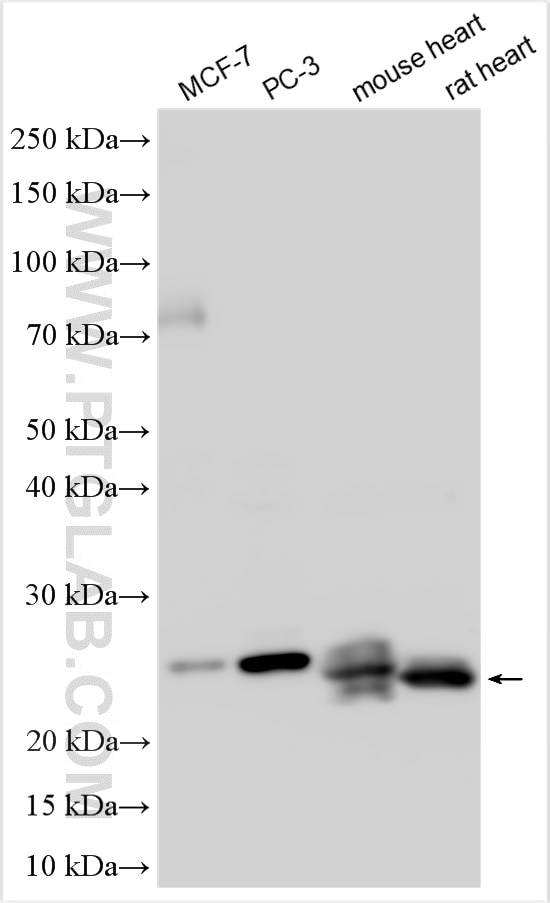
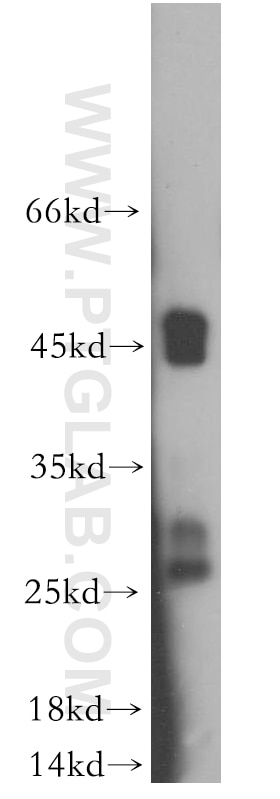
| Positive WB detected in | rat heart tissue, human liver tissue, PC-3 cells, mouse heart tissue |
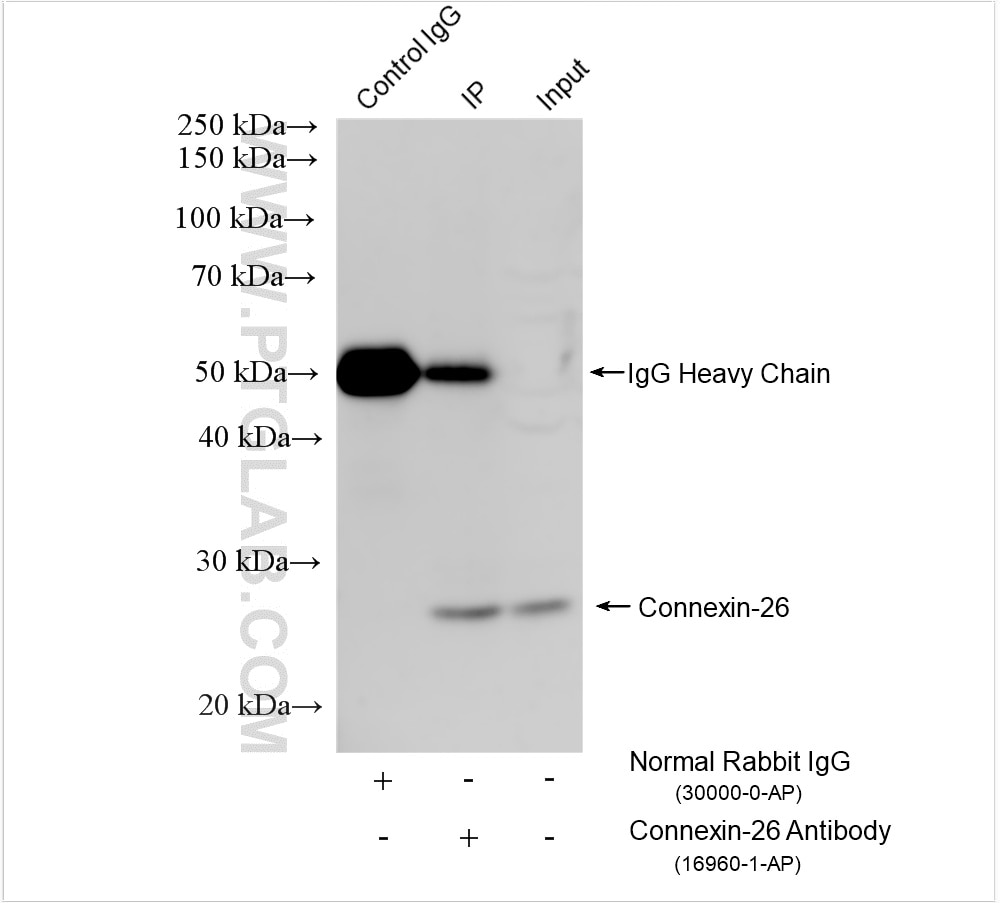
| Positive IP detected in | PC-3 cells |
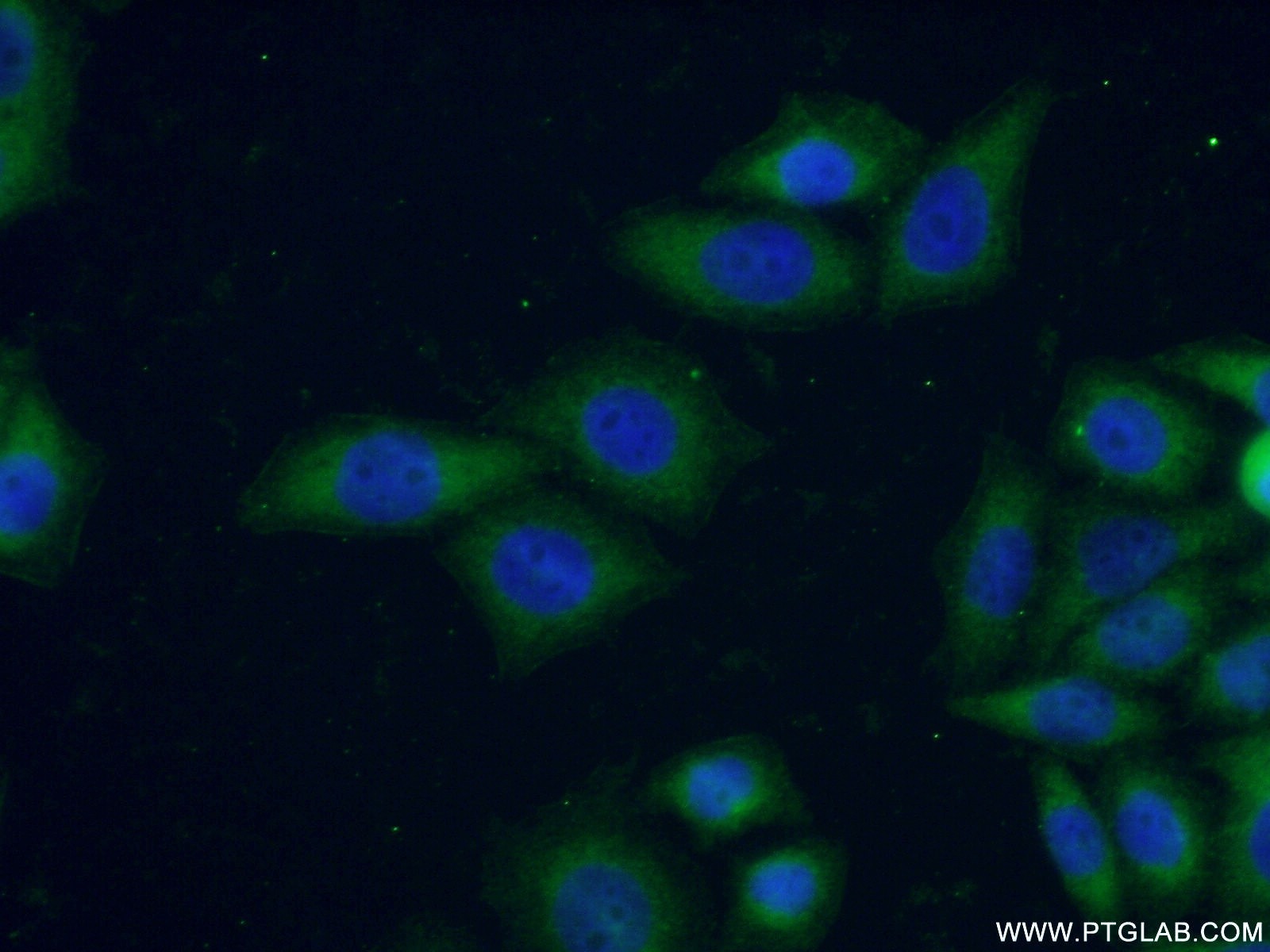
| Positive IF/ICC detected in | PC-3 cells |
Recommended dilution
| Application | Dilution |
|---|---|
| Western Blot (WB) | WB : 1:1000-1:6000 |
| Immunoprecipitation (IP) | IP : 0.5-4.0 ug for 1.0-3.0 mg of total protein lysate |
| Immunofluorescence (IF)/ICC | IF/ICC : 1:50-1:500 |
| It is recommended that this reagent should be titrated in each testing system to obtain optimal results. | |
| Sample-dependent, Check data in validation data gallery. | |
Product Information
16960-1-AP targets Connexin-26 in WB, IF/ICC, IP, ELISA applications and shows reactivity with human, mouse, rat samples.
| Tested Reactivity | human, mouse, rat |
| Cited Reactivity | human |
| Host / Isotype | Rabbit / IgG |
| Class | Polyclonal |
| Type | Antibody |
| Immunogen |
CatNo: Ag10666 Product name: Recombinant human Connexin-26 protein Source: e coli.-derived, PET28a Tag: 6*His Domain: 1-226 aa of BC017048 Sequence: MDWGTLQTILGGVNKHSTSIGKIWLTVLFIFRIMILVVAAKEVWGDEQADFVCNTLQPGCKNVCYDHYFPISHIRLWALQLIFVSTPALLVAMHVAYRRHEKKRKFIKGEIKSEFKDIEEIKTQKVRIEGSLWWTYTSSIFFRVIFEAAFMYVFYVMYDGFSMQRLVKCNAWPCPNTVDCFVSRPTEKTVFTVFMIAVSGICILLNVTELCYLLIRYCSGKSKKPV Predict reactive species |
| Full Name | gap junction protein, beta 2, 26kDa |
| Calculated Molecular Weight | 26 kDa |
| Observed Molecular Weight | 26 kDa |
| GenBank Accession Number | BC017048 |
| Gene Symbol | Connexin-26 |
| Gene ID (NCBI) | 2706 |
| RRID | AB_2110782 |
| Conjugate | Unconjugated |
| Form | Liquid |
| Purification Method | Antigen affinity purification |
| UNIPROT ID | P29033 |
| Storage Buffer | PBS with 0.02% sodium azide and 50% glycerol, pH 7.3. |
| Storage Conditions | Store at -20°C. Stable for one year after shipment. Aliquoting is unnecessary for -20oC storage. 20ul sizes contain 0.1% BSA. |
Background Information
The gap junctions were first characterized by electron microscopy as regionally specialized structures on plasma membranes of contacting adherent cells. These structures were shown to consist of cell-to-cell channels that facilitate the transfer of ions and small molecules between cells. The gap junction proteins, also known as connexins, purified from fractions of enriched gap junctions from different tissues differ. According to sequence similarities at the nucleotide and amino acid levels, the gap junction proteins are divided into two categories, alpha and beta. Connexin-26 (GJB2) is a beta class gap junction protein. Mutations in the gene for connexin-26 are responsible for as much as 50% of pre-lingual, recessive deafness.
Protocols
| Product Specific Protocols | |
|---|---|
| IF protocol for Connexin-26 antibody 16960-1-AP | Download protocol |
| IP protocol for Connexin-26 antibody 16960-1-AP | Download protocol |
| WB protocol for Connexin-26 antibody 16960-1-AP | Download protocol |
| Standard Protocols | |
|---|---|
| Click here to view our Standard Protocols |
Publications
What published studies show
The GJB2 (Connexin26) antibody, catalog number 16960-1-AP, has 7 total citations. These appear in journals including Cell Communication & Signaling, Frontiers in Cell and Developmental Biology, Molecular Medicine Reports, Oncology Research, BMC Medical Genomics, Cell Adhesion & Migration, and Folia Histochemica et Cytobiologica. Research fields span respiratory epithelial barrier function, glioblastoma, liver dysfunction, lung adenocarcinoma, triple-negative breast cancer, and chondrocyte injury, with applications in immunofluorescence and Western blot.
| Species | Application | Title |
|---|---|---|
Cell Commun Signal Repression of Connexin26 hemichannel activity protects the barrier function of respiratory airway epithelial cells against LPS-induced alteration | ||
Front Cell Dev Biol Integrative analysis of EMT-driving genes identifies a prognostic signature and GJB2 as a potential biomarker in glioblastoma.
| ||
Mol Med Rep Molecular hydrogen accelerates the reversal of acute obstructive cholangitis‑induced liver dysfunction by restoring gap and tight junctions. | ||
Oncol Res Microenvironment Analysis of Prognosis and Molecular Signature of Immune-Related Genes in Lung Adenocarcinoma. | ||
BMC Med Genomics Multi-omics single-cell dissection of malignant epithelial heterogeneity identifies GJB2 as an EMT-driving biomarker in triple-negative breast cancer. | ||
Cell Adh Migr GJB2, a novel transcription target of HSF4, confers tumorigenic and metastatic phenotypes and sustains mitochondrial homeostasis in lung adenocarcinoma via the PI3K/AKT pathway. |





