

Product Information
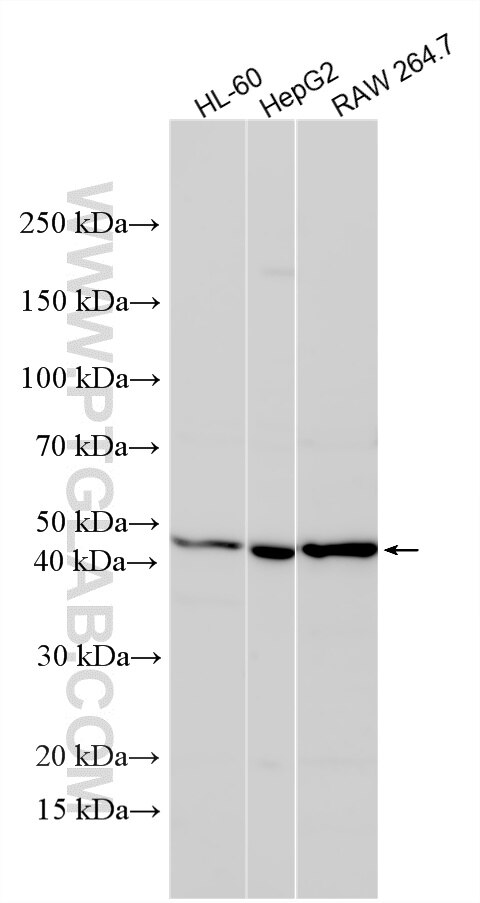
15921-1-PBS targets ERCC8 in WB, Indirect ELISA applications and shows reactivity with human, mouse samples.
| Tested Reactivity | human, mouse |
| Host / Isotype | Rabbit / IgG |
| Class | Polyclonal |
| Type | Antibody |
| Immunogen |
CatNo: Ag8734 Product name: Recombinant human ERCC8 protein Source: e coli.-derived, PGEX-4T Tag: GST Domain: 1-205 aa of BC009793 Sequence: MLGFLSARQTGLEDPLRLRRAESTRRVLGLELNKDRDVERIHGGGINTLDIEPVEGRYMLSGGSDGVIVLYDLENSSRQSYYTCKAVCSIGRDHPDVHRYSVETVQWYPHDTGMFTSSSFDKTLKVWDTNTLQTADVFNFEETVYSHHMSPVSTKHCLVAVGTRGPKVQLCDLKSGSCSHILQGIFILFQTATTLSKRFNKKKRY Predict reactive species |
| Full Name | excision repair cross-complementing rodent repair deficiency, complementation group 8 |
| Calculated Molecular Weight | 396 aa, 44 kDa |
| Observed Molecular Weight | 42 kDa |
| GenBank Accession Number | BC009793 |
| Gene Symbol | ERCC8 |
| Gene ID (NCBI) | 1161 |
| RRID | AB_3741872 |
| Conjugate | Unconjugated |
| Form | Liquid |
| Purification Method | Antigen affinity purification |
| UNIPROT ID | Q13216 |
| Storage Buffer | PBS only, pH 7.3. |
| Storage Conditions | Store at -80°C. |
Background Information
ERCC8 (also known as Cockayne Syndrome A protein, CSA) is a critical nuclear protein that serves as a specific adapter component of the CRL4ᴱᴿᶜᶜ⁸ ubiquitin ligase complex. Its primary function is to play a central role in the transcription-coupled nucleotide excision repair pathway, specifically recognizing and repairing the template strands of actively transcribed genes damaged by factors such as ultraviolet radiation. Mutations in the ERCC8 gene cause Cockayne syndrome, an autosomal recessive disorder characterized by severe photosensitivity, premature aging, neurodevelopmental abnormalities, and sensorineural hearing loss. This demonstrates that ERCC8 is essential for maintaining transcriptional fidelity, neuronal survival, and combating oxidative stress. Therefore, ERCC8 is not only a key factor in DNA repair but also an important molecule for studying mechanisms of premature aging and neurobiology.


