




Tested Applications
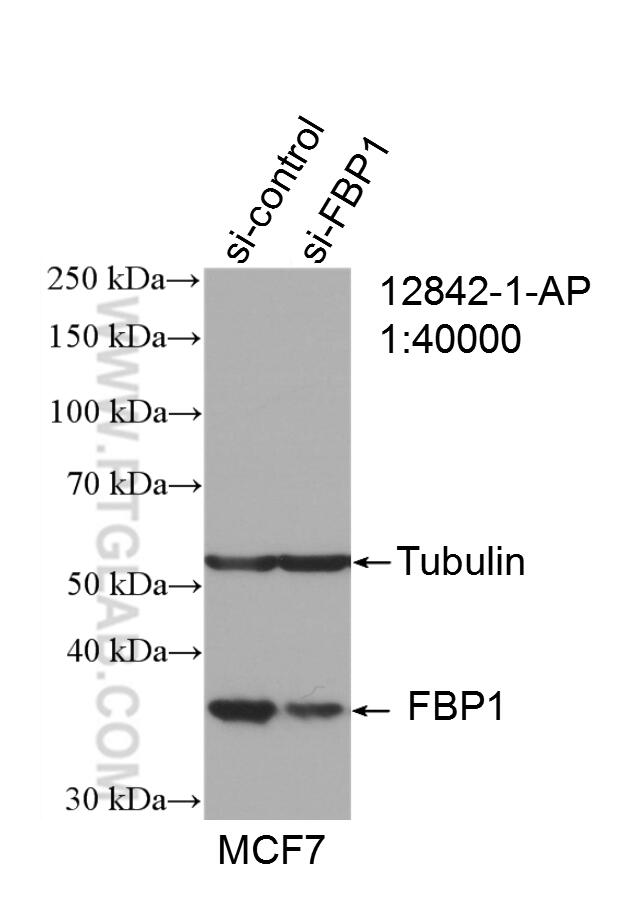
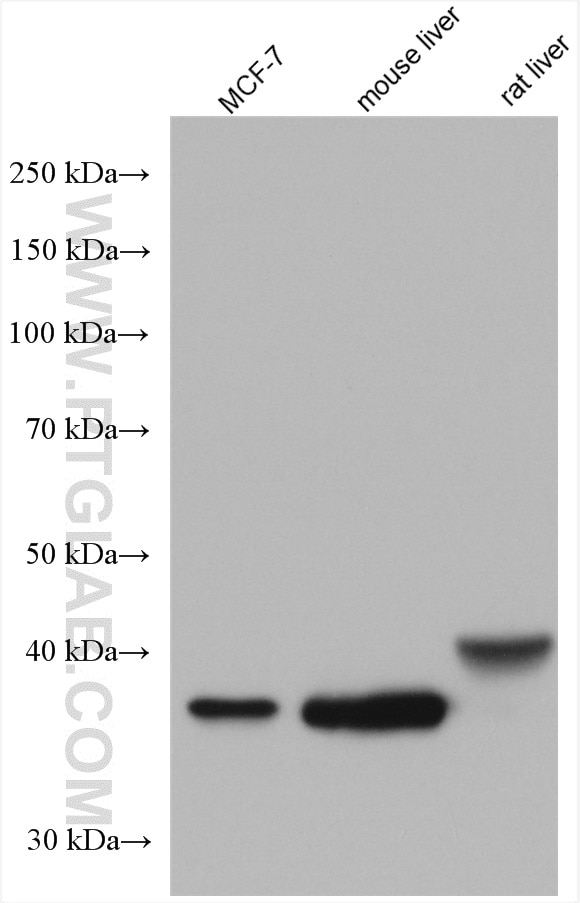
| Positive WB detected in | MCF-7 cells, human liver tissue, mouse liver tissue, rat liver tissue |
| Positive IP detected in | MCF-7 cells, mouse liver tissue |
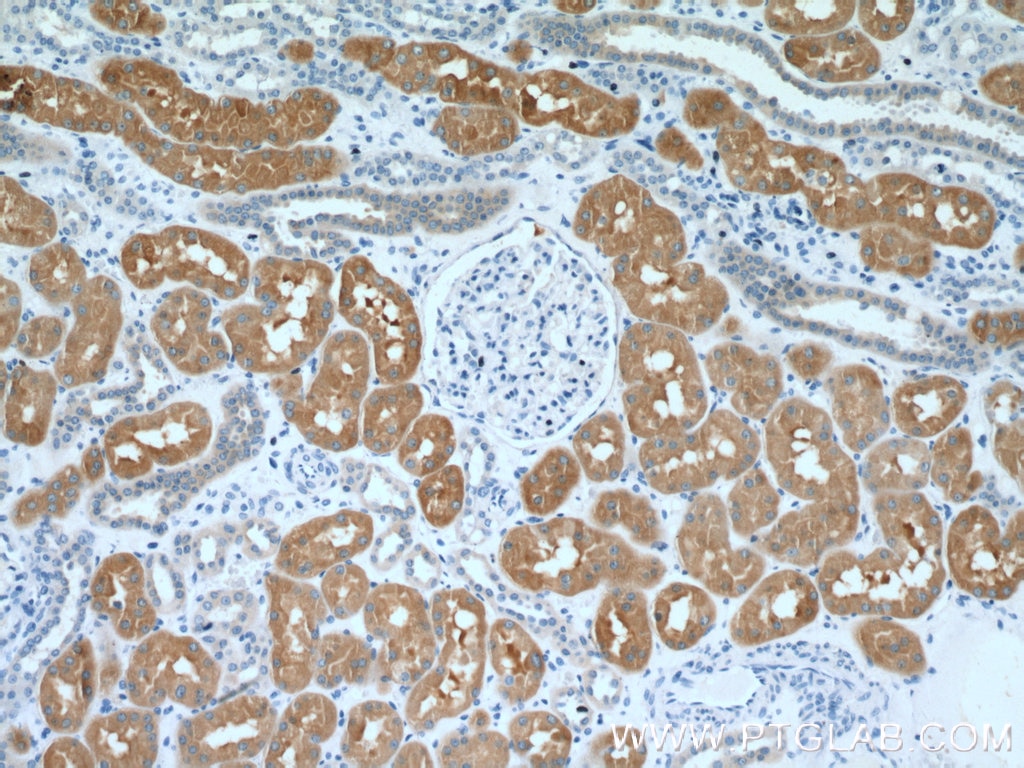
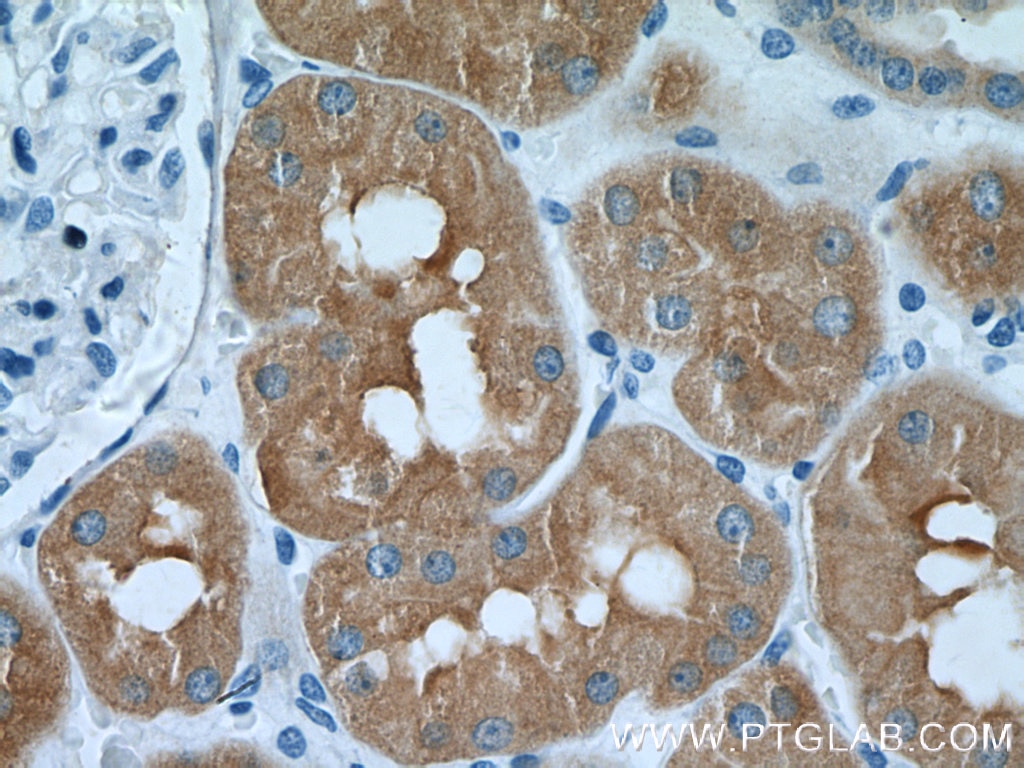
| Positive IHC detected in | human kidney tissue Note: suggested antigen retrieval with TE buffer pH 9.0; (*) Alternatively, antigen retrieval may be performed with citrate buffer pH 6.0 |
Recommended dilution
| Application | Dilution |
|---|---|
| Western Blot (WB) | WB : 1:2000-1:10000 |
| Immunoprecipitation (IP) | IP : 0.5-4.0 ug for 1.0-3.0 mg of total protein lysate |
| Immunohistochemistry (IHC) | IHC : 1:200-1:800 |
| It is recommended that this reagent should be titrated in each testing system to obtain optimal results. | |
| Sample-dependent, Check data in validation data gallery. | |
Product Information
12842-1-AP targets FBP1 in WB, IHC, IP, CoIP, ELISA applications and shows reactivity with human, mouse, rat samples.
| Tested Reactivity | human, mouse, rat |
| Cited Reactivity | human, mouse, pig |
| Host / Isotype | Rabbit / IgG |
| Class | Polyclonal |
| Type | Antibody |
| Immunogen |
CatNo: Ag3837 Product name: Recombinant human FBP1 protein Source: e coli.-derived, T-HIS Tag: 6*His Domain: 1-338 aa of BC012927 Sequence: MADQAPFDTDVNTLTRFVMEEGRKARGTGELTQLLNSLCTAVKAISSAVRKAGIAHLYGIAGSTNVTGDQVKKLDVLSNDLVMNMLKSSFATCVLVSEEDKHAIIVEPEKRGKYVVCFDPLDGSSNIDCLVSVGTIFGIYRKKSTDEPSEKDALQPGRNLVAAGYALYGSATMLVLAMDCGVNCFMLDPAIGEFILVDKDVKIKKKGKIYSLNEGYARDFDPAVTEYIQRKKFPPDNSAPYGARYVGSMVADVHRTLVYGGIFLYPANKKSPNGKLRLLYECNPMAYVMEKAGGMATTGKEAVLDVIPTDIHQRAPVILGSPDDVLEFLKVYEKHSAQ Predict reactive species |
| Full Name | fructose-1,6-bisphosphatase 1 |
| Calculated Molecular Weight | 338 aa, 37 kDa |
| Observed Molecular Weight | 37-40 kDa |
| GenBank Accession Number | BC012927 |
| Gene Symbol | FBP1 |
| Gene ID (NCBI) | 2203 |
| RRID | AB_2103572 |
| Conjugate | Unconjugated |
| Form | Liquid |
| Purification Method | Antigen affinity purification |
| UNIPROT ID | P09467 |
| Storage Buffer | PBS with 0.02% sodium azide and 50% glycerol, pH 7.3. |
| Storage Conditions | Store at -20°C. Stable for one year after shipment. Aliquoting is unnecessary for -20oC storage. 20ul sizes contain 0.1% BSA. |
Background Information
FBP1 (Fructose-1,6-bisphosphatase 1) is also named as FBP and belongs to the FBPase class 1 family. It catalyzes the hydrolysis of fructose-1,6 bisphosphate to fructose-6-phosphate and inorganic phosphate. This reaction is an important regulatory site of gluconeogenesis. Defects in FBP1 are the cause of fructose-1,6-bisphosphatase deficiency (FBPD) (PMID:12126934).
Protocols
| Product Specific Protocols | |
|---|---|
| IHC protocol for FBP1 antibody 12842-1-AP | Download protocol |
| IP protocol for FBP1 antibody 12842-1-AP | Download protocol |
| WB protocol for FBP1 antibody 12842-1-AP | Download protocol |
| Standard Protocols | |
|---|---|
| Click here to view our Standard Protocols |
Publications
What published studies show
The FBP1 Polyclonal antibody (12842-1-AP) is cited in 39 publications across journals including Signal Transduction and Targeted Therapy, Cell Metabolism, Nature Cell Biology, Nature Communications, Journal of Advanced Research, Cell Discovery, Nature Chemical Biology, Advanced Science, Molecular Therapy, Journal of Medicinal Chemistry, Cell Death & Disease, and JBC, among others. Research fields span cancer (metabolic reprogramming/radiosensitivity in lung, liver, breast, prostate cancers), glucose/lipid metabolism, gluconeogenesis and diabetes, hepatic steatosis, AKI/kidney stones, atherosclerosis, diabetic wound healing, erectile function, and macrophage immunometabolism. Applications primarily include WB, IHC, IP, and CoIP.
| Species | Application | Title |
|---|---|---|
Signal Transduct Target Ther Hypoxia-induced GBE1 expression promotes tumor progression through metabolic reprogramming in lung adenocarcinoma. | ||
Cell Metab Circulating glycerate predicts resilience to fructose-induced hepatic steatosis | ||
Nat Cell Biol Fructose-1,6-bisphosphatase 1 functions as a protein phosphatase to dephosphorylate histone H3 and suppresses PPARα-regulated gene transcription and tumour growth | ||
Nat Commun Improving erectile function in diabetic male mice by rescuing depalmitoylated FBP1 to reduce cavernosal lactate. | ||
J Adv Res Discovery of FBP1 as novel therapeutic target and asiatic acid-hydrogen sulfide donors accelerate diabetic wound healing.
| ||
Cell Discov Single-cell spatiotemporal analysis of the lungs reveals Slamf9+ macrophages involved in viral clearance and inflammation resolution |







