

Tested Applications
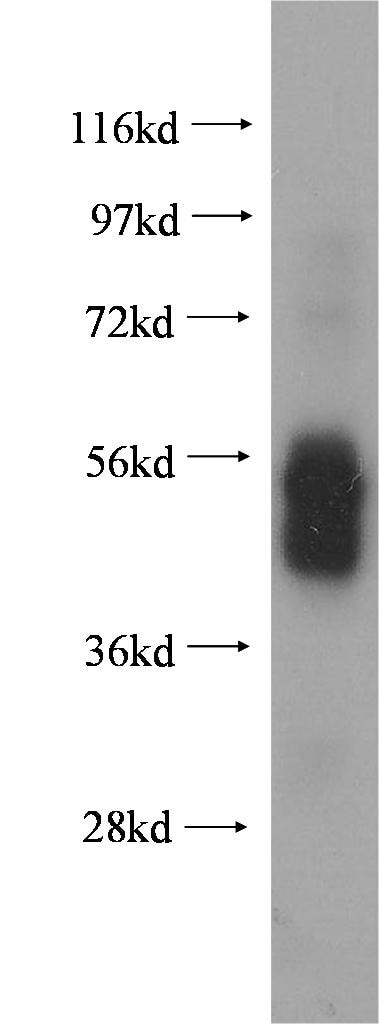
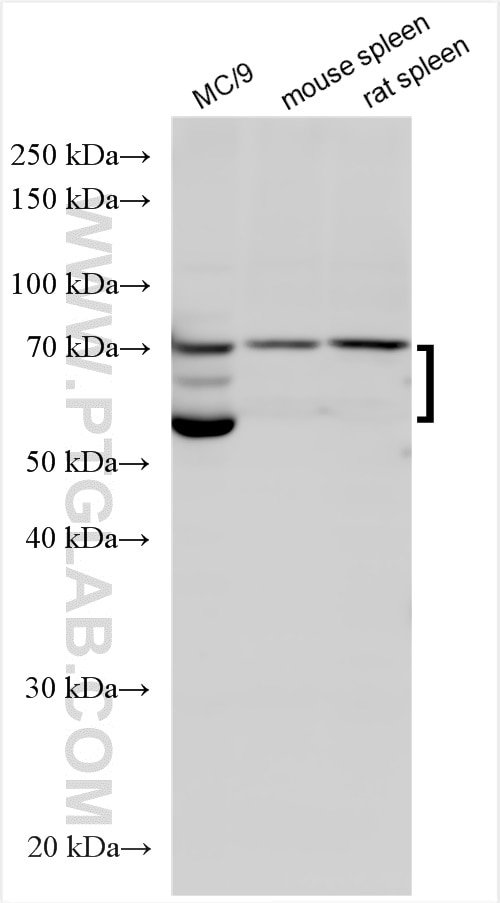
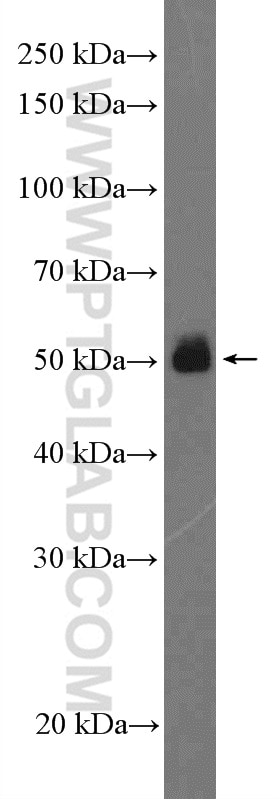
| Positive WB detected in | MC/9 cells, human spleen tissue, RAW 264.7 cells, mouse spleen tissue, rat spleen tissue |
Recommended dilution
| Application | Dilution |
|---|---|
| Western Blot (WB) | WB : 1:1000-1:4000 |
| It is recommended that this reagent should be titrated in each testing system to obtain optimal results. | |
| Sample-dependent, Check data in validation data gallery. | |
Product Information
10980-1-AP targets FceR1a in WB, IHC, IF, ELISA applications and shows reactivity with human, mouse, rat samples.
| Tested Reactivity | human, mouse, rat |
| Cited Reactivity | human, mouse |
| Host / Isotype | Rabbit / IgG |
| Class | Polyclonal |
| Type | Antibody |
| Immunogen |
CatNo: Ag1398 Product name: Recombinant human FCER1A protein Source: e coli.-derived, PGEX-4T Tag: GST Domain: 1-257 aa of BC015195 Sequence: MAPAMESPTLLCVALLFFAPDGVLAVPQKPKVSLNPPWNRIFKGENVTLTCNGNNFFEVSSTKWFHNGSLSEETNSSLNIVNAKFEDSGEYKCQHQQVNESEPVYLEVFSDWLLLQASAEVVMEGQPLFLRCHGWRNWDVYKVIYYKDGEALKYWYENHNISITNATVEDSGTYYCTGKVWQLDYESEPLNITVIKAPREKYWLQFFIPLLVVILFAVDTGLFISTQQQATFLLKIKRTRKGFRLLNPHPKPNPKNN Predict reactive species |
| Full Name | Fc fragment of IgE, high affinity I, receptor for; alpha polypeptide |
| Calculated Molecular Weight | 30 kDa |
| Observed Molecular Weight | 55-70 kDa |
| GenBank Accession Number | BC015195 |
| Gene Symbol | FceR1a |
| Gene ID (NCBI) | 2205 |
| RRID | AB_2103033 |
| Conjugate | Unconjugated |
| Form | Liquid |
| Purification Method | Antigen affinity purification |
| UNIPROT ID | P12319 |
| Storage Buffer | PBS with 0.02% sodium azide and 50% glycerol, pH 7.3. |
| Storage Conditions | Store at -20°C. Stable for one year after shipment. Aliquoting is unnecessary for -20oC storage. 20ul sizes contain 0.1% BSA. |
Background Information
Fc epsilon Receptor I alpha (FceR1a) is a single-pass type I membrane protein that contains 2 immunoglobulin-like domains. FceR1a forms a tetrameric complex, FceRI, with one beta and two gamma subunits (PMID: 19406478). FceRI is the high-affinity receptor for the Fc region of immunoglobulin E (IgE) (PMID: 1532373). It is expressed on mast cells and basophils and plays a central role in the allergic response (PMID: 2148316). The calculated molecular weight of FceR1a is 30 kDa, the 55- to 70-kDa bands detected by this antibody are probably caused by heterogeneous glycosylation (PMID: 11344350; 12671054).
Protocols
| Product Specific Protocols | |
|---|---|
| WB protocol for FceR1a antibody 10980-1-AP | Download protocol |
| Standard Protocols | |
|---|---|
| Click here to view our Standard Protocols |
Publications
What published studies show
The FceR1a Polyclonal antibody (Cat# 10980-1-AP) has 11 citations published in journals including Science, Nature Communications, Theranostics, Cancer Letters, J Allergy Clin Immunol, Allergy, Thorax, Translational Research, J Integr Med, and J Orthop Res. Research fields span allergic asthma and mast cell biology, cardiac fibrosis and remodeling, tumor immunology, colorectal cancer, spatial transcriptomics, urticaria, and osteoarthritis. Applications cited include WB, IHC, and IF in human and mouse samples.
| Species | Application | Title |
|---|---|---|
Science Response to Comment on "Tumor-initiating cells establish an IL-33-TGF-β niche signaling loop to promote cancer progression". | ||
Nat Commun Ultra-precision deconvolution of spatial transcriptomics decodes immune heterogeneity and fate-defining programs in tissues. | ||
Cancer Lett Distinct Immunophenotypic Profiles and Neutrophil Heterogeneity in Colorectal Cancer | ||
J Allergy Clin Immunol Mast cell-associated alveolar inflammation in patients with atopic uncontrolled asthma. | ||
J Allergy Clin Immunol Thymic stromal lymphopoietin epigenetically upregulates Fc receptor γ subunit-related receptors on antigen-presenting cells and induces TH2/TH17 polarization through dectin-2. |
Reviews
What customers say
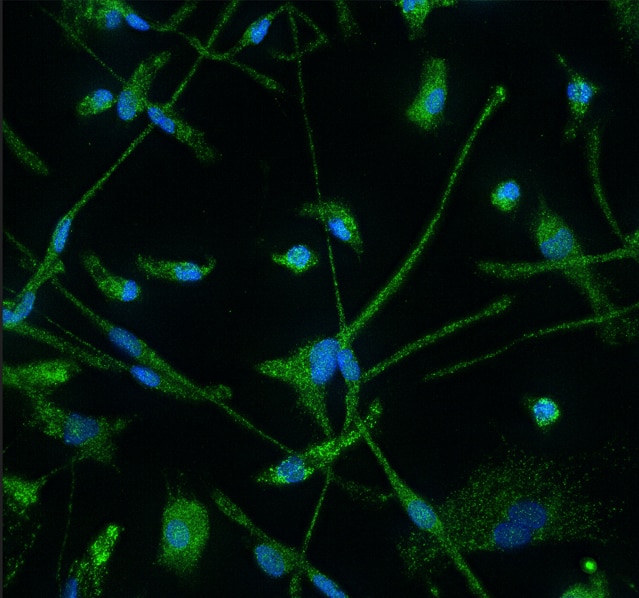
The single review for 10980-1-AP reports use in immunofluorescence on microglia derived from iPSCs (control line), at a 1:500 dilution. The reviewer rated the product 4 out of 5 stars. Overall, the feedback suggests the antibody performed well for detecting its target in iPSC-derived microglia under standard IF conditions, with a strong but not perfect rating.
The reviews below have been submitted by verified Proteintech customers who received an incentive for providing their feedback.
Alicia (Verified Customer) (10-07-2025) | Microglia derived from iPSC - Control line
 |




