
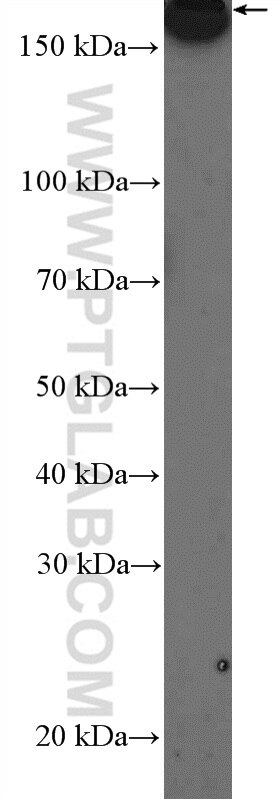
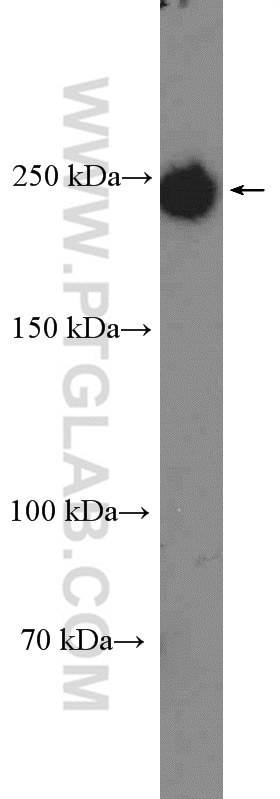
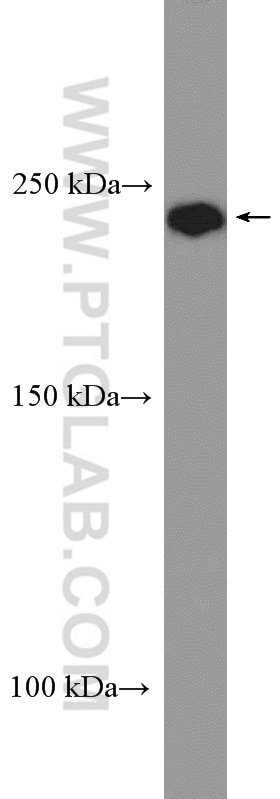
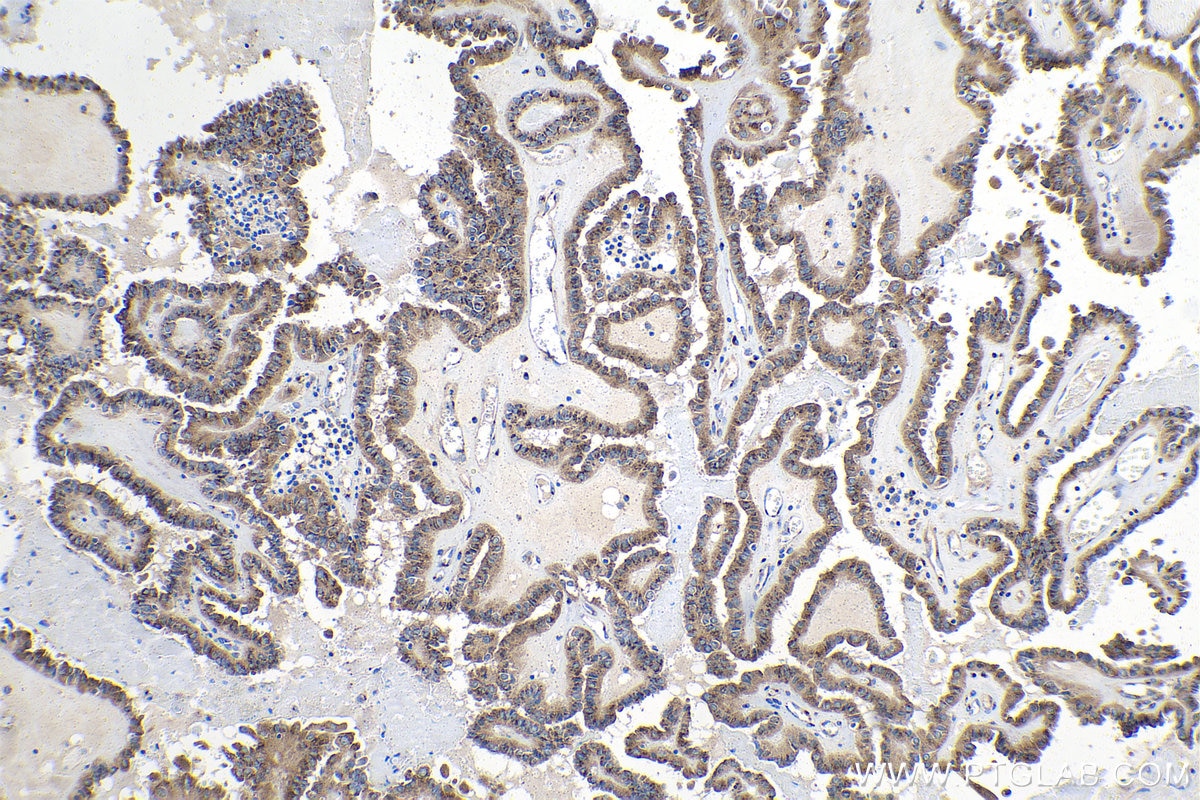

Tested Applications
| Positive WB detected in | HeLa cells, HL-60 cells |
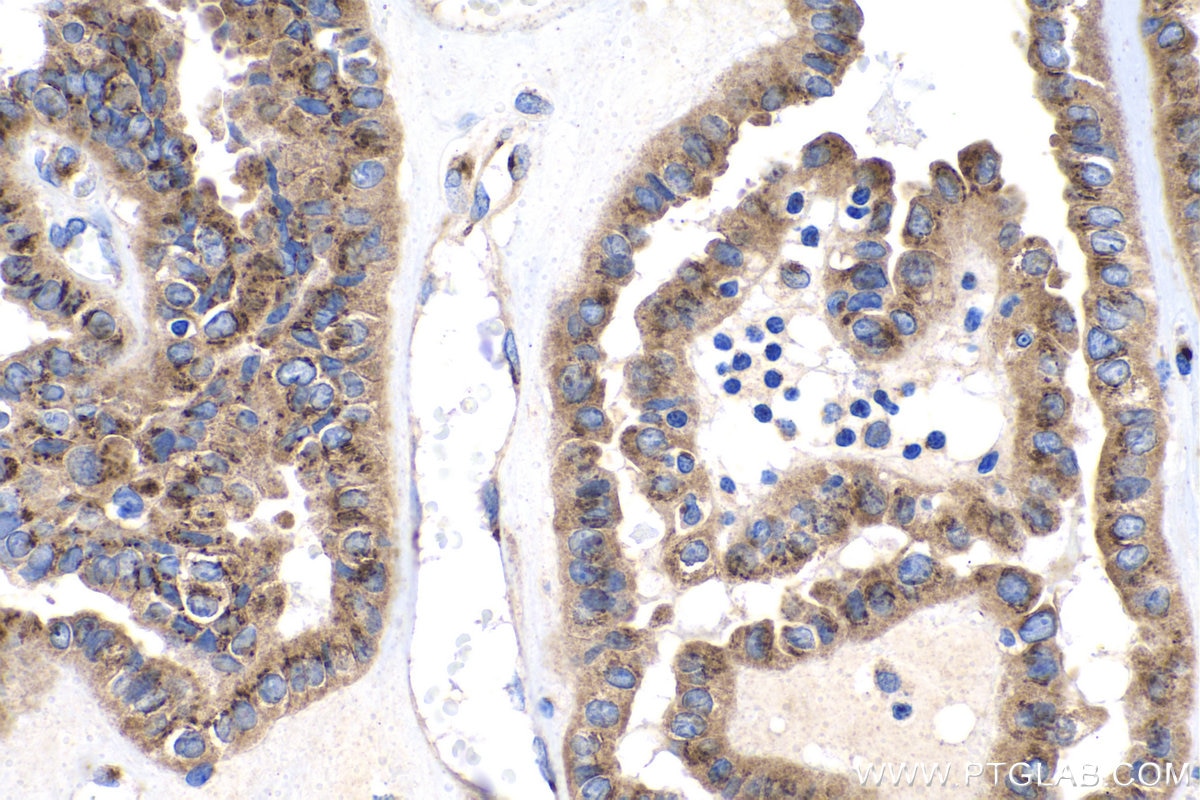
| Positive IHC detected in | human thyroid cancer tissue Note: suggested antigen retrieval with TE buffer pH 9.0; (*) Alternatively, antigen retrieval may be performed with citrate buffer pH 6.0 |
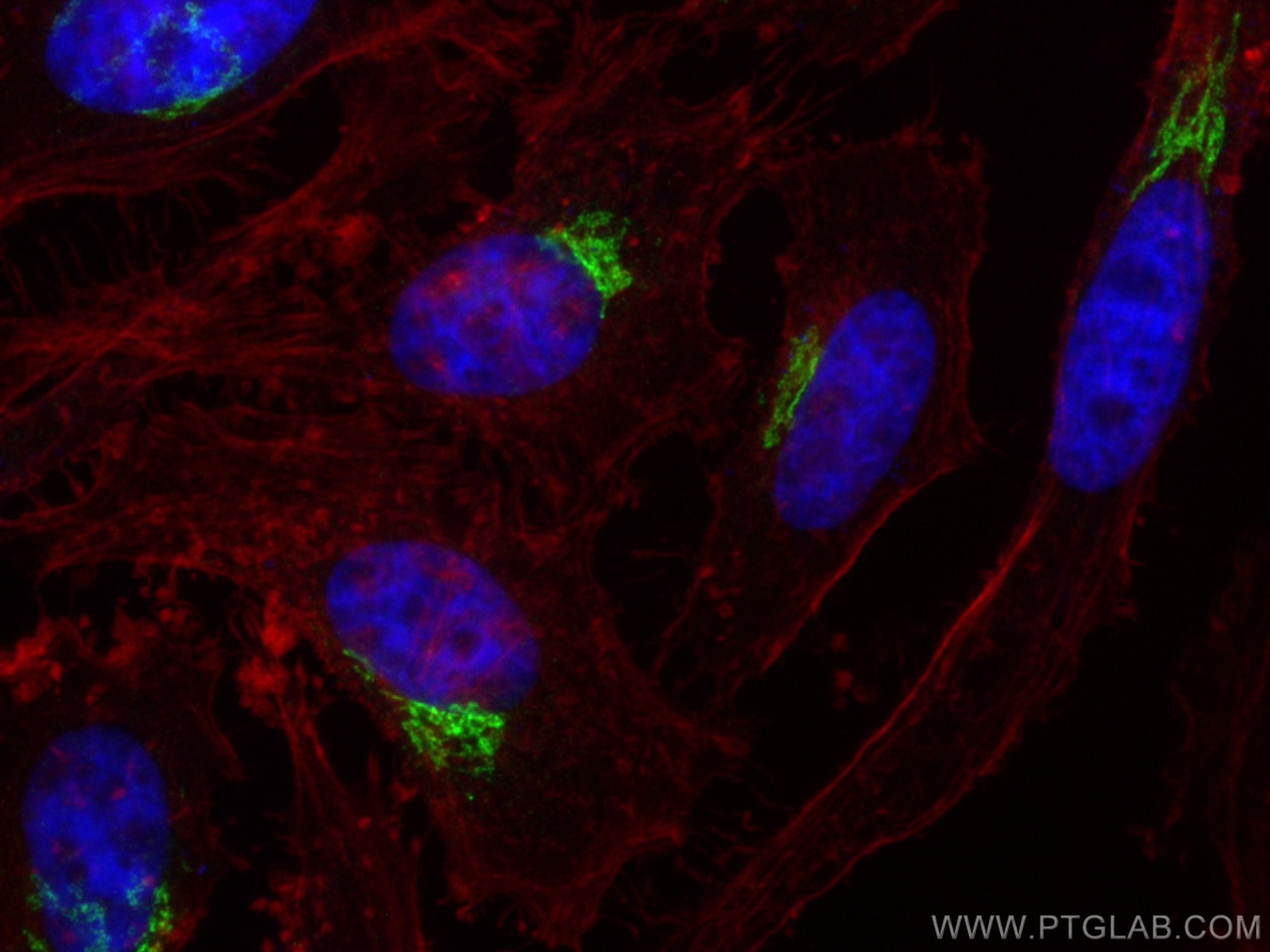
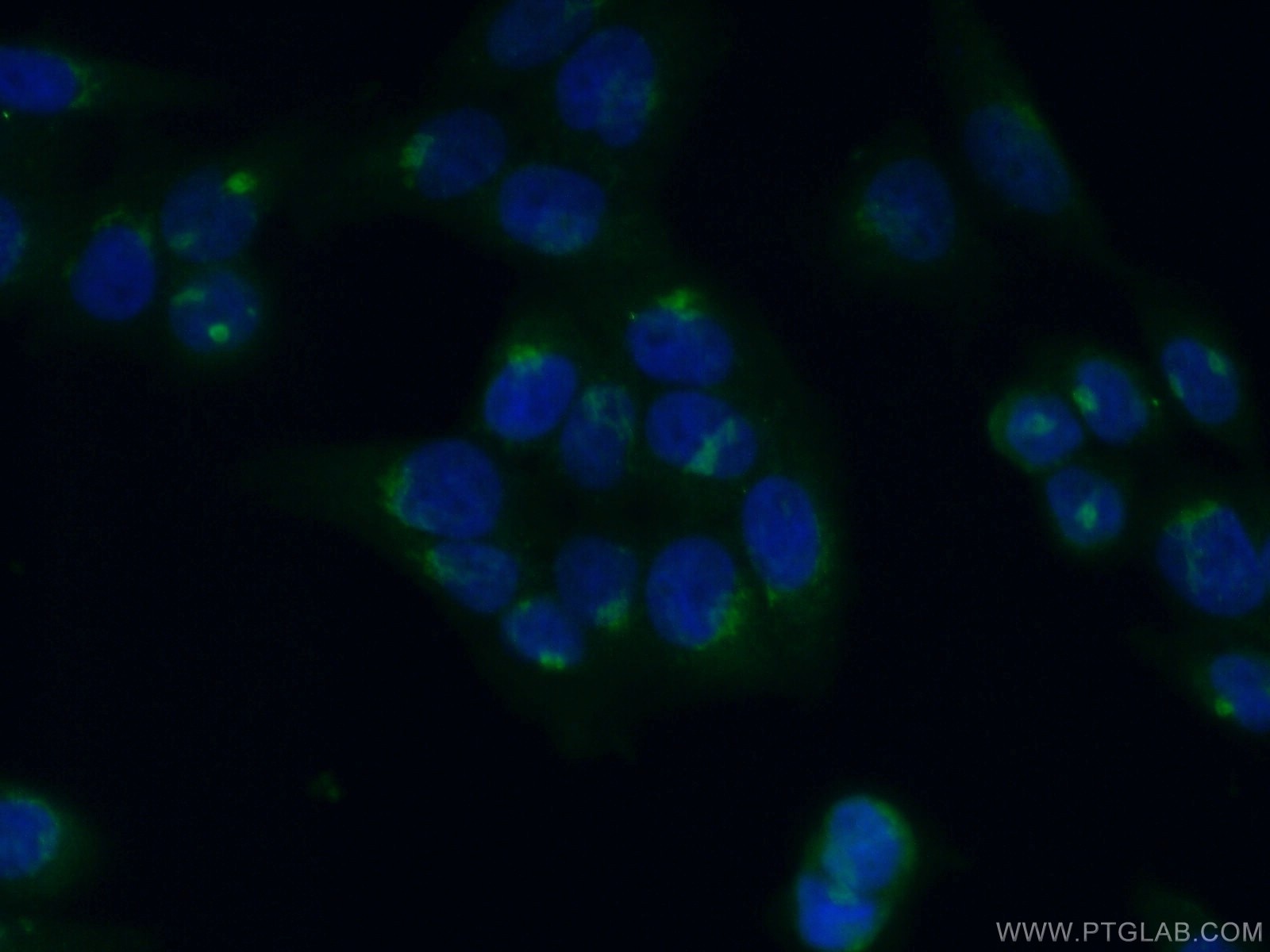
| Positive IF/ICC detected in | HeLa cells |
Recommended dilution
| Application | Dilution |
|---|---|
| Western Blot (WB) | WB : 1:500-1:1000 |
| Immunohistochemistry (IHC) | IHC : 1:250-1:1000 |
| Immunofluorescence (IF)/ICC | IF/ICC : 1:300-1:1200 |
| It is recommended that this reagent should be titrated in each testing system to obtain optimal results. | |
| Sample-dependent, Check data in validation data gallery. | |
Product Information
26456-1-AP targets GMAP-210 in WB, IHC, IF/ICC, ELISA applications and shows reactivity with human samples.
| Tested Reactivity | human |
| Cited Reactivity | human, mouse |
| Host / Isotype | Rabbit / IgG |
| Class | Polyclonal |
| Type | Antibody |
| Immunogen |
CatNo: Ag13867 Product name: Recombinant human GMAP-210 protein Source: e coli.-derived, PGEX-4T Tag: GST Domain: 1-68 aa of BC002656 Sequence: AMSSWLGGLGSGLGQSLGQVGGSLASLTGQISNFTKDMLMEGTEEVEAELPDSRTKEIEAIHAILRSE Predict reactive species |
| Full Name | thyroid hormone receptor interactor 11 |
| Calculated Molecular Weight | 1979 aa, 228 kDa |
| Observed Molecular Weight | 230 kDa |
| GenBank Accession Number | BC002656 |
| Gene Symbol | TRIP11 |
| Gene ID (NCBI) | 9321 |
| RRID | AB_2880519 |
| Conjugate | Unconjugated |
| Form | Liquid |
| Purification Method | Antigen affinity purification |
| UNIPROT ID | Q15643 |
| Storage Buffer | PBS with 0.02% sodium azide and 50% glycerol, pH 7.3. |
| Storage Conditions | Store at -20°C. Stable for one year after shipment. Aliquoting is unnecessary for -20oC storage. 20ul sizes contain 0.1% BSA. |
Background Information
Golgi microtubule-associated protein 210 (GMAP-210), also referred to as CEV14, Trip11 or Trip230, is a peripheral Golgi protein that localizes to the cis-Golgi network. GMAP-210 is a 1,978 amino acid coiled-coil member of the golgin family of proteins. Microtubule ends bind to GMAP-210 which functions to link the cis-Golgi network to the minus ends of centrosome-nucleated microtubules. This interaction may be essential for the proper morphology and structural maintenance of the Golgi apparatus. GMAP-210 also associates with thyroid hormone receptor. Overexpression of GMAP-210 disrupts the micro-tubule network and causes a significant enlargement and fragmentation of the Golgi apparatus; it also blocks anterograde and retrograde transport between the ER and the Golgi apparatus.
Protocols
| Product Specific Protocols | |
|---|---|
| IF protocol for GMAP-210 antibody 26456-1-AP | Download protocol |
| IHC protocol for GMAP-210 antibody 26456-1-AP | Download protocol |
| WB protocol for GMAP-210 antibody 26456-1-AP | Download protocol |
| Standard Protocols | |
|---|---|
| Click here to view our Standard Protocols |
Publications
What published studies show
The GMAP-210 Polyclonal antibody (Cat# 26456-1-AP) has 6 total citations. These appear in Nature Communications, Ecotoxicology and Environmental Safety, Communications Biology, Journal of Biological Chemistry, Biology Open, and Human Mutation. Research fields span Golgi structure and protein glycosylation, autophagy and secretory network organization, sperm head development, and genetic disease (achondrogenesis 1A).
| Species | Application | Title |
|---|---|---|
Ecotoxicol Environ Saf PFOA exposure decreases acrosome reaction and increases DNA oxidative damage by impairing the sperm head shaping in mice. | ||
Commun Biol Tankyrase-1-mediated degradation of Golgin45 regulates glycosyltransferase trafficking and protein glycosylation in Rab2-GTP-dependent manner. | ||
J Biol Chem Tumor protein D54 binds intracellular nanovesicles via an extended amphipathic region. | ||
Biol Open GRASP55 restricts early-stage autophagy and regulates spatial organization of the early secretory network.
| ||
Hum Mutat Biallelic deep intronic variant c.5457+81T>A in TRIP11 causes loss of function and results in achondrogenesis 1A. |
Reviews
What customers say
Both reviews rate the antibody 5 out of 5 stars. One user performing Western Blot reported a clean band at the expected molecular weight. Another user using 293T cells at a 1:250 dilution for immunofluorescence found the antibody performed well and would recommend it for IF applications. Overall, reviewers highlight reliable specificity and strong signal in both WB and IF.
The reviews below have been submitted by verified Proteintech customers who received an incentive for providing their feedback.
Boyan (Verified Customer) (04-28-2023) | clean band around the expected size
|
Yuki (Verified Customer) (01-24-2023) | I will recommend this antibody for IF
 |








