
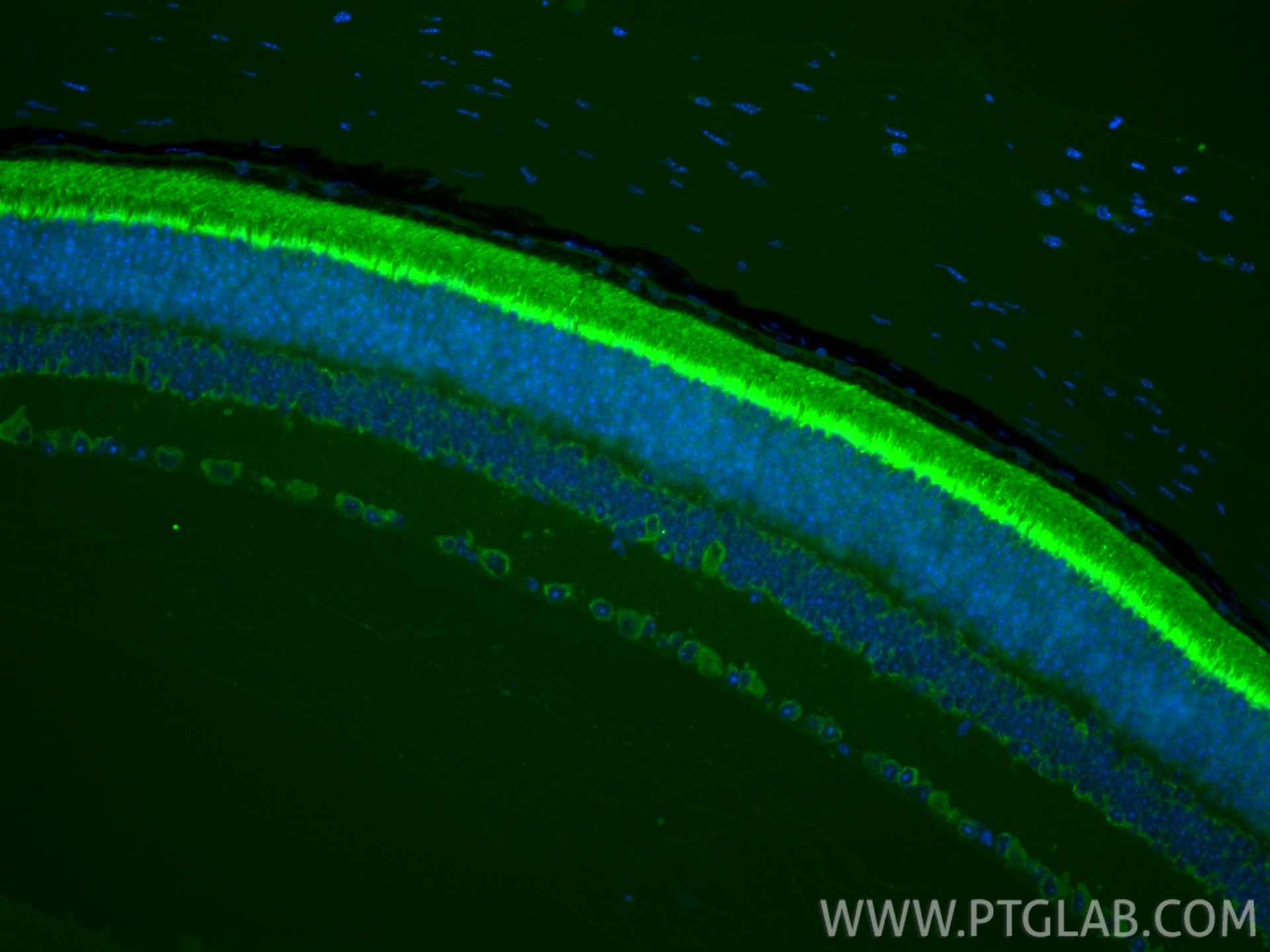

Tested Applications
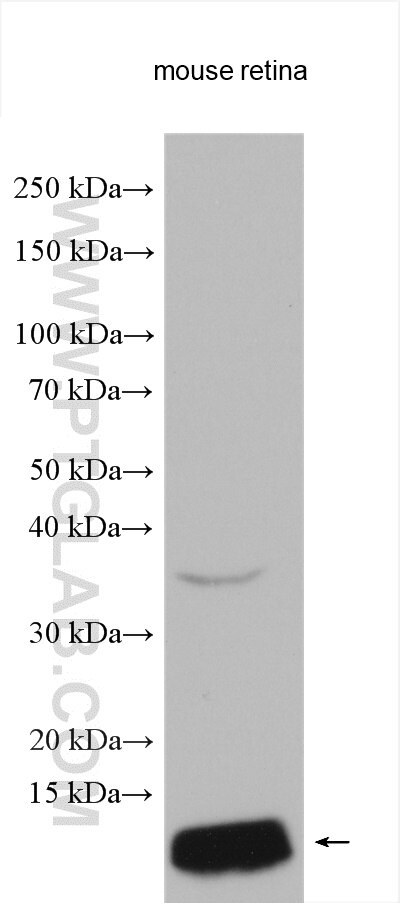
| Positive WB detected in | mouse retina tissue |
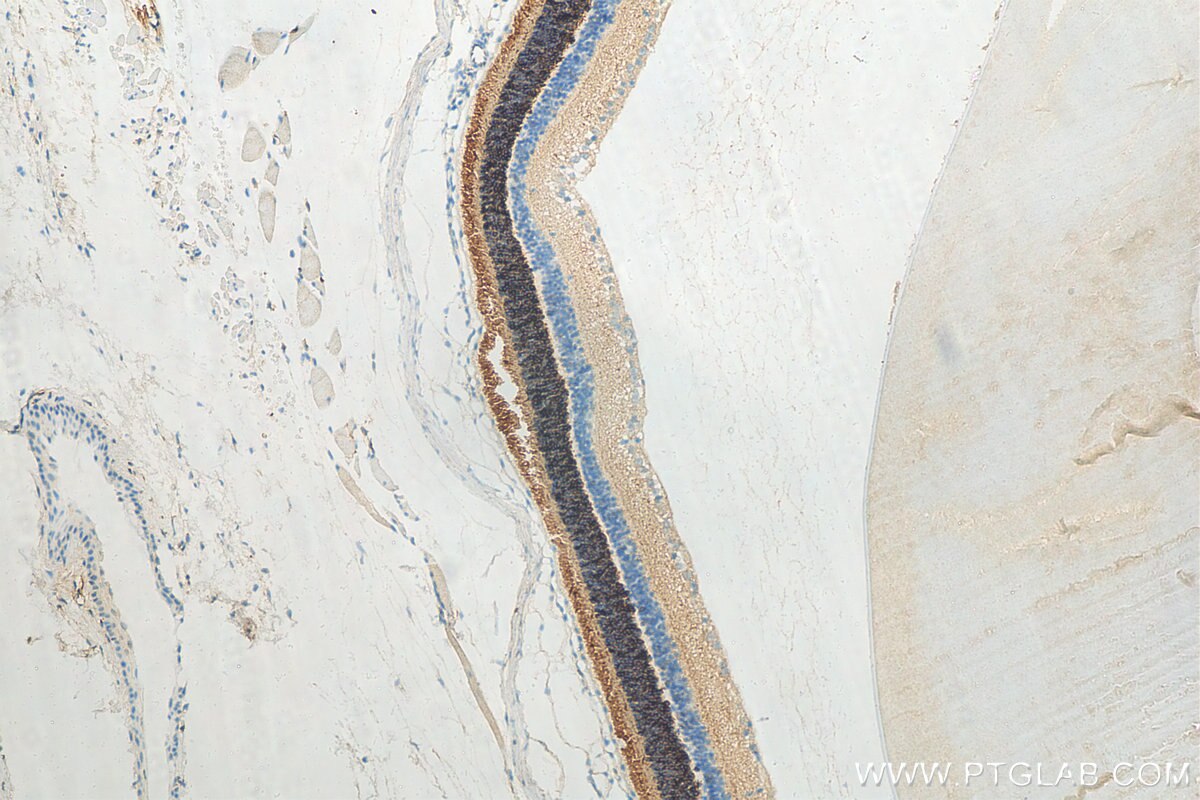
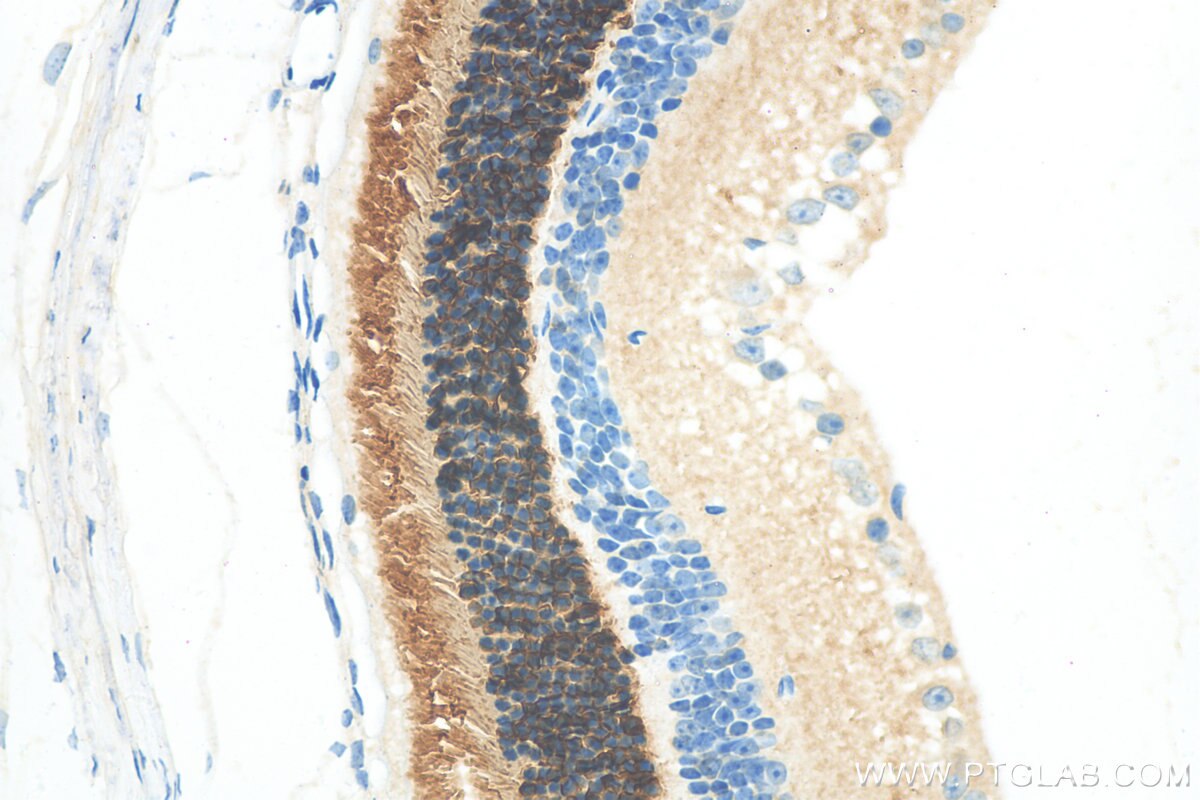
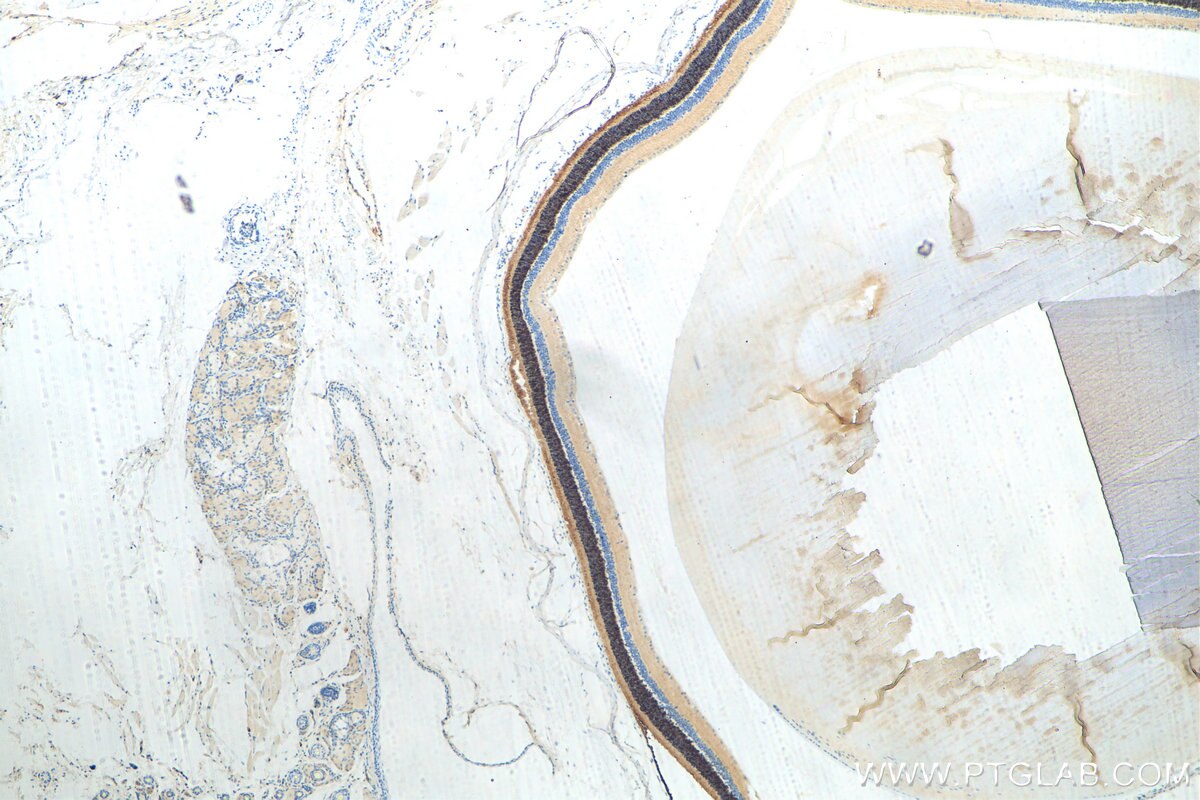
| Positive IHC detected in | mouse eye tissue Note: suggested antigen retrieval with TE buffer pH 9.0; (*) Alternatively, antigen retrieval may be performed with citrate buffer pH 6.0 |
| Positive IF-P detected in | mouse eye tissue |
Recommended dilution
| Application | Dilution |
|---|---|
| Western Blot (WB) | WB : 1:500-1:1000 |
| Immunohistochemistry (IHC) | IHC : 1:50-1:500 |
| Immunofluorescence (IF)-P | IF-P : 1:50-1:500 |
| It is recommended that this reagent should be titrated in each testing system to obtain optimal results. | |
| Sample-dependent, Check data in validation data gallery. | |
Product Information
11988-1-AP targets GNGT2 in WB, IHC, IF-P, ELISA applications and shows reactivity with human, mouse samples.
| Tested Reactivity | human, mouse |
| Cited Reactivity | human, mouse |
| Host / Isotype | Rabbit / IgG |
| Class | Polyclonal |
| Type | Antibody |
| Immunogen |
CatNo: Ag2618 Product name: Recombinant human GNGT2 protein Source: e coli.-derived, PGEX-4T Tag: GST Domain: 1-69 aa of BC008663 Sequence: MAQDLSEKDLLKMEVEQLKKEVKNTRIPISKAGKEIKEYVEAQAGNDPFLKGIPEDKNPFKEKGGCLIS Predict reactive species |
| Full Name | guanine nucleotide binding protein (G protein), gamma transducing activity polypeptide 2 |
| Calculated Molecular Weight | 69 aa, 8 kDa |
| Observed Molecular Weight | 8 kDa |
| GenBank Accession Number | BC008663 |
| Gene Symbol | GNGT2 |
| Gene ID (NCBI) | 2793 |
| RRID | AB_2877813 |
| Conjugate | Unconjugated |
| Form | Liquid |
| Purification Method | Antigen affinity purification |
| UNIPROT ID | O14610 |
| Storage Buffer | PBS with 0.02% sodium azide and 50% glycerol, pH 7.3. |
| Storage Conditions | Store at -20°C. Stable for one year after shipment. Aliquoting is unnecessary for -20oC storage. 20ul sizes contain 0.1% BSA. |
Background Information
GNGT2, also known as GNG8, GNG9 and GNGT8, belongs to the G protein gamma family. Guanine nucleotide-binding proteins (G proteins) are involved as a modulator or transducer in various transmembrane signaling systems. The beta and gamma chains are required for the GTPase activity, for replacement of GDP by GTP, and for G protein-effector interaction. This antibody has weak cross-reactivity of GNGT1 protein, as the immunogen of GNGT2 shares about 65% homology with GNGT1.
Protocols
| Product Specific Protocols | |
|---|---|
| IF protocol for GNGT2 antibody 11988-1-AP | Download protocol |
| IHC protocol for GNGT2 antibody 11988-1-AP | Download protocol |
| WB protocol for GNGT2 antibody 11988-1-AP | Download protocol |
| Standard Protocols | |
|---|---|
| Click here to view our Standard Protocols |
Publications
What published studies show
The GNGT2 Polyclonal antibody (Cat# 11988-1-AP) has 3 citations published in Cell Stem Cell, Inflammation Research, and Toxicology. The associated research fields include pineal gland organoid generation and melatonin production for disease modeling, inflammatory dendritic cell programming in neutrophilic asthma via ATG5-NF-κB signaling, and CCL5-mediated radon exposure-induced lung injury involving dendritic cell recruitment and T helper cell activation.
| Species | Application | Title |
|---|---|---|
Cell Stem Cell Generation of human pineal gland organoids with melatonin production for disease modeling | ||
Inflamm Res Gngt2 promotes inflammatory dendritic cell programming through an ATG5-NF-κB signaling axis in neutrophilic asthma.
| ||
Toxicology C-C motif chemokine ligand 5 contributes to radon exposure-induced lung injury by recruiting dendritic cells to activate effector T helper cells |






