
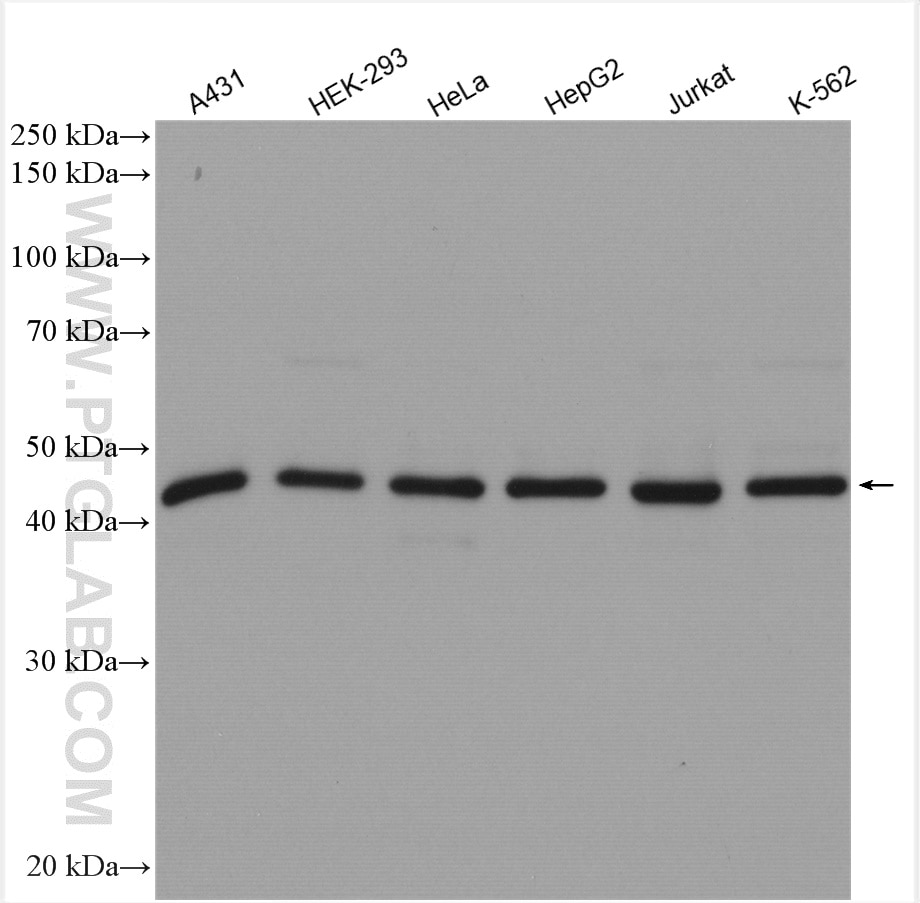
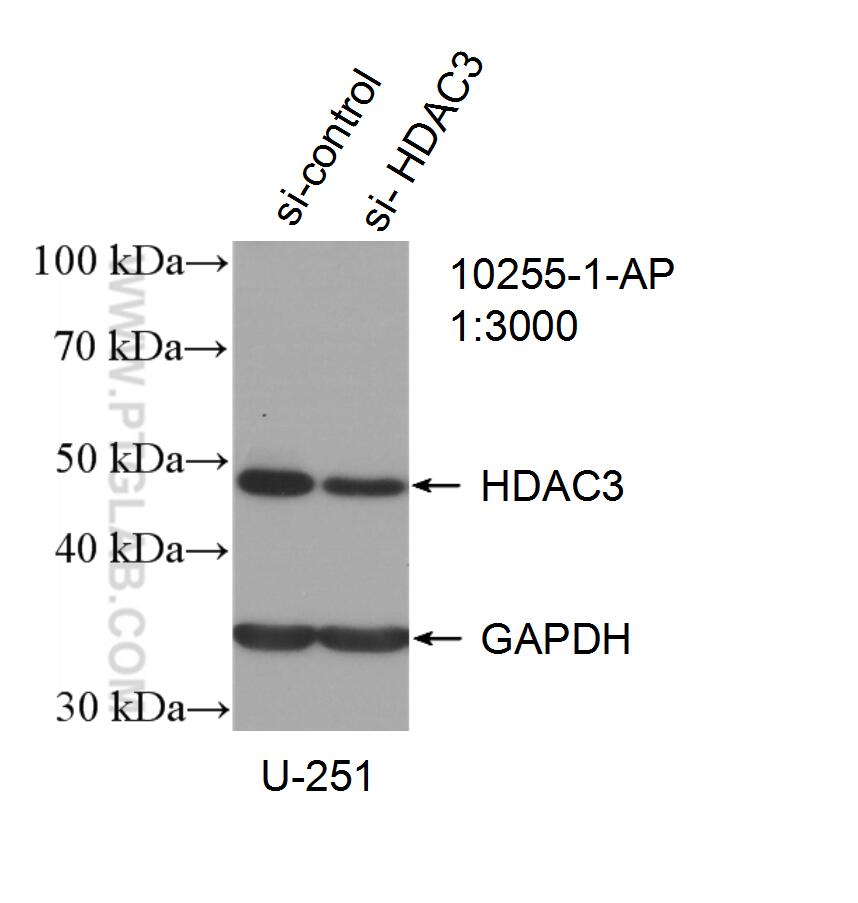
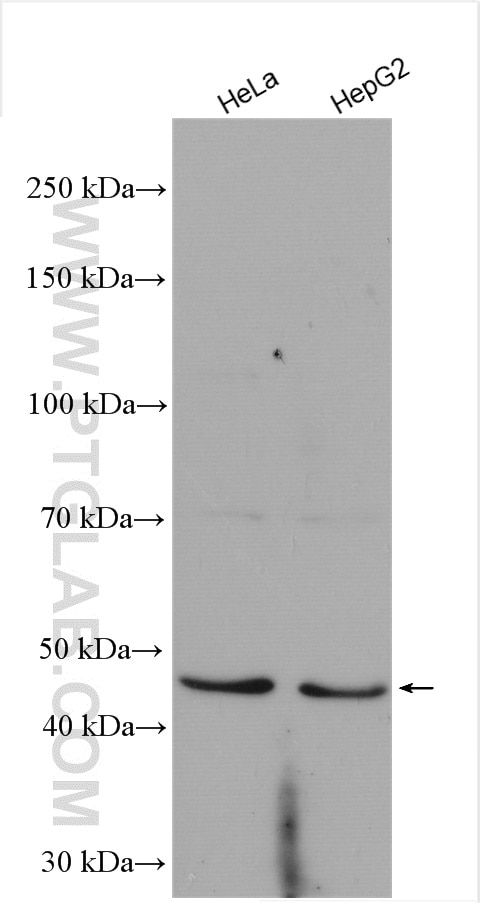
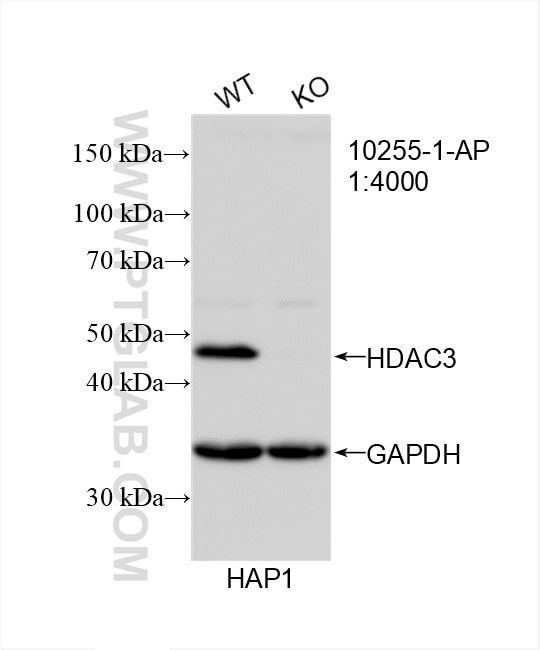
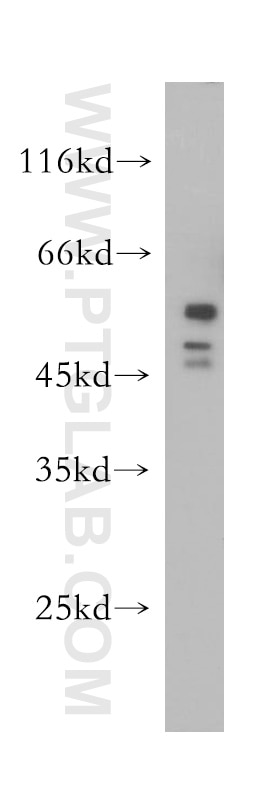
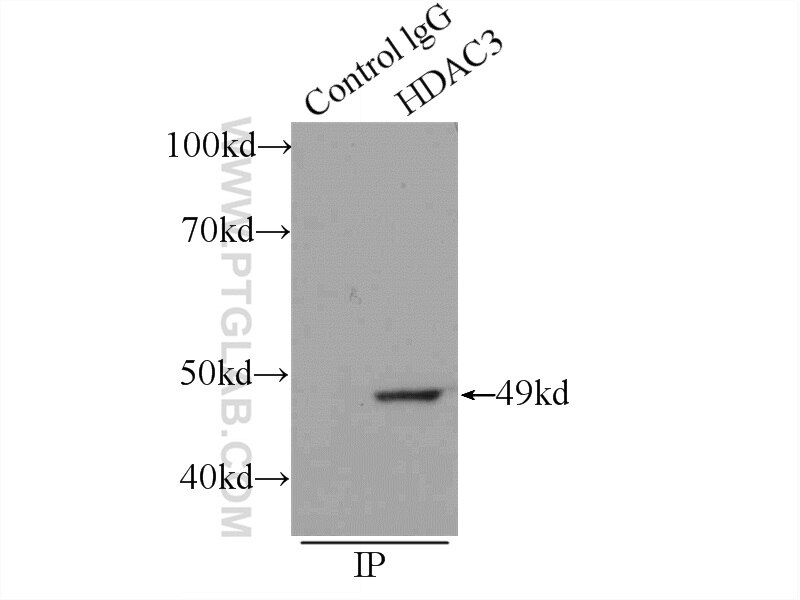
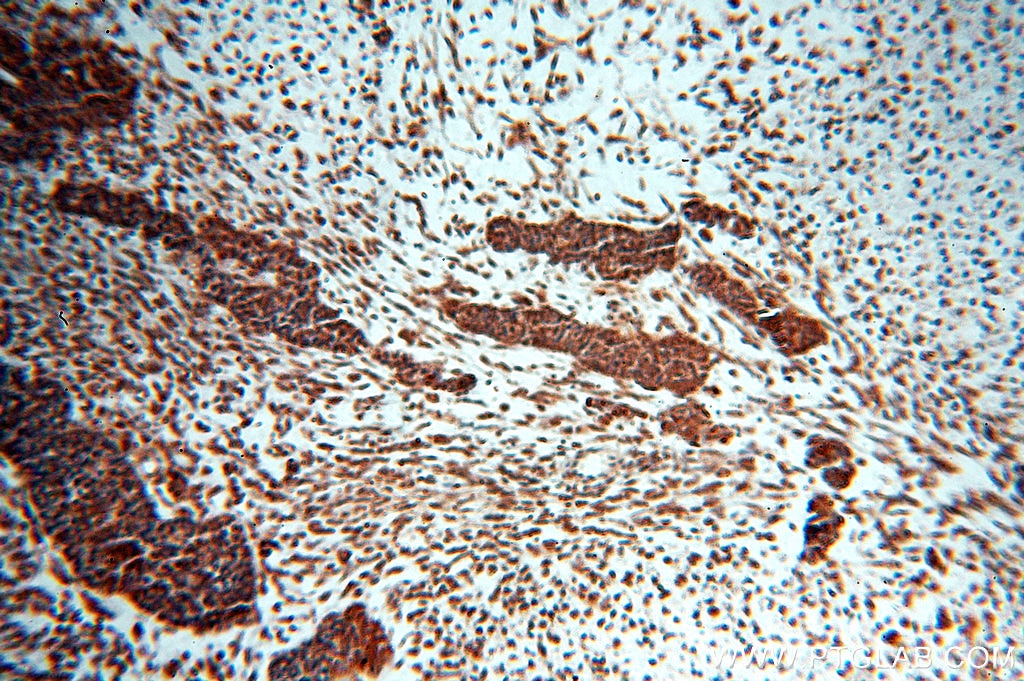
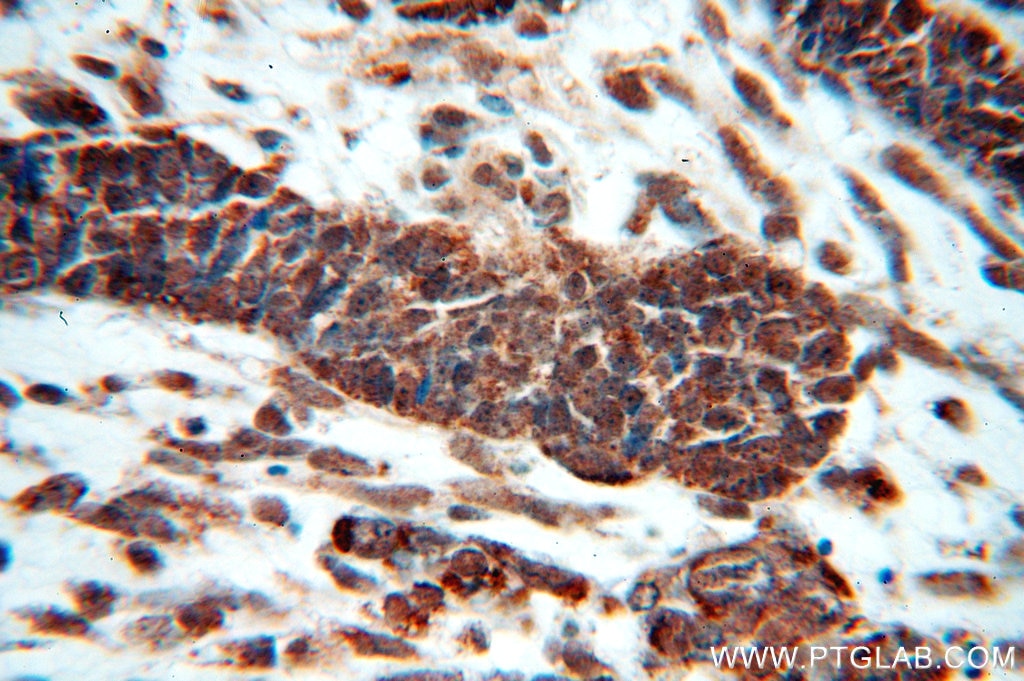

Tested Applications
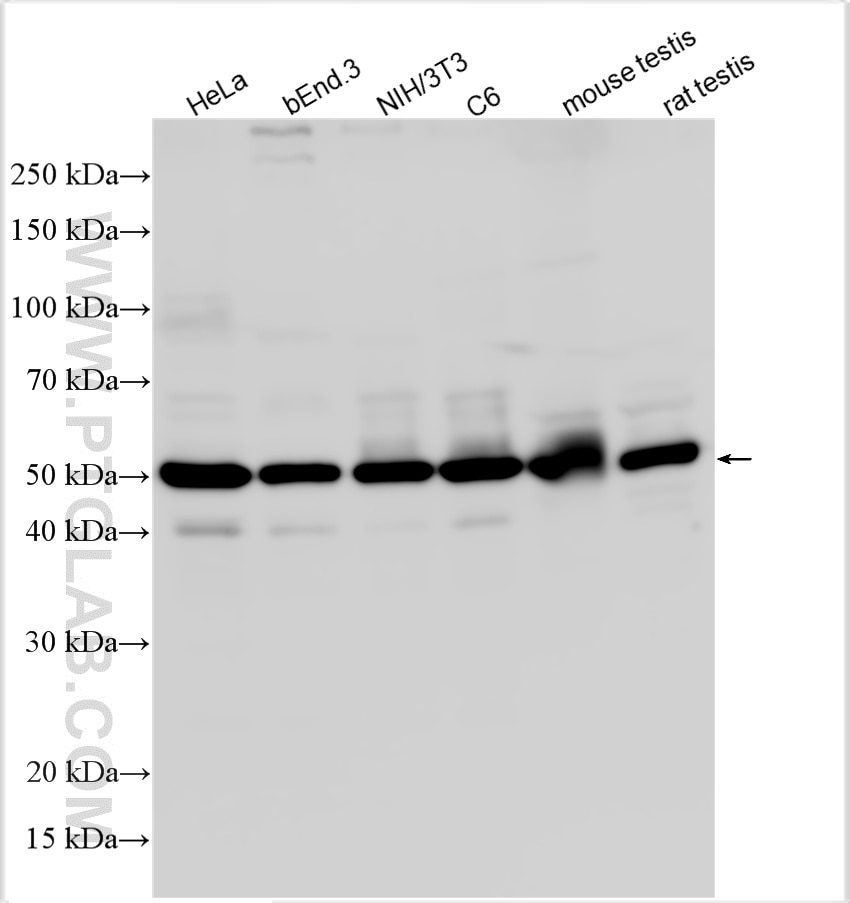
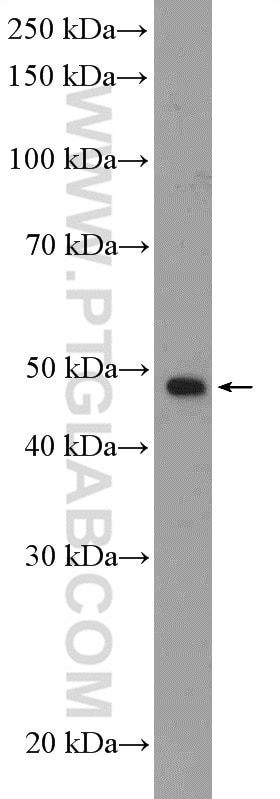
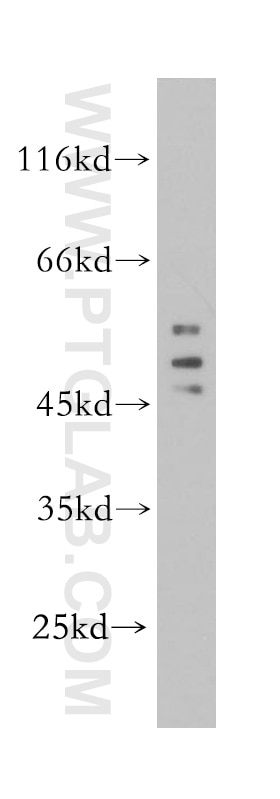
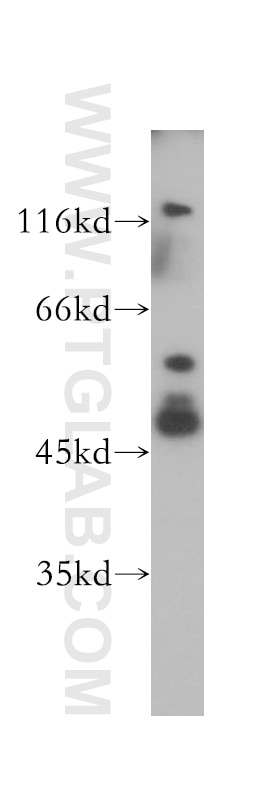
| Positive WB detected in | HeLa cells, A431 cells, HAP1 cells, HL-60 cells, U-251 cells, HEK-293 cells, HepG2 cells, Jurkat cells, K-562 cells, bEnd.3 cells, NIH/3T3 cells, C6 cells, mouse testis tissue, rat testis tissue |
| Positive IP detected in | A431 cells |
| Positive IHC detected in | human ovary tumor tissue Note: suggested antigen retrieval with TE buffer pH 9.0; (*) Alternatively, antigen retrieval may be performed with citrate buffer pH 6.0 |
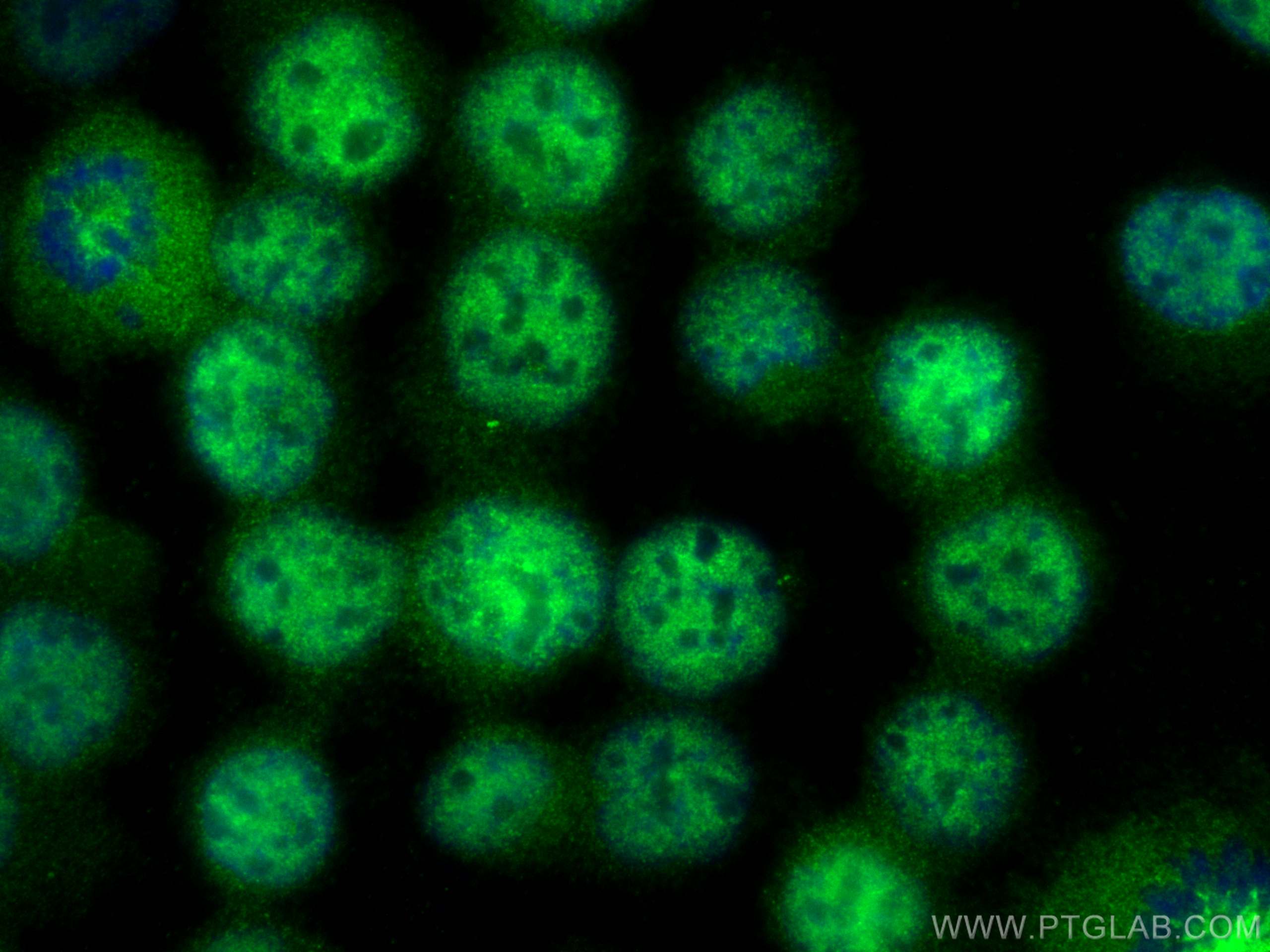
| Positive IF/ICC detected in | K-562 cells |
Recommended dilution
| Application | Dilution |
|---|---|
| Western Blot (WB) | WB : 1:1000-1:8000 |
| Immunoprecipitation (IP) | IP : 0.5-4.0 ug for 1.0-3.0 mg of total protein lysate |
| Immunohistochemistry (IHC) | IHC : 1:20-1:200 |
| Immunofluorescence (IF)/ICC | IF/ICC : 1:50-1:500 |
| It is recommended that this reagent should be titrated in each testing system to obtain optimal results. | |
| Sample-dependent, Check data in validation data gallery. | |
Product Information
10255-1-AP targets HDAC3 in WB, IHC, IF/ICC, IP, CoIP, ChIP, ELISA applications and shows reactivity with human, mouse, rat samples.
| Tested Reactivity | human, mouse, rat |
| Cited Reactivity | human, mouse, rat |
| Host / Isotype | Rabbit / IgG |
| Class | Polyclonal |
| Type | Antibody |
| Immunogen |
CatNo: Ag0396 Product name: Recombinant human HDAC3 protein Source: e coli.-derived, PGEX-4T Tag: GST Domain: 187-395 aa of BC000614 Sequence: VMTVSFHKYGNYFFPGTGDMYEVGAESGRYYCLNVPLRDGIDDQSYKHLFQPVINQVVDFYQPTCIVLQCGADSLGCDRLGCFNLSIRGHGECVEYVKSFNIPLLVLGGGGYTVRNVARCWTYETSLLVEEAISEELPYSEYFEYFAPDFTLHPDVSTRIENQNSRQYLDQIRQTIFENLKMLNHAPSVQIHDVPADLLTYDRTDEADA Predict reactive species |
| Full Name | histone deacetylase 3 |
| Calculated Molecular Weight | 49 kDa |
| Observed Molecular Weight | 49 kDa |
| GenBank Accession Number | BC000614 |
| Gene Symbol | HDAC3 |
| Gene ID (NCBI) | 8841 |
| RRID | AB_2279733 |
| Conjugate | Unconjugated |
| Form | Liquid |
| Purification Method | Antigen affinity purification |
| UNIPROT ID | O15379 |
| Storage Buffer | PBS with 0.02% sodium azide and 50% glycerol, pH 7.3. |
| Storage Conditions | Store at -20°C. Stable for one year after shipment. Aliquoting is unnecessary for -20oC storage. 20ul sizes contain 0.1% BSA. |
Background Information
What is the molecular weight of HDAC3? Is HDAC3 post-translationally modified?
The molecular weight of HDAC3 is 49 kDa but HDAC3 can form homodimers and homotrimers in cells (PMID: 11779848). HDAC3 can be phosphorylated at S424 residue by protein kinase CK2, which regulates HDAC3 activity (PMID: 15805470).
What is the subcellular localization of HDAC3?
Unlike other class I HDACs, HDAC3 actively shuttles between the nucleus and cytoplasm (PMID: 11779848). Additionally, HDAC3 can be present at the plasma membrane, where it associates with c-Src (PMID: 16532030).
What is the tissue expression pattern of HDAC3?
Like other class I HDACs, HDAC3 is ubiquitously expressed (PMID: 9346952).
What is the mechanism of HDAC3 in regulating gene expression?
Unlike other histone deacetylates, it exists in a complex with two proteins - nuclear receptor co-repressor (N-CoR) and silencing mediator for retinoid and thyroid receptors (SMRT) - and therefore acts as a mediator of the repression function of unliganded nuclear hormone receptors (PMID: 10809664). N-CoR and SMRT play an active role in the recruitment of HDAC3 to binding sites as well as directly regulating HDAC3 activity. Additionally, HDAC3 targets growth-regulated genes.
Protocols
| Product Specific Protocols | |
|---|---|
| IF protocol for HDAC3 antibody 10255-1-AP | Download protocol |
| IHC protocol for HDAC3 antibody 10255-1-AP | Download protocol |
| IP protocol for HDAC3 antibody 10255-1-AP | Download protocol |
| WB protocol for HDAC3 antibody 10255-1-AP | Download protocol |
| Standard Protocols | |
|---|---|
| Click here to view our Standard Protocols |
Publications
What published studies show
HDAC3 Polyclonal Antibody (Cat# 10255-1-AP) has 90 citations published in journals including Nature Communications, Molecular Cell, Circulation, EMBO Journal, Journal of Clinical Investigation, Theranostics, Cell Reports, and Oncogene. Research fields span oncology (breast, liver, prostate, colorectal, melanoma), neuroscience (Parkinson's disease, multiple sclerosis, neuropathic pain), immunology and inflammation (rheumatoid arthritis, sepsis, IBD), cardiovascular disease, metabolic disorders, reproductive biology, and epigenetic/post-translational modification studies.
| Species | Application | Title |
|---|---|---|
Signal Transduct Target Ther The noncanonical function of liver-type phosphofructokinase potentiates the efficacy of HDAC inhibitors in cancer. | ||
Mol Cancer CRABP1 is associated with a poor prognosis in breast cancer: adding to the complexity of breast cancer cell response to retinoic acid. | ||
Circulation Nuclear Receptor NR1D1 Regulates Abdominal Aortic Aneurysm Development by Targeting the Mitochondrial Tricarboxylic Acid Cycle Enzyme Aconitase-2 | ||
Cancer Commun (Lond) KDELR2 promotes breast cancer proliferation via HDAC3-mediated cell cycle progression. | ||
Kidney Int Histone deacetylase 4 selectively contributes to podocyte injury in diabetic nephropathy. | ||
Bone Res Matrix stiffening promotes chondrocyte senescence and the osteoarthritis development through downregulating HDAC3
|














