
Human CXCL8/IL-8 ELISA Kit
Cat no : KE00006
Synonyms
CXCL8, IL8, IL-8, C X C motif chemokine 8, Chemokine
Validation Data Gallery
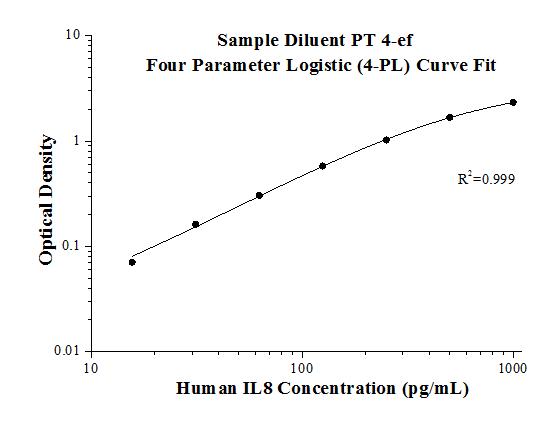
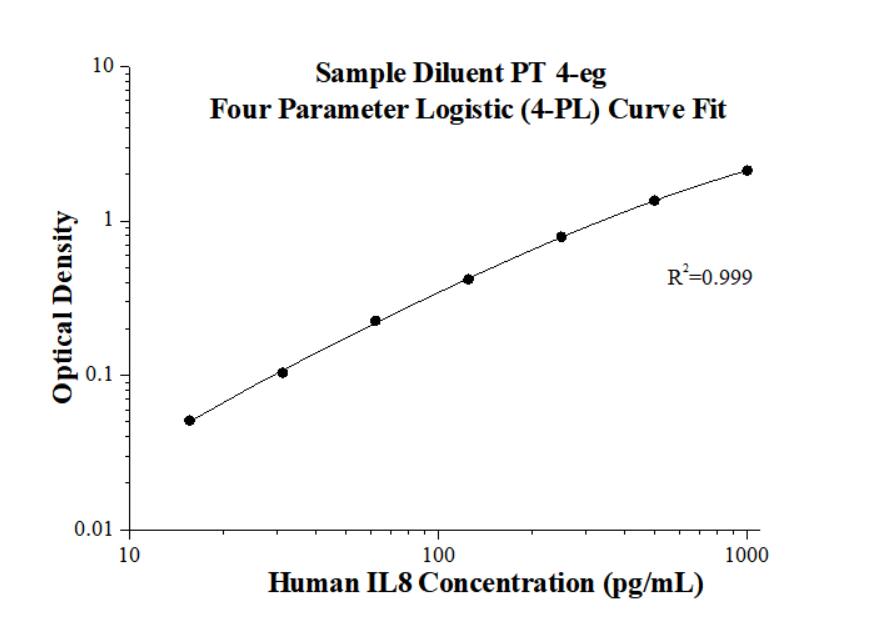
Product Information
KE00006 is a solid phase sandwich Enzyme Linked-Immuno-Sorbent Assay (Sandwich ELISA). The human CXCL8/IL-8 ELISA kit is to be used to detect and quantify protein levels of endogenous CXCL8/IL-8. The assay recognizes human CXCL8/IL-8. An antibody specific for CXCL8/IL-8 has been pre-coated onto the microwells. The CXCL8/IL-8 protein in samples is captured by the coated antibody after incubation. Following extensive washing, another antibody specific for CXCL8/IL-8 is added to detect the captured CXCL8/IL-8 protein. For signal development, horseradish peroxidase (HRP)-conjugated antibody is added, followed by Tetramethyl-benzidine (TMB) reagent. Solution containing sulfuric acid is used to stop color development and the color intensity which is proportional to the quantity of bound protein is measurable at 450 nm with the correction wavelength set at 630 nm.
| Product name | Human CXCL8/IL-8 ELISA Kit |
| Tests | 1 X 96 well plate |
| Sample type | Serum, Plasma, Cell culture supernatants |
| Assay type | Sandwich |
| Sensitivity | 1.0 pg/mL |
| Range | 15.6-1000 pg/mL |
| Reactivity | Human |
| Tested applications | Sandwich ELISA |
| Gene ID (NCBI) | 3576 |
Recovery
| Sample Type | Average | Range |
|---|---|---|
| Human plamsa | 100% | 80%-127% |
| Cell culture supernatants | 101% | 87%-114% |
IntraAssay
| Sample | n | mean ( pg/mL) | SD | CV% |
|---|---|---|---|---|
| 1 | 20 | 127.3 | 5.3 | 4.1 |
| 2 | 20 | 411.6 | 23.7 | 5.8 |
| 3 | 20 | 804.4 | 44.7 | 5.6 |
InterAssay
| Sample | n | mean ( pg/mL) | SD | CV% |
|---|---|---|---|---|
| 1 | 24 | 123.7 | 4.8 | 3.9 |
| 2 | 24 | 420.9 | 17.1 | 4.1 |
| 3 | 24 | 788.9 | 35.8 | 4.5 |
Background Information
Interleukin 8 (IL-8), also known as CXCL8, which is a member of the CXC chemokine family. This chemokine is secreted by a variety of cell types including monocyte/macrophages, T cells, neutrophils, fibroblasts, endothelial cells, and various tumor cell lines in response to inflammatory stimuli. IL-8 has two primary functions. It induces chemotaxis in target cells, primarily neutrophils but also other granulocytes, causing them to migrate toward the site of infection. IL-8 also induces phagocytosis once they have arrived. This gene is believed to play a role in the pathogenesis of bronchiolitis, a common respiratory tract disease caused by viral infection. IL-8 is also known to be a potent promoter of angiogenesis. IL-8 has been associated with tumor angiogenesis, metastasis, and poor prognosis in breast cancer. IL-8 may present a novel therapeutic target for estrogen driven breast carcinogenesis and tumor progression.
Properties
| Storage Instructions | All the reagents are stored at 2-8℃ for 6 months or -20℃ for 12 months. Refer to the protocol for further storage instructions. |
| Synonyms | CXCL8, IL8, IL-8, C X C motif chemokine 8, Chemokine |
FAQ
1、I have limited sample diluent. How should I handle samples requiring high dilution factors?
Answer: We recommend performing a serial dilution. For example, if human serum requires a 1,000,000-fold dilution, you can use a three-step 100× dilution method as follows:
Step 1: Take 2 uL of human serum and add it to 198 uL of sample diluent, mix thoroughly to obtain a 100-fold diluted sample.
Step 2: Take 2 uL of the 100-fold diluted sample and add it to 198 uL of sample diluent, mix thoroughly to obtain a 10,000-fold diluted sample.
Step 3: Take 2 uL of the 10,000-fold diluted sample and add it to 198 uL of sample diluent, mix thoroughly to obtain a 1,000,000-fold diluted sample.
If further dilution is required, additional serial steps can be used. We do not recommend using any other solutions or water for dilution, except for the sample diluent we suggest. If your sample diluent is still insufficient, please contact our customer service for more sample diluent.
Publications
| Species | Sample Type | Title |
|---|---|---|
Gut Microbes Fusobacterium nucleatum promotes esophageal squamous cell carcinoma progression and chemoresistance by enhancing the secretion of chemotherapy-induced senescence-associated secretory phenotype via activation of DNA damage response pathway | ||
Nat Commun Antagonistic activities of CDC14B and CDK1 on USP9X regulate WT1-dependent mitotic transcription and survival. | ||
Oncogene IL-8-induced O-GlcNAc modification via GLUT3 and GFAT regulates cancer stem cell-like properties in colon and lung cancer cells. | ||
Int J Mol Sci Abiotrophia defectiva DnaK Promotes Fibronectin-Mediated Adherence to HUVECs and Induces a Proinflammatory Response. | ||
Oncogenesis Erlotinib overcomes paclitaxel-resistant cancer stem cells by blocking the EGFR-CREB/GRβ-IL-6 axis in MUC1-positive cervical cancer. |