
Human SERPINA1 ELISA Kit
Sensitivity
0.20 ng/mL
Range
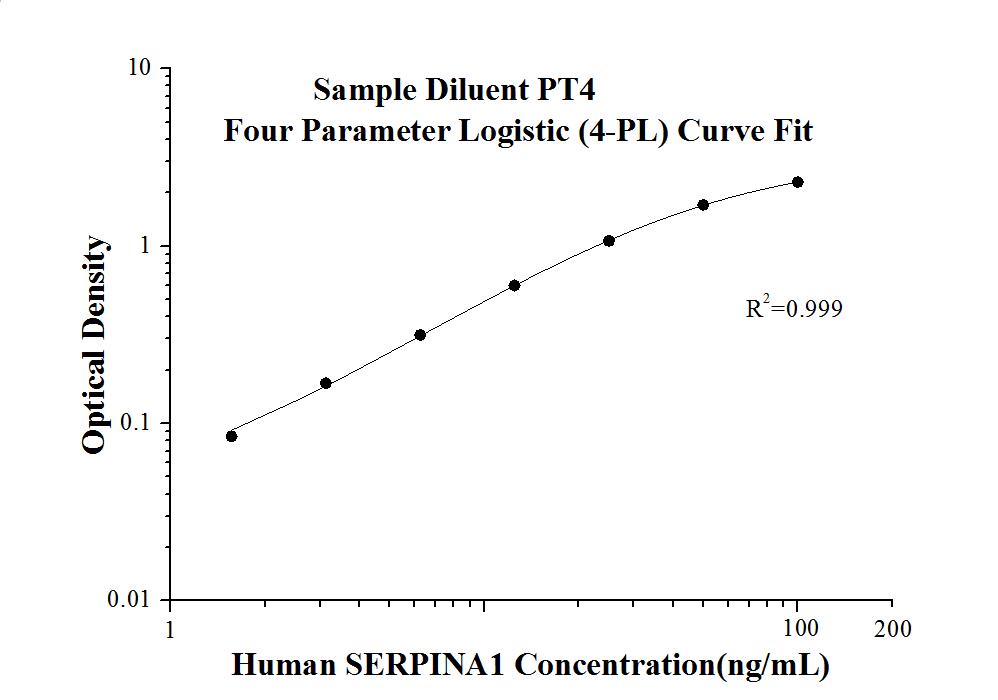
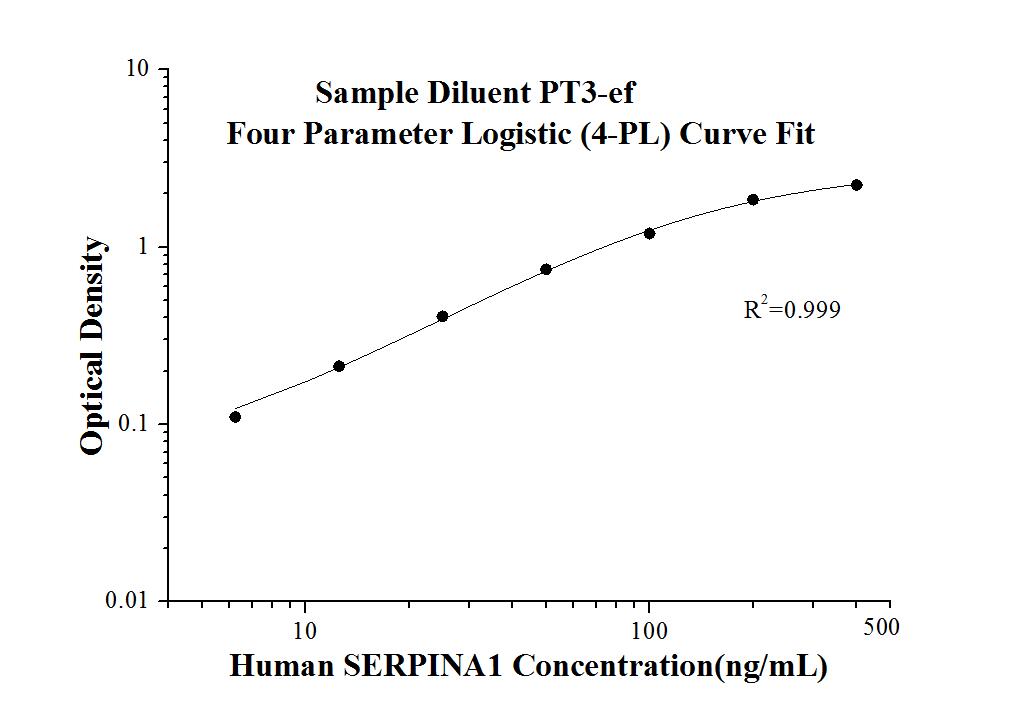
1.56 - 100 ng/mL , 6.25 - 400 ng/mL
Reactivity
Human
Cat no : KE00178
Synonyms
a1-antitrypsin, Alpha-1-antitrypsin, Serpin A1, A1A, A-1-Antitrypsin
Validation Data Gallery
Product Information
KE00178 is a solid phase sandwich Enzyme Linked-Immuno-Sorbent Assay (Sandwich ELISA). The SERPINA1 ELISA kit is to be used to detect and quantify protein levels of endogenous SERPINA1. The assay recognizes human SERPINA1. An antibody specific for SERPINA1 has been pre-coated onto the microwells. The SERPINA1 protein in samples is captured by the coated antibody after incubation. Following extensive washing, another antibody specific for SERPINA1 is added to detect the captured SERPINA1 protein. For signal development, horseradish peroxidase (HRP)-conjugated antibody is added, followed by Tetramethyl-benzidine (TMB) reagent. Solution containing sulfuric acid is used to stop color development and the color intensity which is proportional to the quantity of bound protein is measurable at 450 nm with the correction wavelength set at 630 nm.
| Product name | Human SERPINA1 ELISA Kit |
| Tests | 1 X 96 well plate |
| Sample type | Serum, Plasma, Urine, Cell culture supernatants |
| Assay type | Sandwich |
| Sensitivity | 0.20 ng/mL |
| Range | 1.56 - 100 ng/mL , 6.25 - 400 ng/mL |
| Reactivity | Human |
| Tested applications | Sandwich ELISA |
| Gene ID (NCBI) | 5265 |
Recovery
| Sample Type | Average | Range |
|---|---|---|
| Human serum | 99% | 81%-118% |
| Human urine | 88% | 77%-104% |
| cell culture supernatants | 101% | 90%-116% |
IntraAssay
| Sample | n | mean ( ng/mL) | SD | CV% |
|---|---|---|---|---|
| 1 | 20 | 9.7 | 1.0 | 10 |
| 2 | 20 | 48.9 | 3.9 | 8.1 |
| 3 | 20 | 210.1 | 18.6 | 8.8 |
InterAssay
| Sample | n | mean ( ng/mL) | SD | CV% |
|---|---|---|---|---|
| 1 | 24 | 10.4 | 1.1 | 10.1 |
| 2 | 24 | 41.6 | 4.1 | 9.8 |
| 3 | 24 | 196.8 | 13.2 | 6.7 |
Background Information
SERPINA1 is the archetypal member of the Serpin superfamily of the serine protease inhibitors. It is an acute phase glycoprotein mainly (by 80%) synthesized in human liver and is a major blood protein after albumin and the Immunoglobulins. SERPINA1 plays a key antiinflammatory role to protect tissues against proteolytic digestion by elastase secreted by neutrophils. In patients with carcinomas, it was reported that SERPINA1 promotes invasive and metastatic capacity in lung cancer, gastric cancer, and colorectal carcinomas.Several studies demonstrated that higher levels of SERPINA1 correlate with more advanced cancer stages. Defects in this gene can cause emphysema or liver disease.
Properties
| Storage Instructions | All the reagents are stored at 2-8℃ for 6 months or -20℃ for 12 months. Refer to the protocol for further storage instructions. |
| Synonyms | a1-antitrypsin, Alpha-1-antitrypsin, Serpin A1, A1A, A-1-Antitrypsin |
FAQ
1、I have limited sample diluent. How should I handle samples requiring high dilution factors?
Answer: We recommend performing a serial dilution. For example, if human serum requires a 1,000,000-fold dilution, you can use a three-step 100× dilution method as follows:
Step 1: Take 2 uL of human serum and add it to 198 uL of sample diluent, mix thoroughly to obtain a 100-fold diluted sample.
Step 2: Take 2 uL of the 100-fold diluted sample and add it to 198 uL of sample diluent, mix thoroughly to obtain a 10,000-fold diluted sample.
Step 3: Take 2 uL of the 10,000-fold diluted sample and add it to 198 uL of sample diluent, mix thoroughly to obtain a 1,000,000-fold diluted sample.
If further dilution is required, additional serial steps can be used. We do not recommend using any other solutions or water for dilution, except for the sample diluent we suggest. If your sample diluent is still insufficient, please contact our customer service for more sample diluent.
Publications
| Species | Sample Type | Title |
|---|---|---|
Cells Seasonal Influences on Human Placental Transcriptomes Associated with Spontaneous Preterm Birth | ||
Inflammation Alpha-1 Antitrypsin Mediates Spontaneous Resolution of Acute Gouty Inflammation Via Inhibiting Caspase 3/GSDME-dependent Macrophage Pyroptosis. |