
Speedy™ Human/Cynomolgus Monkey TNF-alpha One-Step ELISA Kit
Cat no : SE50002
Synonyms
Adiponectin, ADIPOQ, TNF, TNF alpha, TNF-a
Validation Data Gallery
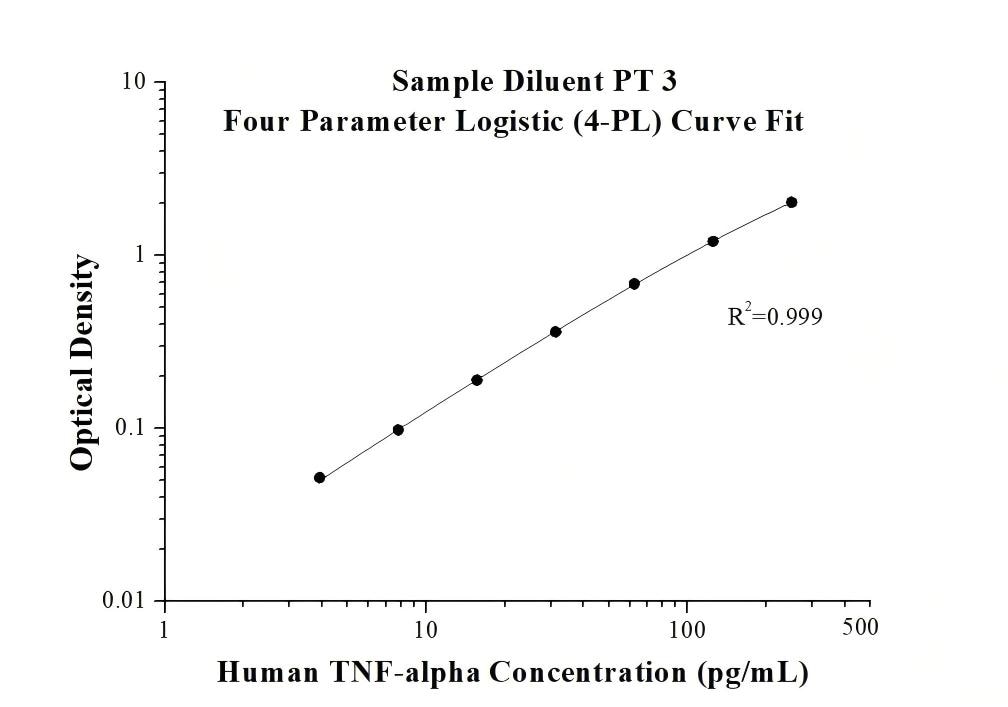
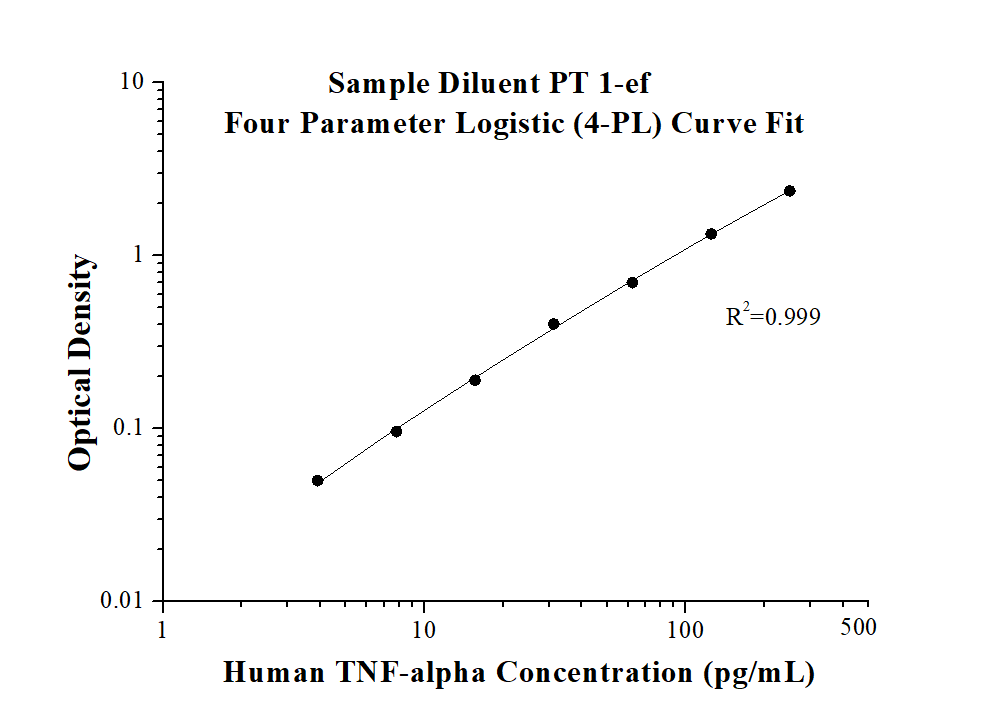
Product Information
| Product name | Speedy™ Human/Cynomolgus Monkey TNF-alpha One-Step ELISA Kit |
| Tests | 1 X 96 well plate |
| Sample type | Human serum, Human plasma, Cell culture supernatant |
| Assay type | Sandwich |
| Sensitivity | 1.1 pg/mL |
| Range | 3.9-250 pg/mL |
| Reactivity | Human/Cynomolgus Monkey |
| Tested applications | Sandwich ELISA |
| Gene ID (NCBI) | 7124 |
Recovery
| Sample Type | Average | Range |
|---|---|---|
| Human serum | 92% | 76%-99% |
| Cell culture supernatant | 107% | 100%-112% |
IntraAssay
| Sample | n | mean ( pg/mL) | SD | CV% |
|---|---|---|---|---|
| 1 | 8 | 128.6 | 7.6 | 5.9 |
| 2 | 8 | 30.3 | 0.8 | 2.8 |
| 3 | 8 | 15.1 | 0.4 | 2.5 |
InterAssay
| Sample | n | mean ( pg/mL) | SD | CV% |
|---|---|---|---|---|
| 1 | 16 | 127.7 | 6.2 | 4.9 |
| 2 | 16 | 30.5 | 1.0 | 3.3 |
| 3 | 16 | 15.2 | 0.5 | 3.4 |
Background Information
TNF, as also known as TNF-alpha, or cachectin, is a multifunctional proinflammatory cytokine that belongs to the tumor necrosis factor (TNF) superfamily. It is expressed as a 26 kDa membrane bound protein and is then cleaved by TNF-alpha converting enzyme (TACE) to release the soluble 17 kDa monomer, which forms homotrimers in circulation. It is produced chiefly by activated macrophages, although it can be produced by many other cell types such as CD4+ lymphocytes, NK cells, neutrophils, mast cells, eosinophils, and neurons. It can bind to, and thus functions through its receptors TNFRSF1A/TNFR1 and TNFRSF1B/TNFBR. This cytokine is involved in the regulation of a wide spectrum of biological processes including cell proliferation, differentiation, apoptosis, lipid metabolism, and coagulation. Dysregulation of TNF production has been implicated in a variety of human diseases including Alzheimer's disease, cancer, major depression and inflammatory bowel disease (IBD).
Properties
| Storage Instructions | All the reagents are stored at 2-8℃ for 6 months or -20℃ for 12 months. Refer to the protocol for further storage instructions. |
| Synonyms | Adiponectin, ADIPOQ, TNF, TNF alpha, TNF-a |
FAQ
1、If thermostatic shaker is not available, will it affect the duration of my experiment and the experimental data?
Answer: If thermostatic shaker is not available, it may take 2.5 hours to complete this experiment. After adding the antibody cocktail, we suggest you incubate the plate at 37℃ for 2 hours. After adding TMB, you only need to incubate the plate at 37℃ for 15 minutes. Through comparative experiments, our R&D personnel have confirmed that you can still obtain valid experimental data, although the signal will be slightly reduced.