
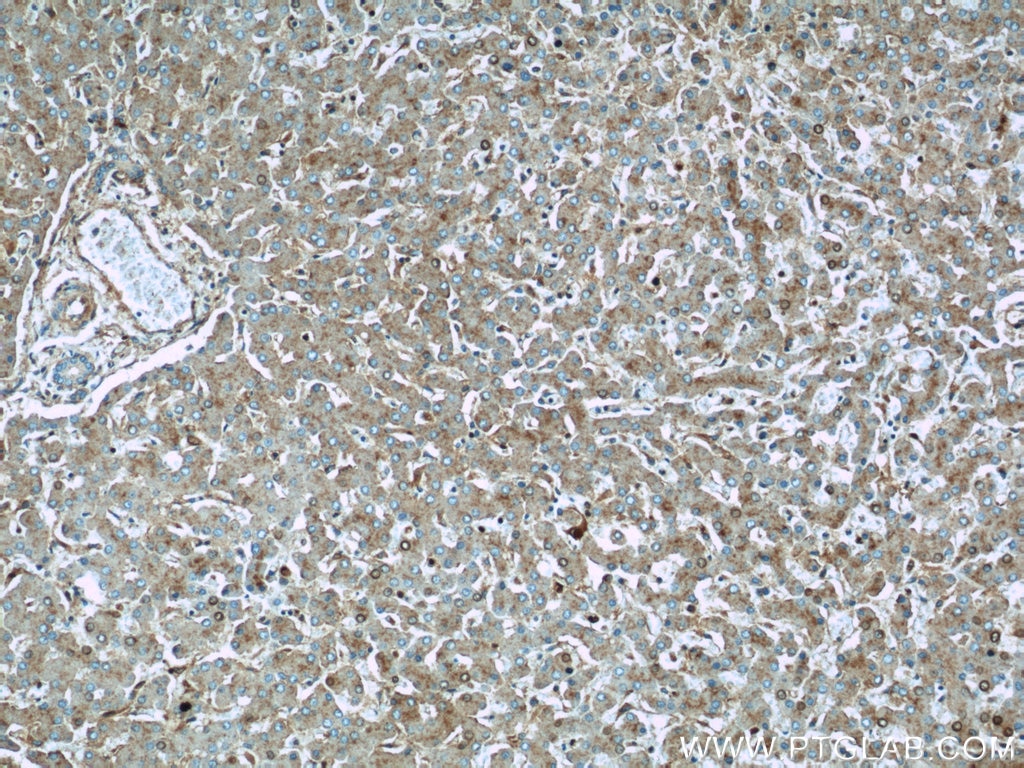
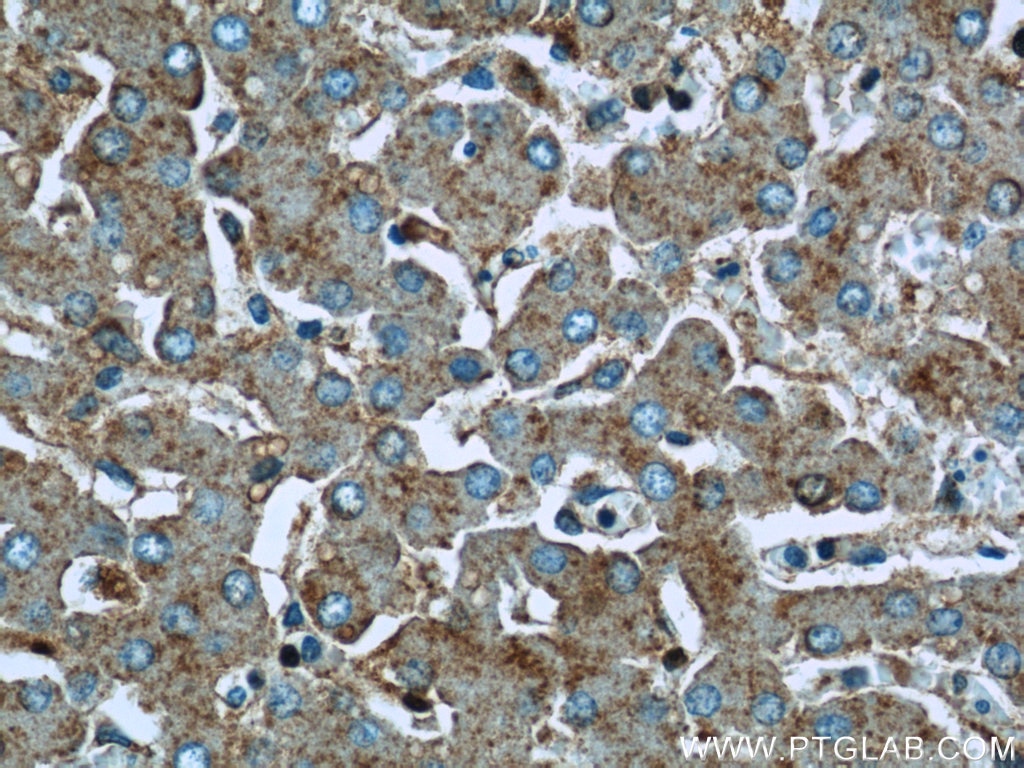

Tested Applications
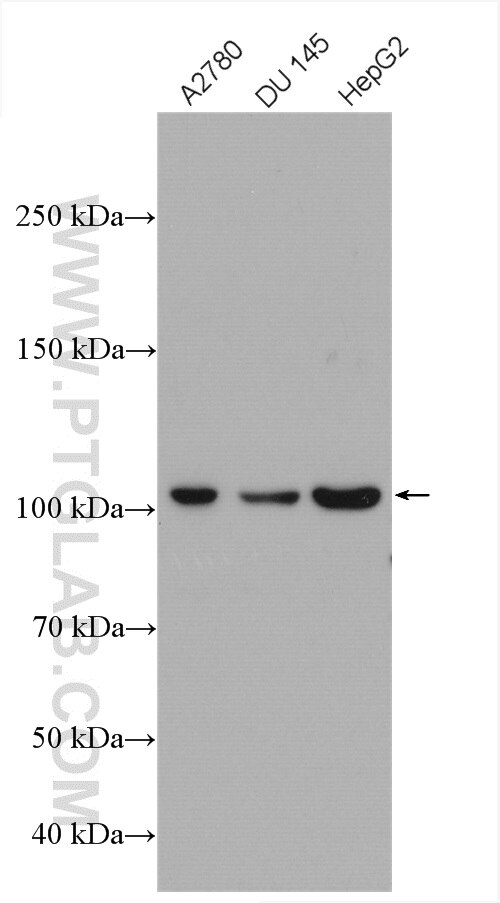
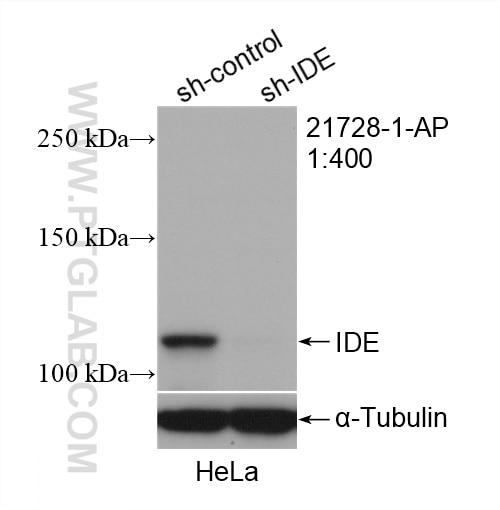
| Positive WB detected in | A2780 cells, HepG2 cells, HeLa cells, DU 145 cells |
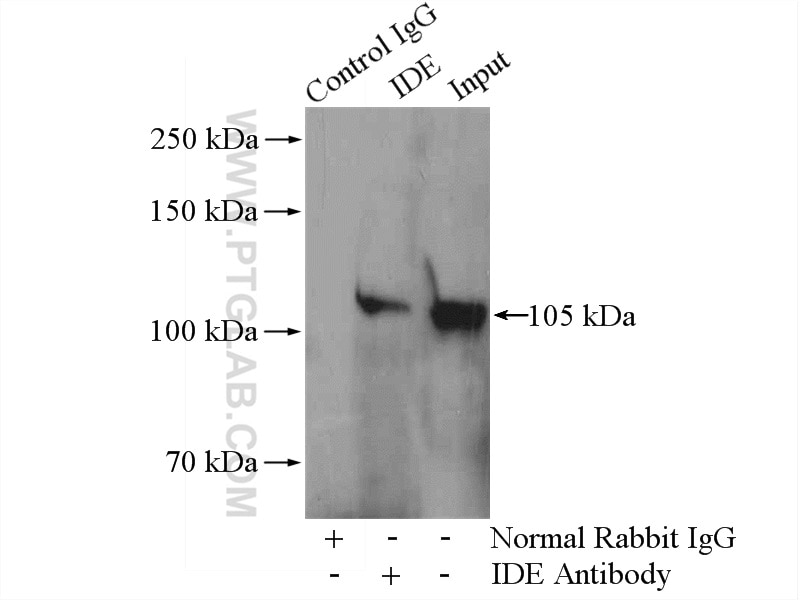
| Positive IP detected in | HepG2 cells |
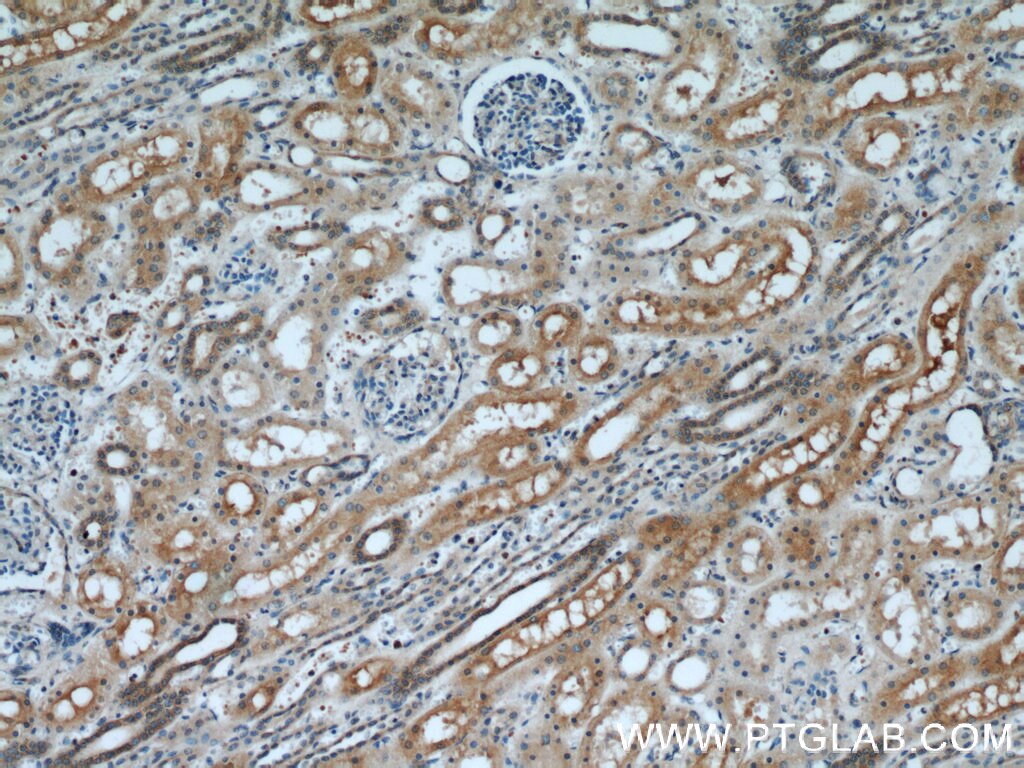
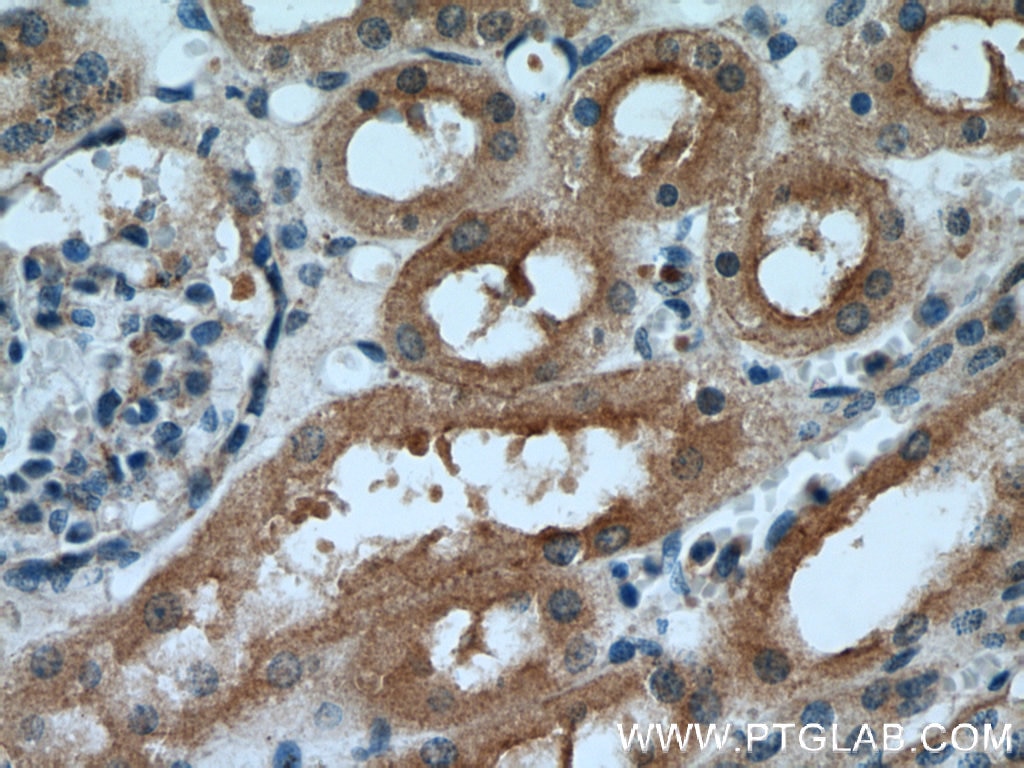
| Positive IHC detected in | human kidney tissue, human liver tissue Note: suggested antigen retrieval with TE buffer pH 9.0; (*) Alternatively, antigen retrieval may be performed with citrate buffer pH 6.0 |
Recommended dilution
| Application | Dilution |
|---|---|
| Western Blot (WB) | WB : 1:500-1:1000 |
| Immunoprecipitation (IP) | IP : 0.5-4.0 ug for 1.0-3.0 mg of total protein lysate |
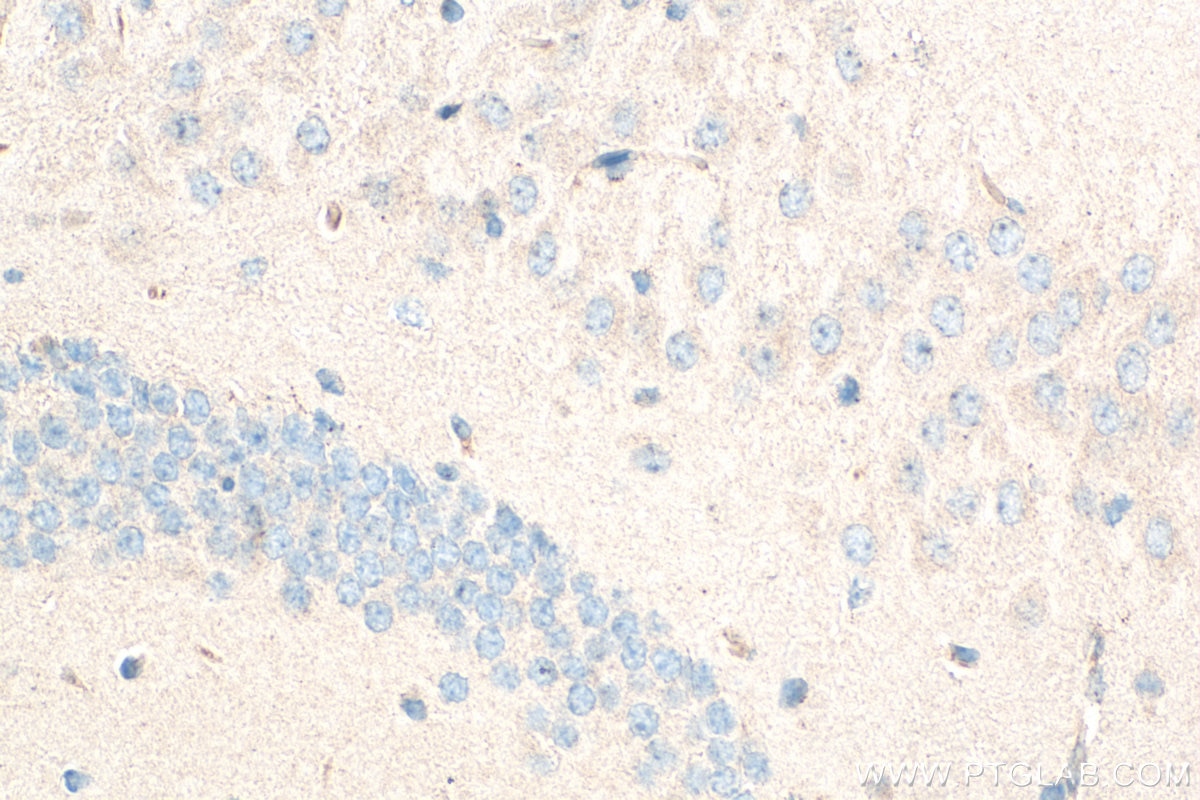
| Immunohistochemistry (IHC) | IHC : 1:20-1:200 |
| It is recommended that this reagent should be titrated in each testing system to obtain optimal results. | |
| Sample-dependent, Check data in validation data gallery. | |
Product Information
21728-1-AP targets IDE in WB, IHC, IP, ELISA applications and shows reactivity with human samples.
| Tested Reactivity | human |
| Cited Reactivity | human |
| Host / Isotype | Rabbit / IgG |
| Class | Polyclonal |
| Type | Antibody |
| Immunogen |
CatNo: Ag16392 Product name: Recombinant human IDE protein Source: e coli.-derived, PGEX-4T Tag: GST Domain: 676-1019 aa of BC096336 Sequence: EQPHQHAMYYLRLLMTEVAWTKDELKEALDDVTLPRLKAFIPQLLSRLHIEALLHGNITKQAALGIMQMVEDTLIEHAHTKPLLPSQLVRYREVQLPDRGWFVYQQRNEVHNNCGIEIYYQTDMQSTSENMFLELFCQIISEPCFNTLRTKEQLGYIVFSGPRRANGIQGLRFIIQSEKPPHYLESRVEAFLITMEKSIEDMTEEAFQKHIQALAIRRLDKPKKLSAECAKYWGEIISQQYNFDRDNTEVAYLKTLTKEDIIKFYKEMLAVDAPRRHKVSVHVLAREMDSCPVVGEFPCQNDINLSQAPALPQPEVIQNMTEFKRGLPLFPLVKPHINFMAAKL Predict reactive species |
| Full Name | Abeta degrading protease |
| Calculated Molecular Weight | 1019 aa, 118 kDa |
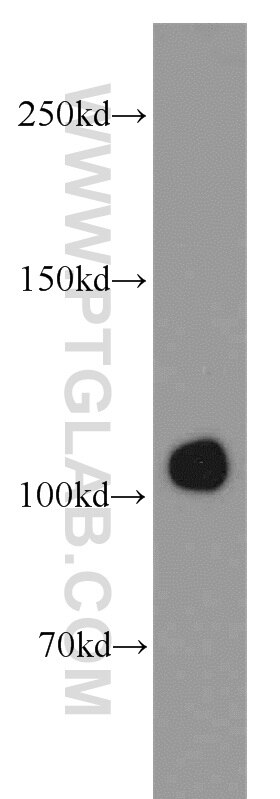
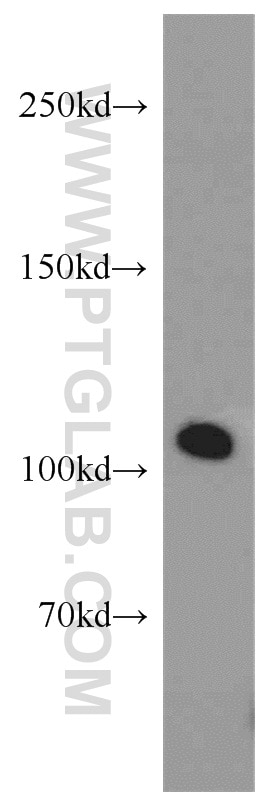
| Observed Molecular Weight | 100-120 kDa |
| GenBank Accession Number | BC096336 |
| Gene Symbol | IDE |
| Gene ID (NCBI) | 3416 |
| RRID | AB_10804773 |
| Conjugate | Unconjugated |
| Form | Liquid |
| Purification Method | Antigen affinity purification |
| UNIPROT ID | P14735 |
| Storage Buffer | PBS with 0.02% sodium azide and 50% glycerol, pH 7.3. |
| Storage Conditions | Store at -20°C. Stable for one year after shipment. Aliquoting is unnecessary for -20oC storage. 20ul sizes contain 0.1% BSA. |
Background Information
IDE (INS-degrading enzyme) belongs to the peptidase M16 family. It is also known as insulysin and is a 110-kD neutral metallopeptidase that can degrade a number of peptides, including INS and beta-amyloid(PMID:9830016). The reduction of IDE expression may be a risk factor for AD, and that IDE may interact with APOE status to affect beta-amyloid metabolism(PMID:12507914). It can exsit as a homodimer and form higher oligomers(PMID:17613531). This antibody is specific to IDE.
Protocols
| Product Specific Protocols | |
|---|---|
| IHC protocol for IDE antibody 21728-1-AP | Download protocol |
| IP protocol for IDE antibody 21728-1-AP | Download protocol |
| WB protocol for IDE antibody 21728-1-AP | Download protocol |
| Standard Protocols | |
|---|---|
| Click here to view our Standard Protocols |
Publications
What published studies show
The IDE (INS-degrading enzyme) antibody (Cat# 21728-1-AP) has 12 citations. These appear in journals including Brain, J Biol Chem, Carbohydr Polym, Int J Biol Macromol, Neurochem Int, Front Pharmacol, Biochim Biophys Acta Mol Basis Dis, Metab Brain Dis, Mol Biol Rep, Neurol Sci, Cell Physiol Biochem, and J Mol Neurosci. Research fields span Alzheimer's disease, β-amyloid metabolism, neurodegeneration, cognitive dysfunction, insulin signaling, and neurotoxicity.
| Species | Application | Title |
|---|---|---|
Carbohydr Polym A pectin from fruits of Lycium barbarum L. decreases β-amyloid peptide production through modulating APP processing. | ||
Brain MMP13 inhibition rescues cognitive decline in Alzheimer transgenic mice via BACE1 regulation. | ||
Int J Biol Macromol A novel pectin from Polygala tenuifolia blocks Aβ42 aggregation and production by enhancing insulin-degradation enzyme and neprilysin. | ||
Neurochem Int Activation of α7 nicotinic acetylcholine receptor alleviates Aβ1-42-induced neurotoxicity via downregulation of p38 and JNK MAPK signaling pathways. | ||
Front Pharmacol Ginsenoside ompound K reduces neuronal damage and improves neuronal synaptic dysfunction by targeting Aβ | ||
Reviews
What customers say
The single review for this product (rated 3/5) was for Western Blot on HEK293T cells at a 1:500 dilution. The reviewer noted that a non-specific band at approximately 60 kDa was stronger than the expected IDE band, although the IDE band was still detectable. Overall, the antibody showed some background interference but remained functional for target detection.
The reviews below have been submitted by verified Proteintech customers who received an incentive for providing their feedback.
Tom (Verified Customer) (12-15-2020) | Non-specific band at around 60kDa was stronger than band for IDE, although IDE band could still be made out.
 |











