

Tested Applications
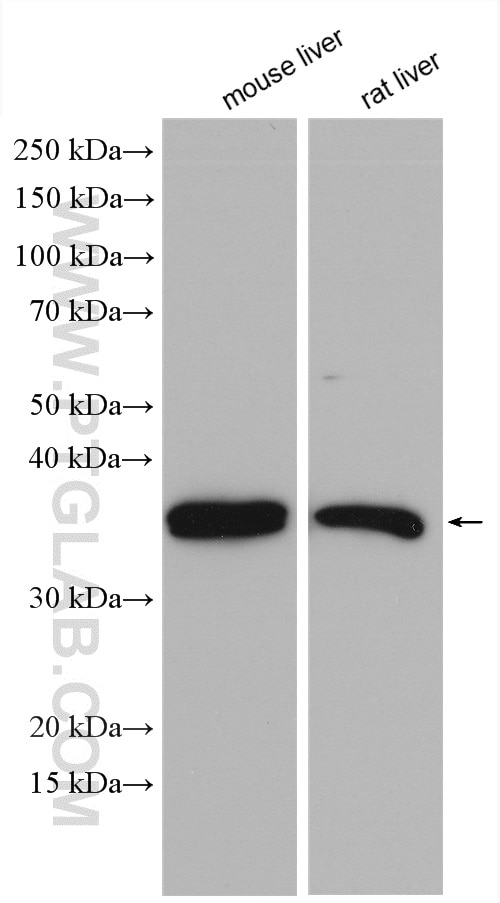
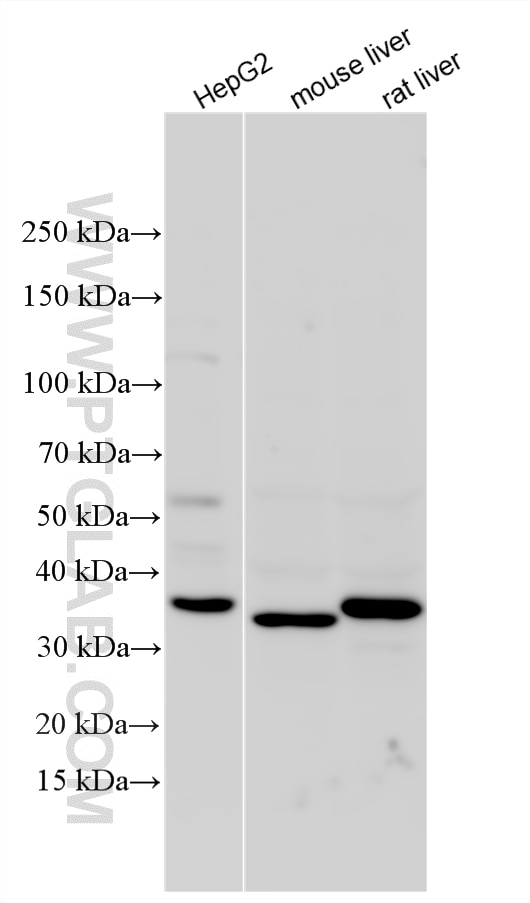
| Positive WB detected in | mouse liver tissue, HepG2 cells, rat liver tissue |
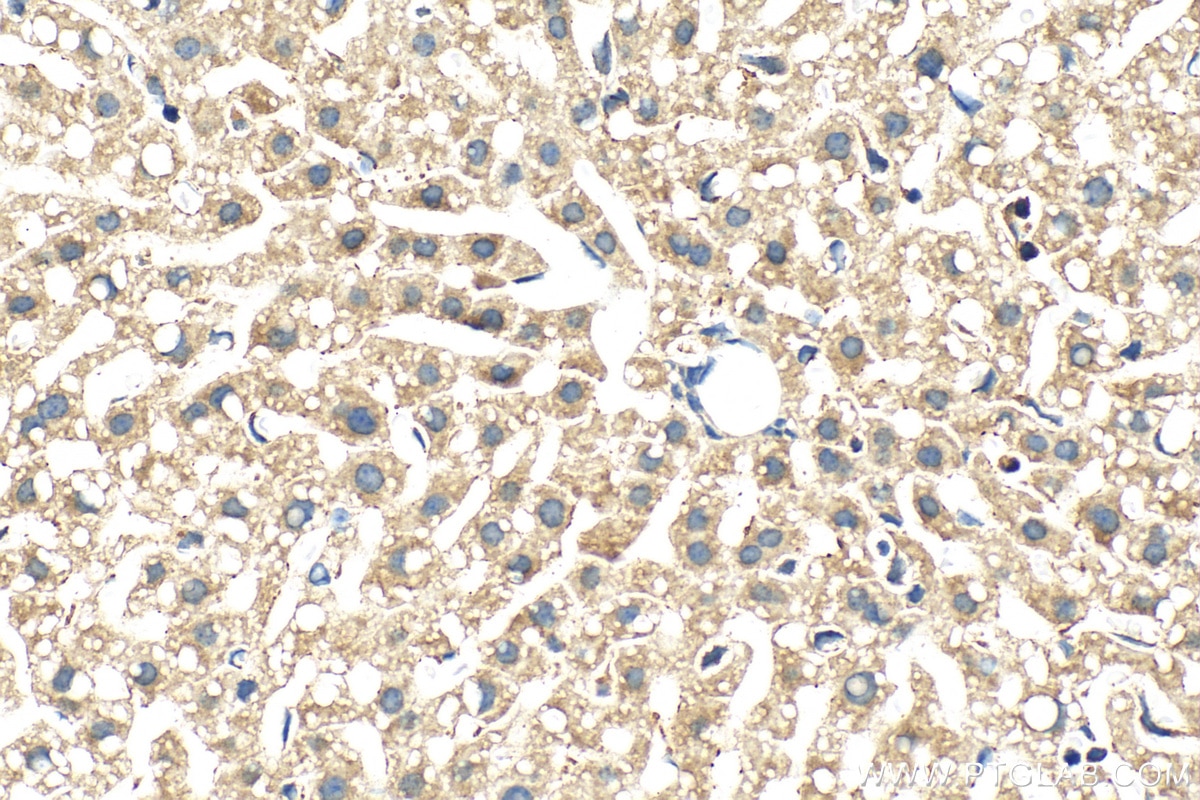
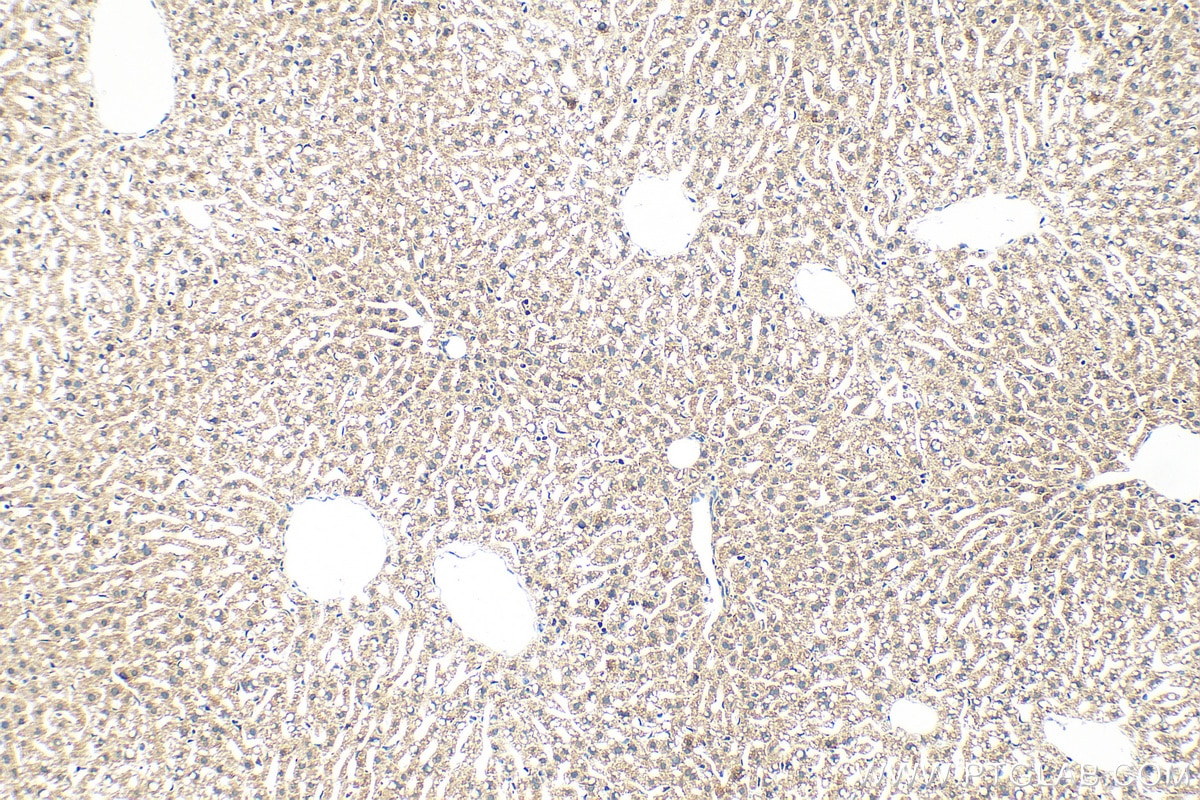
| Positive IHC detected in | mouse liver tissue Note: suggested antigen retrieval with TE buffer pH 9.0; (*) Alternatively, antigen retrieval may be performed with citrate buffer pH 6.0 |
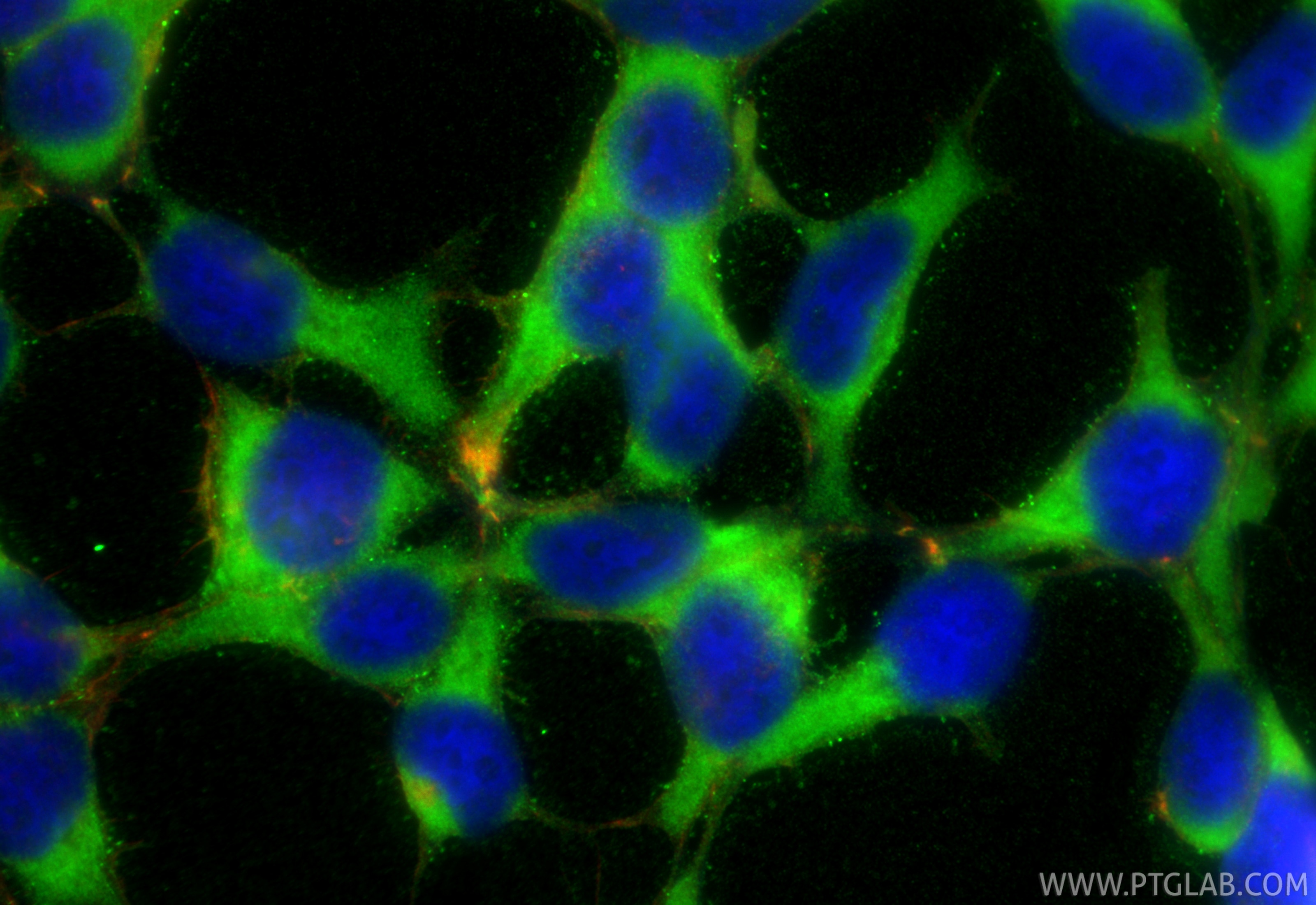
| Positive IF/ICC detected in | HEK-293 cells |
Recommended dilution
| Application | Dilution |
|---|---|
| Western Blot (WB) | WB : 1:1000-1:6000 |
| Immunohistochemistry (IHC) | IHC : 1:250-1:1000 |
| Immunofluorescence (IF)/ICC | IF/ICC : 1:200-1:800 |
| It is recommended that this reagent should be titrated in each testing system to obtain optimal results. | |
| Sample-dependent, Check data in validation data gallery. | |
Product Information
55282-1-AP targets INSIG1 in WB, IHC, IF/ICC, ELISA applications and shows reactivity with human, mouse, rat samples.
| Tested Reactivity | human, mouse, rat |
| Cited Reactivity | human, mouse, rat, monkey, chicken |
| Host / Isotype | Rabbit / IgG |
| Class | Polyclonal |
| Type | Antibody |
| Immunogen |
Peptide Predict reactive species |
| Full Name | insulin induced gene 1 |
| Calculated Molecular Weight | 30 kDa |
| Observed Molecular Weight | 35 kDa |
| GenBank Accession Number | NM_005542 |
| Gene Symbol | INSIG1 |
| Gene ID (NCBI) | 3638 |
| RRID | AB_2881298 |
| Conjugate | Unconjugated |
| Form | Liquid |
| Purification Method | Antigen affinity purification |
| UNIPROT ID | O15503 |
| Storage Buffer | PBS with 0.02% sodium azide and 50% glycerol, pH 7.3. |
| Storage Conditions | Store at -20°C. Stable for one year after shipment. Aliquoting is unnecessary for -20oC storage. 20ul sizes contain 0.1% BSA. |
Background Information
Insulin-induced genes (INSIGs), which consist of two isoforms (INSIG1 and INSIG2), are representative endoplasmic reticulum (ER)-resident oxysterol-binding proteins (OSBPs). INSIG1 is part of negative regulatory feedback, acting as a brake on SREBP transcriptional function (PMID: 23919961). INSIG1 also has a secondary function mediating sterolaccelerated proteolytic degradation of HMG CoA reductase, thus impacting the mevalonate pathway. Suppression of INSIG1 function promotes hepatic lipid remodelling and restrains NASH (non-alcoholic steatohepatitis) progression(PMID: 33722690).
Protocols
| Product Specific Protocols | |
|---|---|
| IF protocol for INSIG1 antibody 55282-1-AP | Download protocol |
| IHC protocol for INSIG1 antibody 55282-1-AP | Download protocol |
| WB protocol for INSIG1 antibody 55282-1-AP | Download protocol |
| Standard Protocols | |
|---|---|
| Click here to view our Standard Protocols |
Publications
What published studies show
The INSIG1 Polyclonal antibody (Cat# 55282-1-AP) has 19 citations. These appear in journals including Nature Cell Biology, Nature Communications, Cell Death & Differentiation, EMBO Molecular Medicine, Experimental Molecular Medicine, Metabolism, Redox Biology, FASEB Journal, and Frontiers in Pharmacology. The research spans lipid metabolism, atherosclerosis, hepatic steatosis/NASH, ferroptosis, inflammation, kidney fibrosis, and diabetes, with applications mainly in Western blot, IHC, and IF across human, mouse, rat, monkey, and chicken.
| Species | Application | Title |
|---|---|---|
Nat Cell Biol Cholesterol sensing by the SCAP-FAM134B complex regulates ER-phagy and STING innate immunity. | ||
Nat Commun A cholesterol-responsive hepatic tRNA-derived small RNA regulates cholesterol homeostasis and atherosclerosis development. | ||
Exp Mol Med Iron overload reprogramming lipid metabolism through the IRP1-SCAP axis in fibroblast-like synoviocytes aggravates bone destruction in rheumatoid arthritis. | ||
Metabolism miR-32-5p induces hepatic steatosis and hyperlipidemia by triggering de novo lipogenesis | ||
Redox Biol Excessive SOX8 reprograms energy and iron metabolism to prime hepatocellular carcinoma for ferroptosis | ||
Cell Death Differ Ubiquitination of NLRP3 by gp78/Insig-1 restrains NLRP3 inflammasome activation. |
Reviews
What customers say
The single review for this product (rated 3/5) was for Western Blot on liver tissue at a 1:1000 dilution. The reviewer reported that the antibody failed to detect the endogenous protein but was able to detect transgenically overexpressed target. This suggests the antibody may have limited sensitivity for low-abundance endogenous expression, though it performs adequately when the target is overexpressed.
The reviews below have been submitted by verified Proteintech customers who received an incentive for providing their feedback.
Zach (Verified Customer) (09-12-2025) | Did not detect endogenous protein but detected transgenically overexpressed ones.
|






