
Product Information
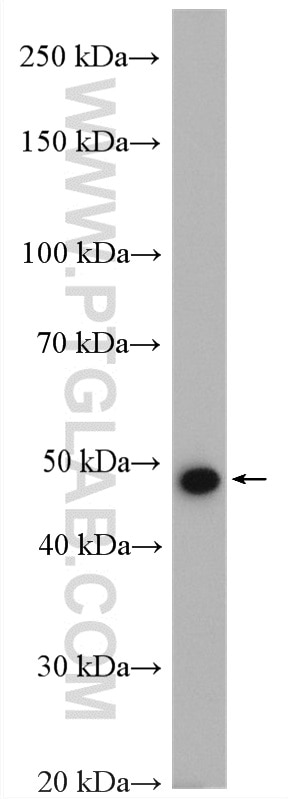
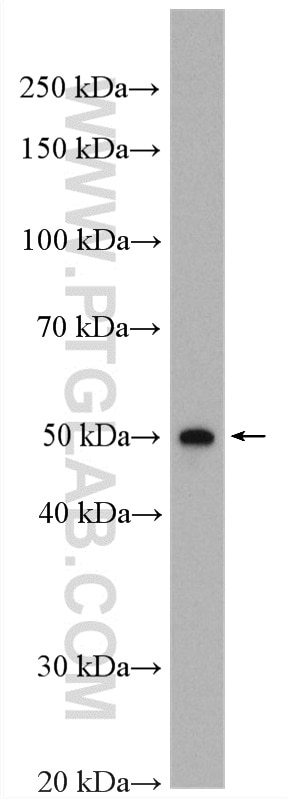
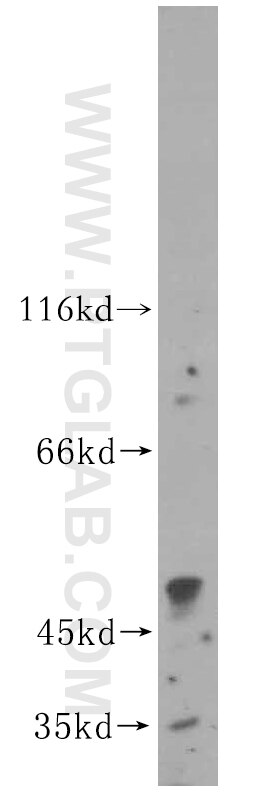
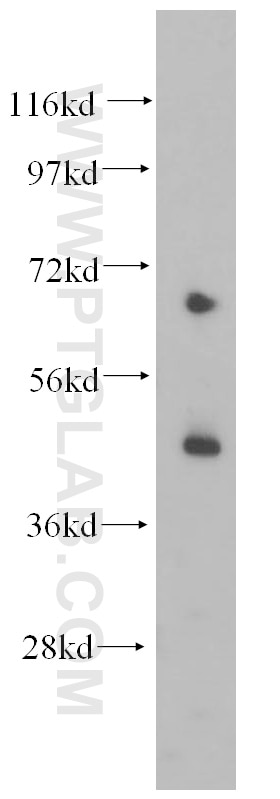
16920-1-PBS targets Kir6.2 in WB, Indirect ELISA applications and shows reactivity with human, mouse, rat samples.
| Tested Reactivity | human, mouse, rat |
| Host / Isotype | Rabbit / IgG |
| Class | Polyclonal |
| Type | Antibody |
| Immunogen |
CatNo: Ag10262 Product name: Recombinant human Kir6.2 protein Source: e coli.-derived, PGEX-4T Tag: GST Domain: 169-390 aa of BC064497 Sequence: MKTAQAHRRAETLIFSKHAVIALRHGRLCFMLRVGDLRKSMIISATIHMQVVRKTTSPEGEVVPLHQVDIPMENGVGGNSIFLVAPLIIYHVIDANSPLYDLAPSDLHHHQDLEIIVILEGVVETTGITTQARTSYLADEILWGQRFVPIVAEEDGRYSVDYSKFGNTIKVPTPLCTARQLDEDHSLLEALTLASARGPLRKRSVPMAKAKPKFSISPDSLS Predict reactive species |
| Full Name | potassium inwardly-rectifying channel, subfamily J, member 11 |
| Calculated Molecular Weight | 390 aa, 44 kDa |
| Observed Molecular Weight | 48 kDa |
| GenBank Accession Number | BC064497 |
| Gene Symbol | Kir6.2 |
| Gene ID (NCBI) | 3767 |
| RRID | AB_2130461 |
| Conjugate | Unconjugated |
| Form | Liquid |
| Purification Method | Antigen affinity purification |
| UNIPROT ID | Q14654 |
| Storage Buffer | PBS only, pH 7.3. |
| Storage Conditions | Store at -80°C. |
Background Information
Kir6.2 (also known as BIR or IKATP), encoded by the KCNJ11 gene, is the pore-forming unit of the ATP-sensitive K+ channel, an inward-rectifier potassium ion channel. Kir6.2 is controlled by G-proteins and is found associated with the sulfonylurea receptor (SUR) to constitute the ATP-sensitive K+ channel. The KCNJ11 gene is located at 11p15.1 and has no intron. Mutations in KCNJ11 are a cause of familial PHHI, an autosomal recessive disorder characterized by unregulated ins secretion. Defects in KCNJ11 may also contribute to autosomal dominant non-ins-dependent diabetes mellitus type II (NIDDM), transient neonatal diabetes mellitus type 3 (TNDM3), and permanent neonatal diabetes mellitus (PNDM).





