


Tested Applications
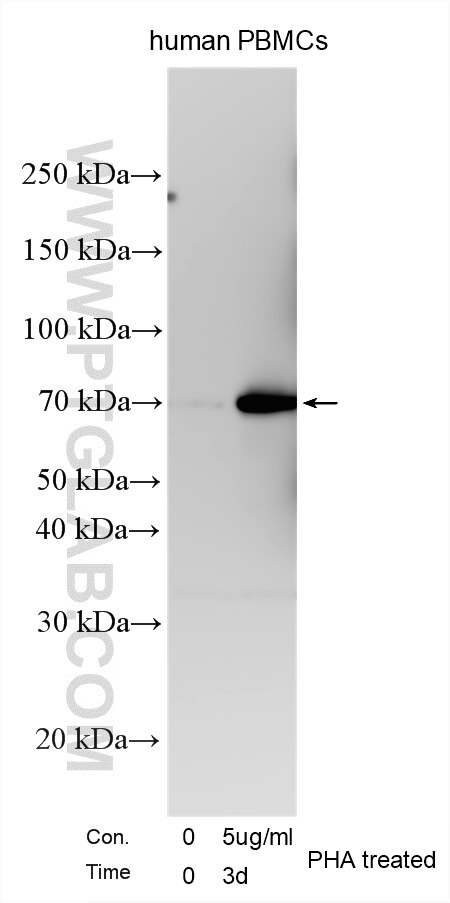
| Positive WB detected in | PHA treated human PBMCs |
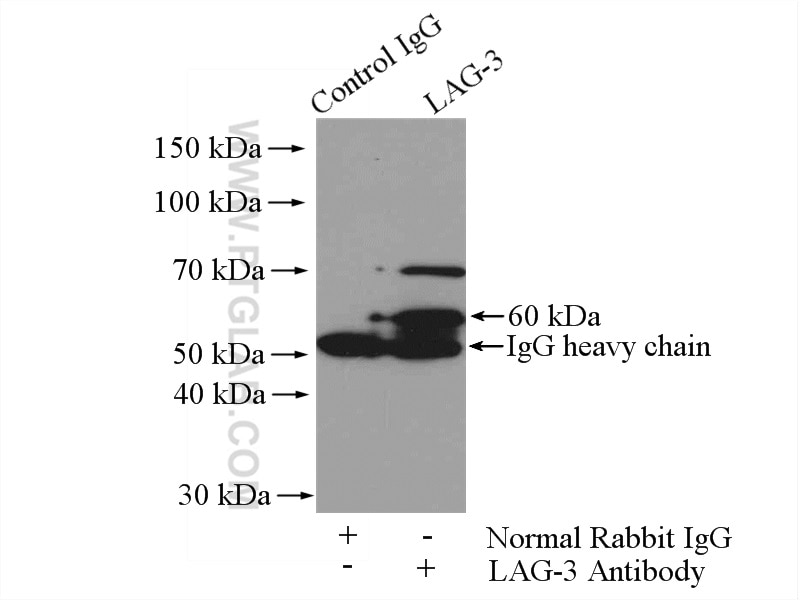
| Positive IP detected in | mouse liver tissue |
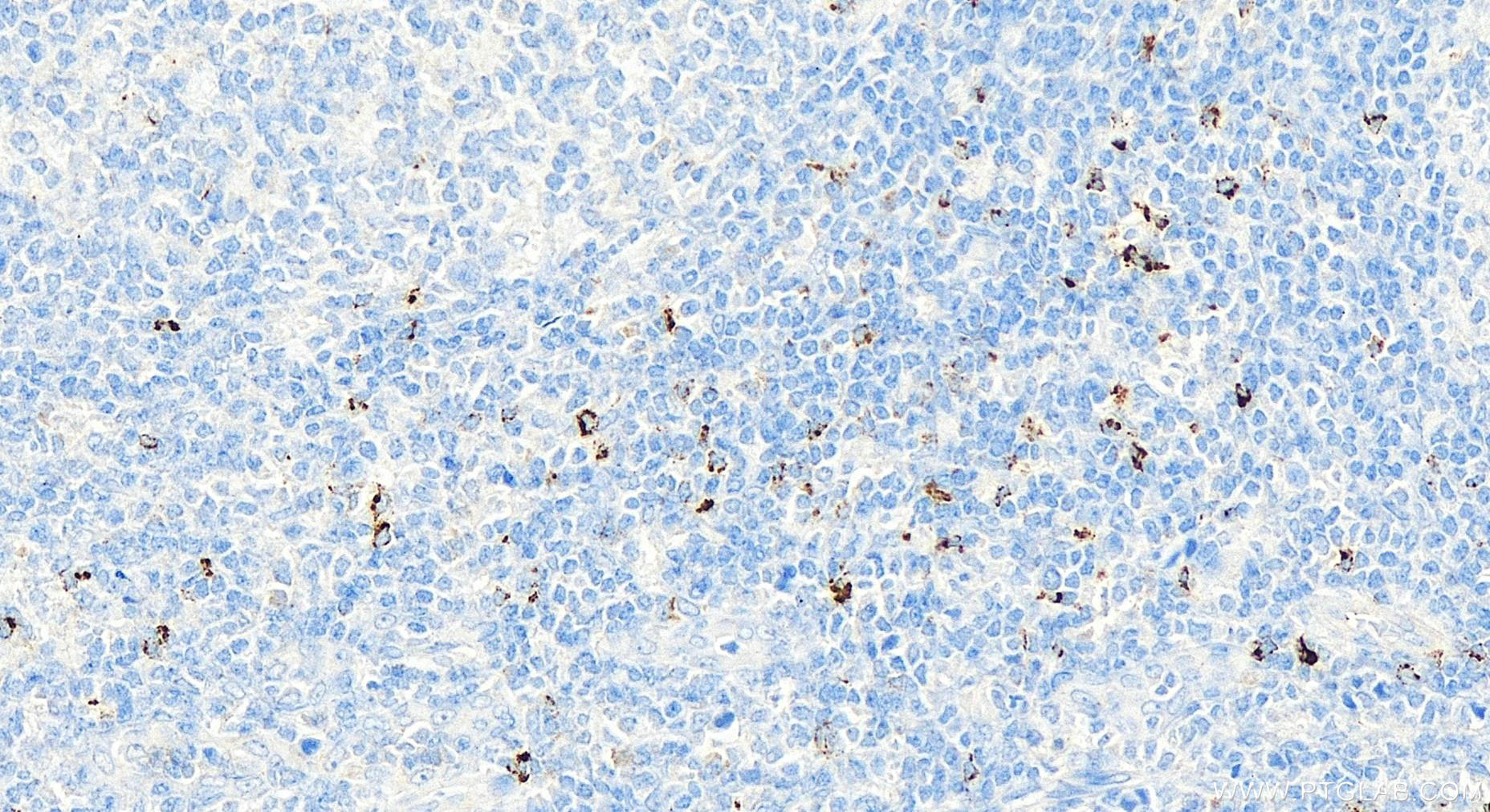
| Positive IHC detected in | human tonsillitis tissue Note: suggested antigen retrieval with TE buffer pH 9.0; (*) Alternatively, antigen retrieval may be performed with citrate buffer pH 6.0 |
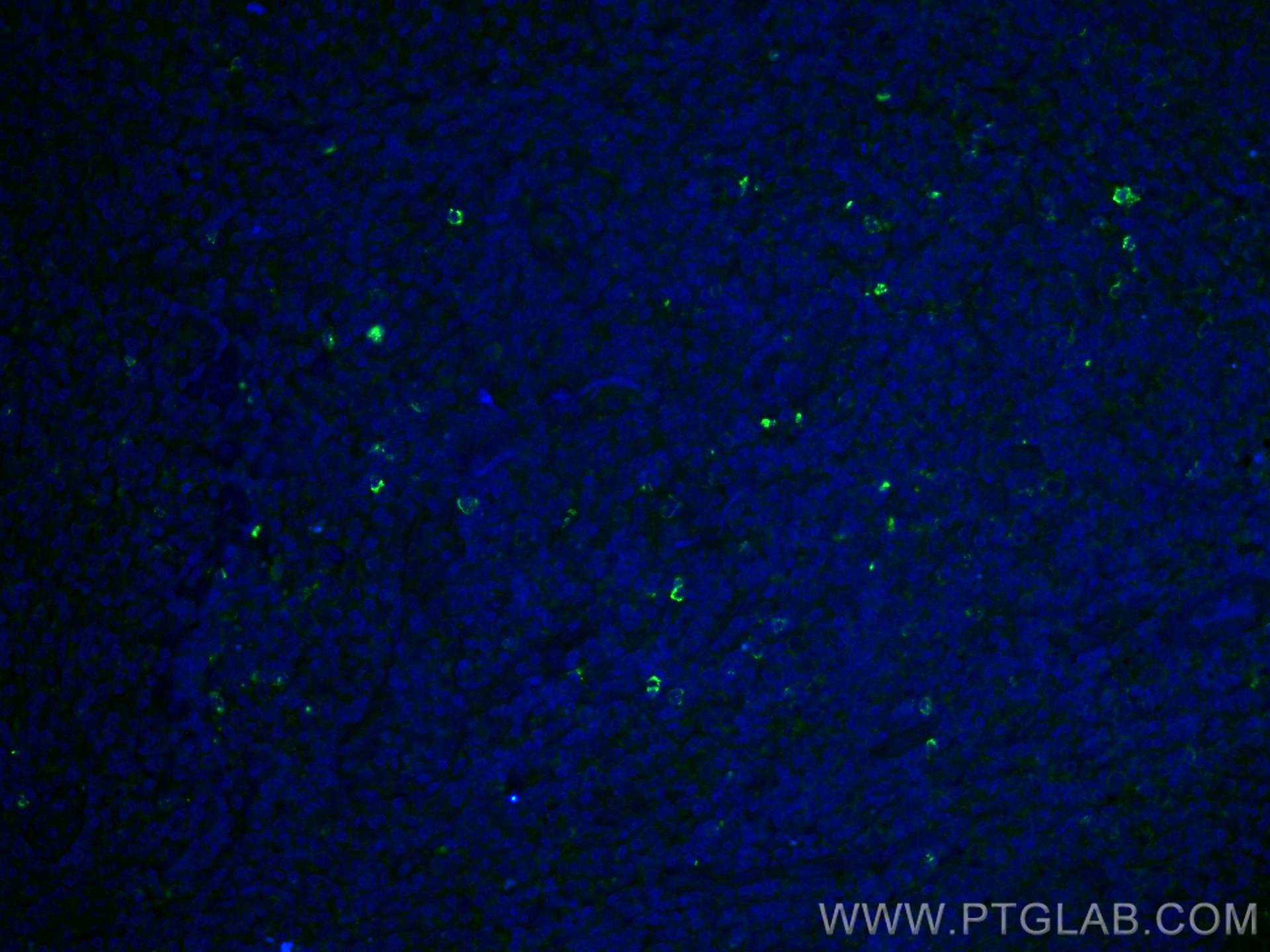
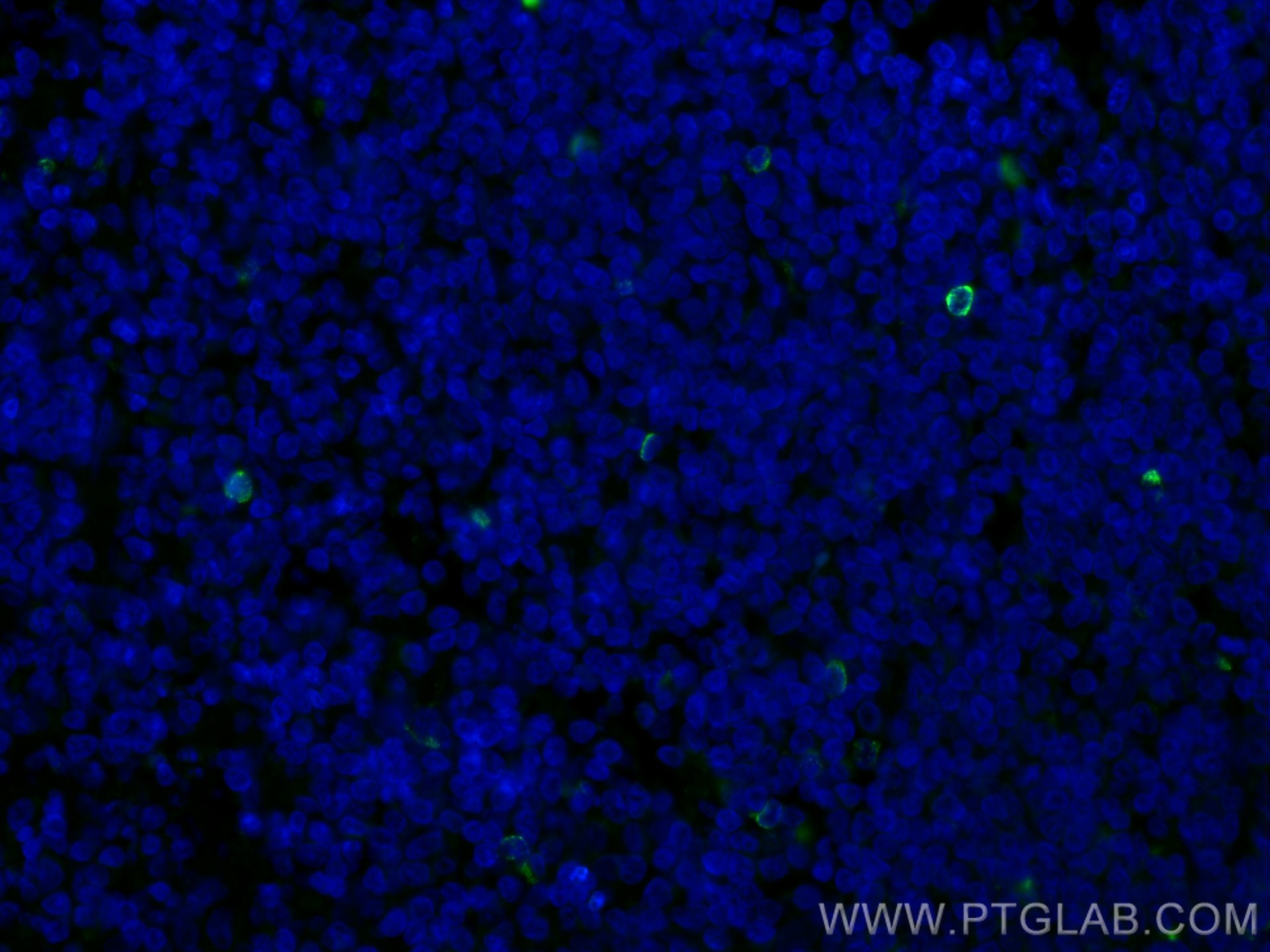
| Positive IF-P detected in | human tonsillitis tissue |
Recommended dilution
| Application | Dilution |
|---|---|
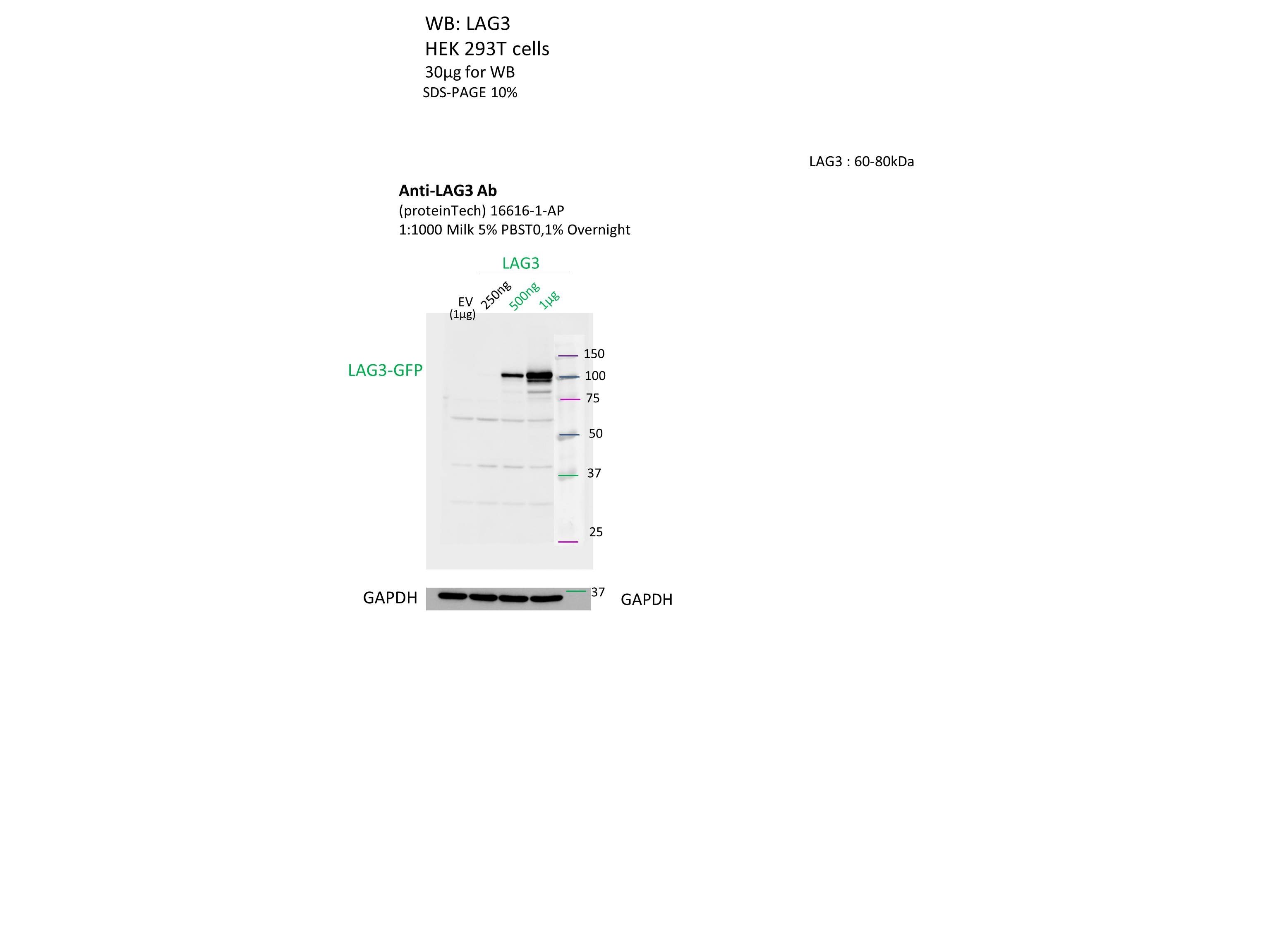
| Western Blot (WB) | WB : 1:500-1:2000 |
| Immunoprecipitation (IP) | IP : 0.5-4.0 ug for 1.0-3.0 mg of total protein lysate |
| Immunohistochemistry (IHC) | IHC : 1:1000-1:4000 |
| Immunofluorescence (IF)-P | IF-P : 1:50-1:500 |
| It is recommended that this reagent should be titrated in each testing system to obtain optimal results. | |
| Sample-dependent, Check data in validation data gallery. | |
Product Information
16616-1-AP targets LAG-3/CD223 in WB, IHC, IF-P, IP, ELISA applications and shows reactivity with human, mouse, rat samples.
| Tested Reactivity | human, mouse, rat |
| Cited Reactivity | human, mouse, rat |
| Host / Isotype | Rabbit / IgG |
| Class | Polyclonal |
| Type | Antibody |
| Immunogen |
CatNo: Ag9909 Product name: Recombinant human LAG3 protein Source: e coli.-derived, PGEX-4T Tag: GST Domain: 27-360 aa of BC052589 Sequence: AEVPVVWAQEGAPAQLPCSPTIPLQDLSLLRRAGVTWQHQPDSGPPAAAPGHPLAPGPHPAAPSSWGPRPRRYTVLSVGPGGLRSGRLPLQPRVQLDERGRQRGDFSLWLRPARRADAGEYRAAVHLRDRALSCRLRLRLGQASMTASPPGSLRASDWVILNCSFSRPDRPASVHWFRNRGQGRVPVRESPHHHLAESFLFLPQVSPMDSGPWGCILTYRDGFNVSIMYNLTVLGLEPPTPLTVYAGAGSRVGLPCRLPAGVGTRSFLTAKWTPPGGGPDLLVTGDNGDFTLRLEDVSQAQAGTYTCHIHLQEQQLNATVTLAIITGQPQVGKE Predict reactive species |
| Full Name | lymphocyte-activation gene 3 |
| Calculated Molecular Weight | 525 aa, 57 kDa |
| Observed Molecular Weight | 60-70 kDa |
| GenBank Accession Number | BC052589 |
| Gene Symbol | LAG-3 |
| Gene ID (NCBI) | 3902 |
| RRID | AB_2133350 |
| Conjugate | Unconjugated |
| Form | Liquid |
| Purification Method | Antigen affinity purification |
| UNIPROT ID | P18627 |
| Storage Buffer | PBS with 0.02% sodium azide and 50% glycerol, pH 7.3. |
| Storage Conditions | Store at -20°C. Stable for one year after shipment. Aliquoting is unnecessary for -20oC storage. 20ul sizes contain 0.1% BSA. |
Background Information
LAG-3, also known as CD223, is an immune checkpoint molecule that regulates both T-cell activation and homeostasis. LAG-3 is expressed on activated T cells, NK cells, regulatory T cells, and plasmacytoid dendritic cells. It is a CD4-related molecule that binds MHC class II. LAG-3 plays an important role in modulating T cell expansion and function, and blockade of LAG-3 with monoclonal antibodies can augment T cell function. (PMID: 15634887; 21086108; 28783703)
Protocols
| Product Specific Protocols | |
|---|---|
| IF protocol for LAG-3/CD223 antibody 16616-1-AP | Download protocol |
| IHC protocol for LAG-3/CD223 antibody 16616-1-AP | Download protocol |
| IP protocol for LAG-3/CD223 antibody 16616-1-AP | Download protocol |
| WB protocol for LAG-3/CD223 antibody 16616-1-AP | Download protocol |
| Standard Protocols | |
|---|---|
| Click here to view our Standard Protocols |
Publications
What published studies show
The LAG3 antibody (catalog no. 16616-1-AP) has 25 citations. They appear in journals including Cancer Cell, Molecular Cancer, Science Translational Medicine, Journal of Clinical Investigation, Cell Death & Disease, Cancer Letters, Clinical Cancer Research, Frontiers in Immunology, iScience, and British Journal of Ophthalmology. Research fields center on cancer immunology and immunotherapy—immune checkpoint biology (LAG3/PD-1/CTLA-4), T-cell exhaustion, and the tumor immune microenvironment across breast, prostate, liver, lung, melanoma, and other cancers.
| Species | Application | Title |
|---|---|---|
Cancer Cell Identification of cycling regulatory T cell precursors as conductors of immune escape during breast carcinoma progression. | ||
Mol Cancer Targeting BATF2-RGS2 axis reduces T-cell exhaustion and restores anti-tumor immunity | ||
Sci Transl Med Immune checkpoint B7-H3 is a therapeutic vulnerability in prostate cancer harboring PTEN and TP53 deficiencies | ||
J Clin Invest Targeting fibrinogen-like protein 1 enhances immunotherapy in hepatocellular carcinoma | ||
Cell Death Dis Helicobacter pylori CagA promotes gastric cancer immune escape by upregulating SQLE | ||
Cancer Lett Radiation-induced glioblastoma stem cell-mediated T cell exhaustion via EGR1-Gal3-LAG3 axis in glioblastoma. |
Reviews
What customers say
Two reviews were found. One user reported the antibody did not perform as expected for immunofluorescence on brain tissue at 1:200 dilution, even with the suggested antigen retrieval, and planned to retry with an alternative protocol. Another user gave a five-star rating for Western Blot on HEK293T cells, noting excellent performance at 1:1000 overnight dilution, suggesting the antibody could potentially be diluted further (1:500–1:1000 range), and highly recommending it for WB applications.
The reviews below have been submitted by verified Proteintech customers who received an incentive for providing their feedback.
Sofia (Verified Customer) (05-27-2025) | Antibody did not work as expected even using the suggested antigen retrieval. I'll try it again using a different antigen retrieval.
|
Eman (Verified Customer) (09-20-2021) | the antibody works very well for WB the recommended dilution is 1:500 to 1:1000 i think we can even dilute it more this antibody is higly recommended
 |







