
Tested Applications
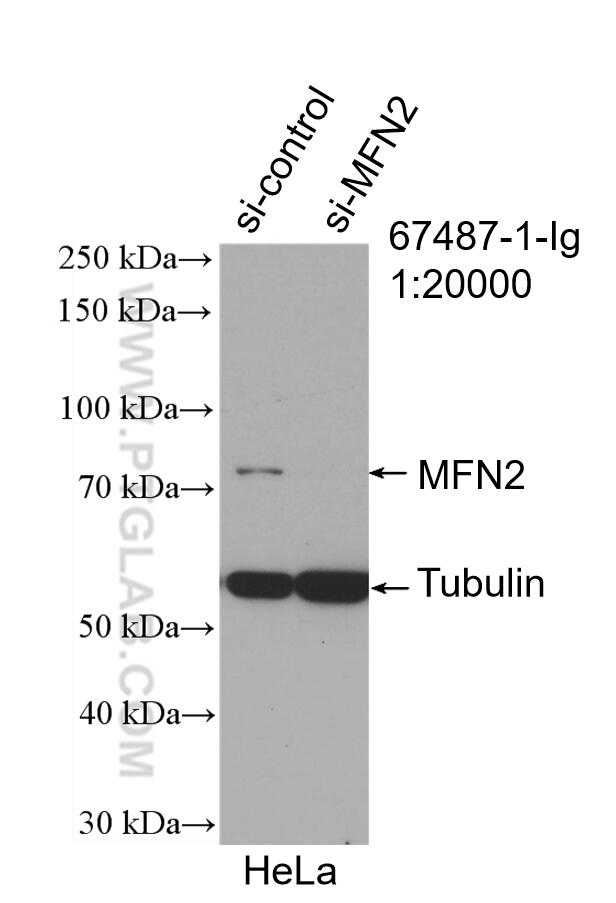
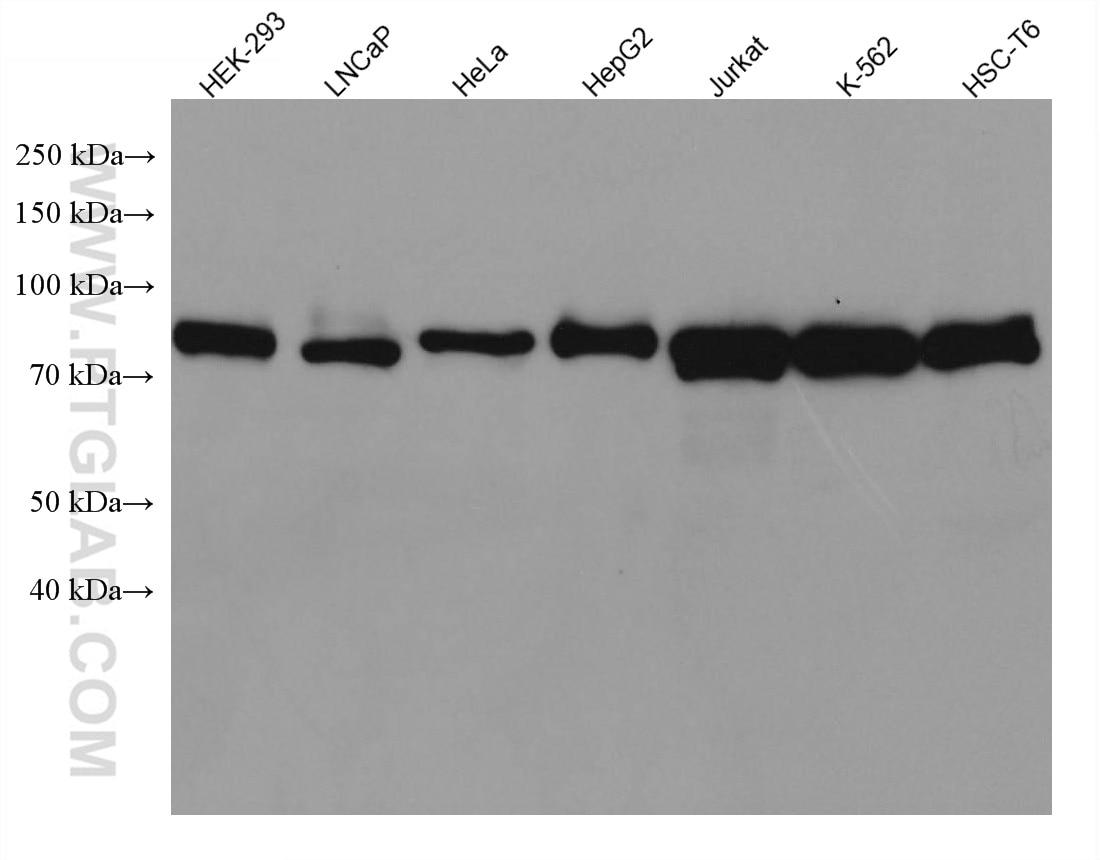
| Positive WB detected in | HEK-293 cells, HeLa cells, HepG2 cells, Jurkat cells, K-562 cells, HSC-T6 cells, LNCaP cells |
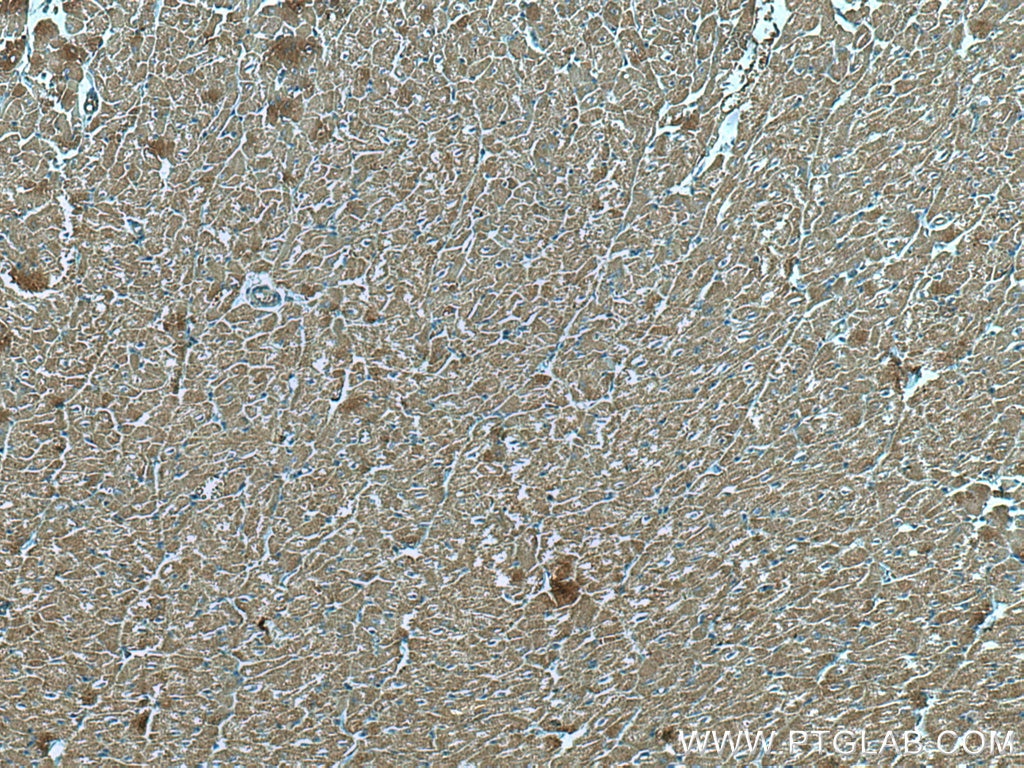
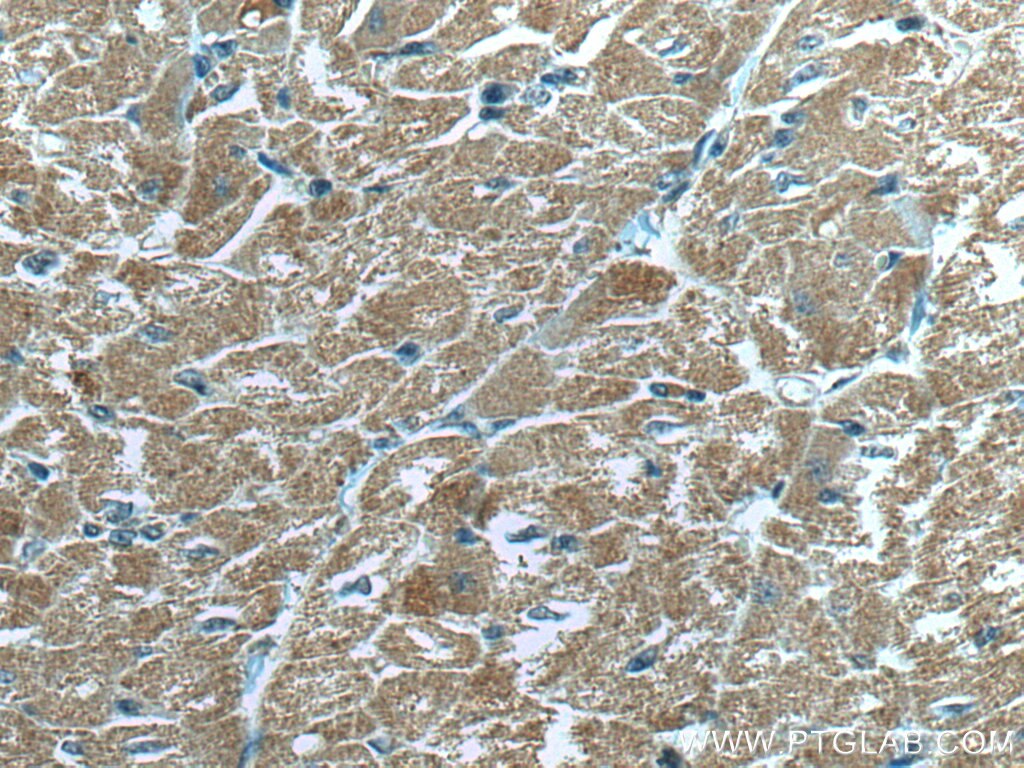
| Positive IHC detected in | human heart tissue Note: suggested antigen retrieval with TE buffer pH 9.0; (*) Alternatively, antigen retrieval may be performed with citrate buffer pH 6.0 |
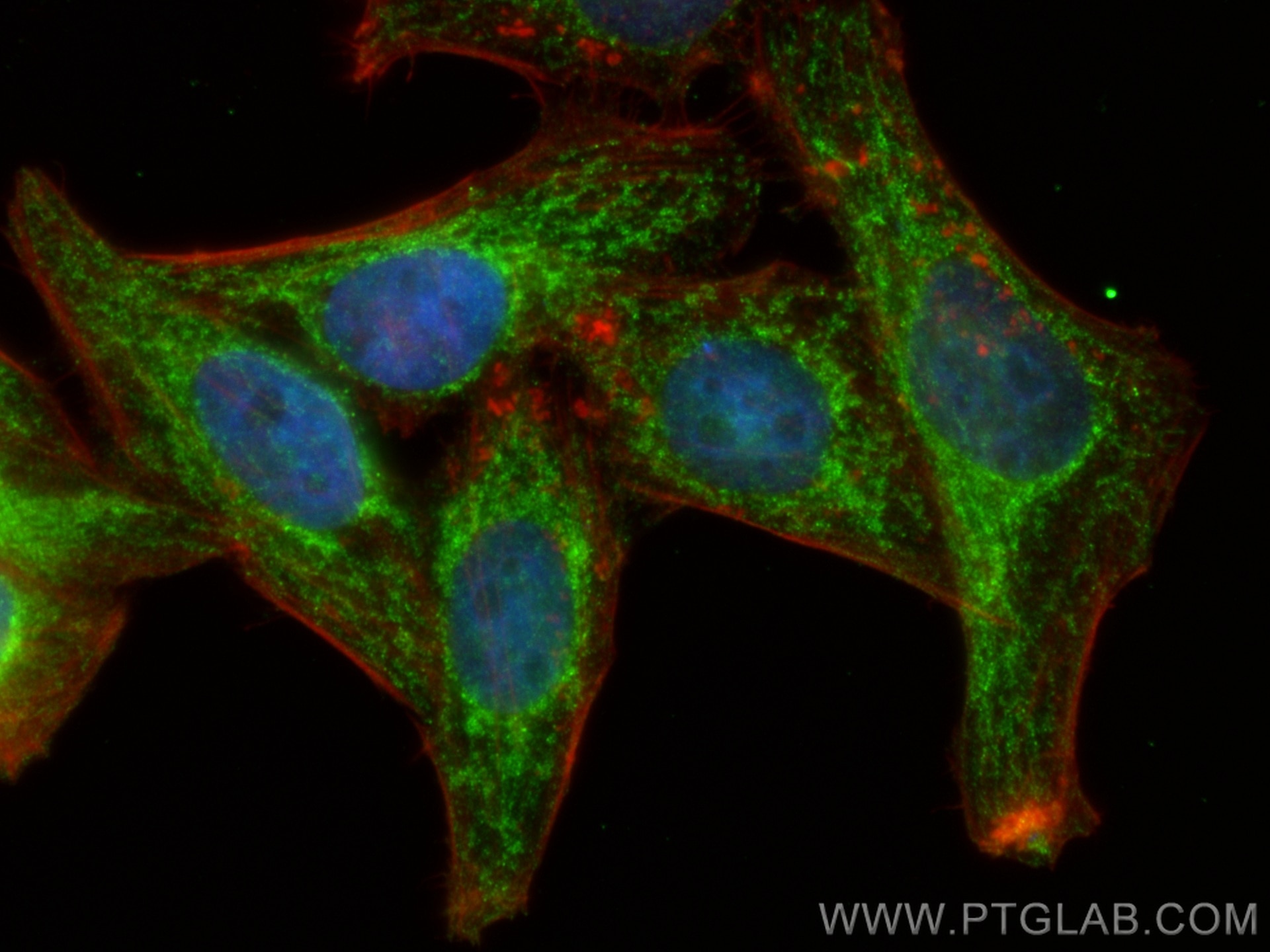
| Positive IF/ICC detected in | HepG2 cells |
Recommended dilution
| Application | Dilution |
|---|---|
| Western Blot (WB) | WB : 1:5000-1:50000 |
| Immunohistochemistry (IHC) | IHC : 1:1000-1:4000 |
| Immunofluorescence (IF)/ICC | IF/ICC : 1:400-1:1600 |
| It is recommended that this reagent should be titrated in each testing system to obtain optimal results. | |
| Sample-dependent, Check data in validation data gallery. | |
Product Information
67487-1-Ig targets MFN2 in WB, IHC, IF/ICC, CoIP, ELISA applications and shows reactivity with human, mouse, rat samples.
| Tested Reactivity | human, mouse, rat |
| Cited Reactivity | human, mouse, rat, fish |
| Host / Isotype | Mouse / IgG2a |
| Class | Monoclonal |
| Type | Antibody |
| Immunogen |
CatNo: Ag29873 Product name: Recombinant human MFN2 protein Source: e coli.-derived, PET28a Tag: 6*His Domain: 2-353 aa of BC017061 Sequence: SLLFSRCNSIVTVKKNKRHMAEVNASPLKHFVTAKKKINGIFEQLGAYIQESATFLEDTYRNAELDPVTTEEQVLDVKGYLSKVRGISEVLARRHMKVAFFGRTSNGKSTVINAMLWDKVLPSGIGHTTNCFLRVEGTDGHEAFLLTEGSEEKRSAKTVNQLAHALHQDKQLHAGSLVSVMWPNSKCPLLKDDLVLMDSPGIDVTTELDSWIDKFCLDADVFVLVANSESTLMQTEKHFFHKVSERLSRPNIFILNNRWDASASEPEYMEEVRRQHMERCTSFLVDELGVVDRSQAGDRIFFVSAKEVLNARIQKAQGMPEGGGALAEGFQVRMFEFQNFERRFEECISQSA Predict reactive species |
| Full Name | mitofusin 2 |
| Calculated Molecular Weight | 757 aa, 86 kDa |
| Observed Molecular Weight | 86 kDa |
| GenBank Accession Number | BC017061 |
| Gene Symbol | MFN2 |
| Gene ID (NCBI) | 9927 |
| ENSEMBL Gene ID | ENSG00000116688 |
| RRID | AB_2882713 |
| Conjugate | Unconjugated |
| Form | Liquid |
| Purification Method | Protein A purification |
| UNIPROT ID | O95140 |
| Storage Buffer | PBS with 0.02% sodium azide and 50% glycerol, pH 7.3. |
| Storage Conditions | Store at -20°C. Stable for one year after shipment. Aliquoting is unnecessary for -20oC storage. 20ul sizes contain 0.1% BSA. |
Background Information
MFN2, also named as CPRP1 and KIAA0214, belongs to the mitofusin family. It is an Essential transmembrane GTPase, which mediates mitochondrial fusion. MFN2 acts independently of the cytoskeleton. It therefore plays a central role in mitochondrial metabolism and may be associated with obesity and/or apoptosis processes. Overexpression of MFN2 induces the formation of mitochondrial networks. It plays an important role in the regulation of vascular smooth muscle cell proliferation. Defects in MFN2 are the cause of Charcot-Marie-Tooth disease type 2A2 (CMT2A2). Defects in MFN2 are the cause of Charcot-Marie-Tooth disease type 6 (CMT6). Ubiquitinated forms of Mfn2 (mono- and polyubiquitinated) are present during mitophagy.
Protocols
| Product Specific Protocols | |
|---|---|
| IF protocol for MFN2 antibody 67487-1-Ig | Download protocol |
| IHC protocol for MFN2 antibody 67487-1-Ig | Download protocol |
| WB protocol for MFN2 antibody 67487-1-Ig | Download protocol |
| Standard Protocols | |
|---|---|
| Click here to view our Standard Protocols |
Publications
What published studies show
| Species | Application | Title |
|---|---|---|
Autophagy Hypoxia-induced GPCPD1 depalmitoylation triggers mitophagy via regulating PRKN-mediated ubiquitination of VDAC1 | ||
Nat Commun VPS13B recruits lipid vesicles to promote mitochondrial fission and quality control. | ||
Metabolism HMGCS2 desuccinylation modulates acetoacetate to drive tubule-macrophage inflammatory crosstalk in diabetic kidney disease. | ||
Redox Biol VDR regulates mitochondrial function as a protective mechanism against renal tubular cell injury in diabetic rats | ||
Theranostics Chronic intermittent hypoxia increases Parkinson's disease susceptibility via PPARα-mediated lipid droplet-mitochondrial dysfunction. | ||
Adv Sci (Weinh) Ubiquitination of ACSL4 by Parkin Suppresses Ferroptosis and Rescues Glucocorticoid-Induced Bone Loss |
Reviews
What customers say
The reviews below have been submitted by verified Proteintech customers who received an incentive for providing their feedback.
Pierre (Verified Customer) (09-26-2025) | Very good
|






