
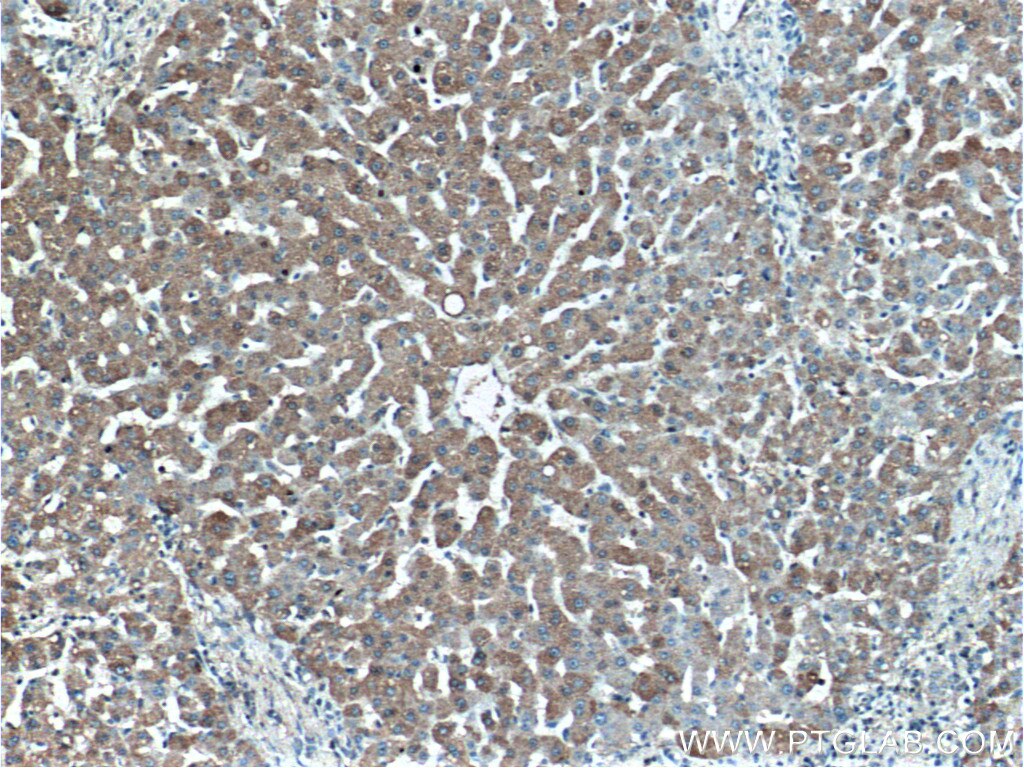
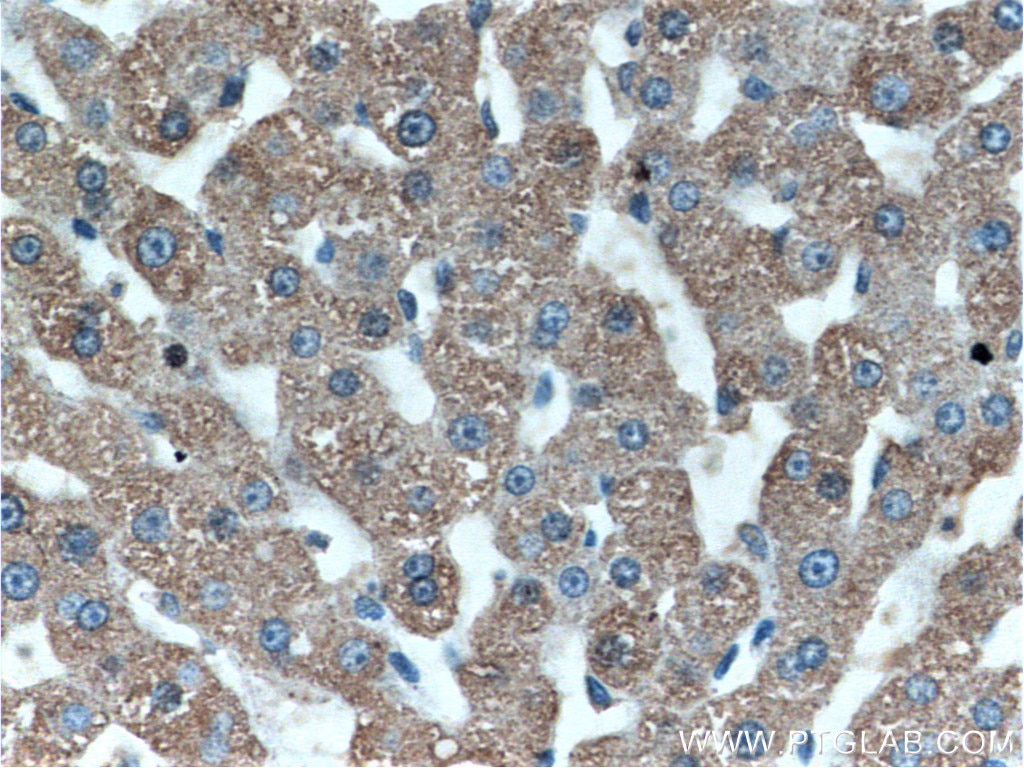
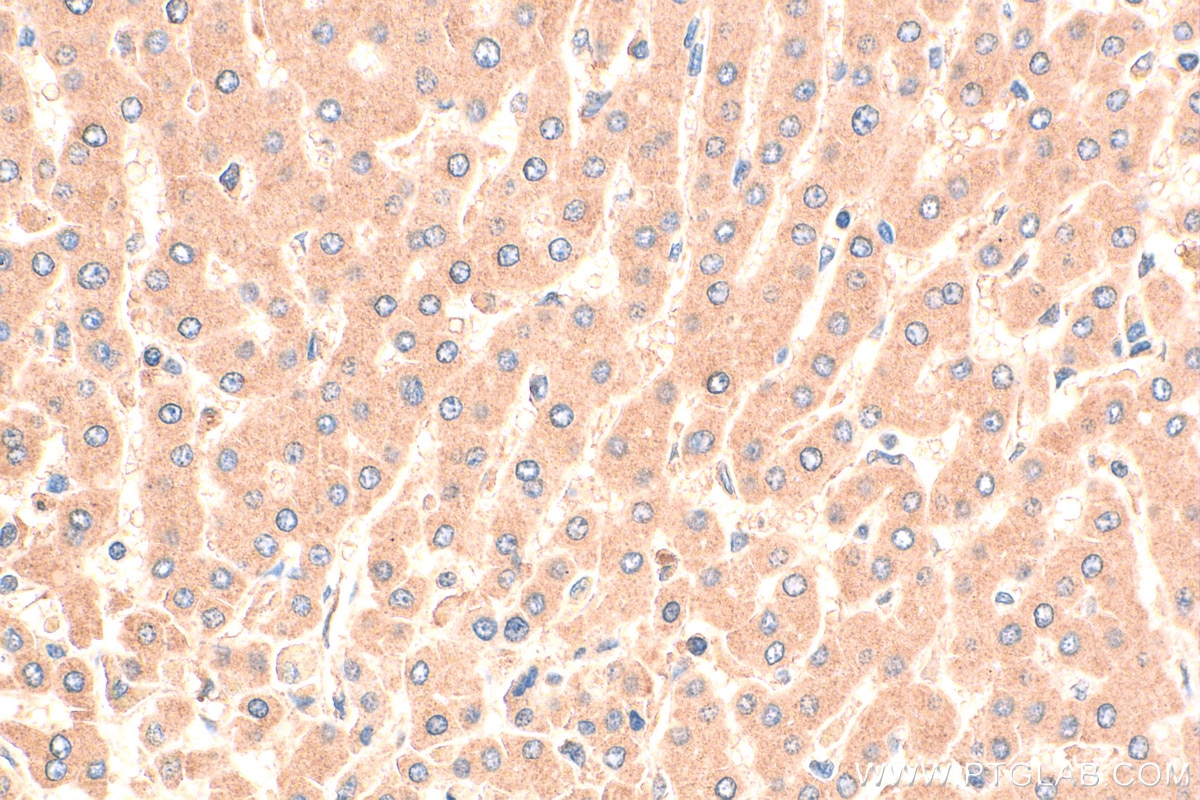
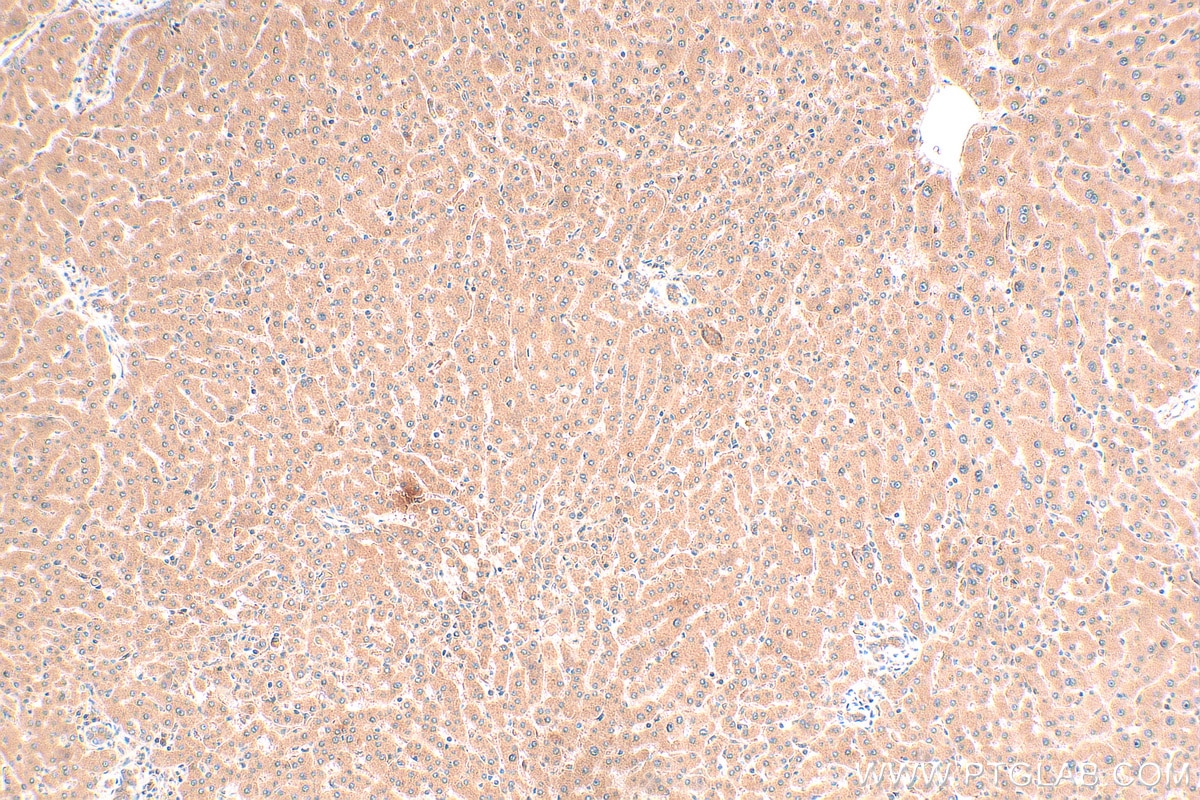

Tested Applications
| Positive IHC detected in | human liver tissue, human hepatocirrhosis tissue Note: suggested antigen retrieval with TE buffer pH 9.0; (*) Alternatively, antigen retrieval may be performed with citrate buffer pH 6.0 |
Recommended dilution
| Application | Dilution |
|---|---|
| Immunohistochemistry (IHC) | IHC : 1:50-1:500 |
| It is recommended that this reagent should be titrated in each testing system to obtain optimal results. | |
| Sample-dependent, Check data in validation data gallery. | |
Product Information
17172-1-AP targets MT1X in WB, IHC, IF, ELISA applications and shows reactivity with human samples.
| Tested Reactivity | human |
| Cited Reactivity | human, mouse, chicken |
| Host / Isotype | Rabbit / IgG |
| Class | Polyclonal |
| Type | Antibody |
| Immunogen |
CatNo: Ag10711 Product name: Recombinant human MT1X protein Source: e coli.-derived, PGEX-4T Tag: GST Domain: 1-46 aa of BC032131 Sequence: MDPNCSCSPVGSCACAGSCKCKECKCTSCKKSECRAFPANLGDGPI Predict reactive species |
| Full Name | metallothionein 1X |
| Calculated Molecular Weight | 46 aa, 5 kDa |
| GenBank Accession Number | BC032131 |
| Gene Symbol | MT1X |
| Gene ID (NCBI) | 4501 |
| RRID | AB_2878354 |
| Conjugate | Unconjugated |
| Form | Liquid |
| Purification Method | Antigen affinity purification |
| UNIPROT ID | U3KQD7 |
| Storage Buffer | PBS with 0.02% sodium azide and 50% glycerol, pH 7.3. |
| Storage Conditions | Store at -20°C. Stable for one year after shipment. Aliquoting is unnecessary for -20oC storage. 20ul sizes contain 0.1% BSA. |
Protocols
| Product Specific Protocols | |
|---|---|
| IHC protocol for MT1X antibody 17172-1-AP | Download protocol |
| Standard Protocols | |
|---|---|
| Click here to view our Standard Protocols |
Publications
What published studies show
The MT1X Polyclonal antibody (catalog #17172-1-AP) has 14 citations. These appear in journals including Cancer Cell, Nature Materials, Cancer Research, Autophagy, Advanced Science, Cell Death & Disease, Cell Reports, Cancer Biology & Therapy, Journal of Cellular and Molecular Medicine, Poultry Science, Diagnostics, Discover Oncology, and Journal of Orthopaedic Research. Research fields span cancer biology (renal, colorectal, pancreatic, hepatocellular, leukemia), metal homeostasis (zinc/copper), cuproptosis, tumor immunity, oxidative stress, and musculoskeletal disorders.
| Species | Application | Title |
|---|---|---|
Cancer Cell Radiotherapy promotes cuproptosis and synergizes with cuproptosis inducers to overcome tumor radioresistance
| ||
Nat Mater Zinc nanoparticles from oral supplements accumulate in renal tumours and stimulate antitumour immune responses | ||
Cancer Res Intratumoral Copper Modulates PD-L1 Expression and Influences Tumor Immune Evasion. | ||
Autophagy Therapeutic targeting of the USP2-E2F4 axis inhibits autophagic machinery essential for zinc homeostasis in cancer progression. | ||
Adv Sci (Weinh) The Intestinal Transporter SLC30A1 Plays a Critical Role in Regulating Systemic Zinc Homeostasis | ||
Cell Death Dis Comparison of the major cell populations among osteoarthritis, Kashin-Beck disease and healthy chondrocytes by single-cell RNA-seq analysis. |
Reviews
What customers say
The single review for this antibody reports a 2-star rating from a Western Blot application on MCF7 cells. The user, working at a 1:1000 dilution with overnight 4°C incubation, observed significant unspecific bands and noted that the target band was not clearly brighter than background. They suggested that adjusting the dilution or lysate concentration might improve results. Overall, the feedback indicates the antibody produced considerable non-specific binding under the tested conditions, with the desired signal lacking sufficient clarity.
The reviews below have been submitted by verified Proteintech customers who received an incentive for providing their feedback.
Adrianna (Verified Customer) (10-31-2022) | There is a lot of unspecific bands with this antibody and I cannot see the actual band being brighter. I have used it at 1:1000 dilution, and incubated ON at 4 deg C. Perhaps I should try a different dilution / lysate concentration.
|





