

Tested Applications
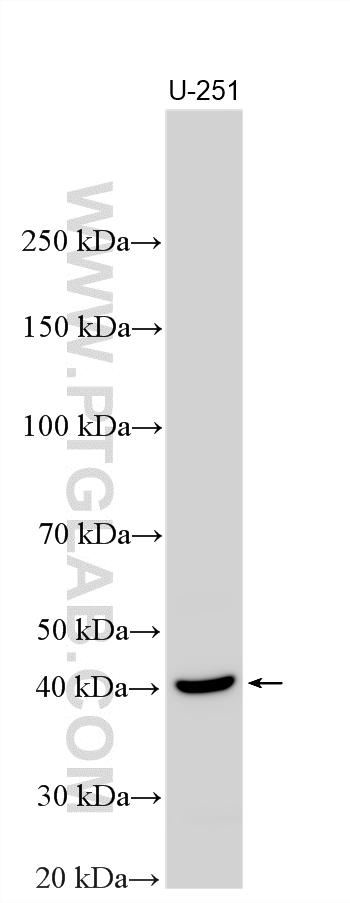
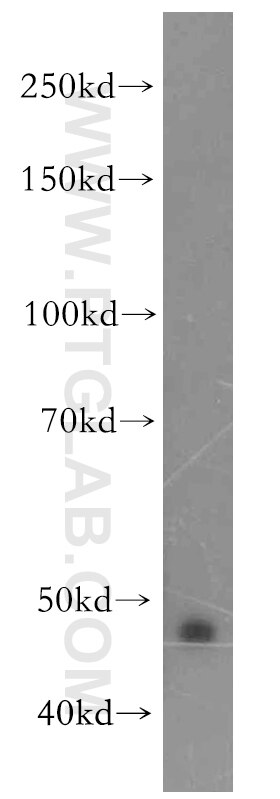
| Positive WB detected in | U-251 cells, A2780 cells |
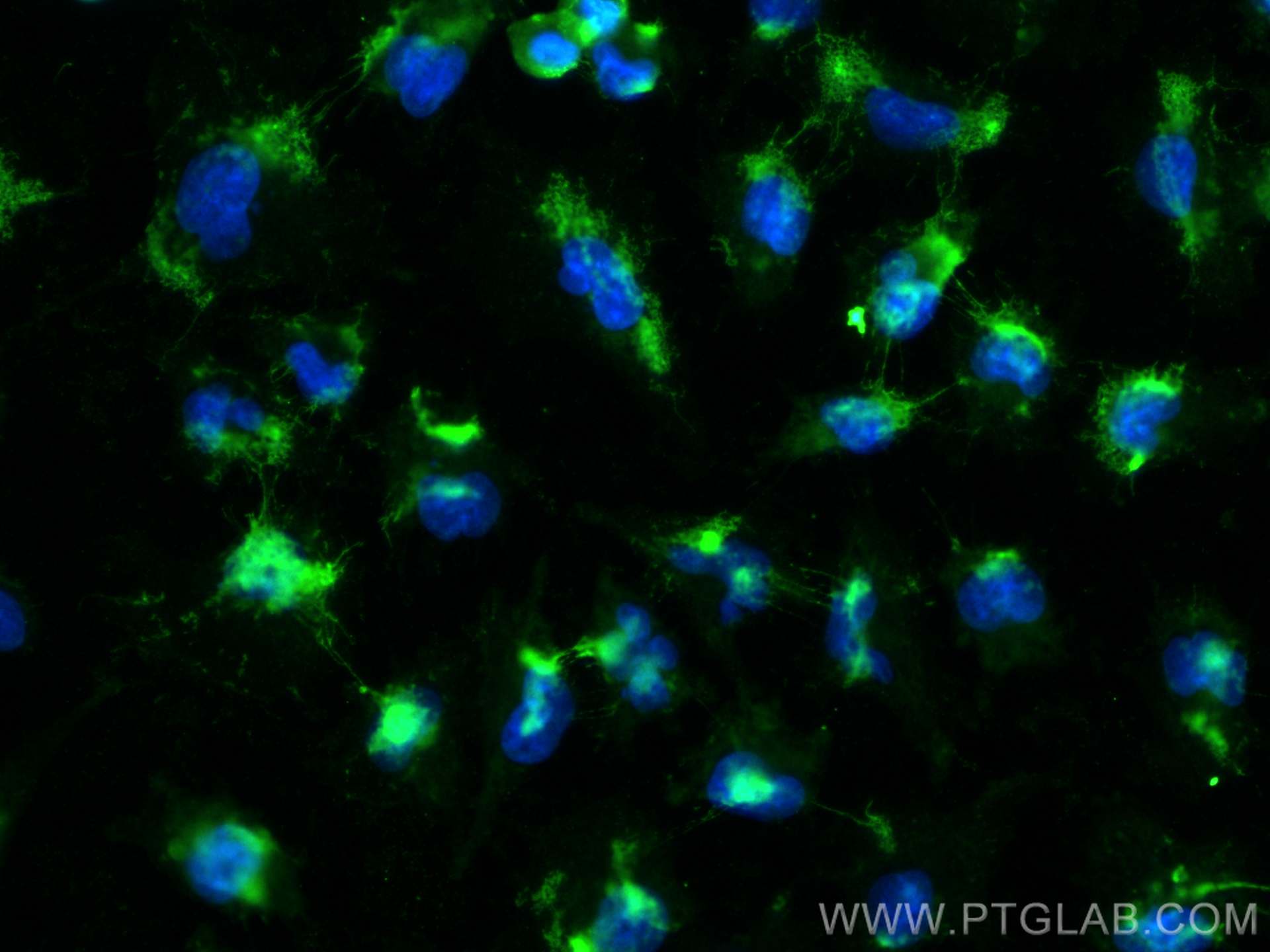
| Positive IF/ICC detected in | U-251 cells |
Recommended dilution
| Application | Dilution |
|---|---|
| Western Blot (WB) | WB : 1:2000-1:10000 |
| Immunofluorescence (IF)/ICC | IF/ICC : 1:200-1:800 |
| It is recommended that this reagent should be titrated in each testing system to obtain optimal results. | |
| Sample-dependent, Check data in validation data gallery. | |
Product Information
10286-1-AP targets uPAR/CD87 in WB, IHC, IF/ICC, CoIP, ELISA applications and shows reactivity with human samples.
| Tested Reactivity | human |
| Cited Reactivity | human, bovine |
| Host / Isotype | Rabbit / IgG |
| Class | Polyclonal |
| Type | Antibody |
| Immunogen |
CatNo: Ag0187 Product name: Recombinant human uPAR, PLAUR protein Source: e coli.-derived, PGEX-4T Tag: GST Domain: 1-136 aa of BC002788 Sequence: MGHPPLLPLLLLLHTCVPASWGLRCMQCKTNGDCRVEECALGQDLCRTTIVRLWEEGEELELVEKSCTHSEKTNRTLSYRTGLKITSLTEVVCGLDLCNQGNSGRAVTYSRSRYLECISCGSSDMSCERGRHQSLQ Predict reactive species |
| Full Name | PLAUR |
| Calculated Molecular Weight | 37 kDa |
| Observed Molecular Weight | 40-50 kDa |
| GenBank Accession Number | BC002788 |
| Gene Symbol | uPAR |
| Gene ID (NCBI) | 5329 |
| RRID | AB_10667460 |
| Conjugate | Unconjugated |
| Form | Liquid |
| Purification Method | Antigen affinity purification |
| UNIPROT ID | Q03405 |
| Storage Buffer | PBS with 0.02% sodium azide and 50% glycerol, pH 7.3. |
| Storage Conditions | Store at -20°C. Stable for one year after shipment. Aliquoting is unnecessary for -20oC storage. 20ul sizes contain 0.1% BSA. |
Background Information
uPAR is a 45-65 kDa, highly glycosylated, GPI-anchored membrane protein. In addition to the membrane-anchored form, uPAR is released from the plasma membrane by cleavage of the GPI anchor and can be found as a soluble form (suPAR). uPAR contains three homologous domains (D1-D3) of which the N-terminal one (D1) represents the uPA-binding domain. After binding to uPAR, uPA cleaves plasminogen, generating the active protease plasmin which is involved in a wide variety of physiologic and pathologic processes. In addition to regulating proteolysis, uPAR has important function in cell adhesion, migration and proliferation. Studies reveal that uPAR expression is elevated during inflammation and tissue remodelling and in many human cancers, in which it frequently indicates poor prognosis. (PMID 20027185; 12461559)
Protocols
| Product Specific Protocols | |
|---|---|
| IF protocol for uPAR/CD87 antibody 10286-1-AP | Download protocol |
| WB protocol for uPAR/CD87 antibody 10286-1-AP | Download protocol |
| Standard Protocols | |
|---|---|
| Click here to view our Standard Protocols |
Publications
What published studies show
Rabbit Monoclonal Antibody to uPAR (Cat# 10286-1-AP) has 37 citations across journals including Nature Communications, Molecular Cell, Cancer Research, Nucleic Acids Research, FASEB Journal, Journal of Virology, Cell Reports Medicine, and International Journal of Biological Sciences. Research fields span oncology (pancreatic, breast, colorectal, renal, thyroid, glioma, bladder cancers), nephrology (podocyte injury), bone biology (osteoclastogenesis), inflammation, vasculitis, wound healing, viral infection, and developmental biology.
| Species | Application | Title |
|---|---|---|
Cancer Res Bcl-xL enforces a slow-cycling state necessary for survival in the nutrient-deprived microenvironment of pancreatic cancer. | ||
Clin Mol Hepatol Radiogenomics of intrahepatic cholangiocarcinoma predicts immunochemotherapy response and identifies therapeutic target | ||
Nat Commun Sirt6 deficiency exacerbates podocyte injury and proteinuria through targeting Notch signaling. | ||
J Adv Res Discovery of FBP1 as novel therapeutic target and asiatic acid-hydrogen sulfide donors accelerate diabetic wound healing. | ||
Mol Cell A transient transcriptional activation governs unpolarized-to-polarized morphogenesis during embryo implantation | ||
Nucleic Acids Res Regulation of u-PAR gene expression by H2A.Z is modulated by the MEK-ERK/AP-1 pathway. |
Reviews
What customers say
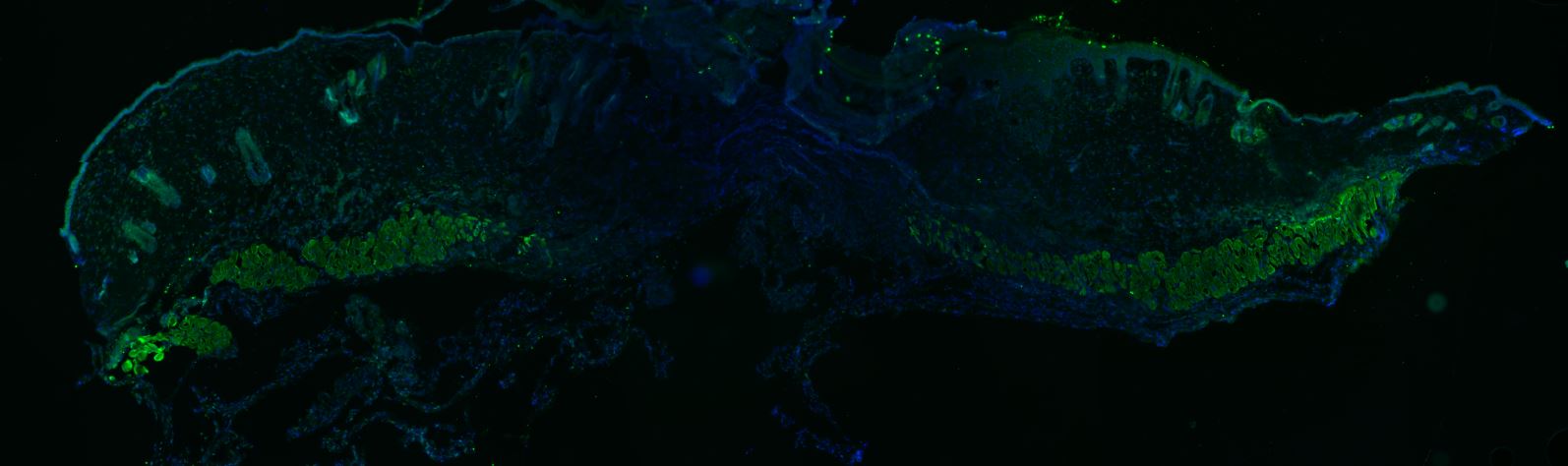
The only review for this product is a 5-star rating by Ruchi Gupta (July 2022), who used the antibody at a 1:50 dilution for immunofluorescence on mouse skin tissue. The reviewer included an image of the staining result and provided no additional written comments beyond confirming the application. Overall, the single review reflects a positive experience with the antibody performing well in IF on mouse skin.
The reviews below have been submitted by verified Proteintech customers who received an incentive for providing their feedback.
Ruchi (Verified Customer) (07-26-2022) | IF on mouse skin
 |




