

Tested Applications
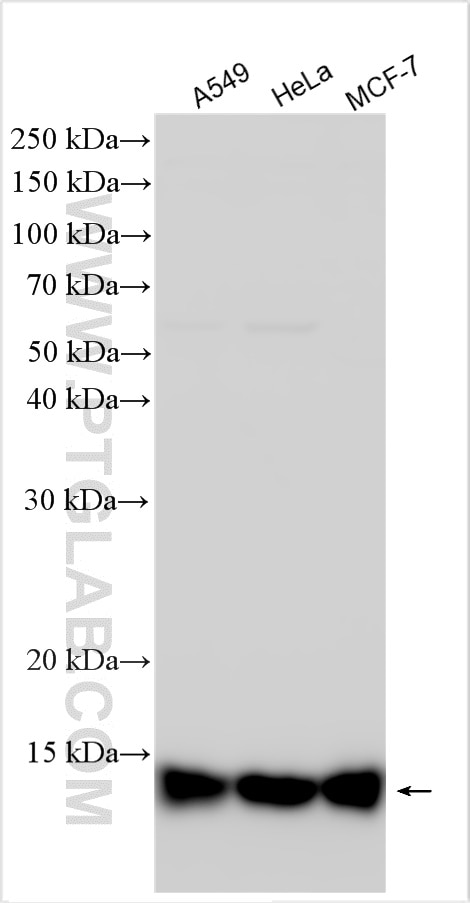
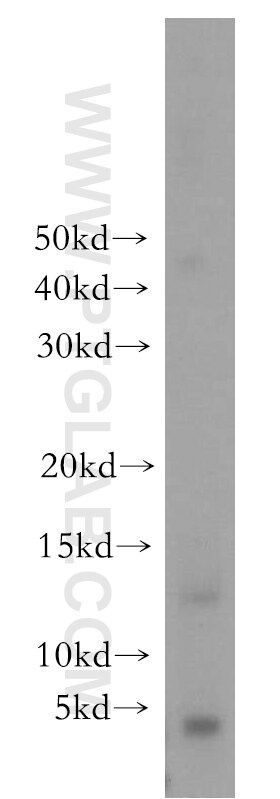
| Positive WB detected in | A549 cells, human brain tissue, HeLa cells, MCF-7 cells |
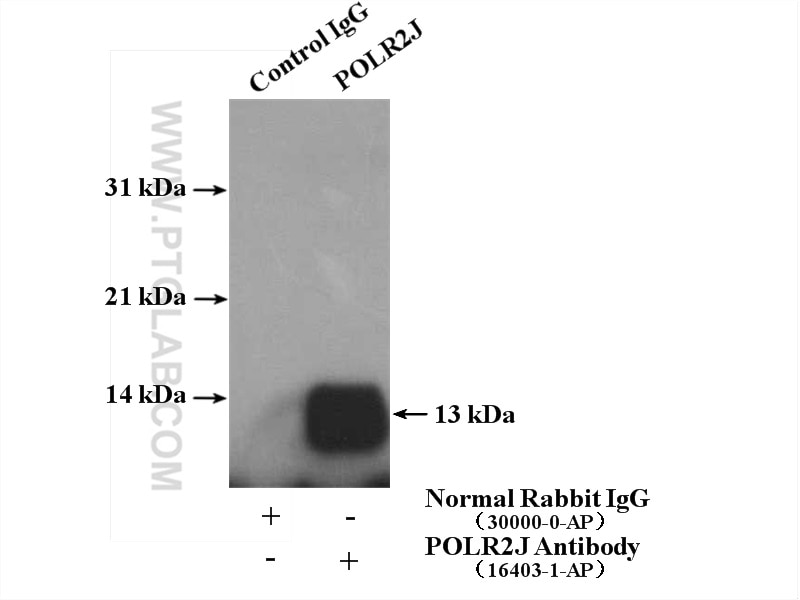
| Positive IP detected in | A549 cells |
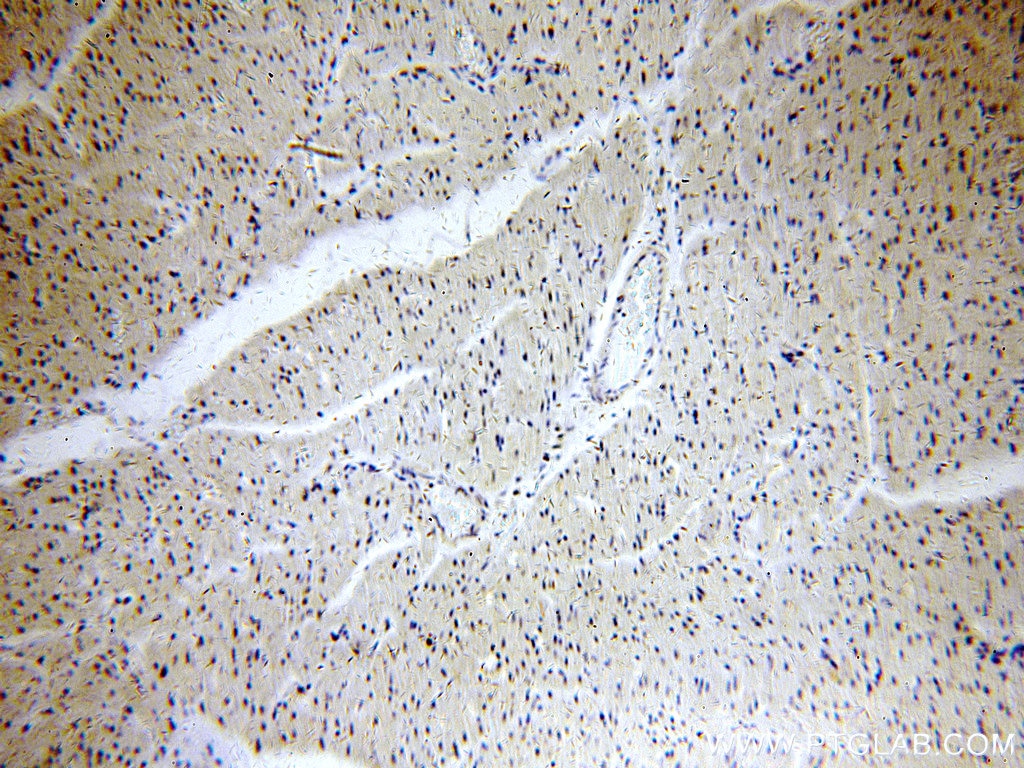
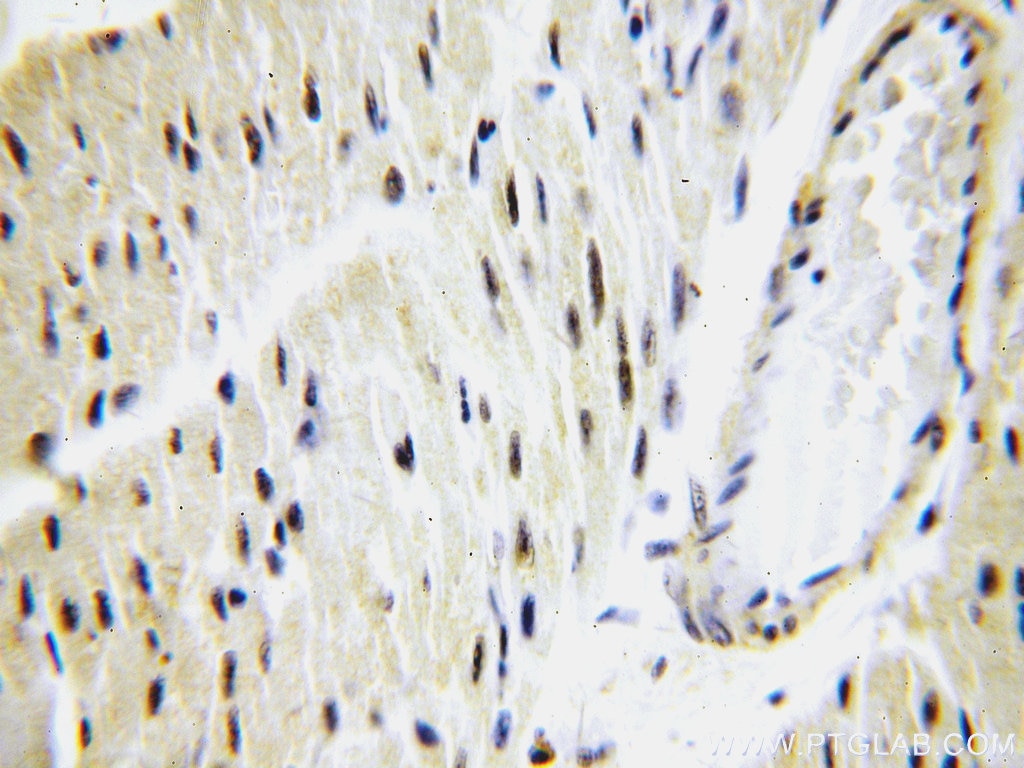
| Positive IHC detected in | human heart tissue Note: suggested antigen retrieval with TE buffer pH 9.0; (*) Alternatively, antigen retrieval may be performed with citrate buffer pH 6.0 |
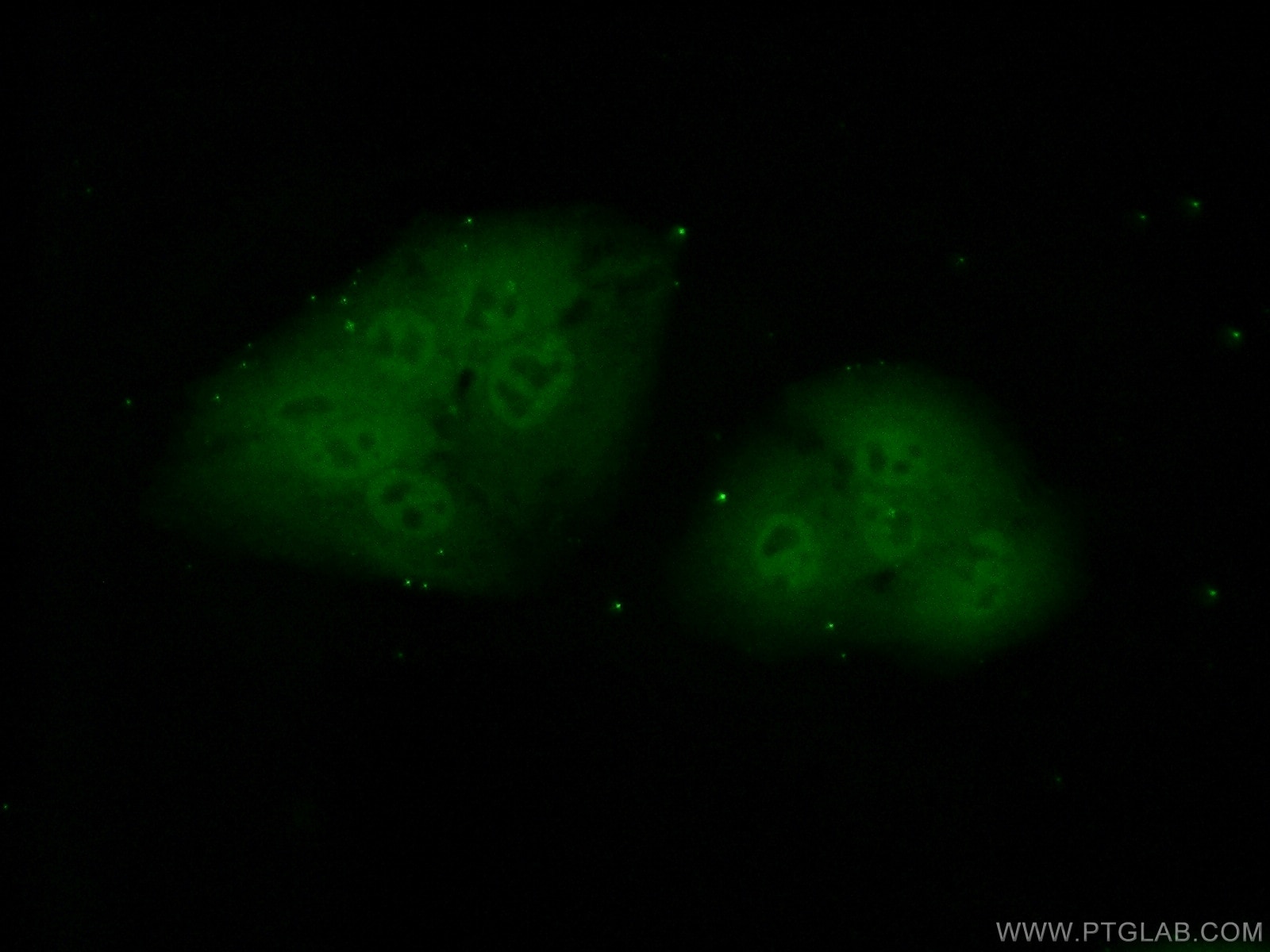
| Positive IF/ICC detected in | A549 cells |
Recommended dilution
| Application | Dilution |
|---|---|
| Western Blot (WB) | WB : 1:500-1:3000 |
| Immunoprecipitation (IP) | IP : 0.5-4.0 ug for 1.0-3.0 mg of total protein lysate |
| Immunohistochemistry (IHC) | IHC : 1:20-1:200 |
| Immunofluorescence (IF)/ICC | IF/ICC : 1:50-1:500 |
| It is recommended that this reagent should be titrated in each testing system to obtain optimal results. | |
| Sample-dependent, Check data in validation data gallery. | |
Product Information
16403-1-AP targets POLR2J in WB, IHC, IF/ICC, IP, ELISA applications and shows reactivity with human, mouse, rat samples.
| Tested Reactivity | human, mouse, rat |
| Cited Reactivity | human, mouse |
| Host / Isotype | Rabbit / IgG |
| Class | Polyclonal |
| Type | Antibody |
| Immunogen |
CatNo: Ag9520 Product name: Recombinant human POLR2J protein Source: e coli.-derived, PGEX-4T Tag: GST Domain: 1-115 aa of BC024165 Sequence: MNAPPAFESFLLFEGEKKITINKDTKVPNACLFTINKEDHTLGNIIKSQLLKDPQVLFAGYKVPHPLEHKIIIRVQTTPDYSPQEAFTNAITDLISELSLLEERFRVAIKDKQEG Predict reactive species |
| Full Name | polymerase (RNA) II (DNA directed) polypeptide J, 13.3kDa |
| Calculated Molecular Weight | 115 aa, 13 kDa |
| Observed Molecular Weight | 13 kDa |
| GenBank Accession Number | BC024165 |
| Gene Symbol | POLR2J |
| Gene ID (NCBI) | 5439 |
| RRID | AB_10666162 |
| Conjugate | Unconjugated |
| Form | Liquid |
| Purification Method | Antigen affinity purification |
| UNIPROT ID | P52435 |
| Storage Buffer | PBS with 0.02% sodium azide and 50% glycerol, pH 7.3. |
| Storage Conditions | Store at -20°C. Stable for one year after shipment. Aliquoting is unnecessary for -20oC storage. 20ul sizes contain 0.1% BSA. |
Protocols
| Product Specific Protocols | |
|---|---|
| IF protocol for POLR2J antibody 16403-1-AP | Download protocol |
| IHC protocol for POLR2J antibody 16403-1-AP | Download protocol |
| IP protocol for POLR2J antibody 16403-1-AP | Download protocol |
| WB protocol for POLR2J antibody 16403-1-AP | Download protocol |
| Standard Protocols | |
|---|---|
| Click here to view our Standard Protocols |
Publications
What published studies show
The POLR2J polyclonal antibody (Cat# 16403-1-AP) has 5 citations published in Molecular Cell, Genome Biology, Cell Bioscience, and American Journal of Cancer Research. The research fields span RNA polymerase II regulation of ribosomal protein expression, targeted protein degradation revealing Pol II heterogeneity, cross-regulome profiling of polymerase III on mRNA transcription, ranavirus replication and transcription machinery, and POLR2J-driven glioblastoma malignancy via oxidative stress and STAT3 signaling.
| Species | Application | Title |
|---|---|---|
Mol Cell Targeted protein degradation reveals RNA Pol II heterogeneity and functional diversity | ||
Mol Cell RNA Pol II preferentially regulates ribosomal protein expression by trapping disassociated subunits | ||
Genome Biol Cross-regulome profiling of RNA polymerases highlights the regulatory role of polymerase III on mRNA transcription by maintaining local chromatin architecture | ||
Cell Biosci Replication and transcription machinery for ranaviruses: components, correlation, and functional architecture.
| ||
Am J Cancer Res POLR2J expression promotes glioblastoma malignancy by regulating oxidative stress and the STAT3 signaling pathway |







