
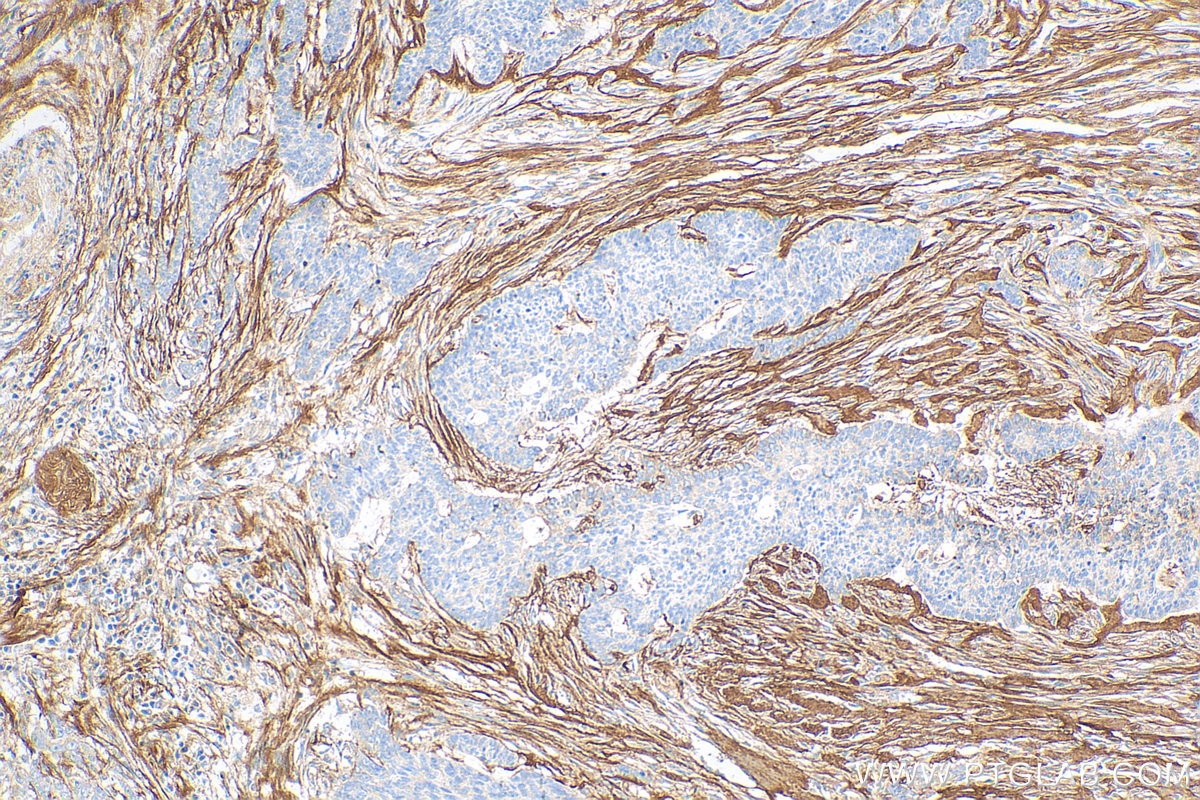
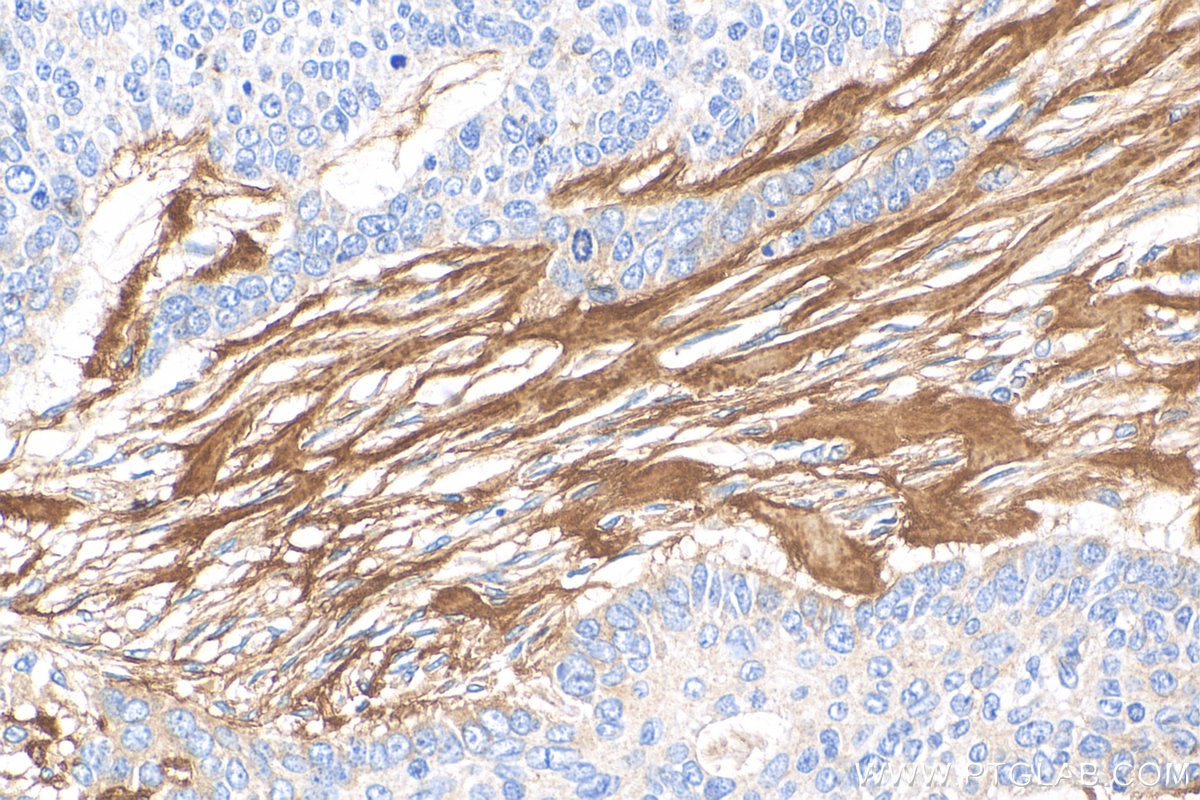
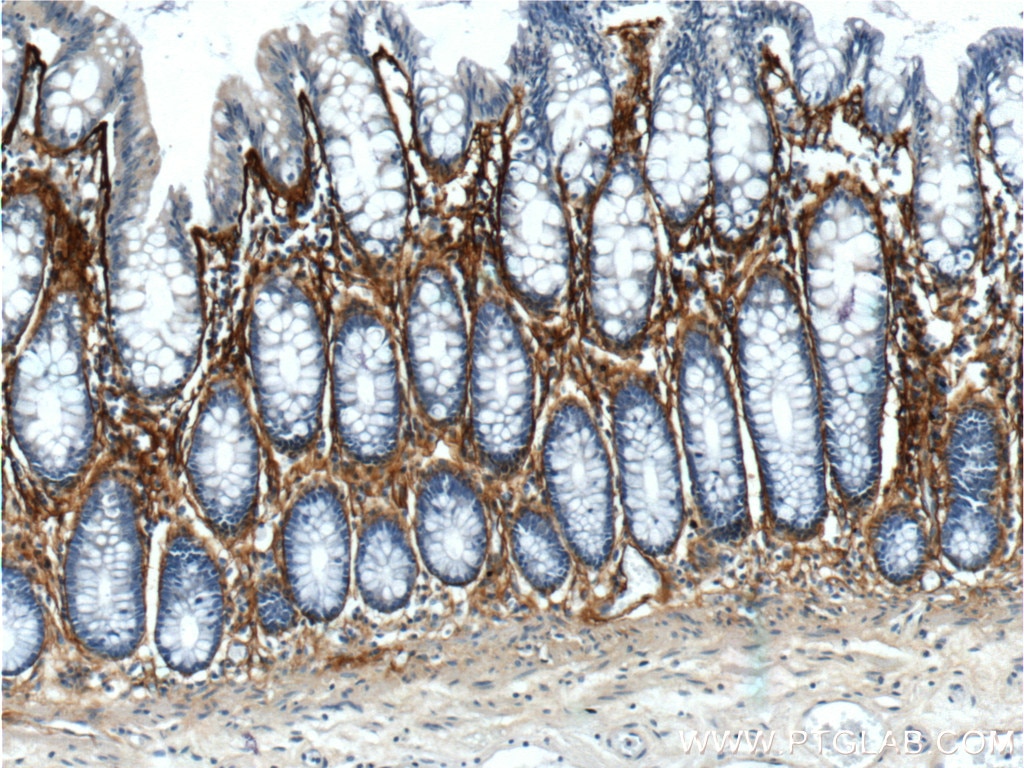
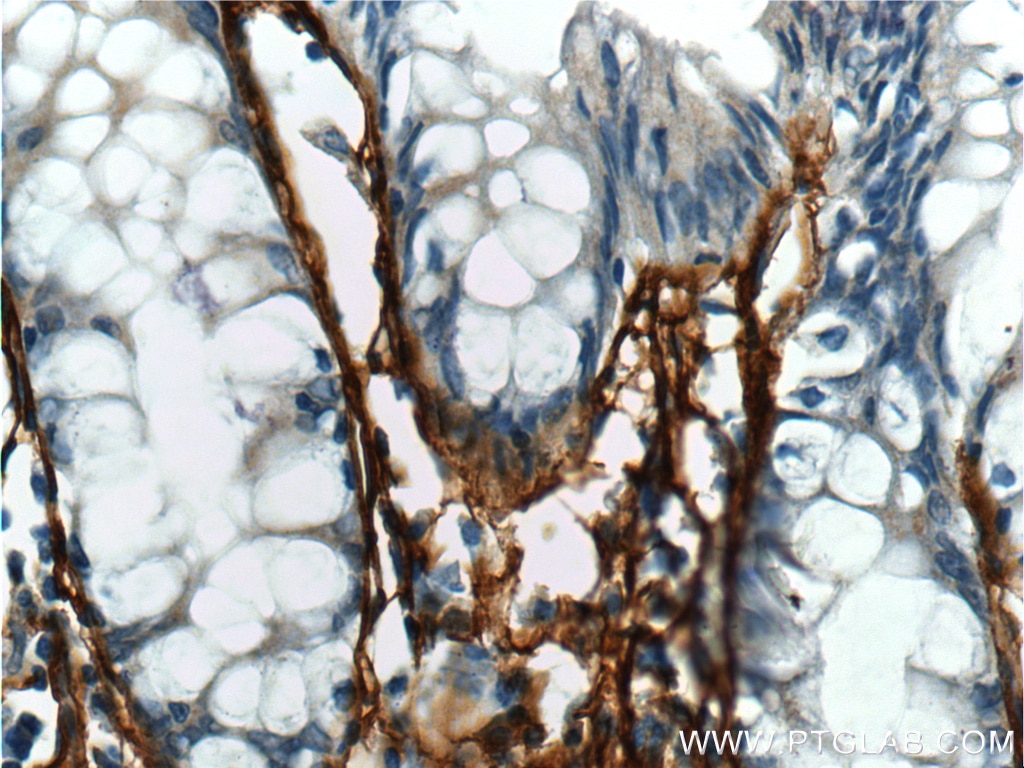
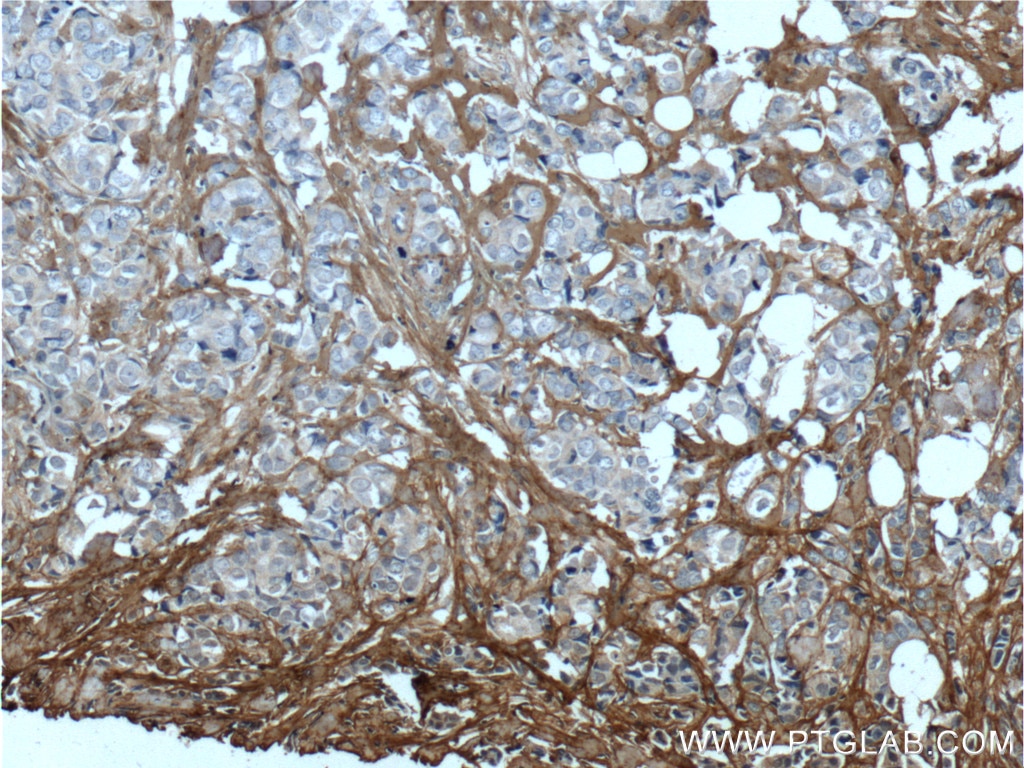
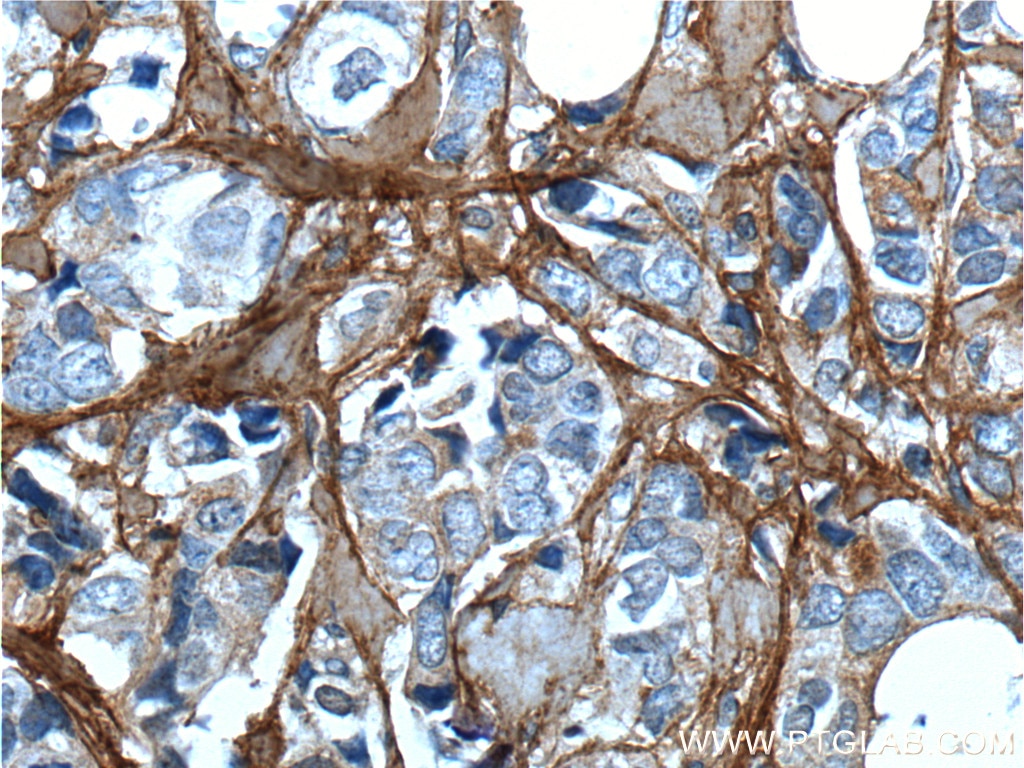

Tested Applications
| Positive IHC detected in | human colon tissue, human breast cancer tissue, human skin cancer tissue Note: suggested antigen retrieval with TE buffer pH 9.0; (*) Alternatively, antigen retrieval may be performed with citrate buffer pH 6.0 |
Recommended dilution
| Application | Dilution |
|---|---|
| Immunohistochemistry (IHC) | IHC : 1:50-1:500 |
| It is recommended that this reagent should be titrated in each testing system to obtain optimal results. | |
| Sample-dependent, Check data in validation data gallery. | |
Product Information
19899-1-AP targets Periostin in IHC, IF, ELISA applications and shows reactivity with human, mouse, rat samples.
| Tested Reactivity | human, mouse, rat |
| Cited Reactivity | human, mouse, rat, zebrafish |
| Host / Isotype | Rabbit / IgG |
| Class | Polyclonal |
| Type | Antibody |
| Immunogen |
CatNo: Ag13791 Product name: Recombinant human POSTN protein Source: e coli.-derived, PGEX-4T Tag: GST Domain: 21-368 aa of BC106710 Sequence: ANNHYDKILAHSRIRGRDQGPNVCALQQILGTKKKYFSTCKNWYKKSICGQKTTVLYECCPGYMRMEGMKGCPAVLPIDHVYGTLGIVGATTTQRYSDASKLREEIEGKGSFTYFAPSNEAWDNLDSDIRRGLESNVNVELLNALHSHMINKRMLTKDLKNGMIIPSMYNNLGLFINHYPNGVVTVNCARIIHGNQIATNGVVHVIDRVLTQIGTSIQDFIEAEDDLSSFRAAAITSDILEALGRDGHFTLFAPTNEAFEKLPRGVLERIMGDKVASEALMKYHILNTLQCSESIMGGAVFETLEGNTIEIGCDGDSITVNGIKMVNKKDIVTNNGVIHLIDQVLIPD Predict reactive species |
| Full Name | periostin, osteoblast specific factor |
| Calculated Molecular Weight | 93 kDa |
| GenBank Accession Number | BC106710 |
| Gene Symbol | Periostin |
| Gene ID (NCBI) | 10631 |
| RRID | AB_10732682 |
| Conjugate | Unconjugated |
| Form | Liquid |
| Purification Method | Antigen affinity purification |
| UNIPROT ID | Q15063 |
| Storage Buffer | PBS with 0.02% sodium azide and 50% glycerol, pH 7.3. |
| Storage Conditions | Store at -20°C. Stable for one year after shipment. Aliquoting is unnecessary for -20oC storage. 20ul sizes contain 0.1% BSA. |
Background Information
Periostin (POSTN, PN), originally named as osteoblast-specific factor 2 (OSF-2), is a 90-kDa secreted protein which is now classified as a matricellular protein. It is present in a wide variety of normal adult tissues and fetal tissues, and has a role in bone, tooth and heart development and function. Studies show that periostin is overexpressed in a broad range of human cancer types, including lung, ovary, breast and colon cancers. Recent evidence reveals that periostin is expressed by fibroblasts in the normal tissue and in the stroma of the primary tumour, and it is required to allow cancer stem cell maintenance. The isoforms of periostin are between 83 and 93 kDa in mass and differ in their C-terminal sequences, characterized by individual presence or absence of cassette exons 17-21 (UniProtKB/Swiss-Prot,PMID: 21997759).
Publications
What published studies show
The Periostin Polyclonal antibody (Cat# 19899-1-AP) has accumulated 41 citations published in journals including Nature Communications, Journal of Clinical Investigation, ACS Nano, Cell Death & Disease, Biomaterials, and Advanced Science. Associated research fields encompass cardiac fibrosis and heart failure, periodontal disease and bone regeneration, diverse cancers (esophageal, breast, ovarian, lung, colorectal), renal and pulmonary fibrosis, angiogenesis, tissue repair, and diabetic complications.
| Species | Application | Title |
|---|---|---|
Bone Res Loss of PTH 1 receptor signaling in periodontal cells drives cementum dysfunction and molar ankylosis in mice. | ||
Nat Commun Harnessing the regenerative potential of interleukin11 to enhance heart repair | ||
Nat Commun LTBP4 deficiency inhibits NLRP3 inflammasome activation in cardiomyocytes and attenuates heart failure in male mice | ||
Exp Mol Med Single-cell RNA sequencing and spatial transcriptomics of esophageal squamous cell carcinoma with lymph node metastases | ||
ACS Nano Multifunctional Injectable Bioadhesive with Toll-like Receptor 4 and Myeloid Differentiation Factor 2 Antagonistic Anti-inflammatory Potential for Periodontal Regeneration | ||
J Nanobiotechnology Graphene quantum dots rescue angiogenic retinopathy via blocking STAT3/Periostin/ERK signaling. |







