

Tested Applications
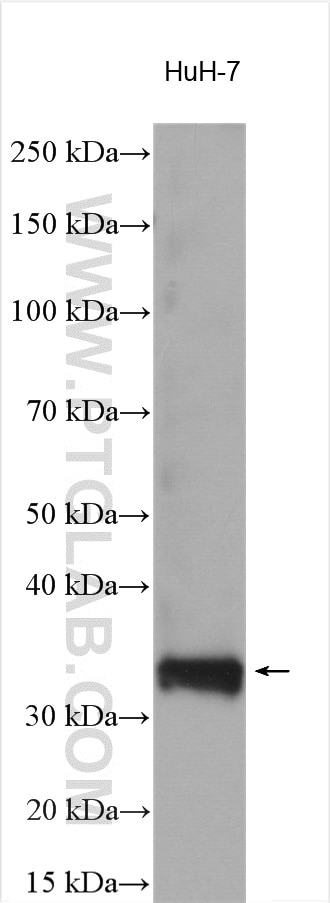
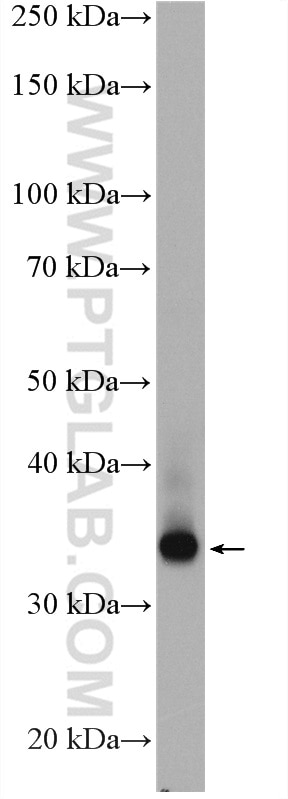
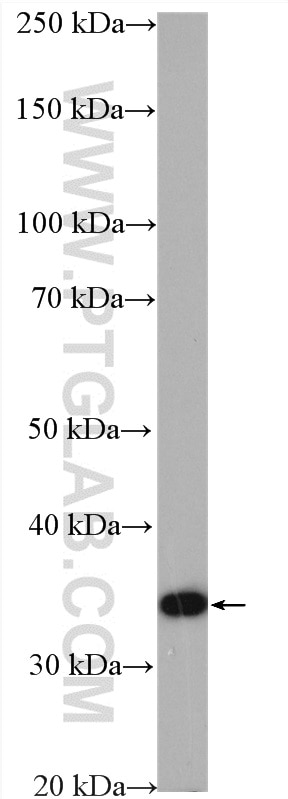
| Positive WB detected in | HuH-7 cells, A549 cells, K-562 cells |
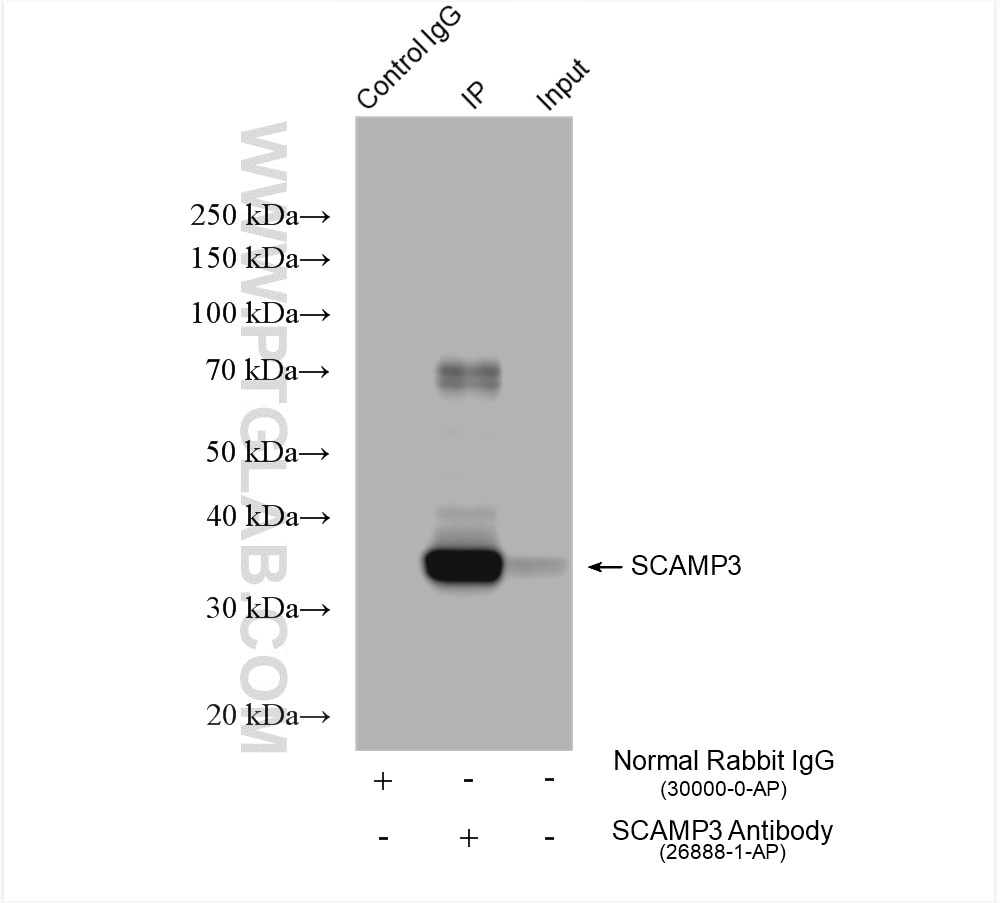
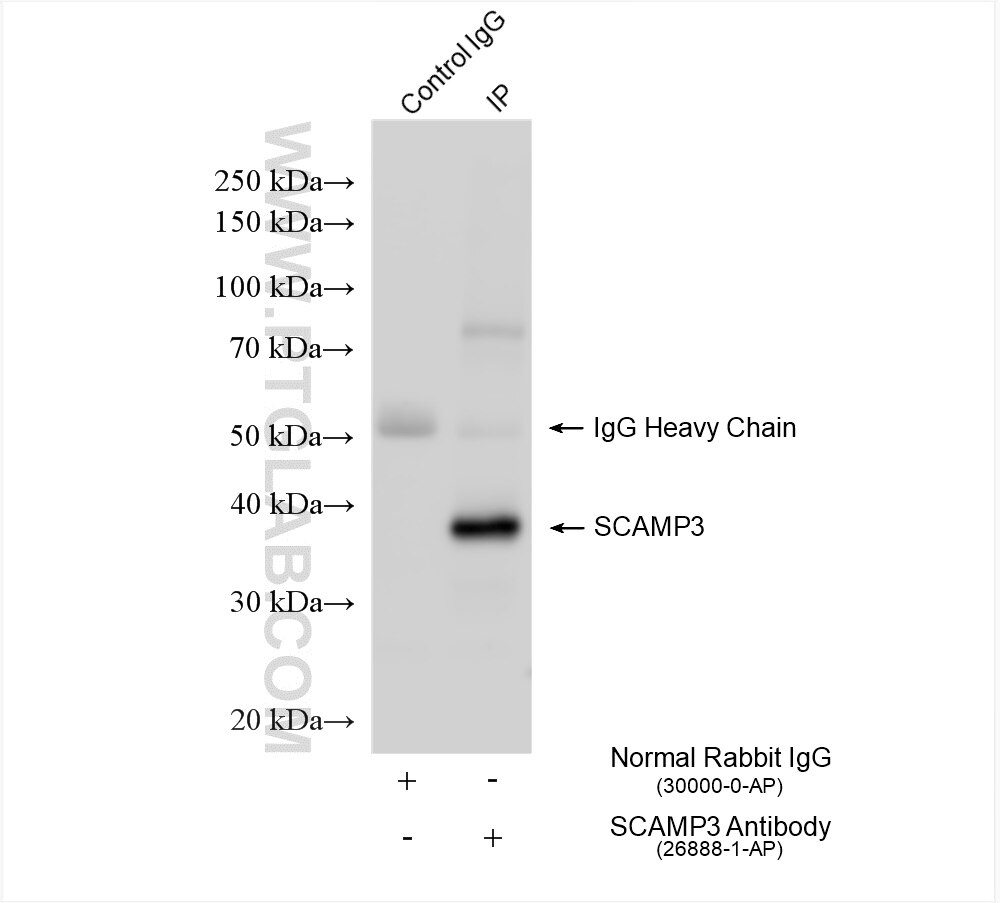
| Positive IP detected in | HepG2 cells, mouse heart tissue |
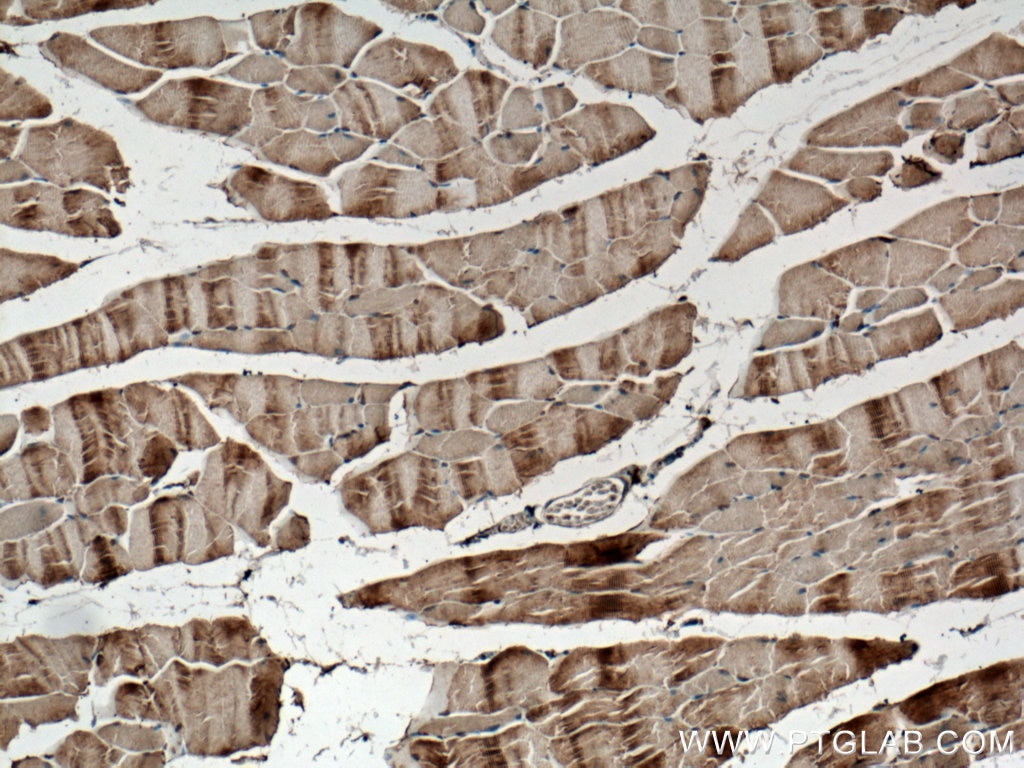
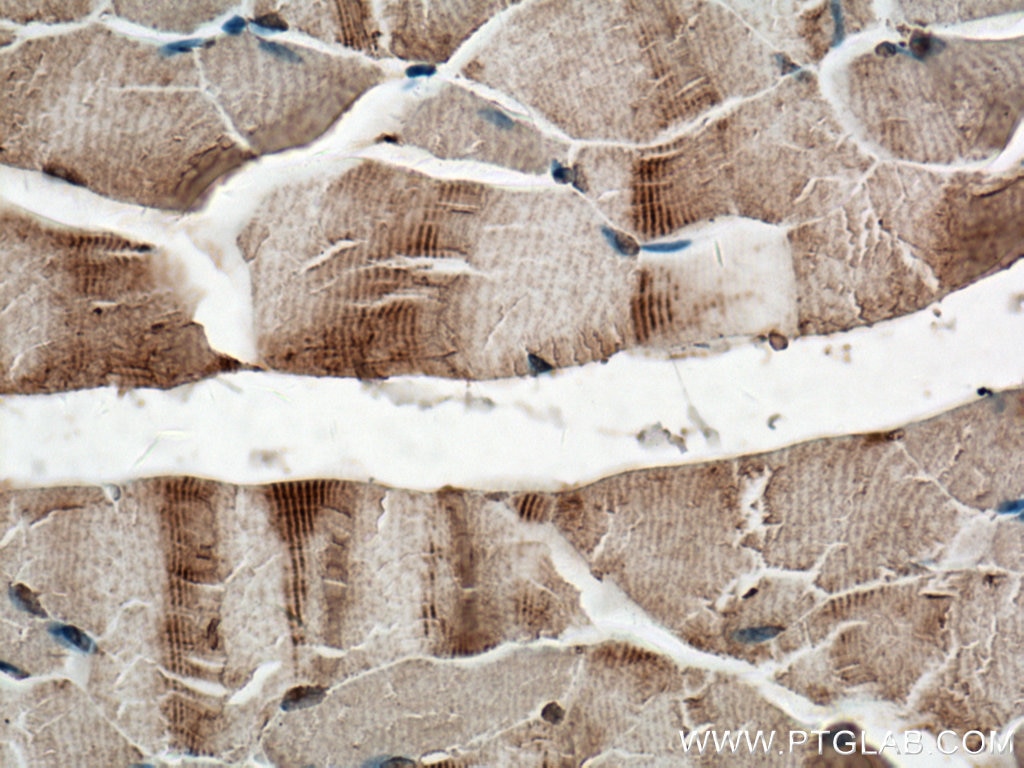
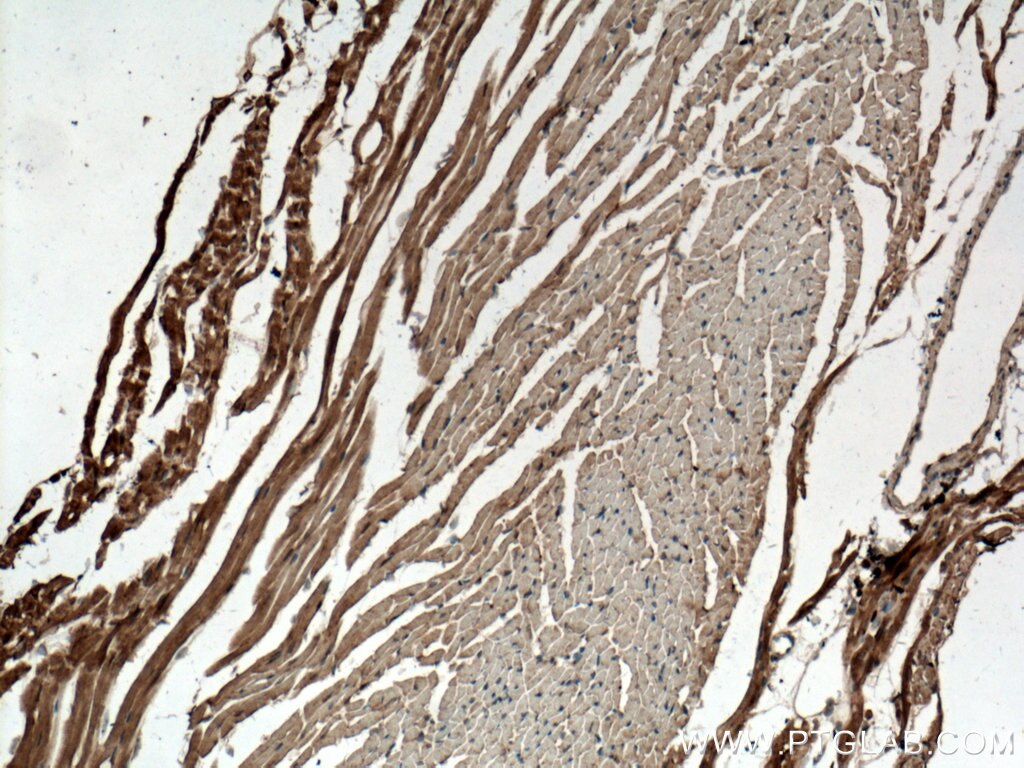
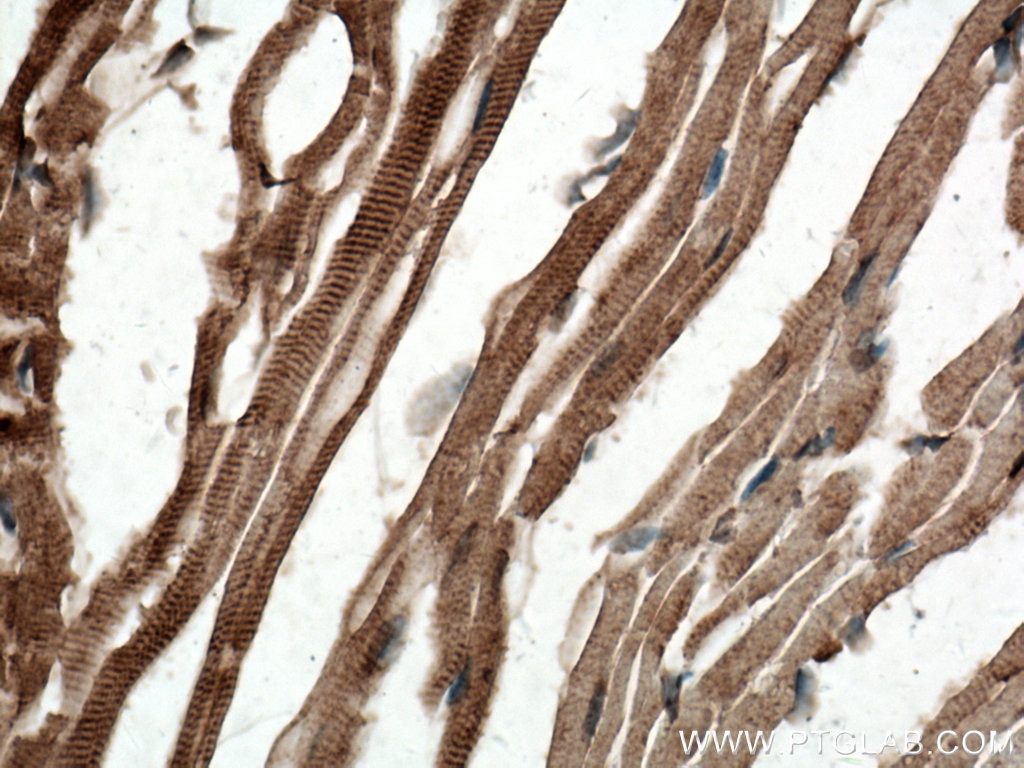
| Positive IHC detected in | mouse skeletal muscle tissue, mouse heart tissue Note: suggested antigen retrieval with TE buffer pH 9.0; (*) Alternatively, antigen retrieval may be performed with citrate buffer pH 6.0 |
Recommended dilution
| Application | Dilution |
|---|---|
| Western Blot (WB) | WB : 1:1000-1:3000 |
| Immunoprecipitation (IP) | IP : 0.5-4.0 ug for 1.0-3.0 mg of total protein lysate |
| Immunohistochemistry (IHC) | IHC : 1:50-1:500 |
| It is recommended that this reagent should be titrated in each testing system to obtain optimal results. | |
| Sample-dependent, Check data in validation data gallery. | |
Product Information
26888-1-AP targets SCAMP3 in WB, IHC, IF, IP, ELISA applications and shows reactivity with human, mouse samples.
| Tested Reactivity | human, mouse |
| Cited Reactivity | human |
| Host / Isotype | Rabbit / IgG |
| Class | Polyclonal |
| Type | Antibody |
| Immunogen |
CatNo: Ag25256 Product name: Recombinant human SCAMP3 protein Source: e coli.-derived, PGEX-4T Tag: GST Domain: 1-96 aa of BC000161 Sequence: MAQSRDGGNPFAEPSELDNPFQDPAVIQHRPSRQYATLDVYNPFETREPPPAYEPPAPAPLPPPSAPSLQPSRKLSPTEPKNYGSYSTQASAAAAT Predict reactive species |
| Full Name | secretory carrier membrane protein 3 |
| Calculated Molecular Weight | 38 kDa |
| Observed Molecular Weight | 33 kDa |
| GenBank Accession Number | BC000161 |
| Gene Symbol | SCAMP3 |
| Gene ID (NCBI) | 10067 |
| RRID | AB_2810962 |
| Conjugate | Unconjugated |
| Form | Liquid |
| Purification Method | Antigen affinity purification |
| UNIPROT ID | O14828 |
| Storage Buffer | PBS with 0.02% sodium azide and 50% glycerol, pH 7.3. |
| Storage Conditions | Store at -20°C. Stable for one year after shipment. Aliquoting is unnecessary for -20oC storage. 20ul sizes contain 0.1% BSA. |
Protocols
| Product Specific Protocols | |
|---|---|
| IHC protocol for SCAMP3 antibody 26888-1-AP | Download protocol |
| IP protocol for SCAMP3 antibody 26888-1-AP | Download protocol |
| WB protocol for SCAMP3 antibody 26888-1-AP | Download protocol |
| Standard Protocols | |
|---|---|
| Click here to view our Standard Protocols |
Publications
What published studies show
The SCAMP3 Polyclonal antibody (26888-1-AP) has 10 total citations in journals including Molecular Cell, Phytomedicine, International Journal of Biological Macromolecules, Aging (Albany NY), Communications Biology, Scientific Reports, Journal of Biological Chemistry, OncoTargets and Therapy, and Current Biology. Research fields span cancer biology (pancreatic adenocarcinoma, glioma, hepatocellular carcinoma, non-small cell lung cancer), metabolism/adipogenesis, protein trafficking and endocytosis, lysosomal/mTORC1 signaling, exosome biogenesis, cardiac fibrosis, and proteomics of ubiquitination and lipid acylation.
| Species | Application | Title |
|---|---|---|
Mol Cell mTORC1 Activation Requires DRAM-1 by Facilitating Lysosomal Amino Acid Efflux.
| ||
Phytomedicine Gentianella acuta-derived Gen-miR-1 suppresses myocardial fibrosis by targeting HAX1/HMG20A/Smads axis to attenuate inflammation in cardiac fibroblasts | ||
Int J Biol Macromol Fungal antitumor protein D1 is internalized via endocytosis and inhibits non-small cell lung cancer proliferation through MAPK signaling pathway | ||
Aging (Albany NY) Expression and prognostic analyses of SCAMPs in pancreatic adenocarcinoma. | ||
Commun Biol Identification of E3 ligase substrates and PROTAC-induced ubiquitylation sites using proximity-based identification of ubiquitin sites (PrIUS). | ||
Sci Rep MicroRNA-27a/b-3p and PPARG regulate SCAMP3 through a feed-forward loop during adipogenesis. |
Reviews
What customers say
Able is busy answering your previous question. Please try again later.
The reviews below have been submitted by verified Proteintech customers who received an incentive for providing their feedback.
Sammy (Verified Customer) (02-15-2024) | This antibody provided some convincing IF staining but detected many unspecific bands when western blotting HUVEC lysate.
|










