


Tested Applications
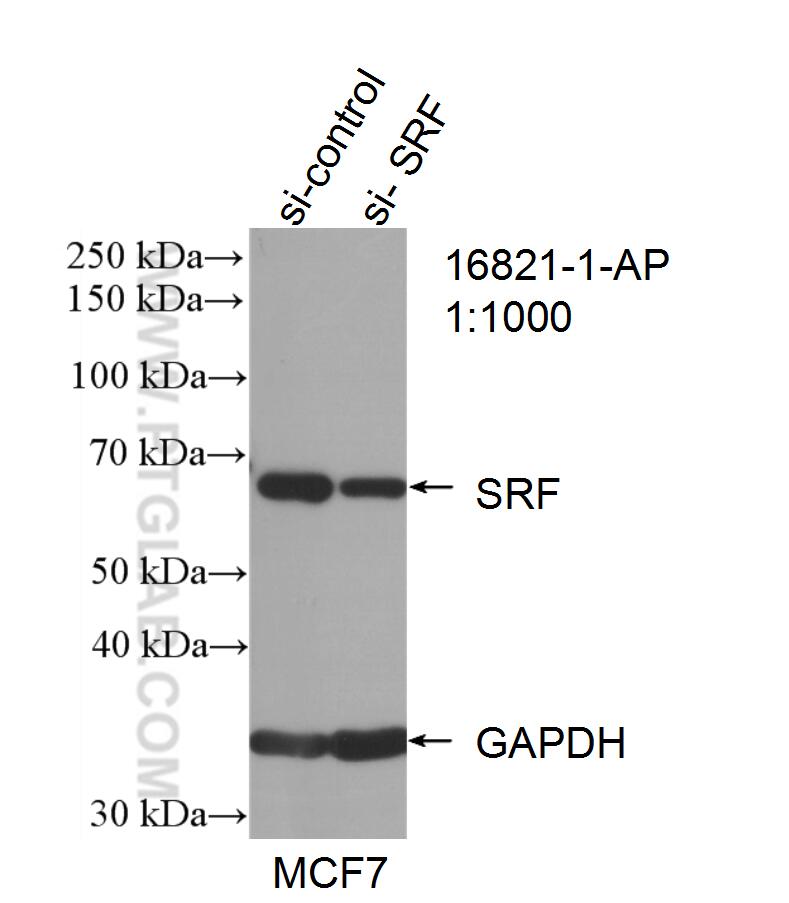
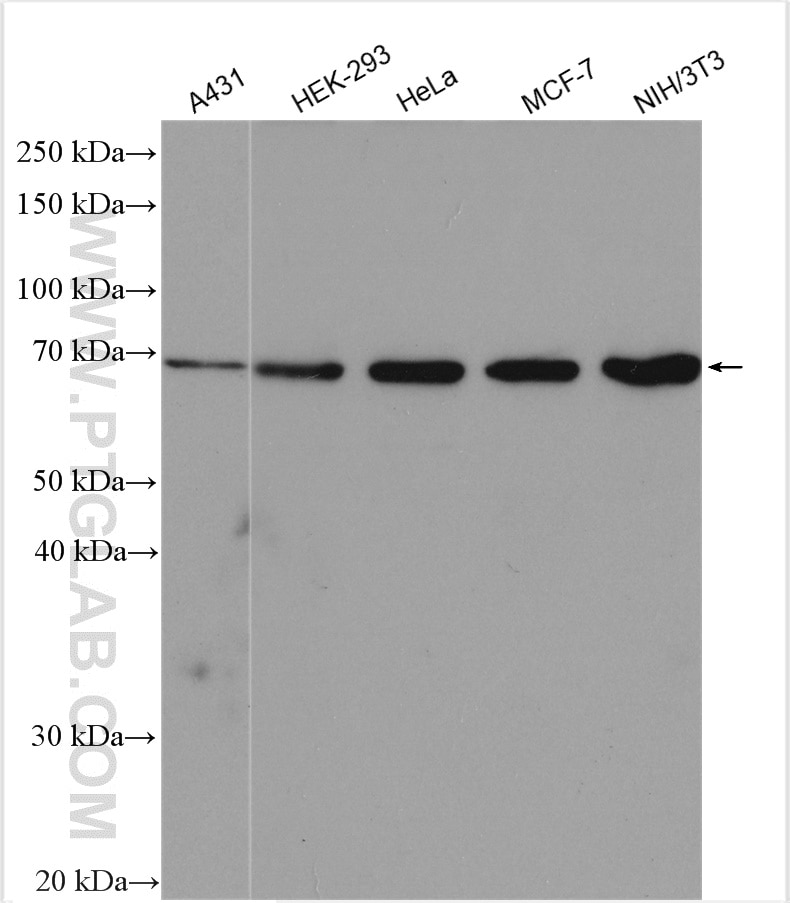
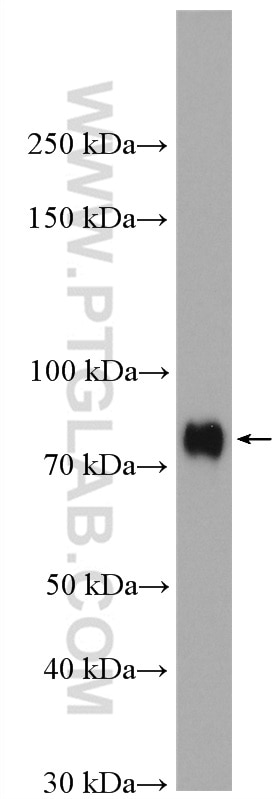
| Positive WB detected in | A431 cells, MCF-7 cells, K-562 cells, HEK-293 cells, HeLa cells, NIH/3T3 cells |
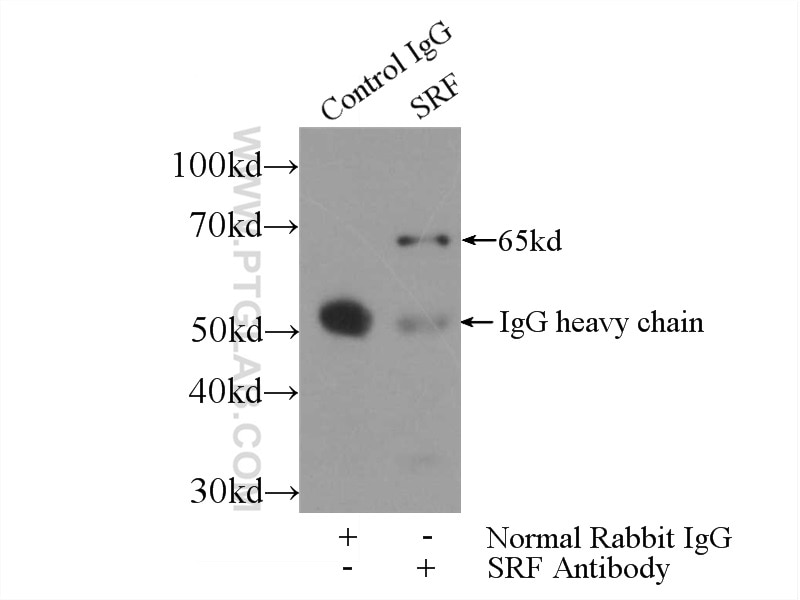
| Positive IP detected in | HeLa cells |
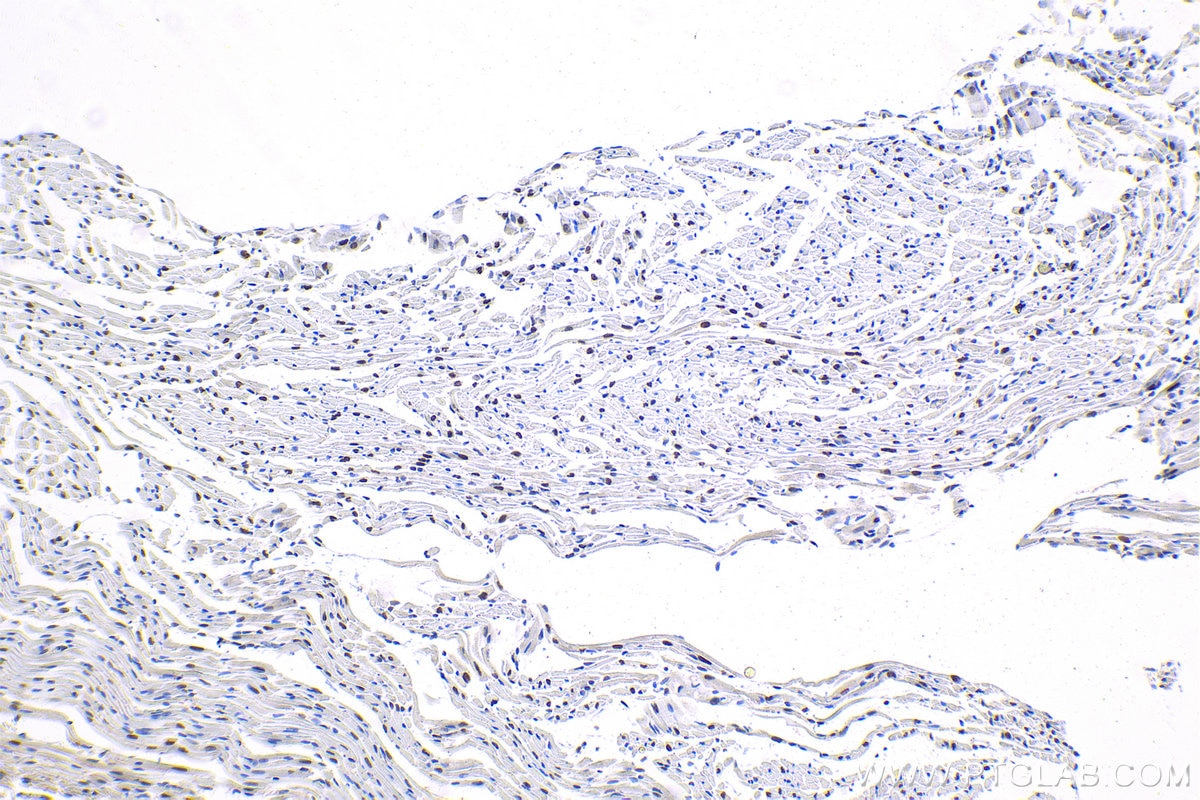
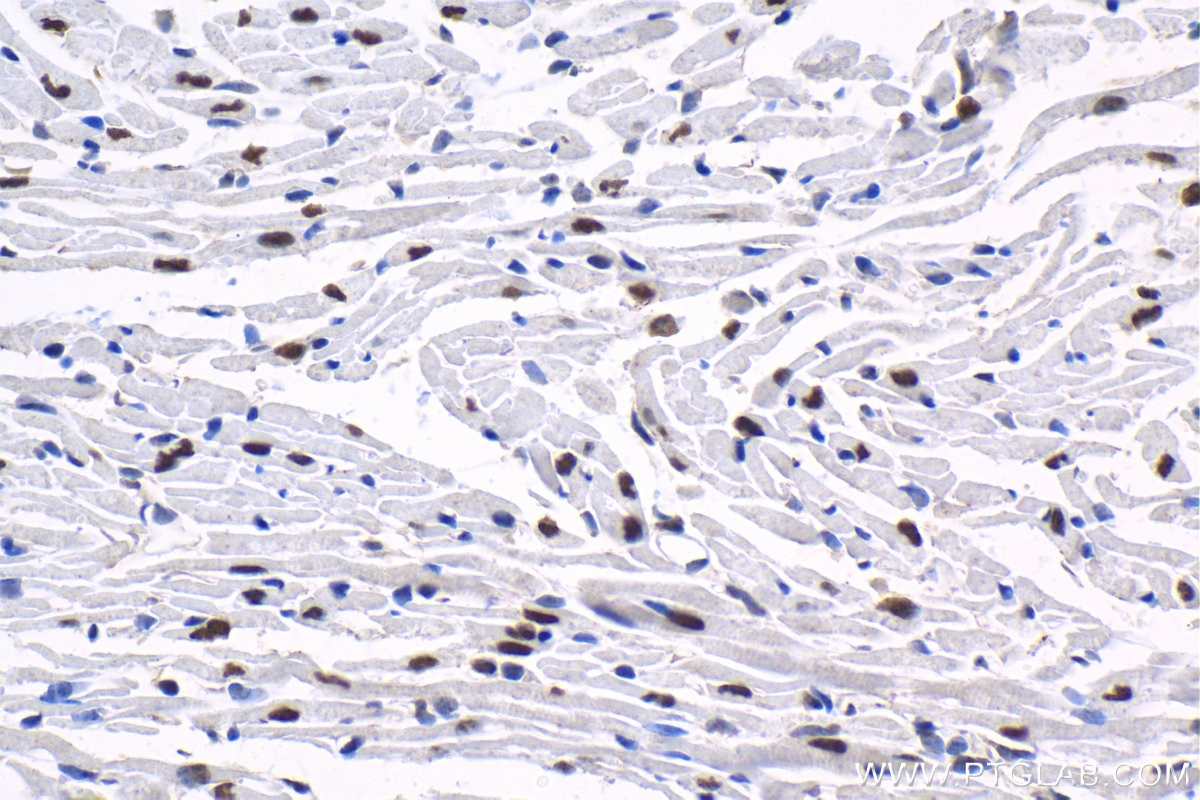
| Positive IHC detected in | mouse heart tissue Note: suggested antigen retrieval with TE buffer pH 9.0; (*) Alternatively, antigen retrieval may be performed with citrate buffer pH 6.0 |
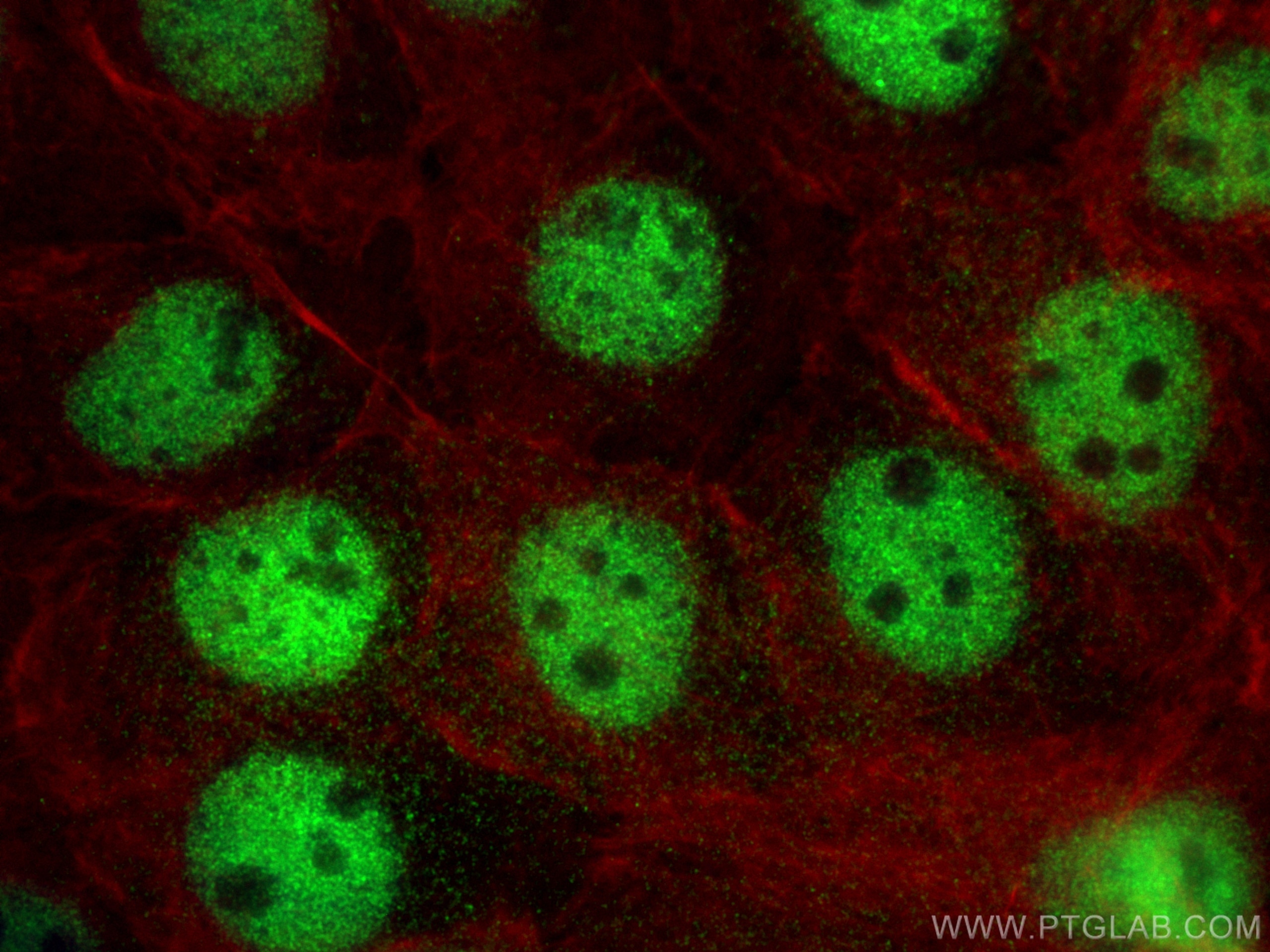
| Positive IF/ICC detected in | A431 cells |
Recommended dilution
| Application | Dilution |
|---|---|
| Western Blot (WB) | WB : 1:1000-1:6000 |
| Immunoprecipitation (IP) | IP : 0.5-4.0 ug for 1.0-3.0 mg of total protein lysate |
| Immunohistochemistry (IHC) | IHC : 1:2000-1:8000 |
| Immunofluorescence (IF)/ICC | IF/ICC : 1:300-1:1200 |
| It is recommended that this reagent should be titrated in each testing system to obtain optimal results. | |
| Sample-dependent, Check data in validation data gallery. | |
Product Information
16821-1-AP targets SRF in WB, IHC, IF/ICC, IP, CoIP, ChIP, ELISA applications and shows reactivity with human, mouse samples.
| Tested Reactivity | human, mouse |
| Cited Reactivity | human, mouse, rat |
| Host / Isotype | Rabbit / IgG |
| Class | Polyclonal |
| Type | Antibody |
| Immunogen |
CatNo: Ag10386 Product name: Recombinant human SRF protein Source: e coli.-derived, PET28a Tag: 6*His Domain: 1-348 aa of BC048211 Sequence: MLPTQAGAAAALGRGSALGGSLNRTPTGRPGGGGGTRGANGGRVPGNGAGLGPGRLEREAAAAAATTPAPTAGALYSGSEGDSESGEEEELGAERRGLKRSLSEMEIGMVVGGPEASAAATGGYGPVSGAVSGAKPGKKTRGRVKIKMEFIDNKLRRYTTFSKRKTGIMKKAYELSTLTGTQVLLLVASETGHVYTFATRKLQPMITSETGKALIQTCLNSPDSPPRSDPTTDQRMSATGFEETDLTYQVSESDSSGETKDTLKPAFTVTNLPGTTSTIQTAPSTSTTMQVSSGPSFPITNYLAPVSASVSPSAVSSANGTVLKSTGSGPVSSGGLMQLPTSFTLMPG Predict reactive species |
| Full Name | serum response factor (c-fos serum response element-binding transcription factor) |
| Calculated Molecular Weight | 508 aa, 52 kDa |
| Observed Molecular Weight | 65-70 kDa, 40 kDa |
| GenBank Accession Number | BC048211 |
| Gene Symbol | SRF |
| Gene ID (NCBI) | 6722 |
| RRID | AB_2194384 |
| Conjugate | Unconjugated |
| Form | Liquid |
| Purification Method | Antigen affinity purification |
| UNIPROT ID | P11831 |
| Storage Buffer | PBS with 0.02% sodium azide and 50% glycerol, pH 7.3. |
| Storage Conditions | Store at -20°C. Stable for one year after shipment. Aliquoting is unnecessary for -20oC storage. 20ul sizes contain 0.1% BSA. |
Background Information
Serum response factor (SRF) is a transcription factor that binds the serum response element (SRE), a sequence that mediates the transient response of many cellular genes to growth stimulation. SRF is required for cardiac differentiation and maturation due to the role in cardiac cell growth and muscle gene regulation. The full-length SRF protein is 67 kDa and molecular weight of cleaved fragment is 50 kDa and 20 kDa (PMID: 21769134).
Protocols
| Product Specific Protocols | |
|---|---|
| IF protocol for SRF antibody 16821-1-AP | Download protocol |
| IHC protocol for SRF antibody 16821-1-AP | Download protocol |
| IP protocol for SRF antibody 16821-1-AP | Download protocol |
| WB protocol for SRF antibody 16821-1-AP | Download protocol |
| Standard Protocols | |
|---|---|
| Click here to view our Standard Protocols |
Publications
What published studies show
Able is busy answering your previous question. Please try again later.
| Species | Application | Title |
|---|---|---|
Nat Commun SREBP1-mediated lipogenesis promotes dedifferentiation and senescence of vascular smooth muscle cells through epigenetic remodeling. | ||
Nat Commun The inner nuclear membrane protein LEMD3 organizes the 3D chromatin architecture to maintain vascular smooth muscle cell identity. | ||
Nat Commun SLC1A5 prevents aortic aneurysm and dissection by glutaminolytic-epigenetic orchestration of vascular smooth muscle cell homeostasis. | ||
Exp Mol Med Helicobacter pylori CagA-mediated ether lipid biosynthesis promotes ferroptosis susceptibility in gastric cancer
| ||
MedComm (2020) Phase Separation-Mediated SRF/P54nrb Transcription Complex Shapes the Vasculature Microenvironment via Upregulating OLFML3 in Glioblastoma. | ||
Adv Sci (Weinh) PRMT5 Maintains Homeostasis of the Intestinal Epithelium by Modulating Cell Proliferation and Survival |
Reviews
What customers say
The single review for this product rates it 4 stars. The reviewer used it for immunohistochemistry on a murine pancreatic tumour at a 1:100 dilution, and reported that it worked well in their IHC setup on the Leica Bond system. Overall, the feedback is positive, indicating reliable performance for IHC applications.
The reviews below have been submitted by verified Proteintech customers who received an incentive for providing their feedback.
Carmen (Verified Customer) (11-29-2024) | Works well IHC set up on the Leica Bond
|









