
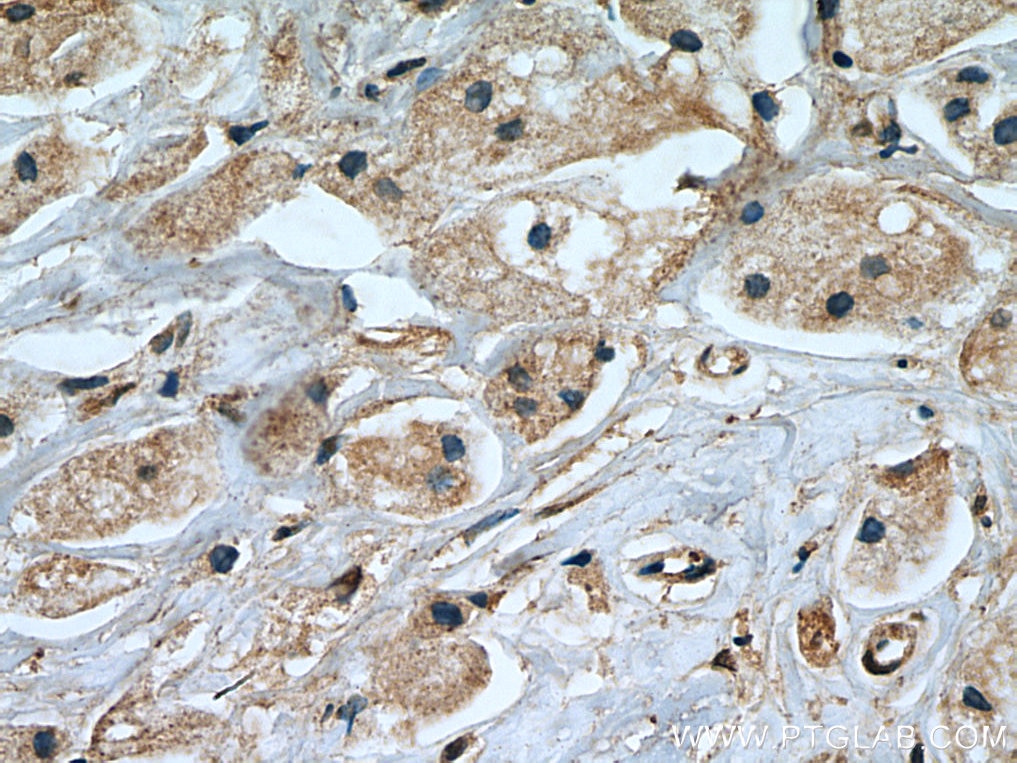

Tested Applications
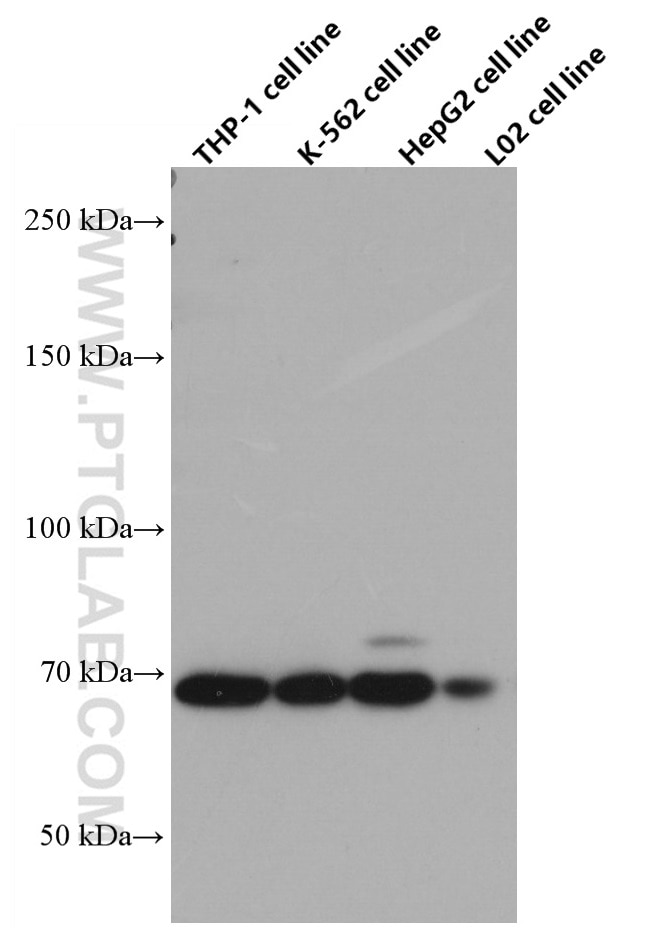
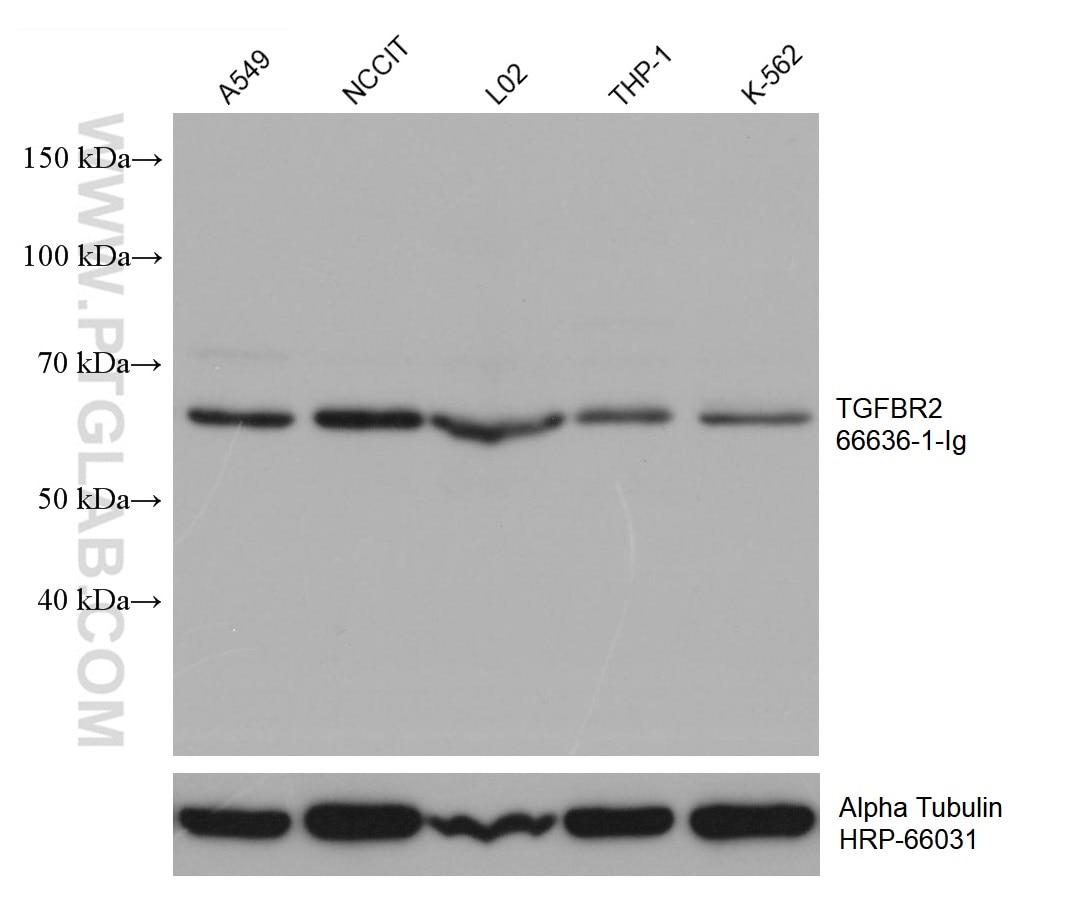
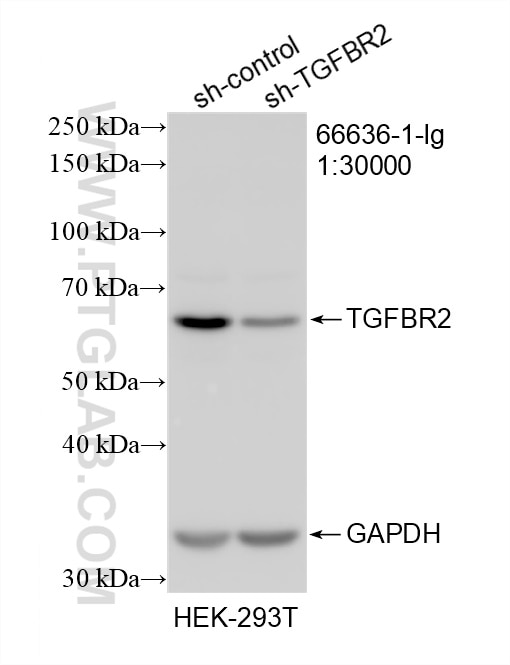
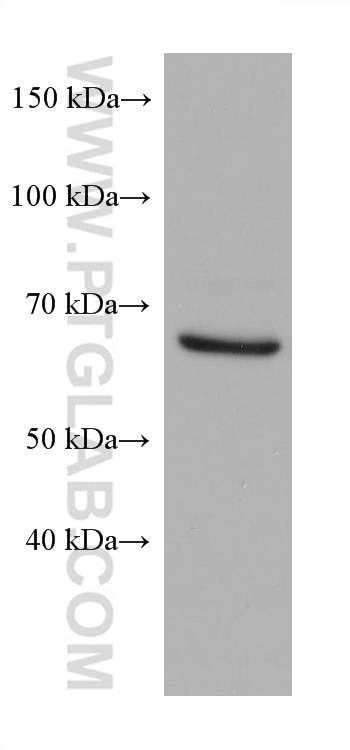
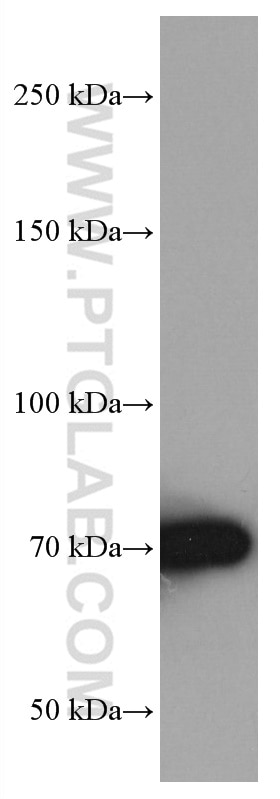
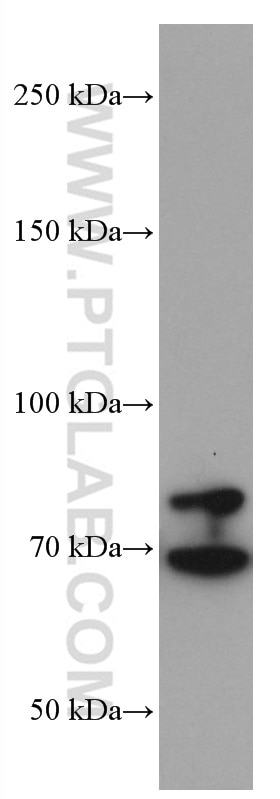
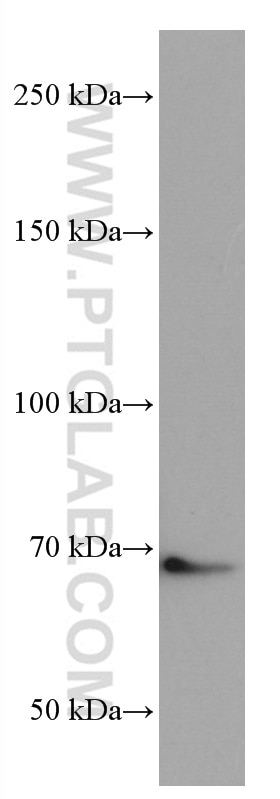
| Positive WB detected in | A549 cells, HEK-293T cells, U2OS cells, THP-1 cells, HSC-T6 cells, NIH/3T3 cells, NCCIT cells, L02 cells, K-562 cells, HepG2 cells |
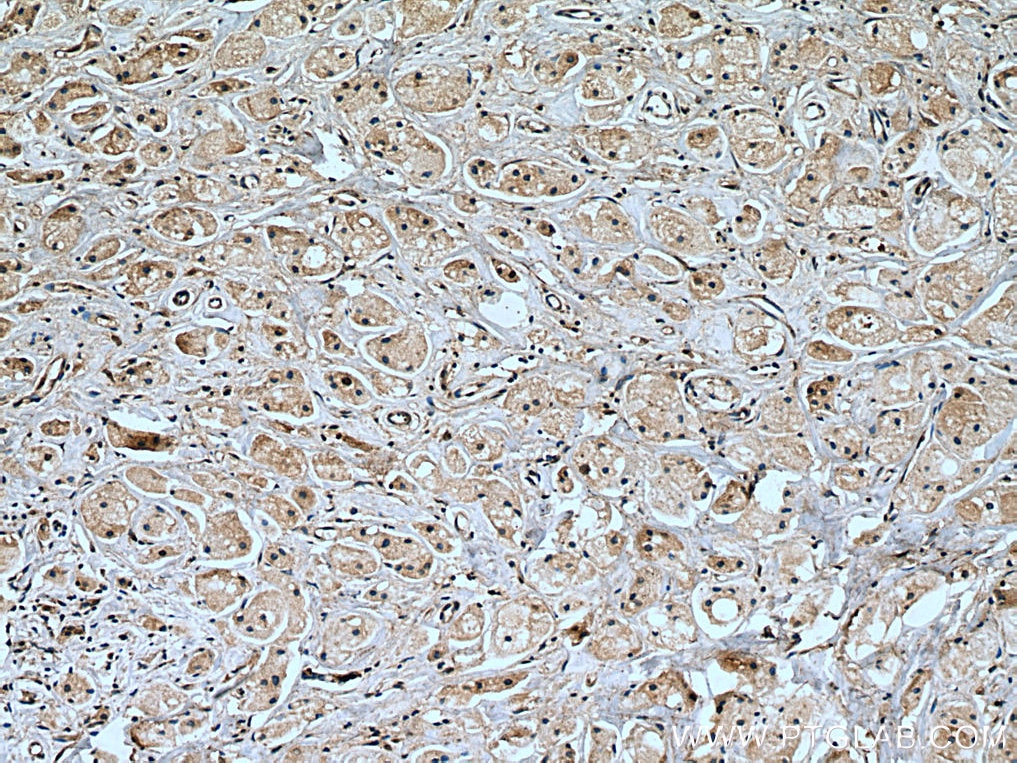
| Positive IHC detected in | human breast cancer tissue Note: suggested antigen retrieval with TE buffer pH 9.0; (*) Alternatively, antigen retrieval may be performed with citrate buffer pH 6.0 |
Recommended dilution
| Application | Dilution |
|---|---|
| Western Blot (WB) | WB : 1:5000-1:20000 |
| Immunohistochemistry (IHC) | IHC : 1:250-1:1000 |
| It is recommended that this reagent should be titrated in each testing system to obtain optimal results. | |
| Sample-dependent, Check data in validation data gallery. | |
Product Information
66636-1-Ig targets TGFBR2 in WB, IHC, IF, IP, CoIP, ELISA applications and shows reactivity with human, mouse, rat samples.
| Tested Reactivity | human, mouse, rat |
| Cited Reactivity | human, mouse, rat, goat |
| Host / Isotype | Mouse / IgG1 |
| Class | Monoclonal |
| Type | Antibody |
| Immunogen |
CatNo: Ag25773 Product name: Recombinant human TGFBR2 protein Source: e coli.-derived, PET28a Tag: 6*His Domain: 23-166 aa of BC040499 Sequence: TIPPHVQKSVNNDMIVTDNNGAVKFPQLCKFCDVRFSTCDNQKSCMSNCSITSICEKPQEVCVAVWRKNDENITLETVCHDPKLPYHDFILEDAASPKCIMKEKKKPGETFFMCSCSSDECNDNIIFSEEYNTSNPDLLLVIFQ Predict reactive species |
| Full Name | transforming growth factor, beta receptor II (70/80kDa) |
| Calculated Molecular Weight | 65 kDa |
| Observed Molecular Weight | 65-80 kDa |
| GenBank Accession Number | BC040499 |
| Gene Symbol | TGFBR2 |
| Gene ID (NCBI) | 7048 |
| RRID | AB_2881995 |
| Conjugate | Unconjugated |
| Form | Liquid |
| Purification Method | Protein G purification |
| UNIPROT ID | P37173 |
| Storage Buffer | PBS with 0.02% sodium azide and 50% glycerol, pH 7.3. |
| Storage Conditions | Store at -20°C. Stable for one year after shipment. Aliquoting is unnecessary for -20oC storage. 20ul sizes contain 0.1% BSA. |
Background Information
TGF beta Receptor II (TGFBR2) is a member of the transforming growth factor-β (TGF-β) superfamily, which are critical regulators of cell proliferation and differentiation, developmental patterning and morphogenesis, and disease pathogenesis (PMID: 10974075). TGFBR2 result in both SMAD4-dependent constraint of proliferation and SMAD4-independent activation of apoptosis (PMID: 29396446). The calculated molecular weight of TGFBR2 is 65 kDa. It has some isoforms with the molecular weight of 70-80 kDa and ~90 kDa after glycosylated.
Protocols
| Product Specific Protocols | |
|---|---|
| IHC protocol for TGFBR2 antibody 66636-1-Ig | Download protocol |
| WB protocol for TGFBR2 antibody 66636-1-Ig | Download protocol |
| Standard Protocols | |
|---|---|
| Click here to view our Standard Protocols |
Publications
What published studies show
The TGFBR2 Monoclonal antibody (2D5H7), catalog number 66636-1-Ig, has 73 citations. These appear in high-impact journals including Nature, Cell, Cell Stem Cell, Cancer Research, Autophagy, Advanced Science, Science Advances, Cell Reports, Developmental Cell, and Frontiers in Immunology, among others. The research fields span fibrosis (cardiac, renal, liver, pulmonary), TGF-β/Smad signaling, cancer metastasis, neurology, immunology, and regenerative medicine. Applications cited include WB, IHC, IF, IP, and CoIP across human, mouse, rat, and goat species.
| Species | Application | Title |
|---|---|---|
Cell Stem Cell Decoding the spatiotemporal development of the blood-brain barrier in human cortex. | ||
Cancer Res Neuropeptide Precursor VGF Promotes Neuroendocrine Differentiation and Cancer-Associated Fibroblast Activation in Small Cell Lung Cancer. | ||
Autophagy Autophagic degradation of SQSTM1 enables fibroblast activation to accelerate wound healing | ||
J Adv Res miR-3606-3p alleviates skin fibrosis by integratively suppressing the integrin/FAK, p-AKT/p-ERK, and TGF-β signaling cascades
|
Reviews
What customers say
The single review for this antibody reports a 5-star rating from an immunofluorescence application on mouse kidney tissue. The reviewer used a 1:200 dilution and noted that the antibody worked well for labeling TGF beta receptor type 2, producing robust immunofluorescence signals. They specifically highlighted that it is a KO-validated antibody, which contributed to their confidence in the results. Overall, the feedback is strongly positive, with no issues or limitations mentioned.
The reviews below have been submitted by verified Proteintech customers who received an incentive for providing their feedback.
Kenzo (Verified Customer) (08-15-2023) | This antibody worked well for labeling TGF beta receptor type 2 in mouse kidney. We were able to acquire robust immunofluorescence signals with this KO validated antibody.
|










