


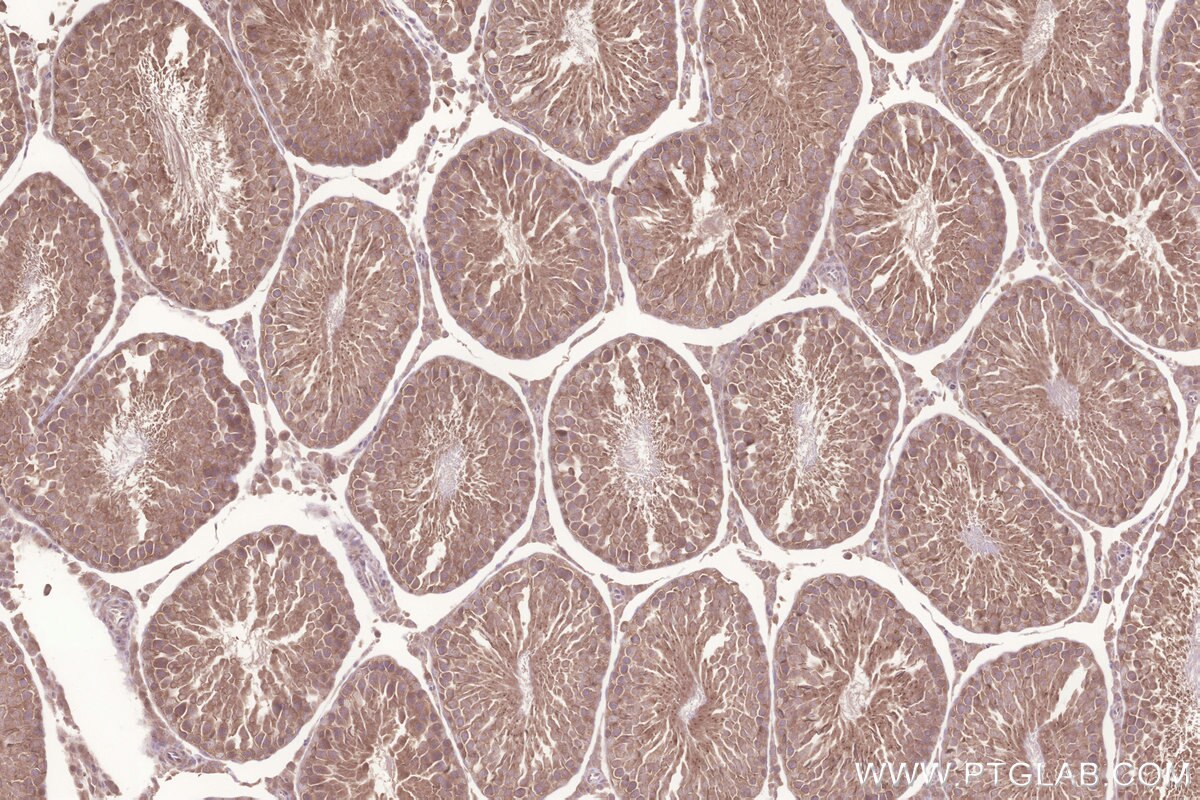
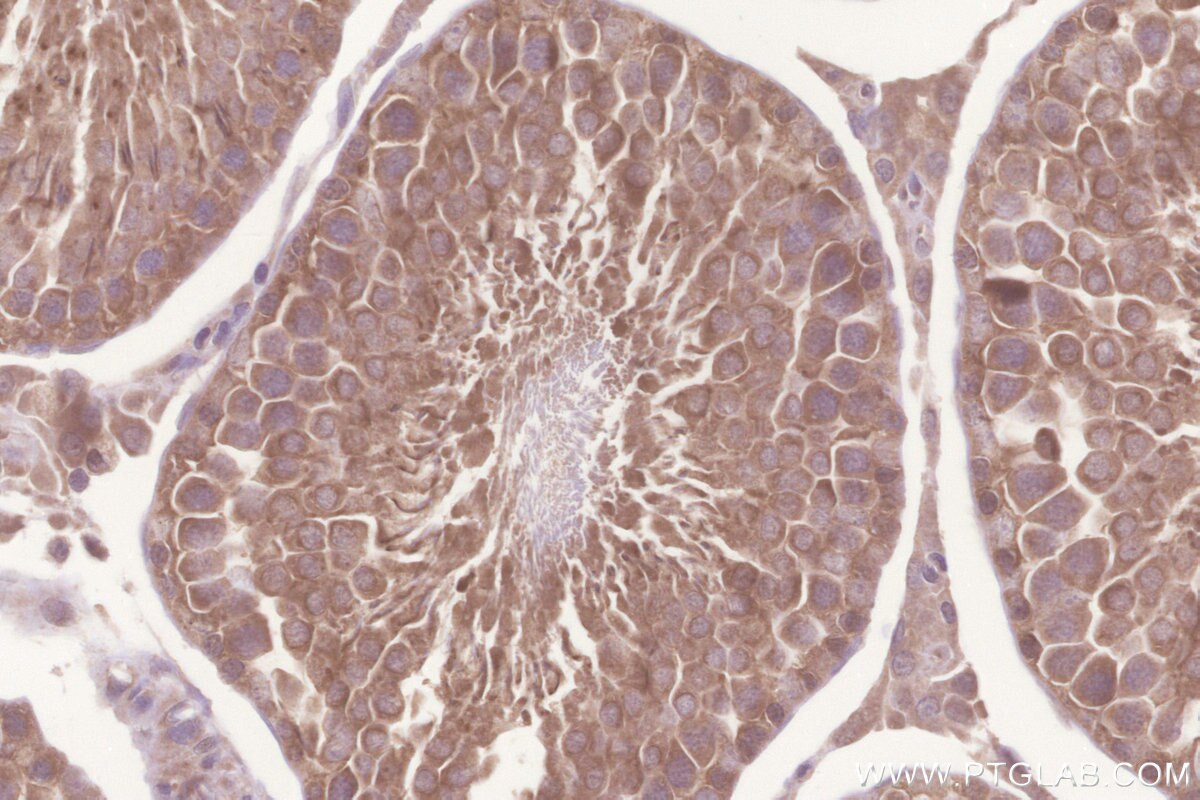

Tested Applications
| Positive WB detected in | mouse liver tissue |
| Positive IP detected in | mouse testis tissue |
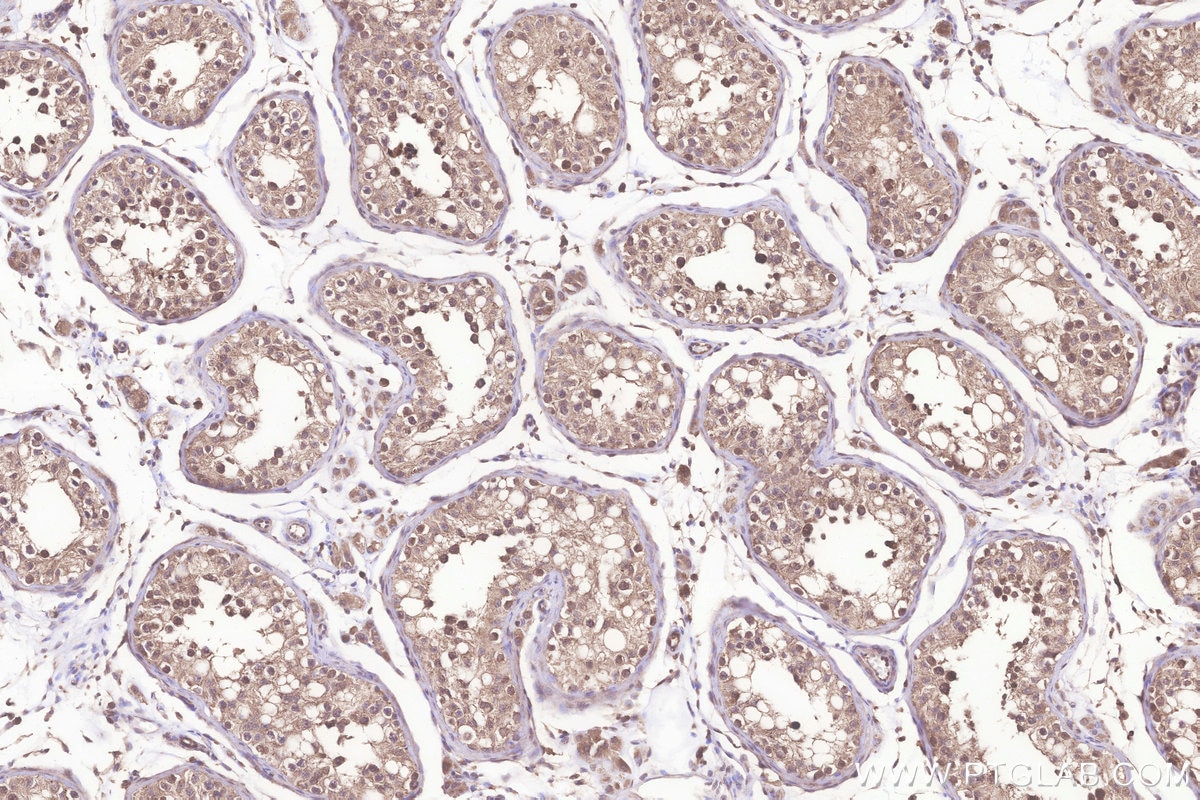
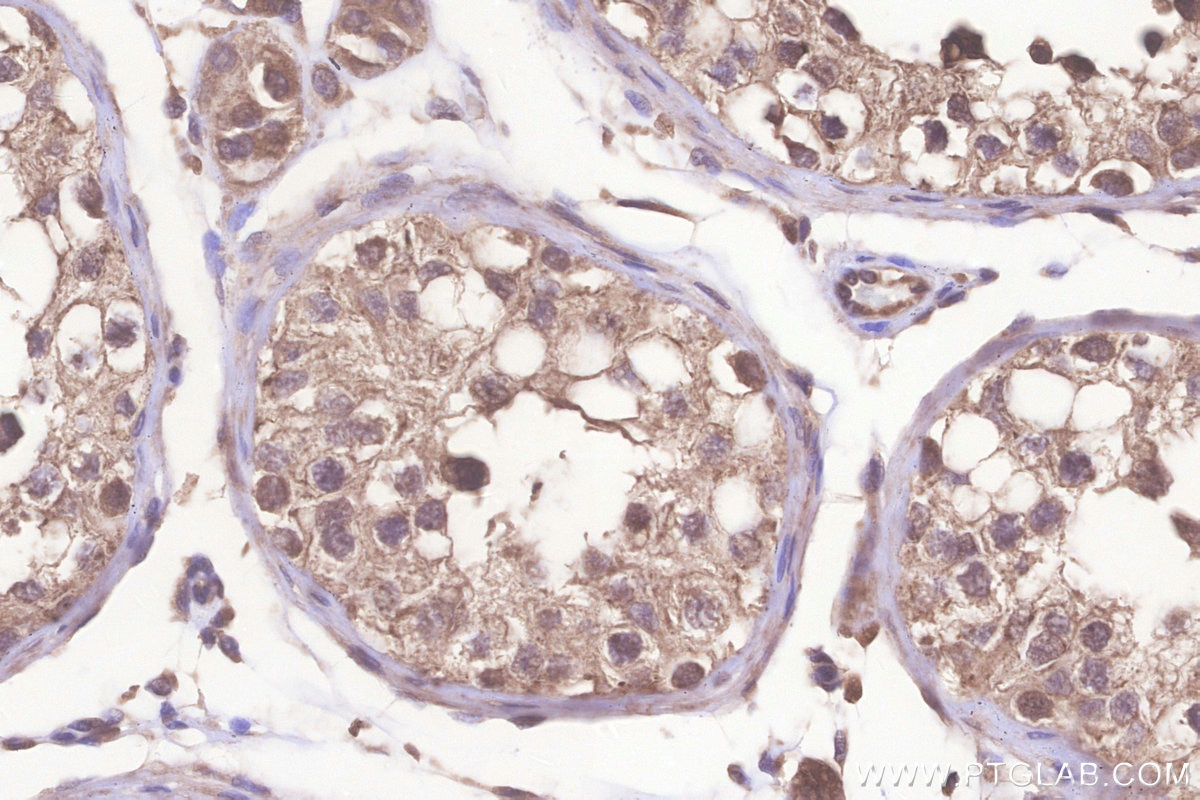
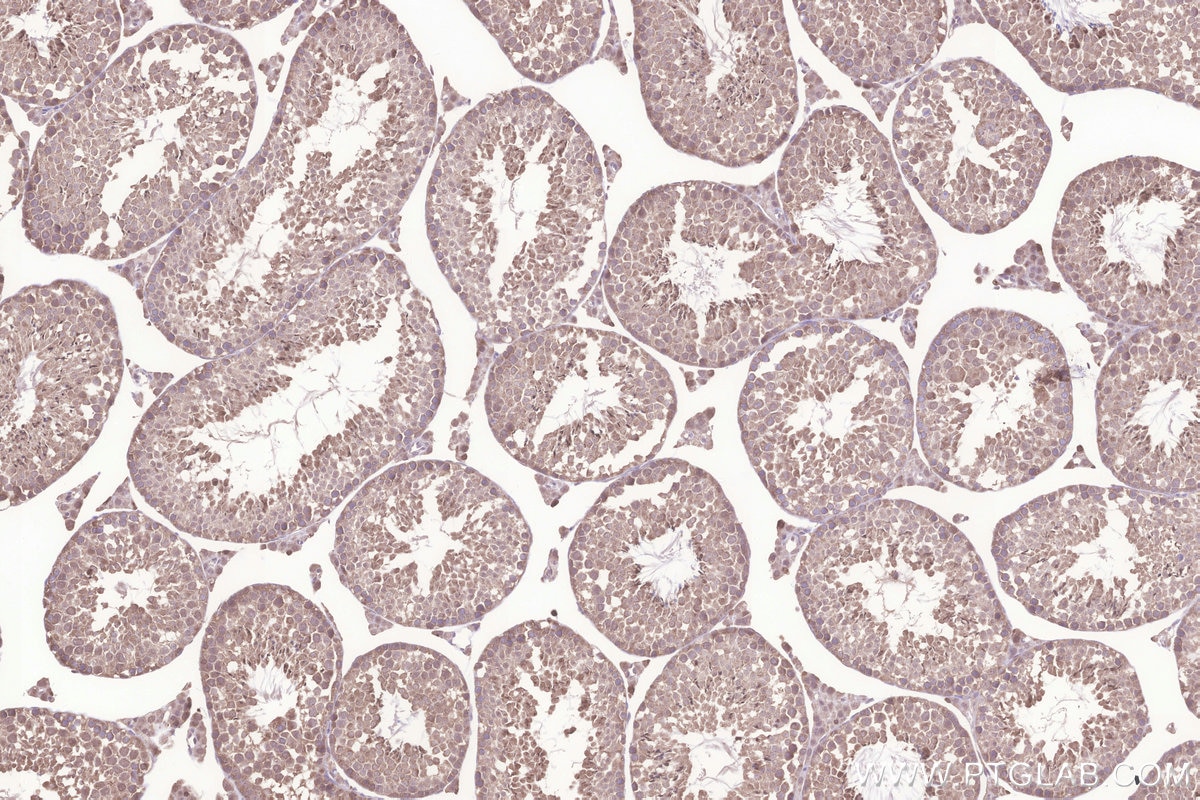
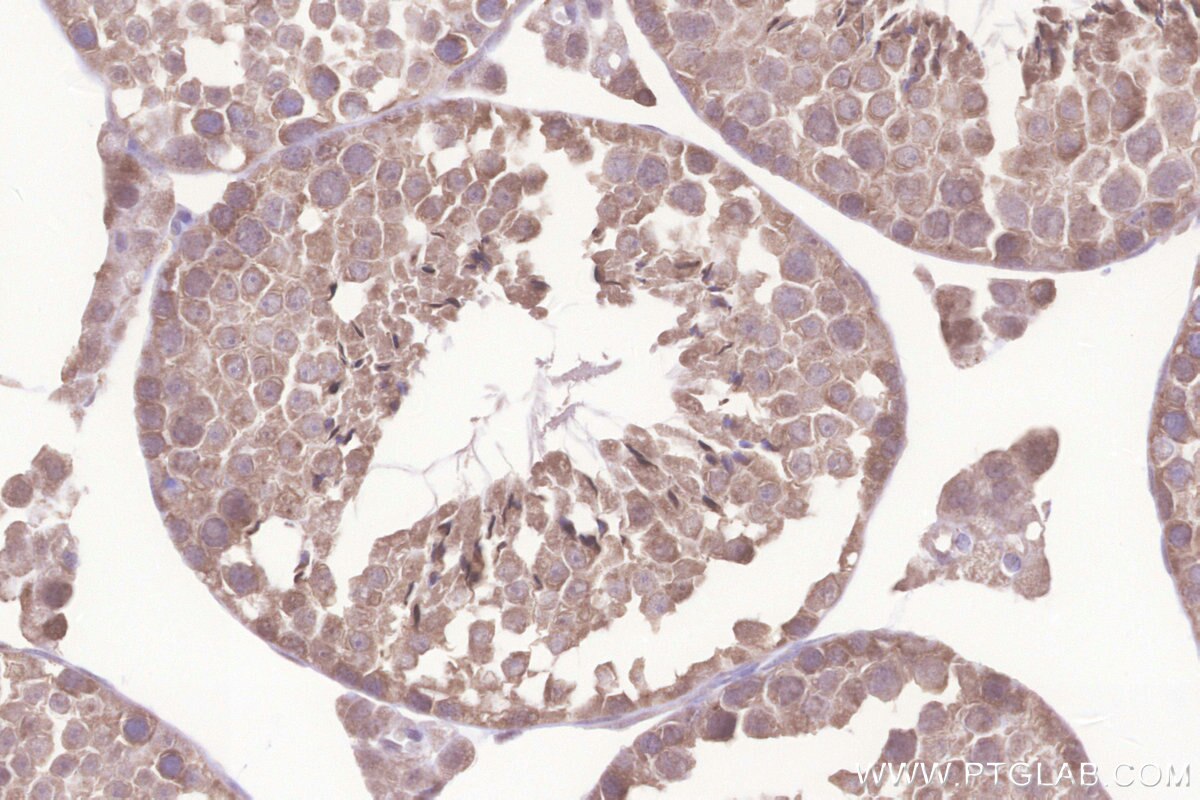
| Positive IHC detected in | human testis tissue, rat testis tissue Note: suggested antigen retrieval with TE buffer pH 9.0; (*) Alternatively, antigen retrieval may be performed with citrate buffer pH 6.0 |
Recommended dilution
| Application | Dilution |
|---|---|
| Western Blot (WB) | WB : 1:500-1:2000 |
| Immunoprecipitation (IP) | IP : 0.5-4.0 ug for 1.0-3.0 mg of total protein lysate |
| Immunohistochemistry (IHC) | IHC : 1:500-1:2000 |
| It is recommended that this reagent should be titrated in each testing system to obtain optimal results. | |
| Sample-dependent, Check data in validation data gallery. | |
Product Information
26782-1-AP targets TMBIM6 in WB, IHC, IF, IP, ELISA applications and shows reactivity with human, mouse, rat samples.
| Tested Reactivity | human, mouse, rat |
| Cited Reactivity | human, mouse |
| Host / Isotype | Rabbit / IgG |
| Class | Polyclonal |
| Type | Antibody |
| Immunogen |
CatNo: Ag24780 Product name: Recombinant human TMBIM6 protein Source: e coli.-derived, PET30a Tag: 6*His Domain: 1-86 aa of BC000916 Sequence: MNIFDRKINFDALLKFSHITPSTQQHLKKVYASFALCMFVAAAGAYVHMVTHFIQAGLLSALGSLILMIWLMATPHSHETEQKRLG Predict reactive species |
| Full Name | transmembrane BAX inhibitor motif containing 6 |
| Calculated Molecular Weight | 27 kDa |
| Observed Molecular Weight | 27 kDa |
| GenBank Accession Number | BC000916 |
| Gene Symbol | TMBIM6 |
| Gene ID (NCBI) | 7009 |
| RRID | AB_2880633 |
| Conjugate | Unconjugated |
| Form | Liquid |
| Purification Method | Antigen affinity purification |
| UNIPROT ID | P55061 |
| Storage Buffer | PBS with 0.02% sodium azide and 50% glycerol, pH 7.3. |
| Storage Conditions | Store at -20°C. Stable for one year after shipment. Aliquoting is unnecessary for -20oC storage. 20ul sizes contain 0.1% BSA. |
Protocols
| Product Specific Protocols | |
|---|---|
| IHC protocol for TMBIM6 antibody 26782-1-AP | Download protocol |
| IP protocol for TMBIM6 antibody 26782-1-AP | Download protocol |
| WB protocol for TMBIM6 antibody 26782-1-AP | Download protocol |
| Standard Protocols | |
|---|---|
| Click here to view our Standard Protocols |
Publications
What published studies show
The anti-TMBIM6 antibody (Cat# 26782-1-AP) has 10 total citations spanning journals including Phytomedicine, Cell Death Discovery, Molecular Medicine, European Journal of Medicinal Chemistry, Cancer Gene Therapy, Journal of Cellular Physiology, Journal of Biochemical and Molecular Toxicology, Journal of Cancer, Molecular Biology Reports, and Life Science Alliance. Research fields cover cancer (colorectal, bladder, breast, esophageal, NSCLC), ferroptosis, mitophagy, endoplasmic reticulum stress, diabetic nephropathy, preeclampsia, and inflammation.
| Species | Application | Title |
|---|---|---|
Phytomedicine FBXO11 enhances colorectal cancer progression through TMBIM6 stabilization: Echinacoside as a natural inhibitor. | ||
Cell Death Discov Transcription factor TCF3 promotes bladder cancer development via TMBIM6-Ca2+-dependent ferroptosis | ||
Mol Med Methyltransferase-like 3 aggravates endoplasmic reticulum stress in preeclampsia by targeting TMBIM6 in YTHDF2-dependent manner | ||
Eur J Med Chem 13-oxyingenol dodecanoate derivatives induce mitophagy and ferroptosis through targeting TMBIM6 as potential anti-NSCLC agents | ||
Cancer Gene Ther The role of hsa_circ_0000520 in breast cancer progression: insights into the miR-542-3p/TMBIM6 regulatory axis. | ||
J Cell Physiol Involvement of miR-27a-3p in diabetic nephropathy via affecting renal fibrosis, mitochondrial dysfunction, and endoplasmic reticulum stress. |









