
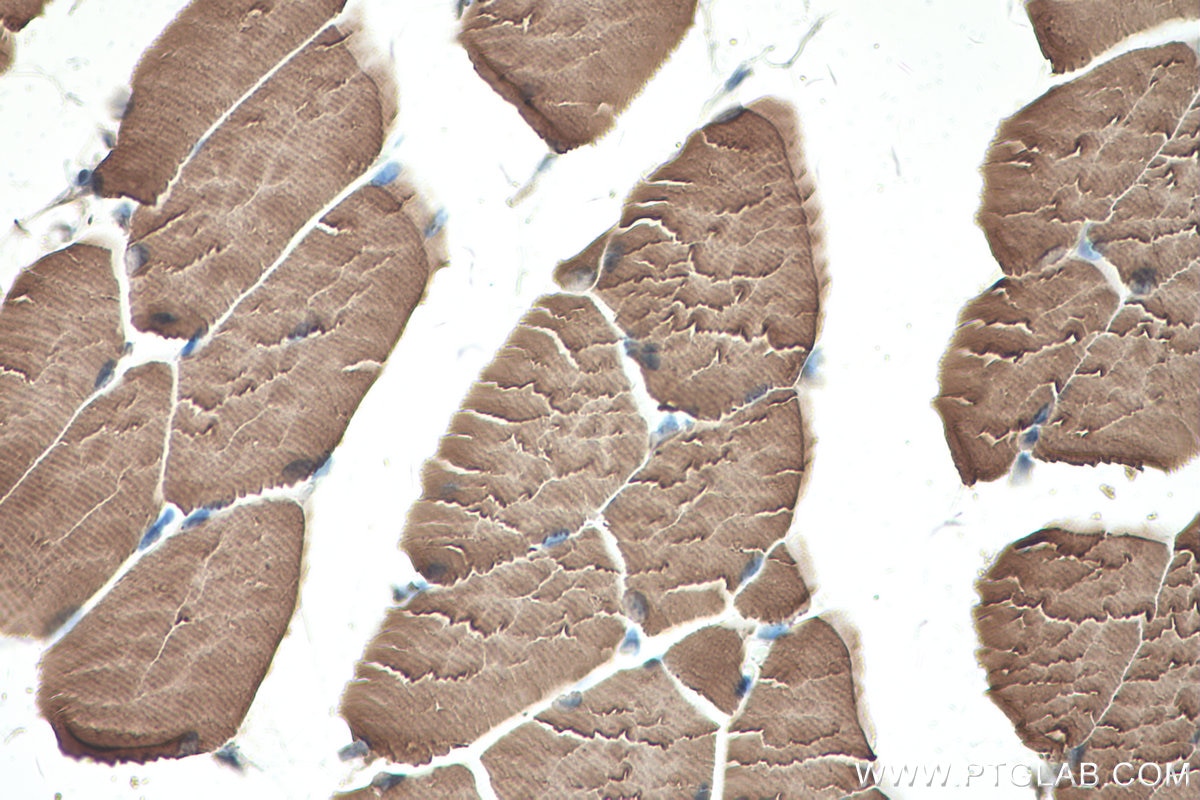
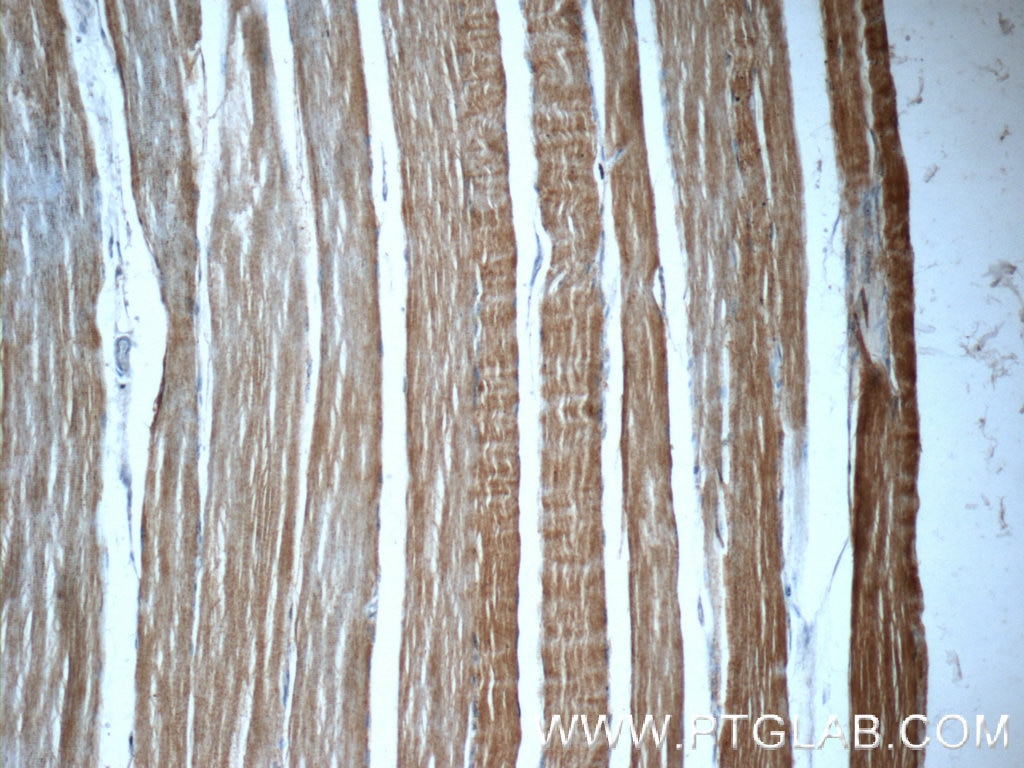
Tested Applications
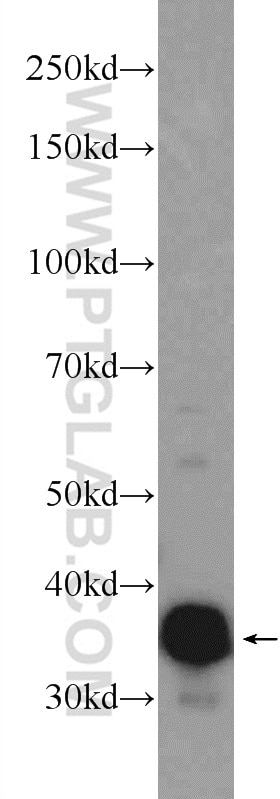
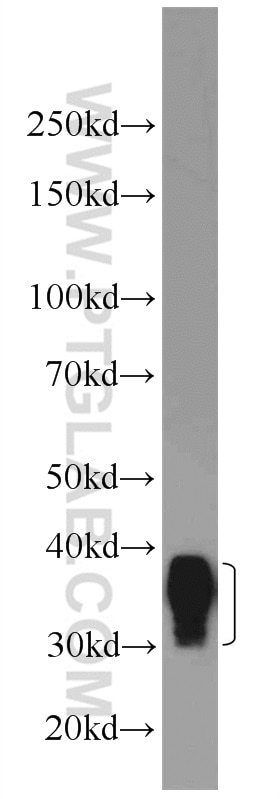
| Positive WB detected in | rat skeletal muscle tissue, mouse skeletal muscle tissue |
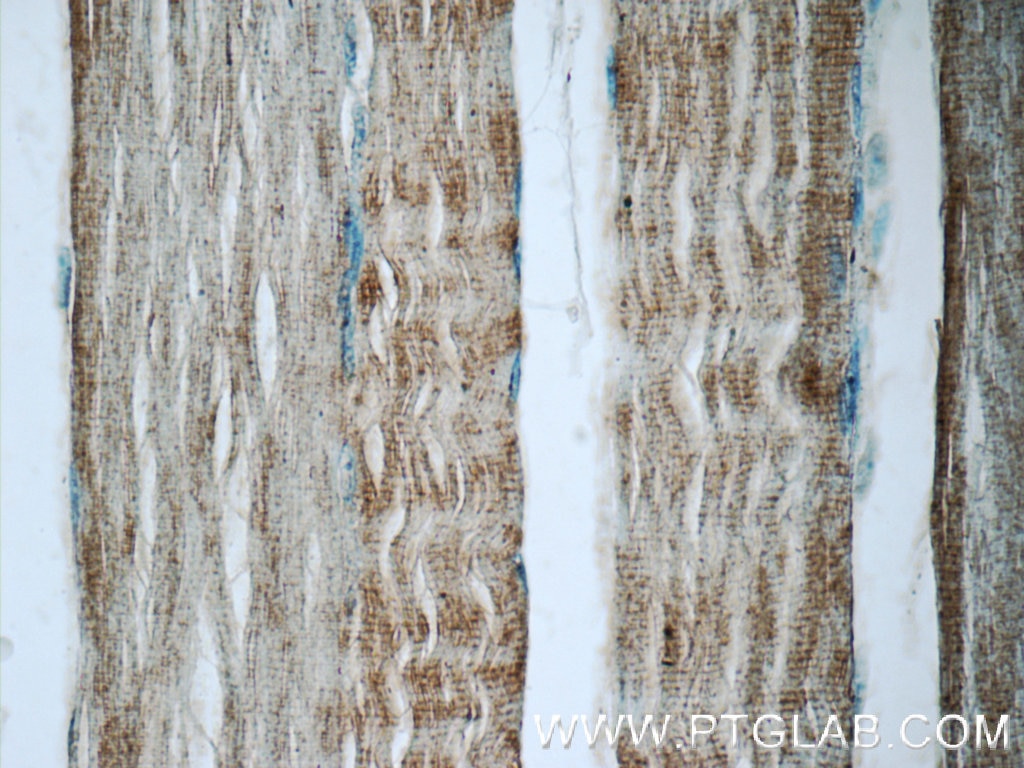
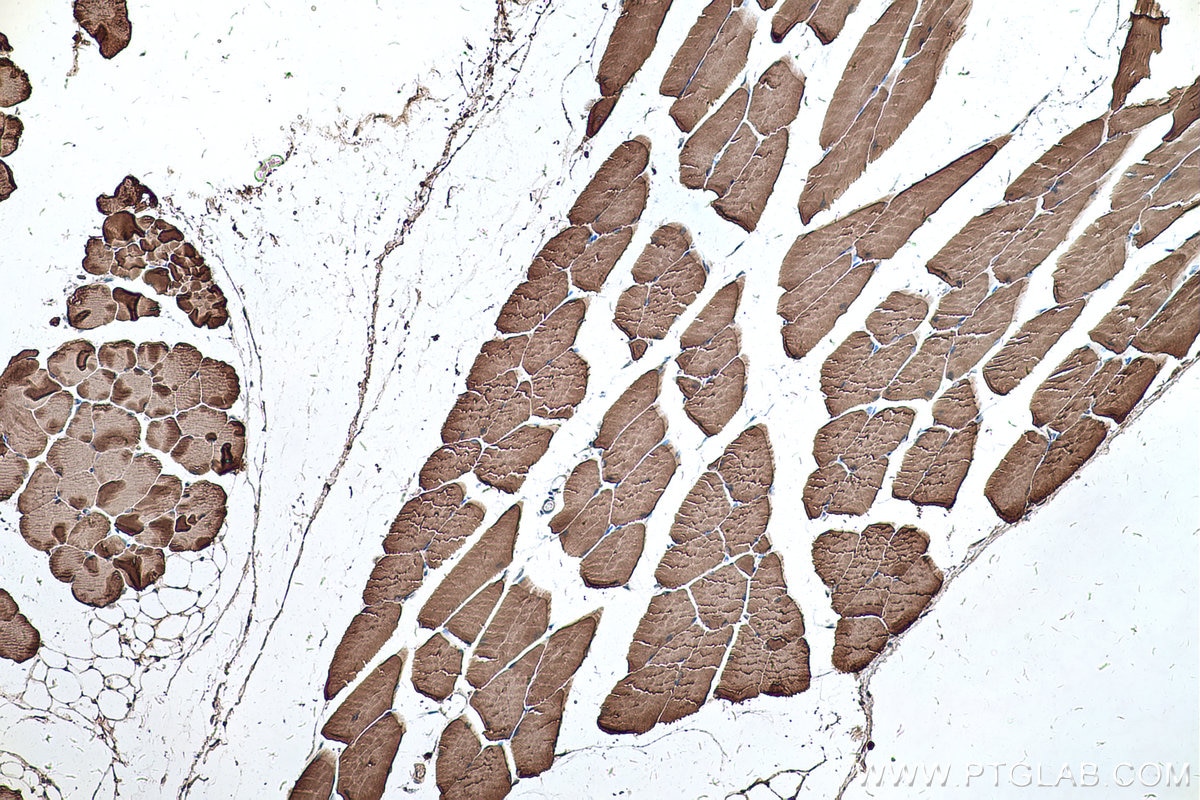
| Positive IHC detected in | mouse skeletal muscle tissue, human skeletal muscle tissue Note: suggested antigen retrieval with TE buffer pH 9.0; (*) Alternatively, antigen retrieval may be performed with citrate buffer pH 6.0 |
Recommended dilution
| Application | Dilution |
|---|---|
| Western Blot (WB) | WB : 1:500-1:2000 |
| Immunohistochemistry (IHC) | IHC : 1:500-1:2000 |
| It is recommended that this reagent should be titrated in each testing system to obtain optimal results. | |
| Sample-dependent, Check data in validation data gallery. | |
Published Applications
| WB | See 1 publications below |
Product Information
19729-1-AP targets TNNT3 in WB, IHC, ELISA applications and shows reactivity with human, mouse, rat samples.
| Tested Reactivity | human, mouse, rat |
| Cited Reactivity | mouse |
| Host / Isotype | Rabbit / IgG |
| Class | Polyclonal |
| Type | Antibody |
| Immunogen |
Peptide Predict reactive species |
| Full Name | troponin T type 3 (skeletal, fast) |
| Calculated Molecular Weight | 32 kDa |
| Observed Molecular Weight | 35-40 kDa |
| GenBank Accession Number | NM_001042780 |
| Gene Symbol | TNNT3 |
| Gene ID (NCBI) | 7140 |
| RRID | AB_2878601 |
| Conjugate | Unconjugated |
| Form | Liquid |
| Purification Method | Antigen Affinity purified |
| UNIPROT ID | P45378 |
| Storage Buffer | PBS with 0.02% sodium azide and 50% glycerol, pH 7.3. |
| Storage Conditions | Store at -20°C. Stable for one year after shipment. Aliquoting is unnecessary for -20oC storage. 20ul sizes contain 0.1% BSA. |
Background Information
The TNNT3 gene encodes the fast skeletal muscle isoform of troponin T, a key protein subunit of the troponin complex responsible for regulating skeletal muscle contraction in a calcium-dependent manner. This gene produces a protein that anchors the troponin complex to tropomyosin on the thin filaments of sarcomeres, playing a crucial role in the conformational changes that permit actin-myosin cross-bridge formation during muscle contraction. Tissue-specific expression is largely restricted to fast-twitch skeletal muscles, where alternative splicing generates multiple developmentally regulated isoforms. Clinically, dominant pathogenic mutations in TNNT3 are associated with distal arthrogryposis multiplex congenita type 2B (DA2B), also known as Sheldon-Hall syndrome, characterized by congenital joint contractures, while rare recessive variants have been linked to congenital myopathies featuring nemaline rods and fiber atrophy.
Protocols
| Product Specific Protocols | |
|---|---|
| IHC protocol for TNNT3 antibody 19729-1-AP | Download protocol |
| WB protocol for TNNT3 antibody 19729-1-AP | Download protocol |
| Standard Protocols | |
|---|---|
| Click here to view our Standard Protocols |
Publications
| Species | Application | Title |
|---|---|---|
Phytomedicine 9-PAHSA ameliorates microvascular damage during cardiac ischaemia/reperfusion injury by promoting LKB1/AMPK/ULK1-mediated autophagy-dependent STING degradation | ||
J Cachexia Sarcopenia Muscle MyoMed205 Counteracts Titin Hyperphosphorylation and the Expression of Contraction-Regulating Proteins in a Rat Model of HFpEF | ||
Discov Oncol Integrated summary data-based Mendelian randomization and colocalization analysis reveals TNNT3 as a target of Deer-Antler-Ginseng-formula for triple-negative breast cancer. |







