
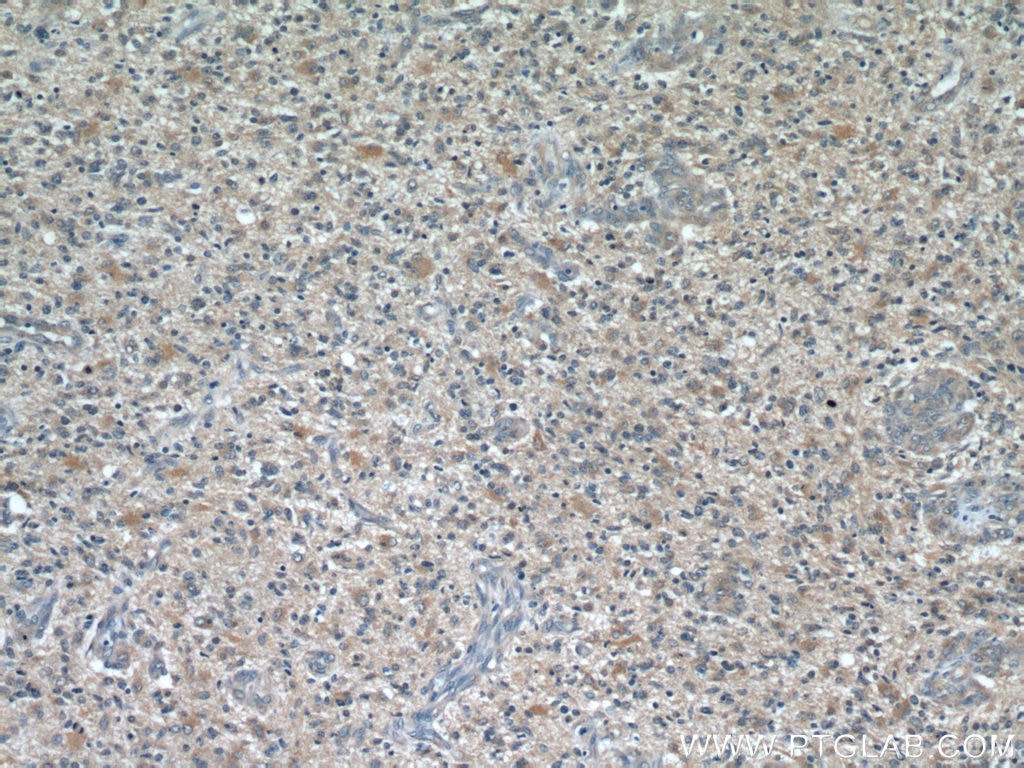
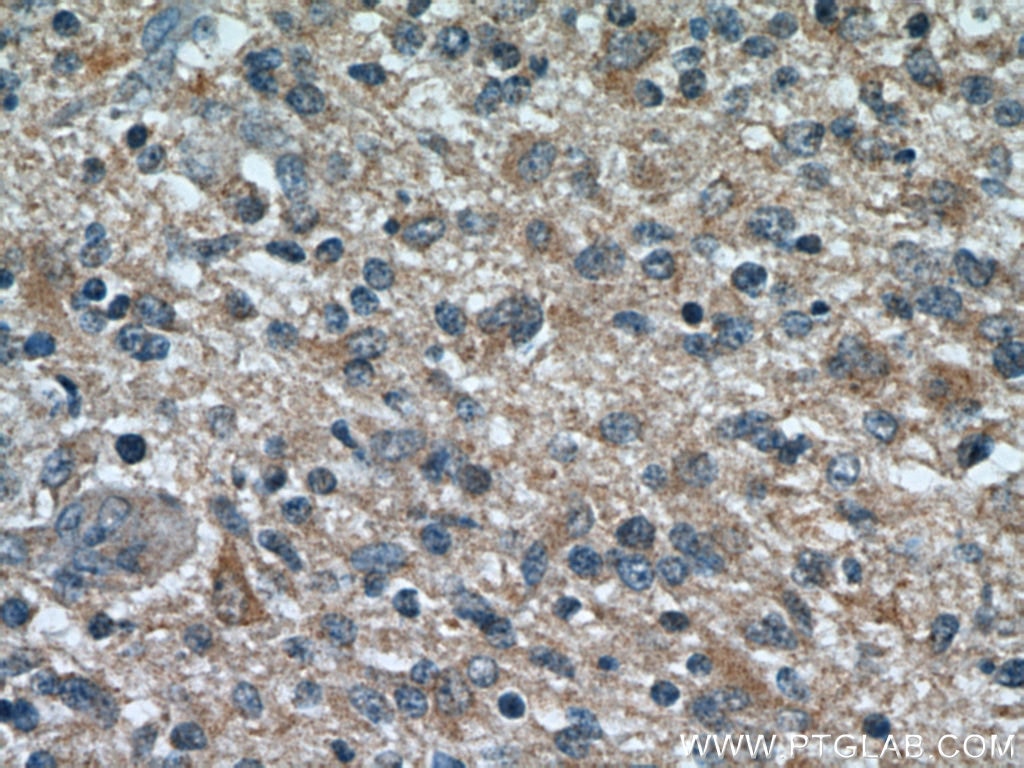
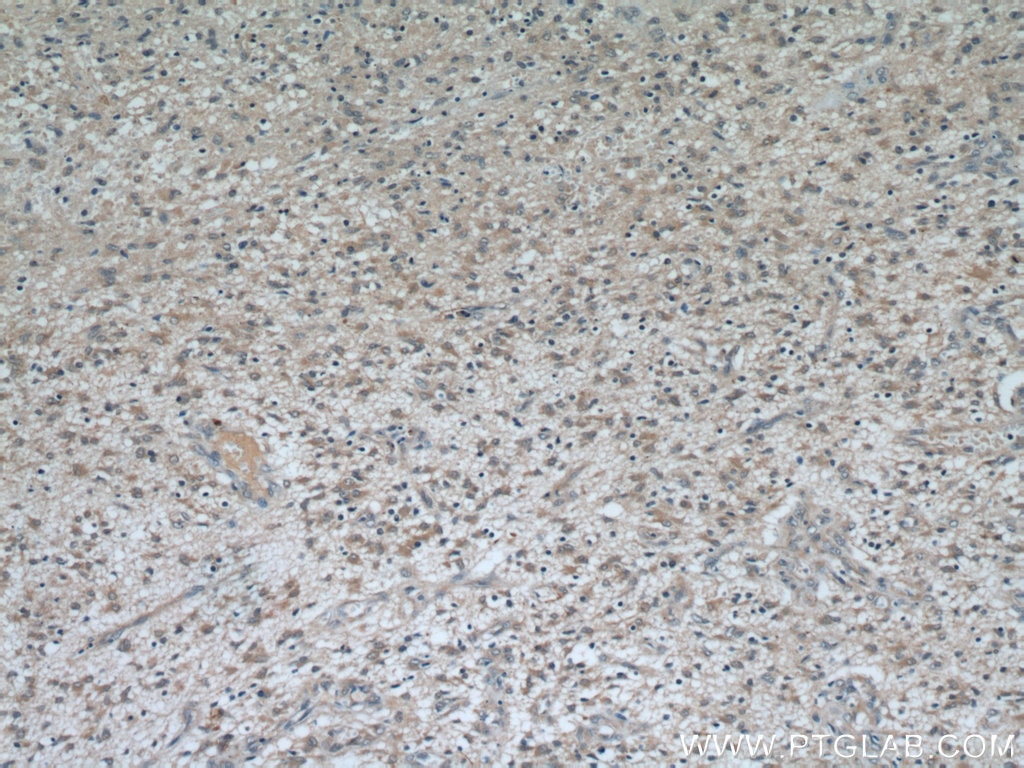
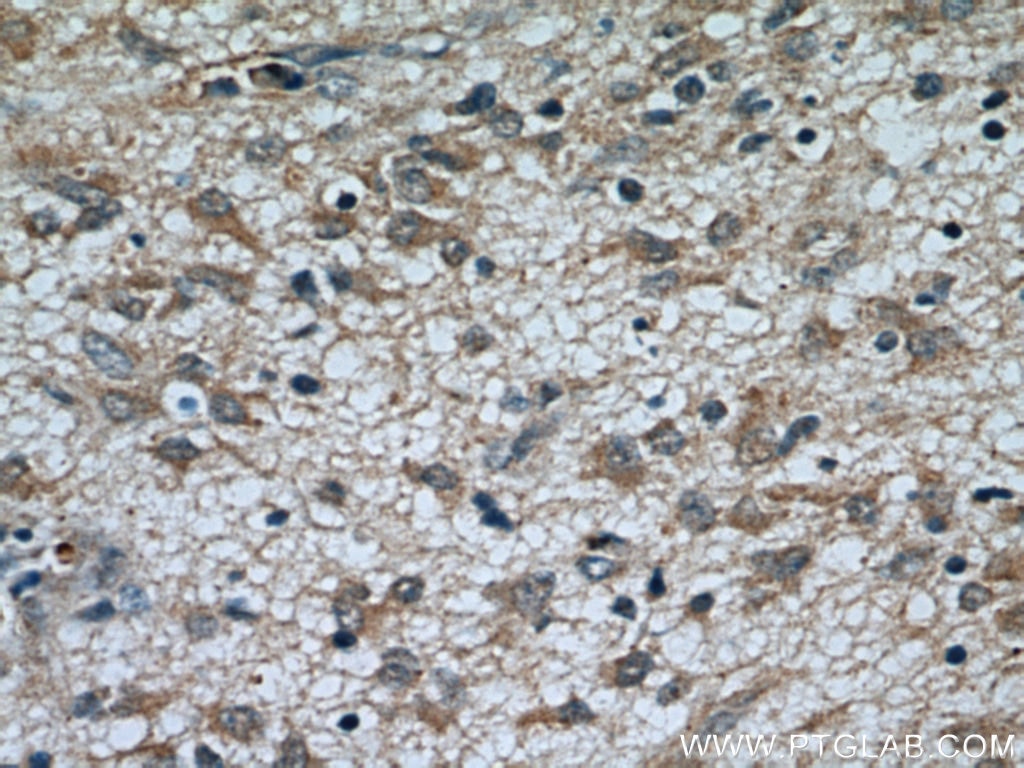
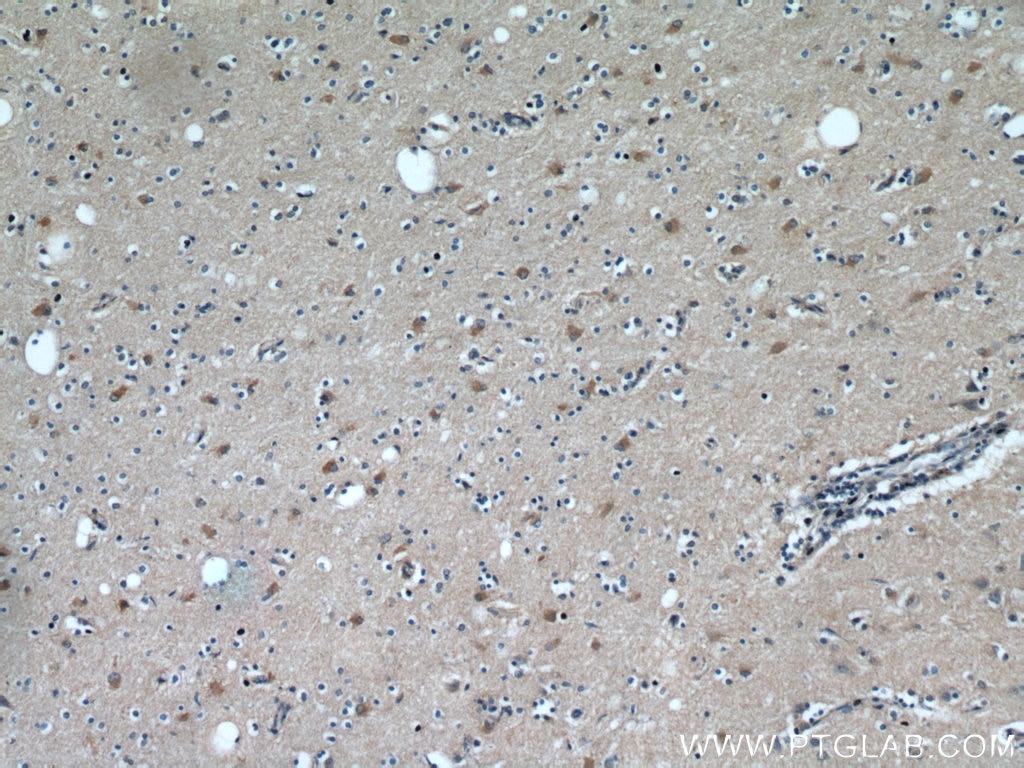
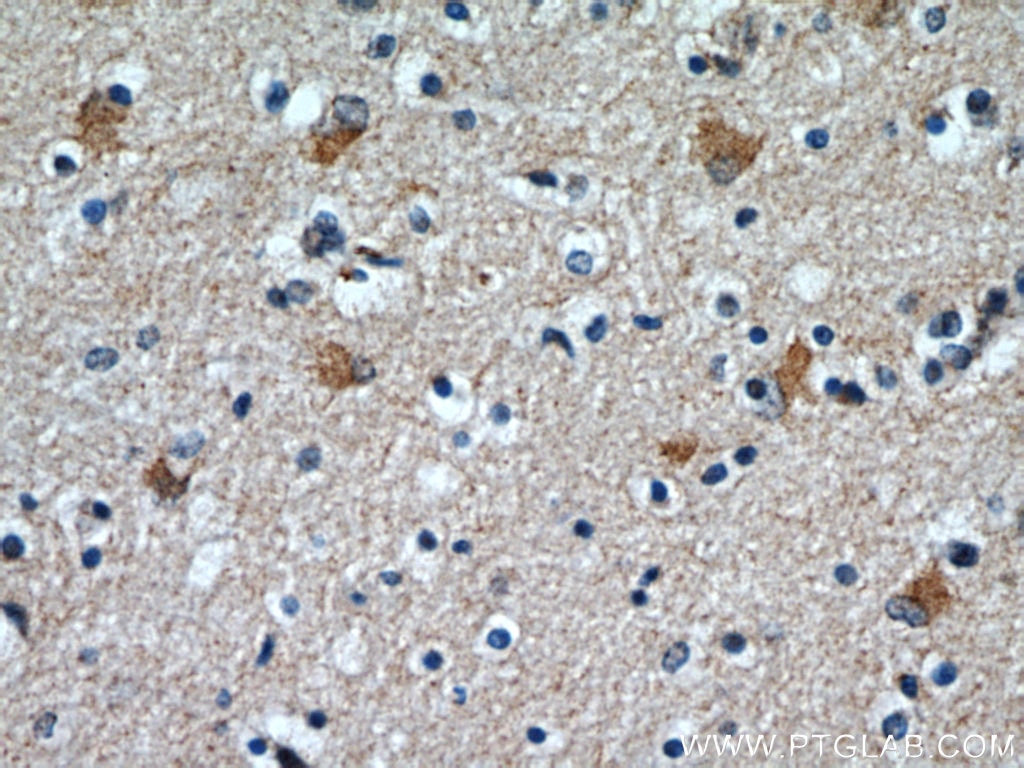
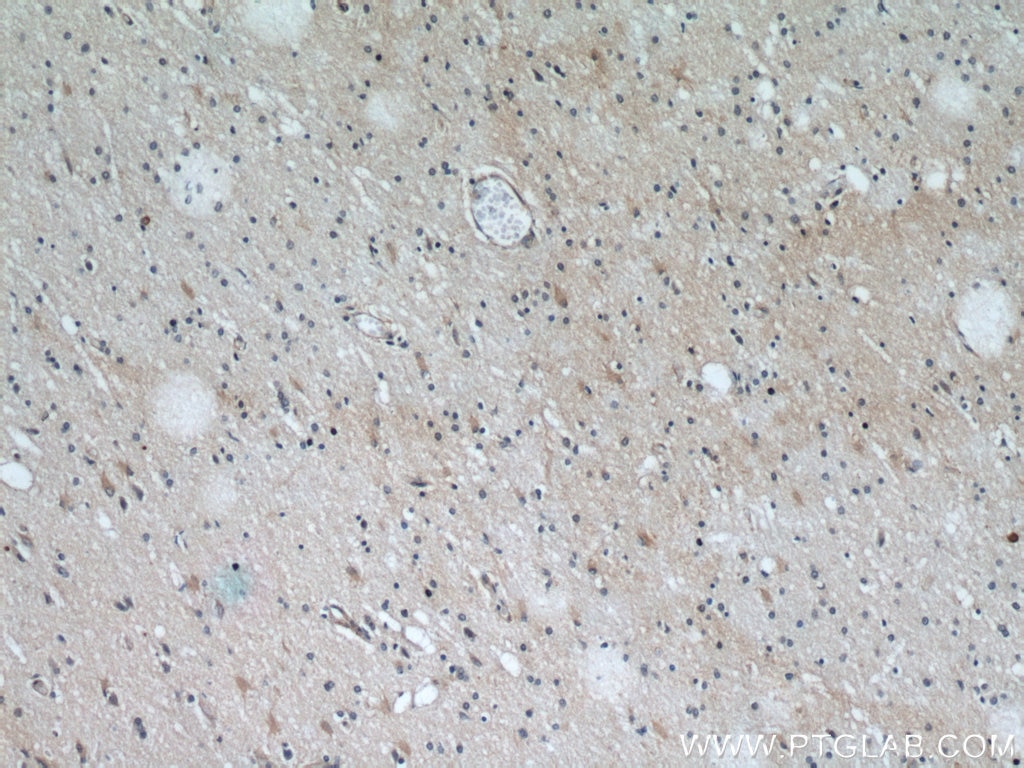
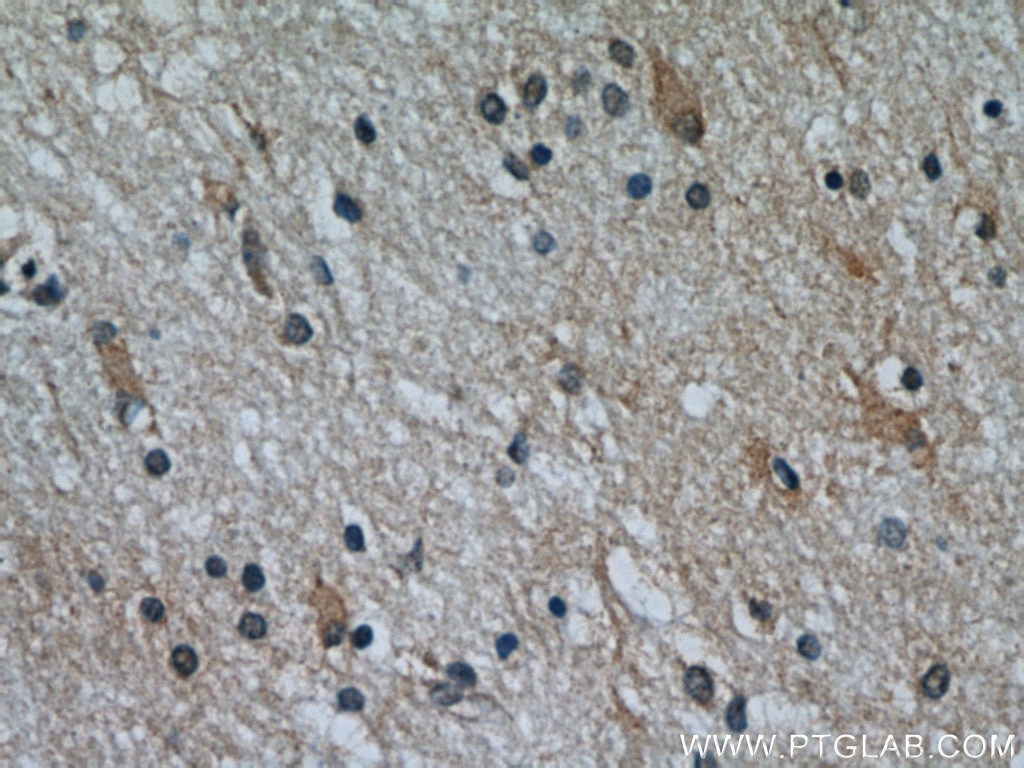

Tested Applications
| Positive IHC detected in | human gliomas tissue, human brain tissue Note: suggested antigen retrieval with TE buffer pH 9.0; (*) Alternatively, antigen retrieval may be performed with citrate buffer pH 6.0 |
Recommended dilution
| Application | Dilution |
|---|---|
| Immunohistochemistry (IHC) | IHC : 1:20-1:200 |
| It is recommended that this reagent should be titrated in each testing system to obtain optimal results. | |
| Sample-dependent, Check data in validation data gallery. | |
Product Information
15071-1-AP targets TOMM7 in WB, IHC, IF, ELISA applications and shows reactivity with human, mouse, rat samples.
| Tested Reactivity | human, mouse, rat |
| Cited Reactivity | human, mouse, rat |
| Host / Isotype | Rabbit / IgG |
| Class | Polyclonal |
| Type | Antibody |
| Immunogen |
CatNo: Ag7105 Product name: Recombinant human TOMM7 protein Source: e coli.-derived, PGEX-4T Tag: GST Domain: 1-55 aa of BC001732 Sequence: MVKLSKEAKQRLQQLFKGSQFAIRWGFIPLVIYLGFKRGADPGMPEPTVLSLLWG Predict reactive species |
| Full Name | translocase of outer mitochondrial membrane 7 homolog (yeast) |
| Calculated Molecular Weight | 6 kDa |
| Observed Molecular Weight | 6 kDa |
| GenBank Accession Number | BC001732 |
| Gene Symbol | TOMM7 |
| Gene ID (NCBI) | 54543 |
| RRID | AB_11232410 |
| Conjugate | Unconjugated |
| Form | Liquid |
| Purification Method | Antigen affinity purification |
| UNIPROT ID | Q9P0U1 |
| Storage Buffer | PBS with 0.02% sodium azide and 50% glycerol, pH 7.3. |
| Storage Conditions | Store at -20°C. Stable for one year after shipment. Aliquoting is unnecessary for -20oC storage. 20ul sizes contain 0.1% BSA. |
Protocols
| Product Specific Protocols | |
|---|---|
| IHC protocol for TOMM7 antibody 15071-1-AP | Download protocol |
| Standard Protocols | |
|---|---|
| Click here to view our Standard Protocols |
Publications
What published studies show
The TOMM7 Polyclonal Antibody (Cat# 15071-1-AP) has 6 citations published in Advanced Science, International Immunopharmacology, Neurochemistry International, Scientific Reports, Brain Research Bulletin, and Molecular Biology of the Cell. Research fields span mitochondrial protein import and homeostasis, PINK1 autophosphorylation in neonatal hypoxia and epilepsy, seizure neuroprotection, and TOM complex dynamics in human mitochondria. Applications cited include WB, IHC, and IF across human, mouse, and rat species.
| Species | Application | Title |
|---|---|---|
Adv Sci (Weinh) SENP6 Maintains Mitochondrial Homeostasis by Regulating Mitochondrial Protein Import Through deSUMOylation of TOM40 | ||
Int Immunopharmacol Distinct roles of PINK1 autophosphorylation in neonatal hypoxia with or without convulsions. | ||
Neurochem Int Inhibition of PTEN-induced kinase 1 autophosphorylation may assist in preventing epileptogenesis induced by pentylenetetrazol
| ||
Sci Rep Attenuated PINK1 autophosphorylation play neuroprotective and anti-seizure roles in neonatal hypoxia | ||
Brain Res Bull Suppression of PINK1 autophosphorylation attenuates pilocarpine-induced seizures and neuronal injury in rats
| ||
Mol Biol Cell The receptor subunit Tom20 is dynamically associated with the TOM complex in mitochondria of human cells. |









