

Tested Applications
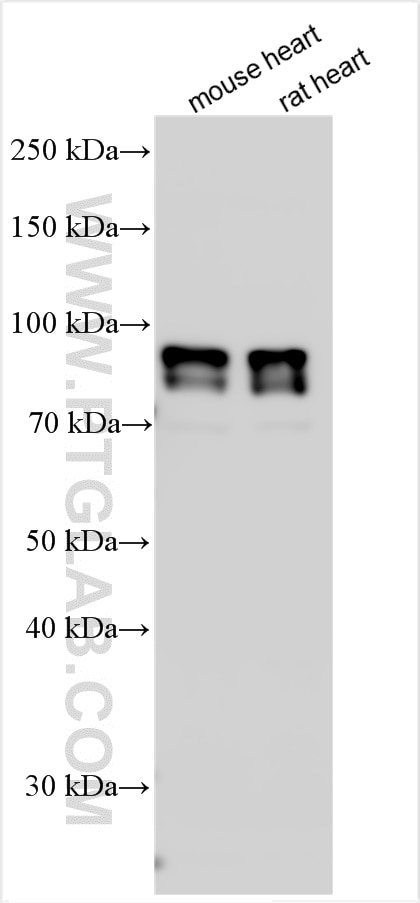
| Positive WB detected in | mouse heart tissue, rat heart tissue |
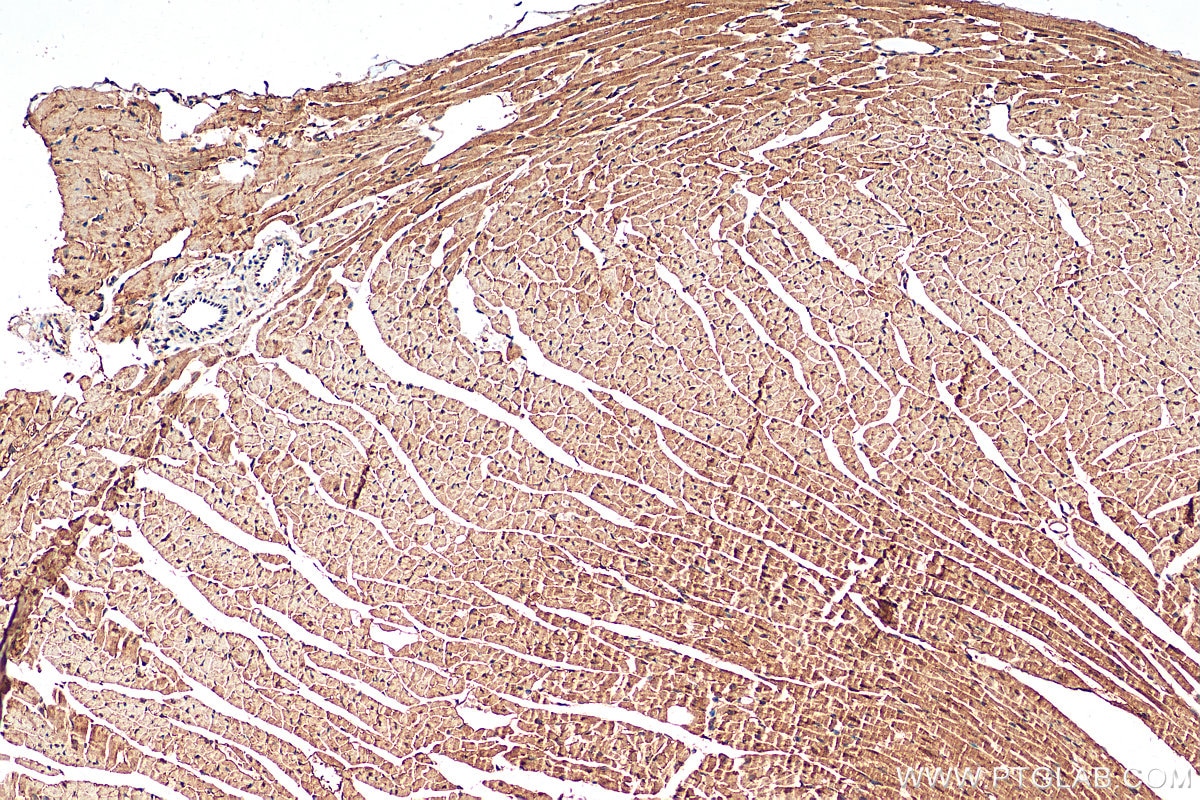
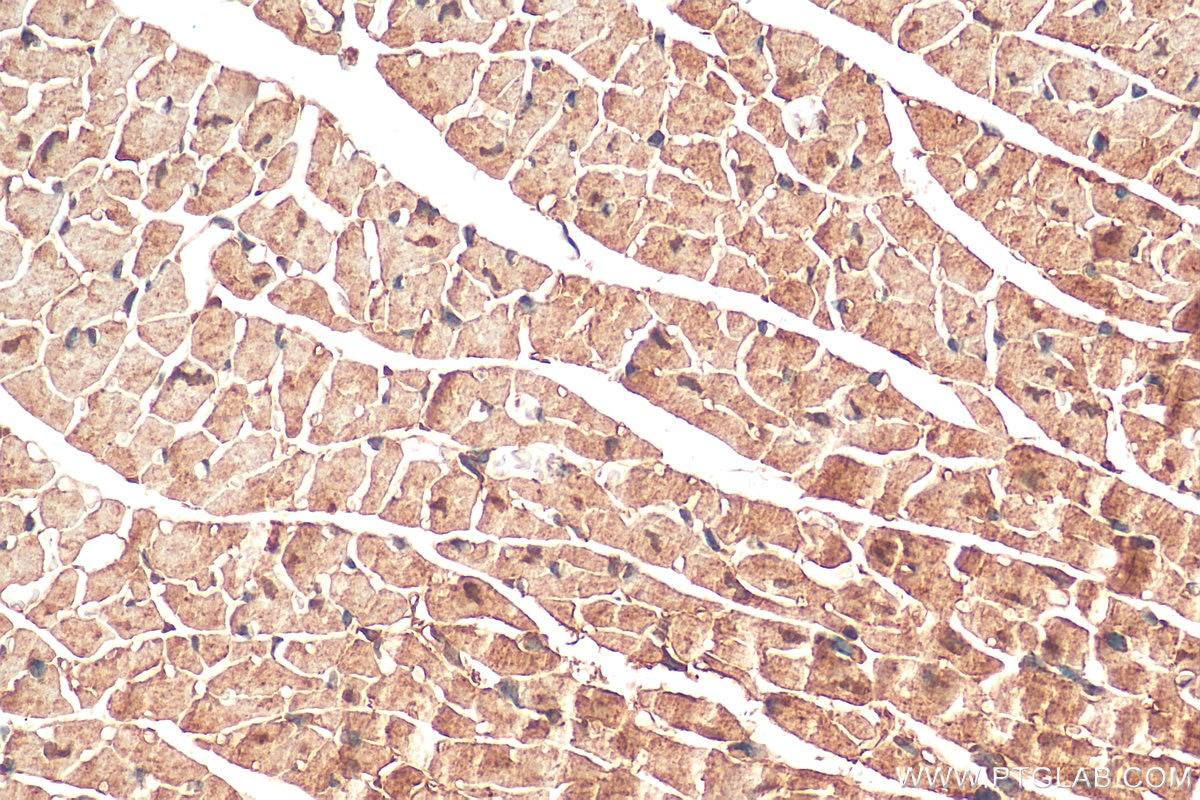
| Positive IHC detected in | mouse heart tissue Note: suggested antigen retrieval with TE buffer pH 9.0; (*) Alternatively, antigen retrieval may be performed with citrate buffer pH 6.0 |
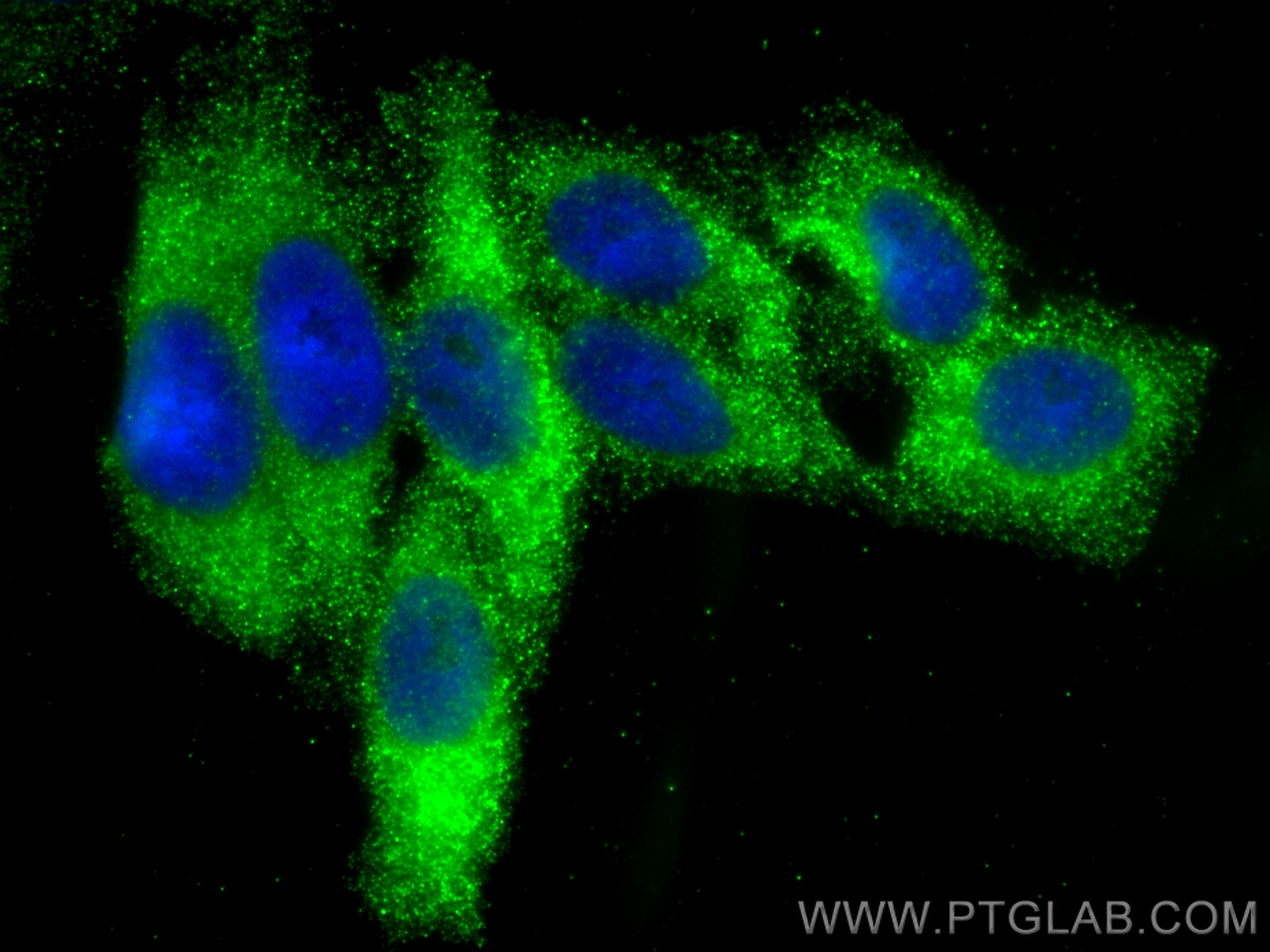
| Positive IF/ICC detected in | HepG2 cells |
Recommended dilution
| Application | Dilution |
|---|---|
| Western Blot (WB) | WB : 1:1000-1:6000 |
| Immunohistochemistry (IHC) | IHC : 1:50-1:500 |
| Immunofluorescence (IF)/ICC | IF/ICC : 1:50-1:500 |
| It is recommended that this reagent should be titrated in each testing system to obtain optimal results. | |
| Sample-dependent, Check data in validation data gallery. | |
Product Information
23758-1-AP targets TPC1 in WB, IHC, IF/ICC, ELISA applications and shows reactivity with human, mouse, rat samples.
| Tested Reactivity | human, mouse, rat |
| Cited Reactivity | human, mouse |
| Host / Isotype | Rabbit / IgG |
| Class | Polyclonal |
| Type | Antibody |
| Immunogen |
CatNo: Ag20607 Product name: Recombinant human TPCN1 protein Source: e coli.-derived, PGEX-4T Tag: GST Domain: 1-112 aa of BC136795 Sequence: MAVSLDDDVPLILTLDEGGSAPLAPSNGLGQEELPSKNGGSYAIHDSQAPSLSSGGESSPSSPAHNWEMNYQEAAIYLQEGENNDKFFTHPKDAKALAAYLFAHNHLFYLME Predict reactive species |
| Full Name | two pore segment channel 1 |
| Calculated Molecular Weight | 816 aa, 94 kDa |
| Observed Molecular Weight | 94 kDa |
| GenBank Accession Number | BC136795 |
| Gene Symbol | TPCN1 |
| Gene ID (NCBI) | 53373 |
| RRID | AB_2879317 |
| Conjugate | Unconjugated |
| Form | Liquid |
| Purification Method | Antigen Affinity purified |
| UNIPROT ID | Q9ULQ1 |
| Storage Buffer | PBS with 0.02% sodium azide and 50% glycerol, pH 7.3. |
| Storage Conditions | Store at -20°C. Stable for one year after shipment. Aliquoting is unnecessary for -20oC storage. 20ul sizes contain 0.1% BSA. |
Background Information
Two-pore channels (TPCs) are ancient members of the voltage-gated ion channel superfamily, are thought to be non-selective cation channels permeable to Ca2+. They mediate their physiological effects through releasing Ca2+ from acidic organelles in response to cues such as the second messenger, NAADP (nicotinic acid adenine dinucleotide phosphate). Genetic knockout and pharmacological inhibition experiments demonstrate that the two-pore channels, TPC1 and TPC2, are required for infection by Filoviruses Ebola and Marburg in mice.(PMID: 29746898; PMID 25722412) Two pore segment channel 1 (TPC1) is a human protein encoded by the TPCN1 gene.
Protocols
| Product Specific Protocols | |
|---|---|
| IF protocol for TPC1 antibody 23758-1-AP | Download protocol |
| IHC protocol for TPC1 antibody 23758-1-AP | Download protocol |
| WB protocol for TPC1 antibody 23758-1-AP | Download protocol |
| Standard Protocols | |
|---|---|
| Click here to view our Standard Protocols |
Publications
What published studies show
The TPC1 Polyclonal antibody (Cat# 23758-1-AP) has a total of 5 citations published in Advanced Science, Science Advances, Phytomedicine, Cell Reports, and PLoS Pathogens. The associated research fields include lysosomal calcium signaling and organelle crosstalk, organellar chloride channel function, macrophage activation syndrome after CAR-T therapy, ER-endosome contacts and autophagy, and viral entry mechanisms involving TRPML1 regulation.
| Species | Application | Title |
|---|---|---|
Adv Sci (Weinh) Activation of Lysosomal Retrograde Transport Triggers TPC1-IP3R1 Ca2+ Crosstalk at Lysosome-ER MCSs Leading to Lethal Depleting of ER Calcium | ||
Sci Adv CLN7 is an organellar chloride channel regulating lysosomal function.
| ||
Phytomedicine Tetrandrine alleviates macrophage activation syndrome after CAR-T cell therapy
| ||
Cell Rep ER-endosome contacts generate a local environment promoting phagophore formation | ||
PLoS Pathog Pseudorabies virus inhibits progesterone-induced inactivation of TRPML1 to facilitate viral entry |





