

Tested Applications
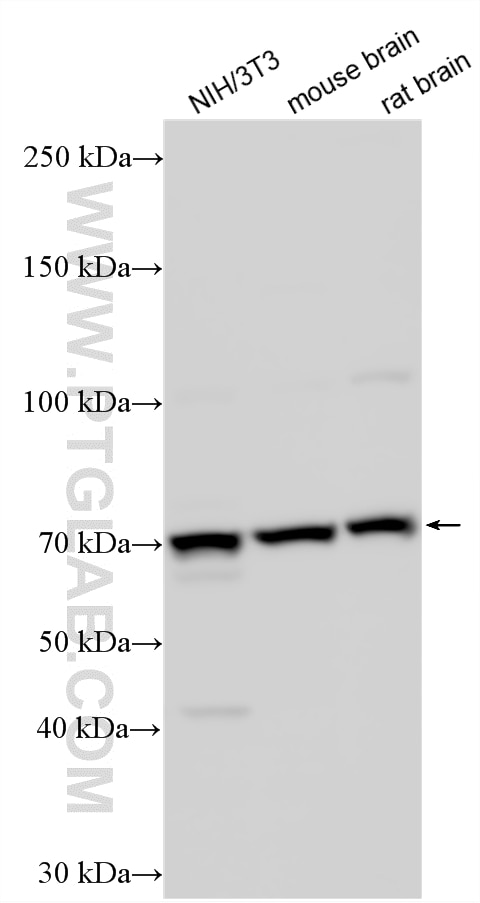
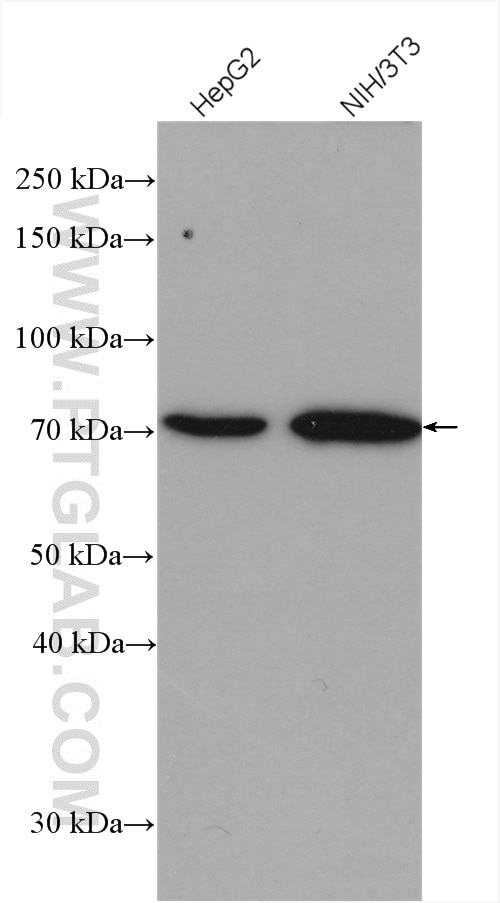
| Positive WB detected in | NIH/3T3 cells, HepG2 cells, mouse brain tissue, rat brain tissue |
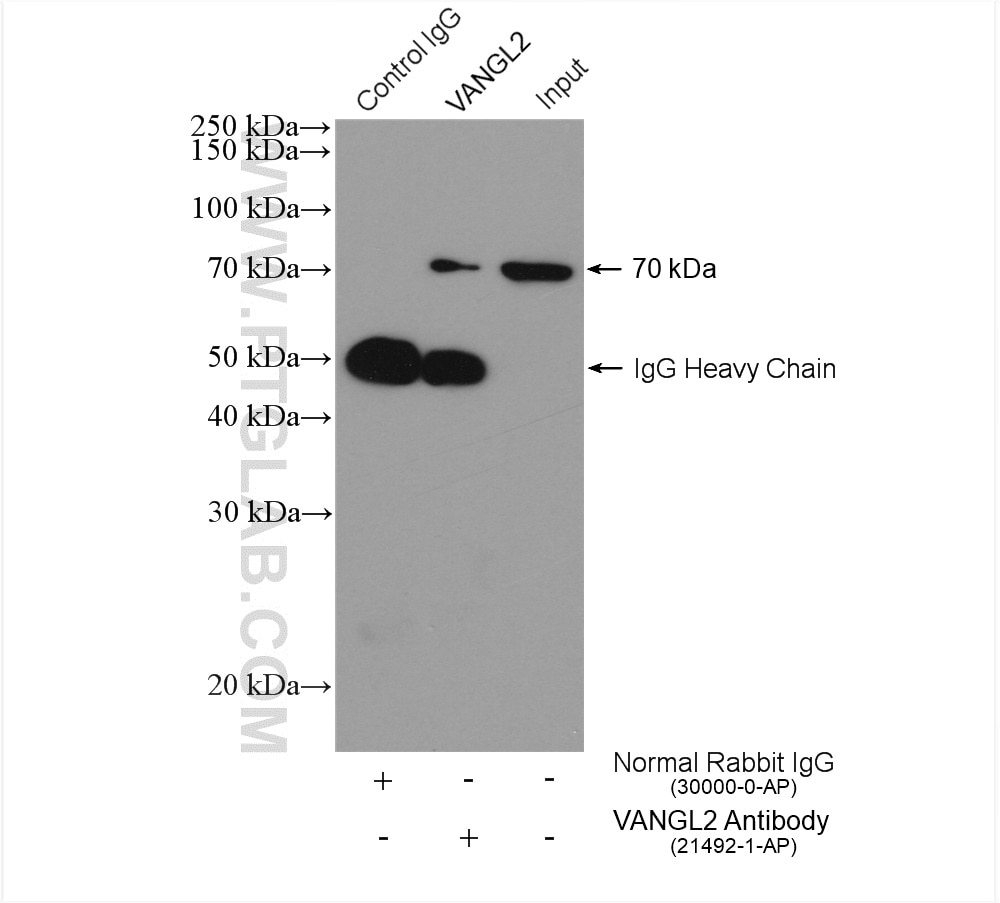
| Positive IP detected in | HepG2 cells |
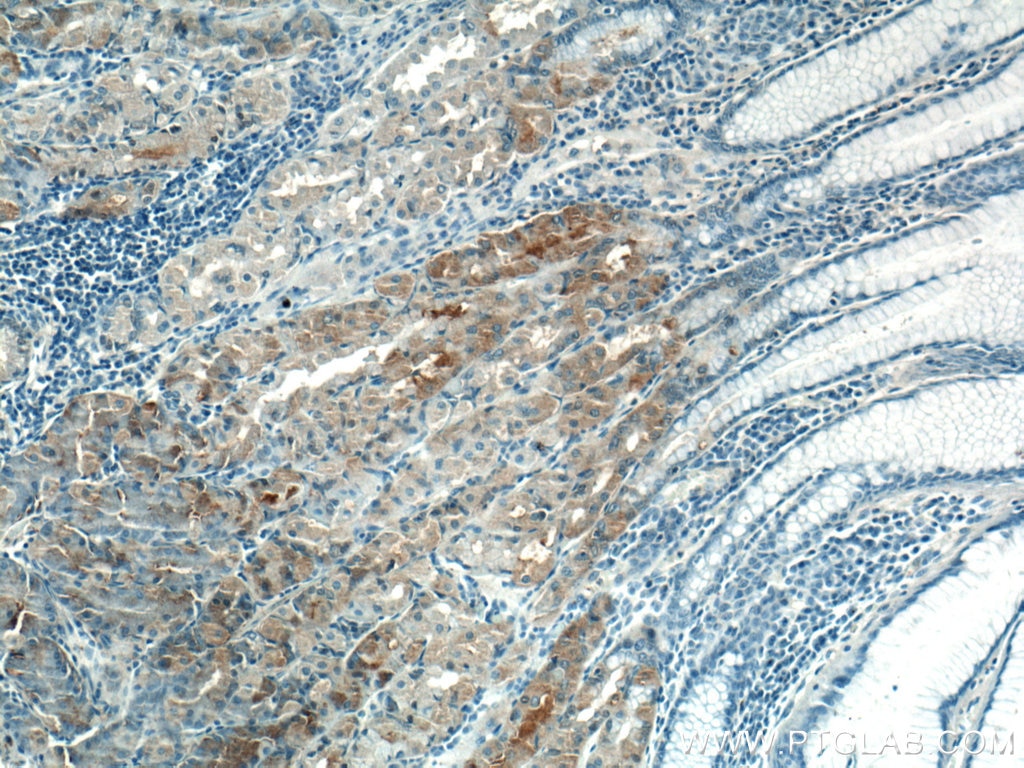
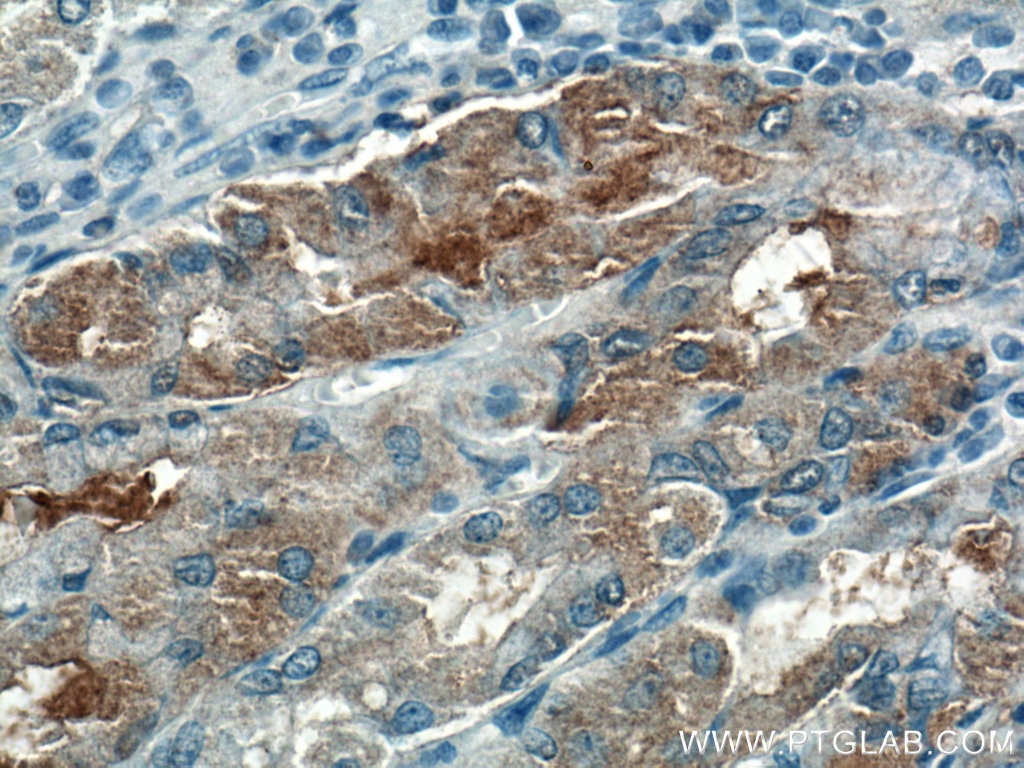
| Positive IHC detected in | human stomach tissue Note: suggested antigen retrieval with TE buffer pH 9.0; (*) Alternatively, antigen retrieval may be performed with citrate buffer pH 6.0 |
Recommended dilution
| Application | Dilution |
|---|---|
| Western Blot (WB) | WB : 1:1000-1:6000 |
| Immunoprecipitation (IP) | IP : 0.5-4.0 ug for 1.0-3.0 mg of total protein lysate |
| Immunohistochemistry (IHC) | IHC : 1:50-1:500 |
| It is recommended that this reagent should be titrated in each testing system to obtain optimal results. | |
| Sample-dependent, Check data in validation data gallery. | |
Product Information
21492-1-AP targets VANGL2 in WB, IHC, IF, IP, CoIP, ELISA applications and shows reactivity with human, mouse, rat samples.
| Tested Reactivity | human, mouse, rat |
| Cited Reactivity | human, mouse, rat |
| Host / Isotype | Rabbit / IgG |
| Class | Polyclonal |
| Type | Antibody |
| Immunogen |
CatNo: Ag15833 Product name: Recombinant human VANGL2 protein Source: e coli.-derived, PGEX-4T Tag: GST Domain: 268-322 aa of BC103920 Sequence: IQRVAVWILEKYYHDFPVYNPALLNLPKSVLAKKVSGFKVYSLGEENSTNNSTGQ Predict reactive species |
| Full Name | vang-like 2 (van gogh, Drosophila) |
| Calculated Molecular Weight | 521 aa, 60 kDa |
| Observed Molecular Weight | 60-70 kDa |
| GenBank Accession Number | BC103920 |
| Gene Symbol | VANGL2 |
| Gene ID (NCBI) | 57216 |
| RRID | AB_11182263 |
| Conjugate | Unconjugated |
| Form | Liquid |
| Purification Method | Antigen affinity purification |
| UNIPROT ID | Q9ULK5 |
| Storage Buffer | PBS with 0.02% sodium azide and 50% glycerol, pH 7.3. |
| Storage Conditions | Store at -20°C. Stable for one year after shipment. Aliquoting is unnecessary for -20oC storage. 20ul sizes contain 0.1% BSA. |
Background Information
Vangl2 is a key component of the planar cell polarity (PCP) pathway. Vangl2 is tightly associated with the postsynaptic density (PSD) fraction and forms a protein complex with PSD-95 and NMDA receptors. Vangl2 directly binds to the third PDZ domain of PSD-95 via its C-terminal TSV motif. Vangl2 directly binds to N-cadherin.
Protocols
| Product Specific Protocols | |
|---|---|
| IHC protocol for VANGL2 antibody 21492-1-AP | Download protocol |
| IP protocol for VANGL2 antibody 21492-1-AP | Download protocol |
| WB protocol for VANGL2 antibody 21492-1-AP | Download protocol |
| Standard Protocols | |
|---|---|
| Click here to view our Standard Protocols |
Publications
What published studies show
The anti-Vangl2 antibody (Cat# 21492-1-AP) has 18 total citations across journals including Bone Research, Advanced Science, Cell Reports Medicine, Cancer Letters, Developmental Cell, Science Signaling, Breast Cancer Research, FASEB Journal, Experimental Cell Research, Life Science Alliance, DNA Cell Biology, and Human Mutation. Research fields span planar cell polarity (PCP) signaling, Wnt pathway regulation, cancer biology (glioblastoma, breast and ovarian carcinoma), skeletal development, cardiovascular defects, kidney organoid modeling, cochlear development, and congenital disorders.
| Species | Application | Title |
|---|---|---|
Bone Res Skeletal progenitor LRP1 deficiency causes severe and persistent skeletal defects with Wnt pathway dysregulation | ||
Adv Sci (Weinh) Isolation and Comprehensive Analysis of Cochlear Tissue-Derived Small Extracellular Vesicles | ||
Cell Rep Med Patient-derived kidney organoids recapitulate ADPKD and facilitate the identification of Rho pathway inhibitors as candidate therapeutics. | ||
Cancer Lett A complex of Wnt/planar cell polarity signaling components Vangl1 and Fzd7 drives glioblastoma multiforme malignant properties | ||
Dev Cell Vangl2 limits chaperone-mediated autophagy to balance osteogenic differentiation in mesenchymal stem cells.
| ||
Chin Med J (Engl) Disruption of Planar Cell Polarity Pathway Attributable to Valproic Acid-Induced Congenital Heart Disease through Hdac3 Participation in Mice. |
Reviews
What customers say
All three reviewers rated this antibody 4 out of 5 stars. For Western blot on mouse brain lysate (1:1000), it detects endogenous VANGL well but shows some nonspecific bands. Two immunofluorescence users reported positive results: one on chicken embryonic auditory epithelia (1:200) with PFA fixation and TX-100 permeabilization, and another on small intestine sections (1:100) noting good signal with mild background. Overall, the antibody performs reliably across species and applications, though minor background or nonspecific bands were occasionally observed.
The reviews below have been submitted by verified Proteintech customers who received an incentive for providing their feedback.
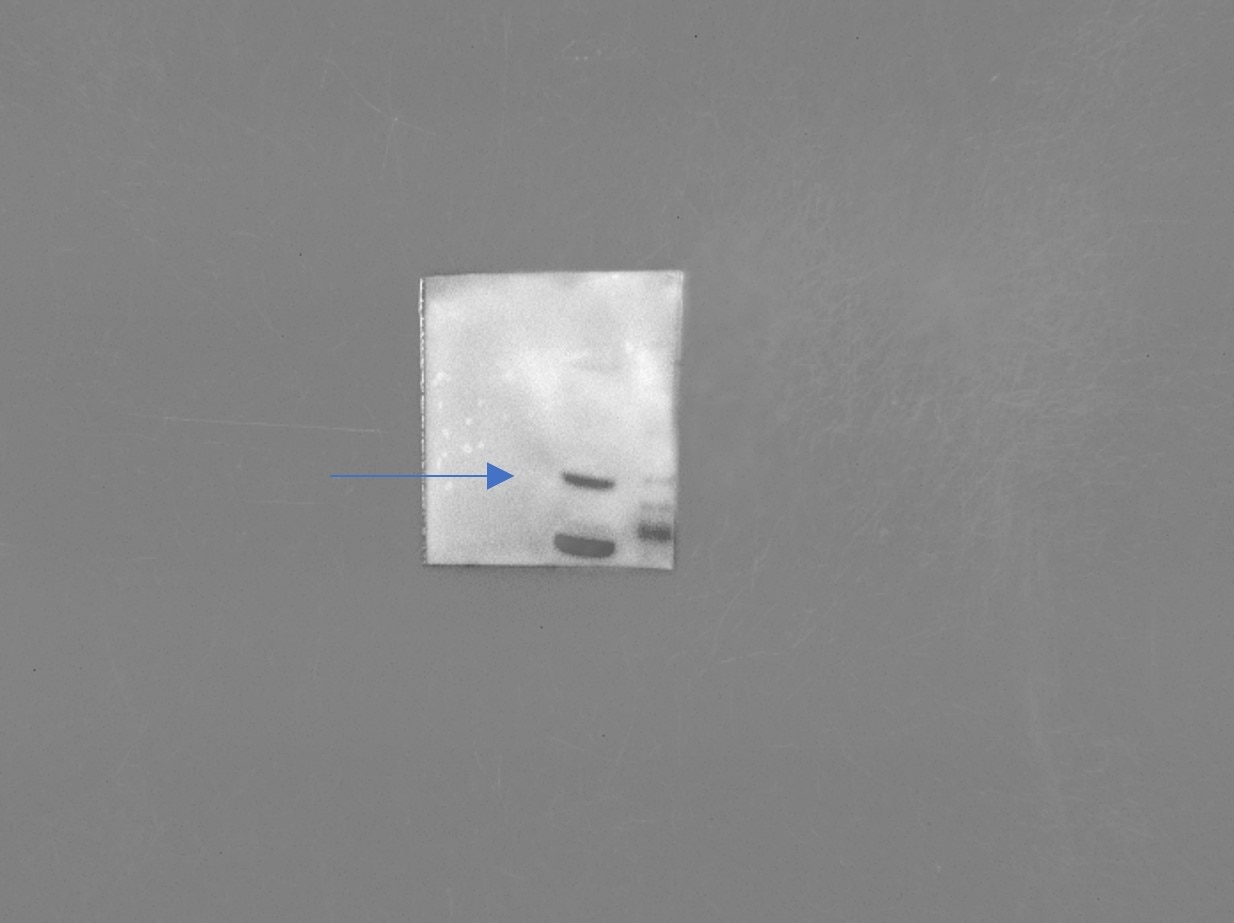
Nin (Verified Customer) (11-07-2024) | A good antibody to detect endogenous VANGL although there are nonspecific bands.
 |
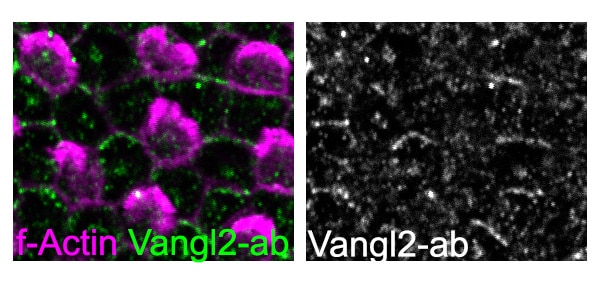
Stephen (Verified Customer) (05-31-2023) | works in chicken tissue fixed with 4% PFA for 2 hours, perm 0.3% tx100 for 2h primary incubated 1:200 for 24h @4 degrees,
 |
Louisiane (Verified Customer) (08-11-2022) | Tissues (small intestine sections) were incubated with primary antibody over the weekend at 4C and with secondary antibody overnight at 4C. The signal looks good but there is a bit of background
|






