
Anti-SARS-CoV-2 N protein Human IgM ELISA Kit
Cat no : KE30002
Synonyms
nucleocapsid phosphoprotein, SARS-COV-2 nucleocapsid phosphoprotein, N protein, sars cov 2, SARS-COV-2
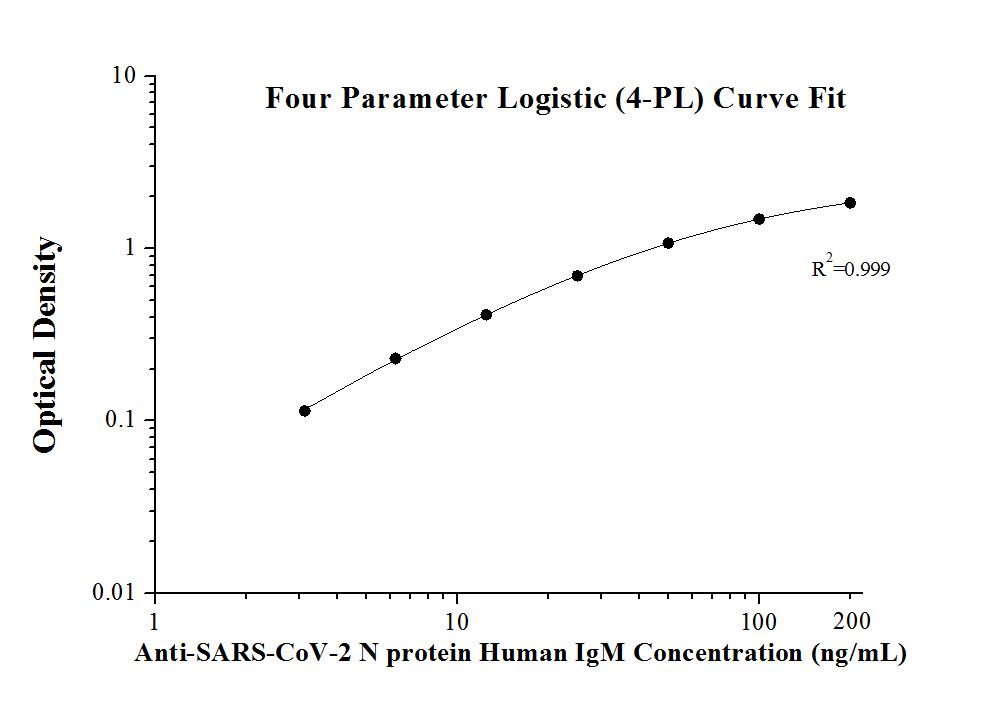
Validation Data Gallery
Product Information
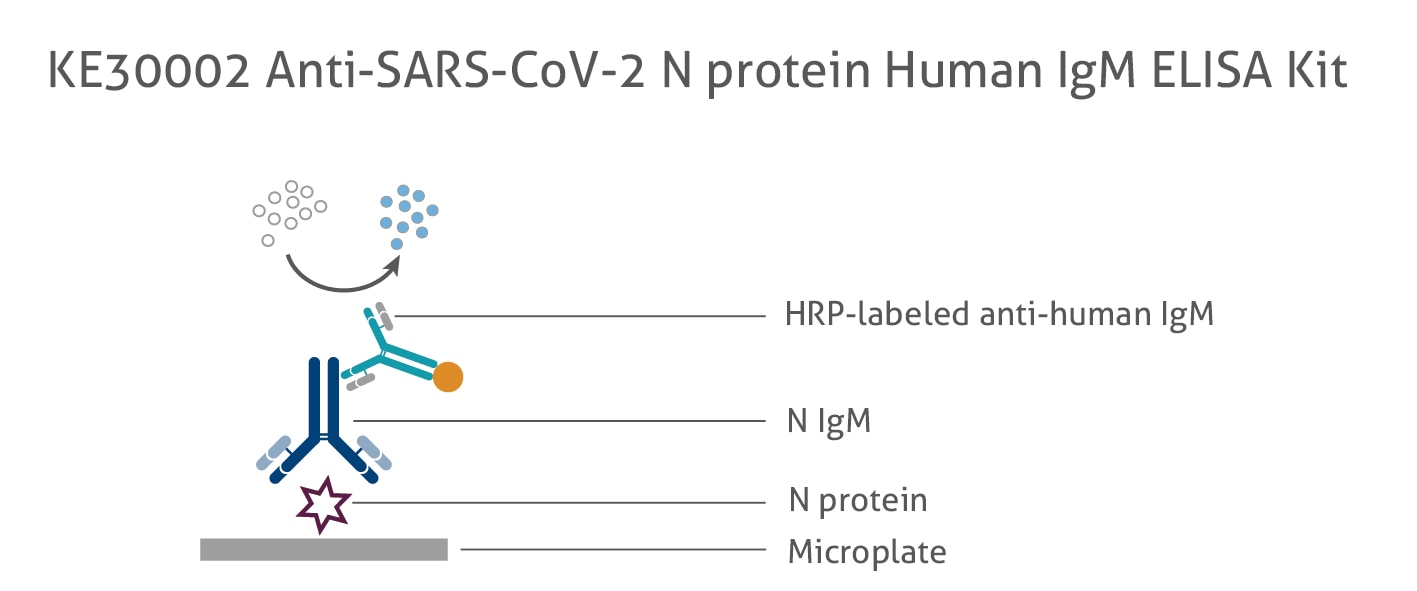
KE30002 is a qualitative measurement of Anti-SARS-CoV-2 protein human IgM for 2019-nCoV N protein in serum and plasma. The principle of the kit is indirect ELISA. Nucleocapsid Recombinant Protein has been pre-coated onto microplate well. The samples are added to the well, after incubation the wells are washed and a horseradish peroxidase conjugated anti-Human IgM is added to each well. Producing an complex "Recombinant Protein-human anti-N protein IgM antibody-HRP conjugated second antibody". after incubation the wells are washed, followed by Tetramethyl-benzidine (TMB) reagent. Solution containing sulfuric acid is used to stop color development and the color intensity which is proportional to the quantity of bound protein is measurable at 450nm with the correction wavelength set at 630 nm.
| Product name | Anti-SARS-CoV-2 N protein Human IgM ELISA Kit |
| Tests | 1 X 96 well plate |
| Sample type | Serum, Plasma |
| Assay type | Indirect |
| Sensitivity | N/A |
| Range | N/A |
| Reactivity | |
| Tested applications | Indirect ELISA |
| Gene ID (NCBI) | 43740575 |
Background Information
Coronaviruses are enveloped viruses with a positive-sense RNA genome and with a nucleocapsid of helical symmetry. Coronavirus nucleoproteins localize to the cytoplasm and the nucleolus, a subnuclear structure, in both virus-infected primary cells and in cells transfected with plasmids that express N protein. Coronavirus N protein is required for coronavirus RNA synthesis, and has RNA chaperone activity that may be involved in template switch. Nucleocapsid protein is a most abundant protein of coronavirus. During virion assembly, N protein binds to viral RNA and leads to formation of the helical nucleocapsid. Nucleocapsid protein is a highly immunogenic phosphoprotein also implicated in viral genome replication and in modulating cell signaling pathways . Because of the conservation of N protein sequence and its strong immunogenicity, the N protein of coronavirus is chosen as a diagnostic tool. COVID-19 antibodies can be produced by a host immune system following exposure to SARS-CoV-2. IgG and IgM antibodies are also known as immunoglobulins G and M, respectively, and are among the antibody isotypes produced by vertebrate immune systems. The ELISA microplate is coated with the SARS-CoV-2 nucleocapsid (N) protein. The coated N protein binds with COVID-19 IgM N antibodies in the serum sample.
Properties
| Storage Instructions | All the reagents are stored at 2-8℃ for 6 months or -20℃ for 12 months. Refer to the protocol for further storage instructions. |
| Synonyms | nucleocapsid phosphoprotein, SARS-COV-2 nucleocapsid phosphoprotein, N protein, sars cov 2, SARS-COV-2 |
FAQ
1、I have limited sample diluent. How should I handle samples requiring high dilution factors?
Answer: We recommend performing a serial dilution. For example, if human serum requires a 1,000,000-fold dilution, you can use a three-step 100× dilution method as follows:
Step 1: Take 2 uL of human serum and add it to 198 uL of sample diluent, mix thoroughly to obtain a 100-fold diluted sample.
Step 2: Take 2 uL of the 100-fold diluted sample and add it to 198 uL of sample diluent, mix thoroughly to obtain a 10,000-fold diluted sample.
Step 3: Take 2 uL of the 10,000-fold diluted sample and add it to 198 uL of sample diluent, mix thoroughly to obtain a 1,000,000-fold diluted sample.
If further dilution is required, additional serial steps can be used. We do not recommend using any other solutions or water for dilution, except for the sample diluent we suggest. If your sample diluent is still insufficient, please contact our customer service for more sample diluent.
Publications
| Species | Sample Type | Title |
|---|---|---|
Infection SARS-CoV-2 nucleocapsid protein, rather than spike protein, triggers a cytokine storm originating from lung epithelial cells in patients with COVID-19 | ||
Scand J Immunol Non-Neutralising Antibodies and T Cell Responses to SARS-CoV-2 Detected in Unvaccinated SARS-CoV-2-Naive Spanish Adolescents. |