SpeedyPLEX CBA Assay Panels
Proteintech's SpeedyPLEX Assay Panels are high-sensitivity, multiplexed kits based on cytometric bead array (CBA) technology. They can be used to detect multiple analytes within a sample, making them perfect for characterizing immune responses, profiling disease states, and understanding biomarker expression patterns
-
 Pre-configured, ready-to-use panels
-
Compatible with most standard flow cytometers
-
Only 25 ul of sample needed for analysis.
-
Rapid results in only 90 minutes

Assay Principle
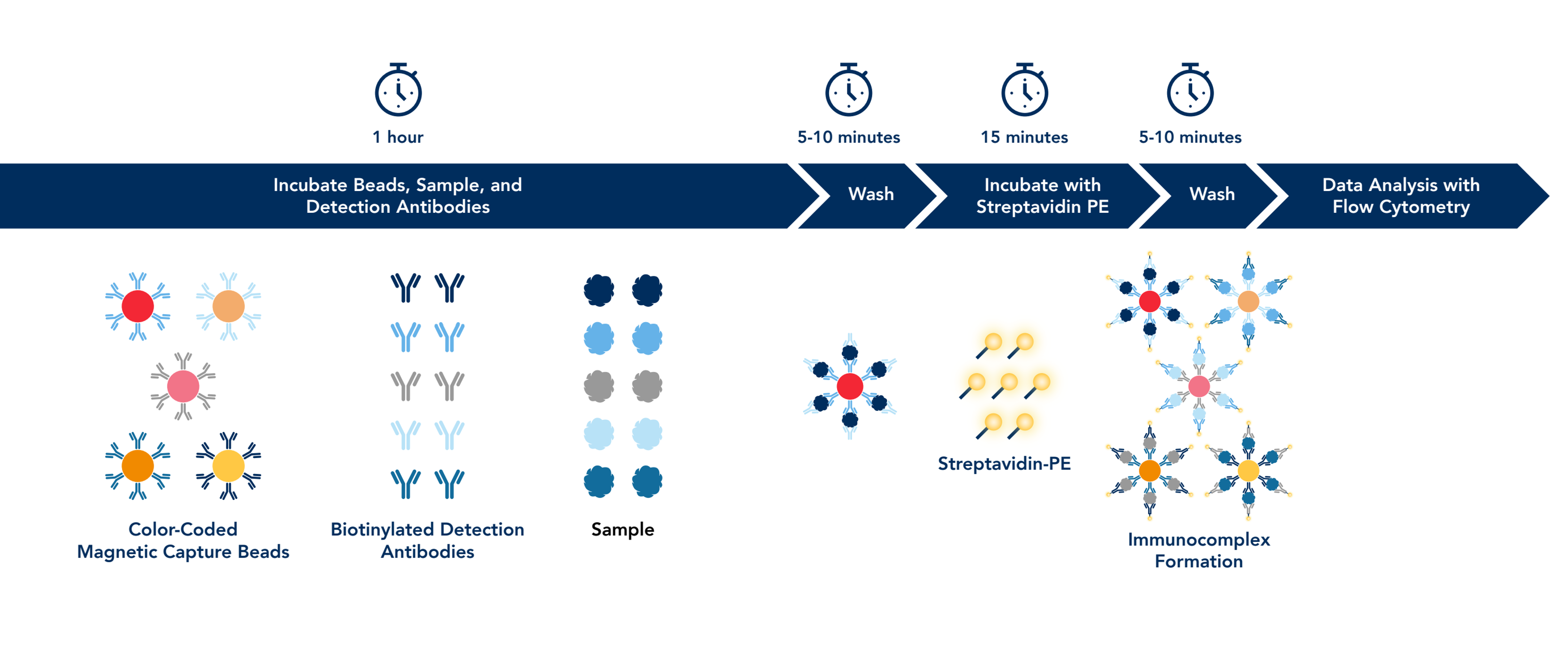
SpeedyPLEX Kits utilize fluorescent dye, color-coded beads which are conjugated to capture antibodies. The capture beads are incubated together with sample and corresponding biotinylated detection antibodies to assemble the sandwich complex. Streptavidin-PE is then added, which is used for detecting the concentration of target analytes via flow cytometry. Through this simple workflow, samples can be prepared for analysis in as little as 90 minutes.
Data Analysis with Flow Cytometry
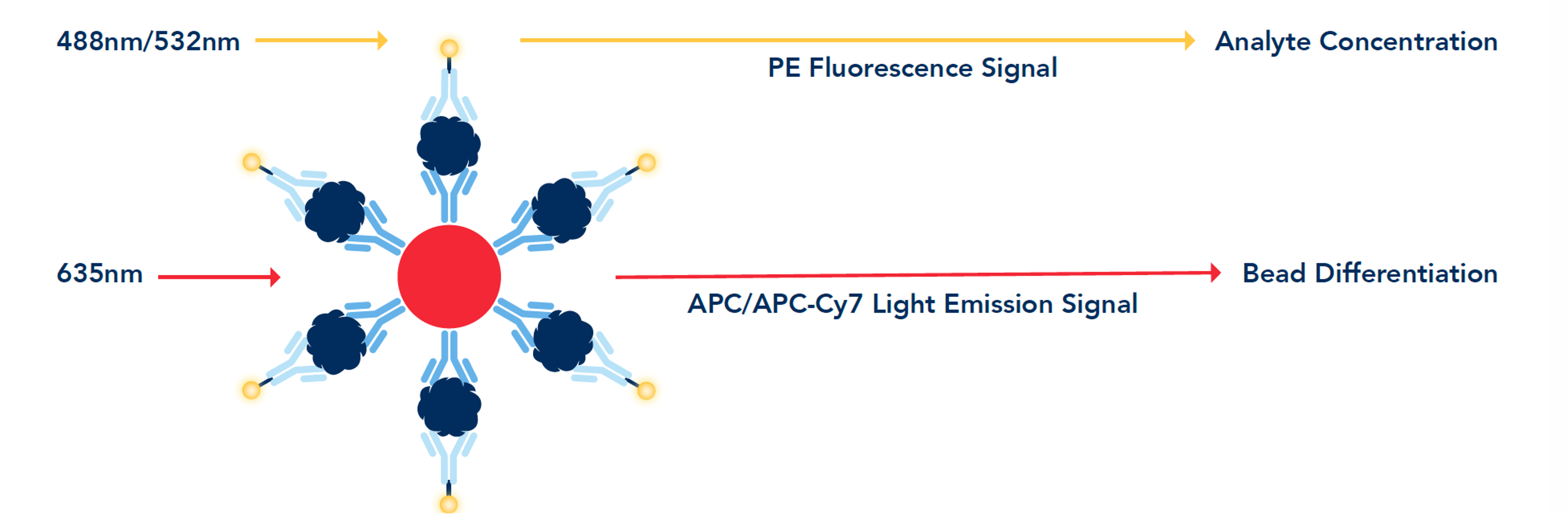
Beads can be distinguished in the flow cytometer due to their unique combinations of APC and APC-Cy7 dyes, with each target being associated with only one type of color-coded bead. The flow cytometer then collects the level of PE fluorescence from the different beads, which corresponds to analyte concentrations.
Compatible with any Flow Cytometer
Proteintech SpeedyPLEX Kits work on any standard flow cytometer equipped with two lasers (488/532 nm and 635 nm) for PE and APC detection.
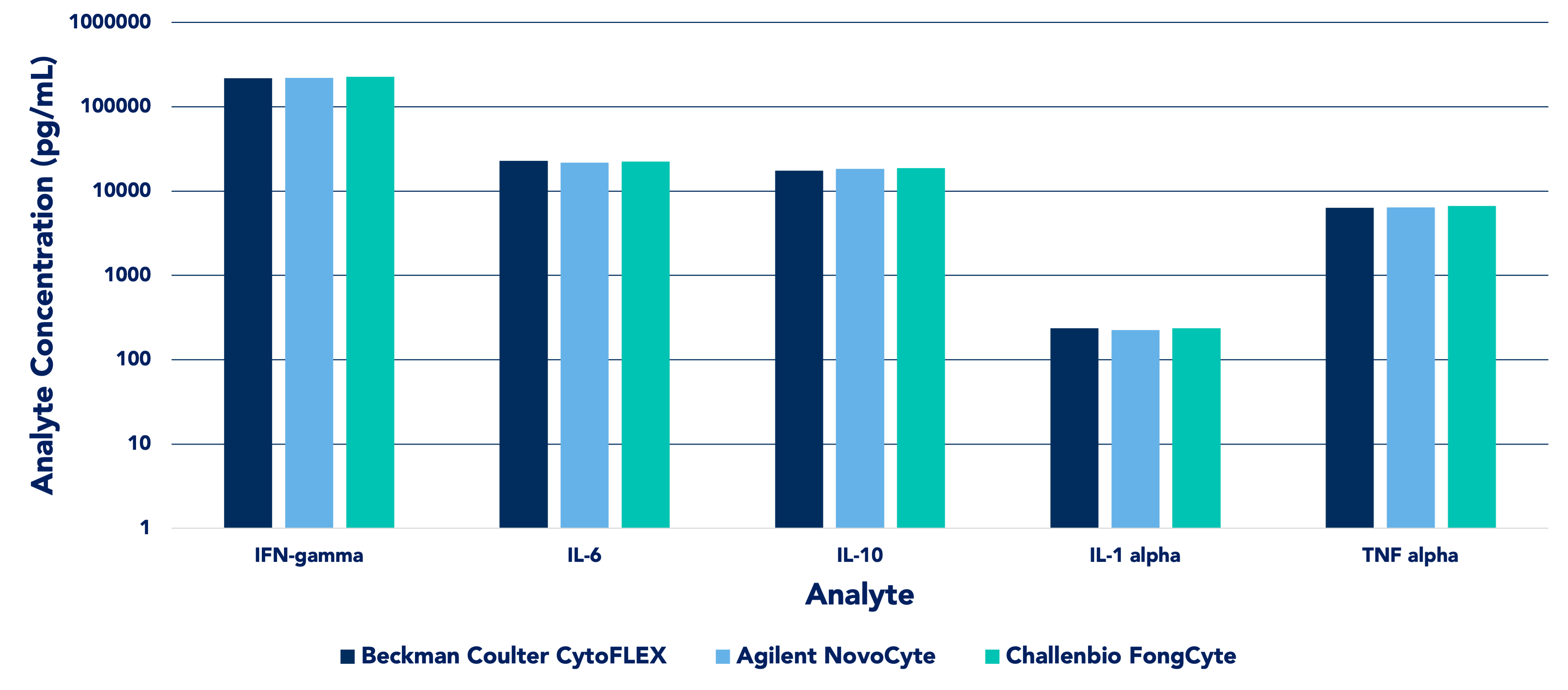
Analysis of cell supernatants collected from human PBMCs that stimulated with 10ug/mL PHA for 3 days. Supernatants were assayed for IFN-gamma, IL-6, IL-10, IL-1 alpha, and TNF alpha using the Human Cytokine (4-plex) SpeedyPLEX Kit 2 (KMF00002) followed by data analysis on Beckman Coulter® CytoFLEX (blue), Agilent® NovoCyte (light blue), and Challenbio FongCyteTM (green) flow cytometers. The measured analyte concentration is comparable across all cytometers with no noticeable differences seen.
Pre-configured, ready-to-use kits
Everything you need for high-throughput sample analysis in one box:
-
96-well microplates (flat- and V-bottom)
-
Setup beads
-
PE control beads
-
Protein standard cocktail
-
Magnetic capture beads
-
Biotinylated detection antibodies
-
Sample diluent
-
Detection diluent
-
Wash buffer
-
Streptavidin-PE
-
Plate seals
-
Easy to follow protocol
Advantages of Cytometric Bead Array
Compared to traditional, single analyte ELISAs, cytometric bead arrays provide several advantages
| Feature | Cytometric Bead Arrays | Traditional ELISA |
|---|---|---|
| Sample Utilization | Multiple analytes from as little as 25 µL | 100–200 µL per single target to account for duplicate/triplicate and possible dilution |
| Dynamic Range | Detects multiple analytes at varying concentrations | Limited to single analyte per well |
| Data Variability | Lower variability via simultaneous measurement | Higher plate-to-plate variation |
| Cost Per Analyte | Lower — multiplex from a single sample | Higher — separate plate needed per analyte |
| Throughput | Multiple analytes in a single run, more high-throughput | One analyte per plate, multiple runs needed |
VBA Data Analysis Tool
Our free VBA analysis tool can be used to quickly process raw data generated from the cytometer.
FAQs
What is a Cytometric Bead Array (CBA)?
Cytometric Bead Array (CBA) is a multiplex immunoassay technique that uses flow cytometry to measure multiple soluble analytes, such as cytokines, chemokines, or antibodies within a single sample. It the combines antibody-based detection of ELISAs with the laser-based particle analysis of flow cytometry.
Can any flow cytometer be used for data analysis?
Yes, Proteintech’s SpeedyPLEX Kits work with any flow cytometer equipped with a 488/532 nm laser and 635 nm laser for PE and APC detection respectively.
How much sample volume is required for the assay?
A minimum sample of volume of 25 uL is required.
What applications can SpeedyPLEX Kits be used for?
The SpeedyPLEX Kits can be used to study a broad range of areas including immune responses, infectious disease states, biomarker discovery, drug development, cancer biology, inflammation, and much more.
Is a microplate magnet required?
No CBA protocols can be completed using either a plate magnet or a centrifuge fitted with a plate holder.