



Tested Applications
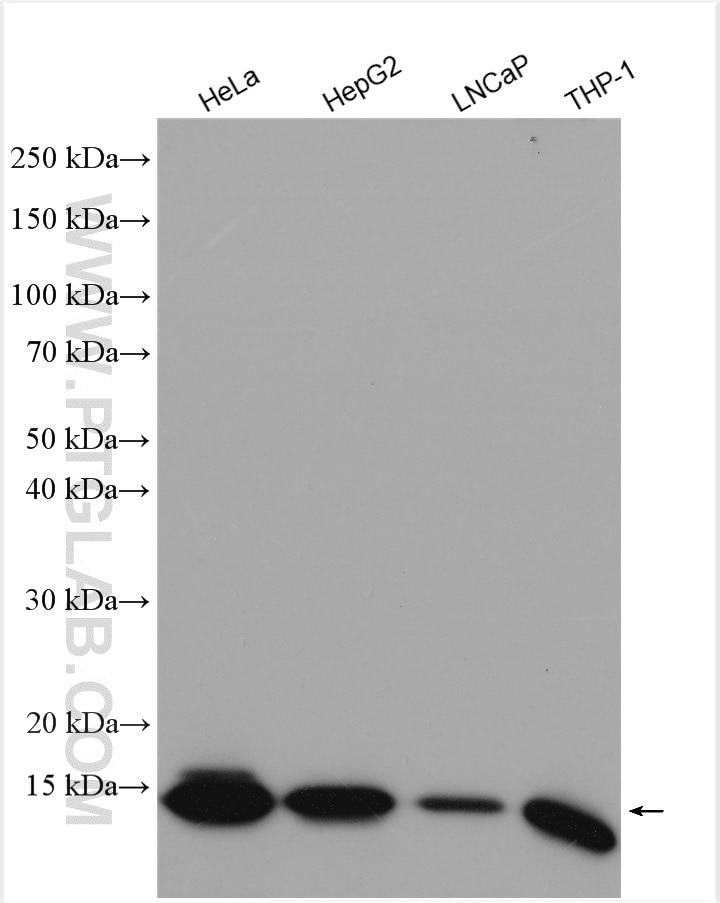
| Positive WB detected in | HeLa cells, HepG2 cells, LNCaP cells, THP-1 cells |
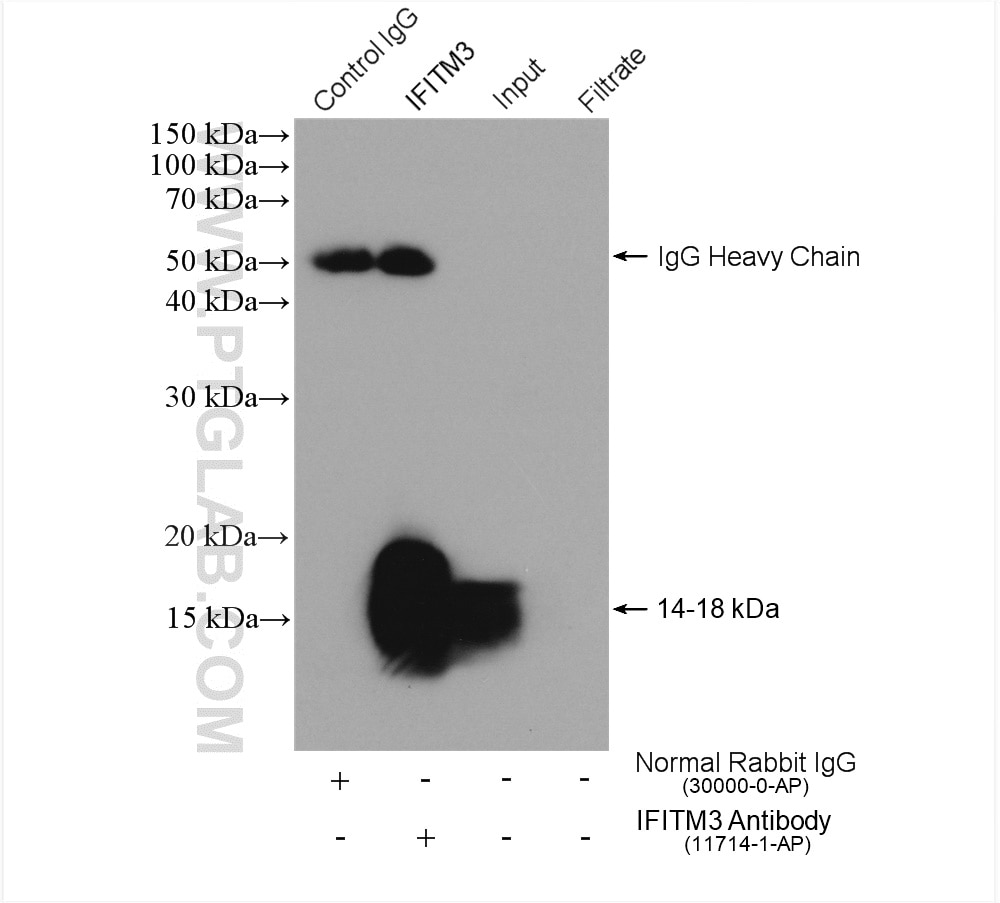
| Positive IP detected in | HepG2 cells |
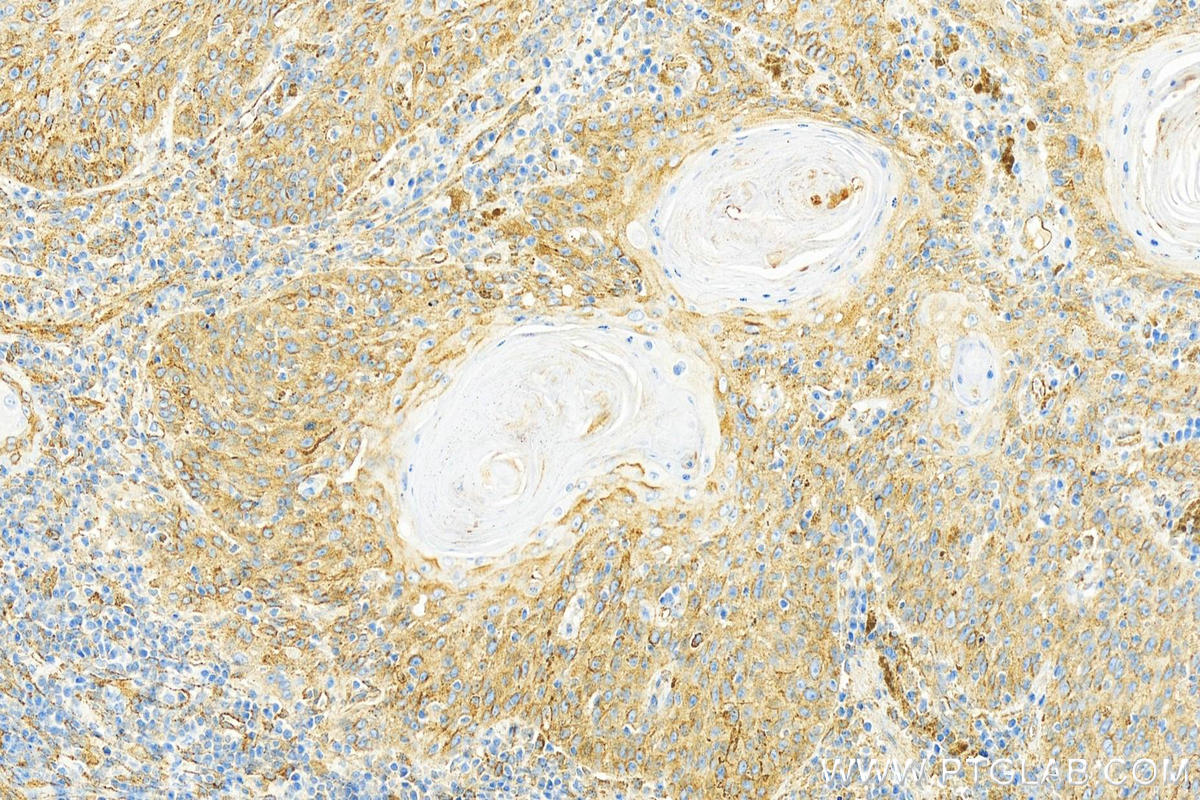
| Positive IHC detected in | human skin cancer tissue, human ovary tumor tissue Note: suggested antigen retrieval with TE buffer pH 9.0; (*) Alternatively, antigen retrieval may be performed with citrate buffer pH 6.0 |
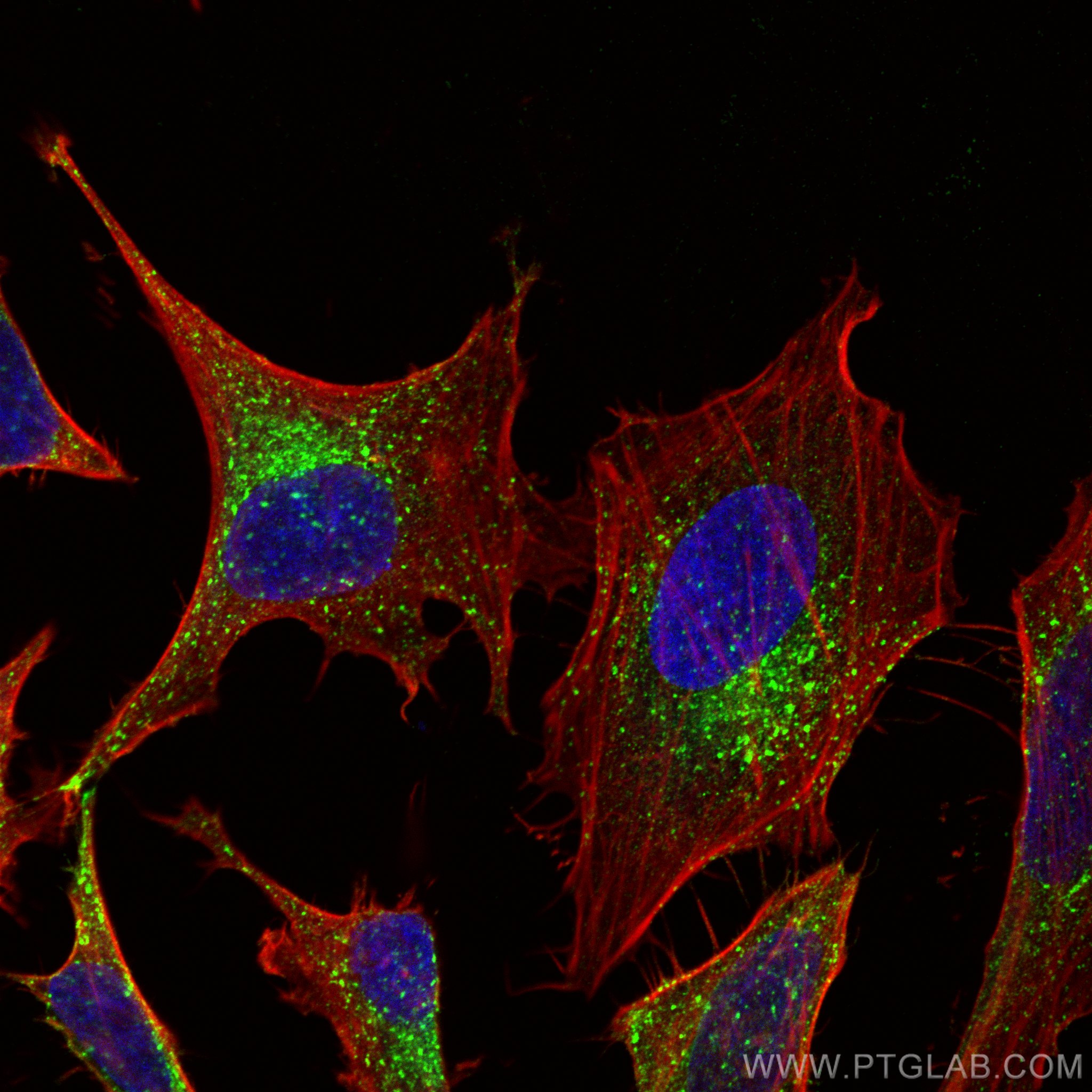
| Positive IF/ICC detected in | HeLa cells |
Recommended dilution
| Application | Dilution |
|---|---|
| Western Blot (WB) | WB : 1:5000-1:50000 |
| Immunoprecipitation (IP) | IP : 0.5-4.0 ug for 1.0-3.0 mg of total protein lysate |
| Immunohistochemistry (IHC) | IHC : 1:2000-1:8000 |
| Immunofluorescence (IF)/ICC | IF/ICC : 1:400-1:1600 |
| It is recommended that this reagent should be titrated in each testing system to obtain optimal results. | |
| Sample-dependent, Check data in validation data gallery. | |
Product Information
11714-1-AP targets IFITM3 in WB, IHC, IF/ICC, IP, CoIP, ELISA applications and shows reactivity with human samples.
| Tested Reactivity | human |
| Cited Reactivity | human, mouse, rat, pig, canine, monkey, chicken, goat, african green monkey |
| Host / Isotype | Rabbit / IgG |
| Class | Polyclonal |
| Type | Antibody |
| Immunogen |
CatNo: Ag2285 Product name: Recombinant human IFITM3 protein Source: e coli.-derived, PGEX-4T Tag: GST Domain: 1-133 aa of BC006794 Sequence: MNHTVQTFFSPVNSGQPPNYEMLKEEHEVAVLGAPHNPAPPTSTVIHIRSETSVPDHVVWSLFNTLFMNPCCLGFIAFAYSVKSRDRKMVGDVTGAQAYASTAKCLNIWALILGILMTILLIVIPVLIFQAYG Predict reactive species |
| Full Name | interferon induced transmembrane protein 3 (1-8U) |
| Calculated Molecular Weight | 133 aa, 15 kDa |
| Observed Molecular Weight | 14 kDa |
| GenBank Accession Number | BC006794 |
| Gene Symbol | IFITM3 |
| Gene ID (NCBI) | 10410 |
| RRID | AB_2295684 |
| Conjugate | Unconjugated |
| Form | Liquid |
| Purification Method | Antigen affinity purification |
| UNIPROT ID | Q01628 |
| Storage Buffer | PBS with 0.02% sodium azide and 50% glycerol, pH 7.3. |
| Storage Conditions | Store at -20°C. Stable for one year after shipment. Aliquoting is unnecessary for -20oC storage. 20ul sizes contain 0.1% BSA. |
Background Information
IFITM3, also named as interferon-inducible protein 1-8U, belongs to the CD225 family. It is IFN-induced antiviral protein that mediates cellular innate immunity to at least three major human pathogens, namely influenza A H1N1 virus, West Nile virus (WNV), and dengue virus, by inhibiting the early steps of replication. IFITM3 is identified as interferon-induced cellular proteins that restrict infections by retroviruses and filoviruses and of influenza virus and flaviviruses, respectively. IFITM3, the most potent antiviral IFITM, was found to inhibit an uncharacterized early infectious event after VSV endocytosis, but before primary transcription of its viral genome. IFITM proteins are viral restriction factors that can inhibit infection mediated by the influenza A virus (IAV) hemagglutinin (HA) protein. They differentially restrict the entry of a broad range of enveloped viruses, and modulate cellular tropism independently of viral receptor expression. Catalog#11714-1-AP is a rabbit polyclonal antibody raised against the full-length of human IFITM3.
Protocols
| Product Specific Protocols | |
|---|---|
| IF protocol for IFITM3 antibody 11714-1-AP | Download protocol |
| IHC protocol for IFITM3 antibody 11714-1-AP | Download protocol |
| IP protocol for IFITM3 antibody 11714-1-AP | Download protocol |
| WB protocol for IFITM3 antibody 11714-1-AP | Download protocol |
| Standard Protocols | |
|---|---|
| Click here to view our Standard Protocols |
Publications
What published studies show
The IFITM3 Polyclonal antibody (catalog number 11714-1-AP) has 176 citations. These appear in high-impact journals including Nature, Science, Cell, Immunity, Nature Communications, Cell Host & Microbe, PLoS Pathogens, Journal of Virology, and EMBO Journal. Research fields span antiviral immunity (influenza, HIV, SARS-CoV-2, Zika), innate immune and interferon signaling, neuroinflammation and Alzheimer's disease, cancer immunotherapy, and host-pathogen interactions, primarily using Western blot, immunofluorescence, and IHC applications.
| Species | Application | Title |
|---|---|---|
Science T cell memory. Skin-resident memory CD8⁺ T cells trigger a state of tissue-wide pathogen alert. | ||
Science A human apolipoprotein L with detergent-like activity kills intracellular pathogens. | ||
Cell A family of conserved bacterial virulence factors dampens interferon responses by blocking calcium signaling. |
Reviews
What customers say
Users consistently rate this antibody positively (4–5 stars) for detecting endogenous IFITM3 in human samples. Western blot performance is the most frequently highlighted strength, with one reviewer noting reliable results at a 1:2000 dilution. Immunofluorescence was also reported to work well. One user tested it successfully in MARC-145 and H1299 cell lines. Overall, reviewers describe it as a dependable reagent for IFITM3 detection across WB and IF applications.
The reviews below have been submitted by verified Proteintech customers who received an incentive for providing their feedback.
Cl (Verified Customer) (09-01-2025) | A reliable antibody to probe endogenous IFITM3 in humans.
 |
Thomas (Verified Customer) (06-29-2022) | Works fine in WB and IF
|
Xiuqing (Verified Customer) (03-21-2022) | worked very well for western blot
|







