
Microscopy & imaging guide for researchers: From experimental setup to image acquisition
Written by: Sadaf Fazeli, PhD in Hematology at Karolinska Institutet
This blog outlines key aspects of immunofluorescence and imaging, including
-
How to choose the right microscope for your sample and
-
Which factors are essential for achieving both high-quality preparation and reliable images.
Even with optimal staining and imaging, we remain restricted by the laws of physics. Optical aberrations such as refractive index mismatch can be minimized, and diffraction can be used strategically, but no image is a perfect representation of the true structure. Image quality and interpretation are influenced by many often-overlooked factors. Excellent sample preparation may still yield poor images if the microscope or objective is not well suited to the task, while in other cases, the limitations arise from the sample itself.
This guide, therefore, focuses on the essentials: how to prepare your sample effectively and how to select a microscope that genuinely fits your research question.
Start at the planning stage
Before ordering antibodies and reagents, it is essential to clearly define your research question. Begin by asking yourself:
-
What structures do you aim to visualize?
-
What is the size of the structures of interest?
The answers to these questions determine the resolution required for your experiment, which should be estimated in advance. This ensures that the microscope objectives and detectors can deliver the necessary level of detail. This step is particularly important because microscopes differ in their filter sets, lasers, and detection ranges. Therefore, before selecting an antibody, you must confirm that its fluorophore is compatible with the available imaging system in your institute.
Resolution
Resolution describes a microscope’s ability to distinguish two objects as separate. Because biological samples are three-dimensional, resolution has two components: lateral (XY) and axial (Z). Lateral resolution refers to how close two points in the same focal plane can be and still be seen separately, while axial resolution describes how well structures at different depths can be distinguished.
In practice, lateral resolution is almost always better than axial resolution, which is why separating details along the depth of a sample is more challenging than within a single focal plane. There is more than one way to calculate the resolution, and this is one way of doing it:
XY resolution = 0.61 × λem / NA
Z resolution = 2 x n x λem / NA²
Where:
n = refractive index (RI) of immersion medium that should match the objective
-
-
Air: RI ~1.0
-
Water immersion: RI ~1.33
-
Oil immersion: RI ~1.51
-
λem = emission wavelength of your fluorophore
NA = numerical aperture of your objective (written on the objective’s body or in the imaging software)
Notably, magnification does not appear in this equation. Increasing magnification alone does not improve resolution. Objectives with higher magnification often appear to provide better resolution because they may (though not necessarily) have a higher numerical aperture (NA), which directly contributes to improved resolution. Brightness, in contrast, is influenced by both:
Brightness = NA⁴ / Magnification²
What does this mean in practice? Increasing magnification alone leads to a noticeable drop in brightness unless the numerical aperture (NA) also increases.
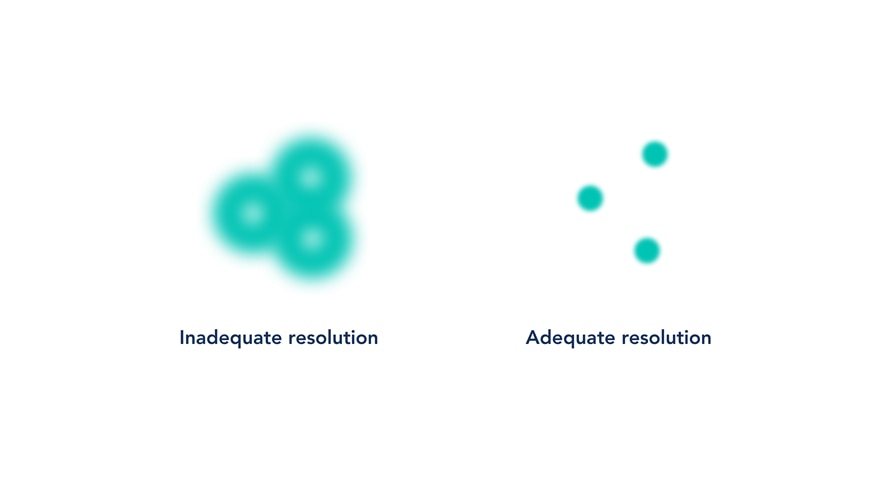
Figure 1: Schematic showing why adequate resolution is critical for imaging: improved resolution enables a more accurate representation of the true sample structure.
For example, imagine the aim is to image lysosomes in human monocytes from spleen tissue using Alexa Fluor 555. Lysosomes in this sample are spaced about 1 µm apart along the Z-axis but can be as close as ~380 nm in the XY plane. To resolve them properly, your objective needs lateral resolution of at least 380 nm and axial resolution of around 1 µm. Only objectives that meet both requirements will allow you to clearly distinguish individual lysosomes in 3D.
Now, suppose a microscope provides three objective options:
-
10× with NA 0.75 (Air objective, n = 1)
-
20× with NA 1.4 (Air objective, n = 1)
-
40× with NA 1.4 (Oil immersion objective, n = 1.515)
Using the formula to calculate each objective lateral resolution for Alexa Fluor 555 (AF555):
10x (AF555):
XY resolution = 0.61 × 565 / 0.75 = 459 nm ≈ 0.46μm (not good enough)
Z resolution = 2 x 1.0 x 565 / (0.75) ² = 2008.9 nm ≈2.01μm (not good enough)
20x (AF555):
XY resolution = 0.61 × 565 / 1.4 = 246 nm (good)
Z resolution = 2 x 1.0 x 565 / (1.4) ² = 576.5 nm ≈0.58μm (good)
40× (AF555):
XY resolution = 0.61 × 565 / 1.4 = 246 nm (good, and same as the 20x objective)
Z resolution = 2 x 1.515 x 565 / (1.4) ² = 873.5 nm≈0.87μm (good)
What would be 10× objective resolution if we use AF405 (λem = 421 nm) instead?
10x (AF405):
XY resolution = 0.61 × 421 / 0.75 = 342 nm → which can resolve 380 nm lysosomes
Z resolution = 2 x 1.0 x 421 / (0.75) ² → 1496.9 nm≈1.50μm (not good enough)
Using a 10× air objective (NA 0.75) with Alexa Fluor 405 (emission 421 nm) to image ~380 nm lysosomes gives the following outcome: The lateral (XY) resolution (~342 nm) is just sufficient to separate lysosomes side-by-side, though fine detail will be limited. In contrast, the axial (Z) resolution (~1.5 µm) exceeds typical vertical spacing, meaning lysosomes stacked in depth will likely appear merged. This illustrates that fluorophore choice also affects achievable resolution!
Beyond resolution
Even when the required resolution is met, several additional factors must be considered. These include whether live-cell imaging is needed and if the system is fast and photostable enough to limit bleaching, the thickness and opacity of the sample (which may require tissue clearing or light-sheet microscopy), the abundance of the target antigen when selecting fluorophores, and whether the microscope’s lasers and filters can support multiplex imaging without crosstalk or bleed-through.
Co-excitation and bleed-through
Co-excitation occurs when a fluorophore is unintentionally excited by a laser intended for another dye, typically due to overlapping excitation spectra. This leads to an unwanted signal appearing in the wrong channel. Bleed-through (spectral overlap) occurs when emission spectra overlap, allowing a signal from one fluorophore to spill into another channel, which can falsely suggest co-localization, especially when signals are strong.
To minimize these effects, select fluorophores, especially those with potential biological overlap, with well-separated excitation and emission spectra, use spectral detectors or virtual filters when available, and acquire images sequentially rather than simultaneously. In practice, several online tools and microscope software utilities allow you to evaluate spectral overlap in advance and optimize fluorophore combinations before imaging.
Refractive index (RI)
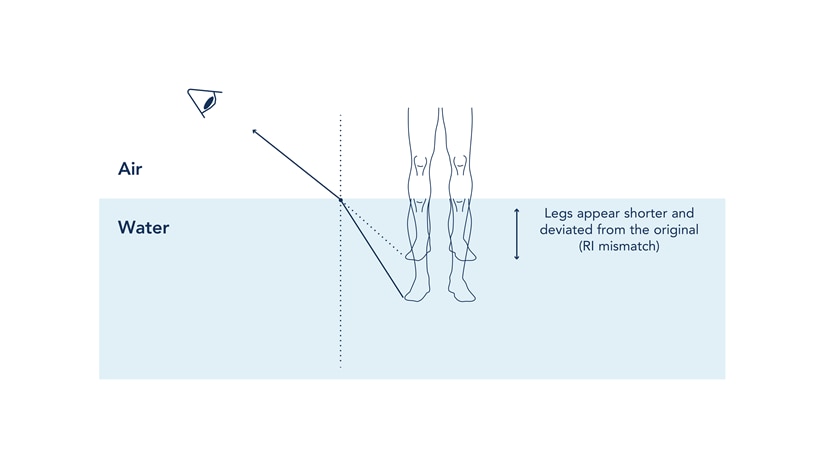
Figure 2: Example for RI mismatch.
The RI describes how light bends when passing between different materials, directly influencing image accuracy. Better RI matching along the imaging path reduces distortion and optical aberrations (see Figure 1). In microscopy, light passes through multiple media, such as the sample, mounting medium, coverslip, and immersion medium, each with its own RI. Mismatches at these interfaces introduce ray bending, leading to blur and loss of fidelity. While a perfect representation of the object is not possible, minimizing RI differences improves image sharpness, contrast, and measurement reliability.
To minimize RI mismatches:
-
Use the correct coverslip thickness for your objective. Most objectives assume 0.17 mm (#1.5). Some objectives have a correction collar you can adjust.
-
Match your mounting medium to your objective.
-
Whenever possible, place your sample on the coverslip rather than the slide.
-
Don’t use excessive mounting medium.
-
Clean coverslips properly to remove any oily residue from manufacturing.
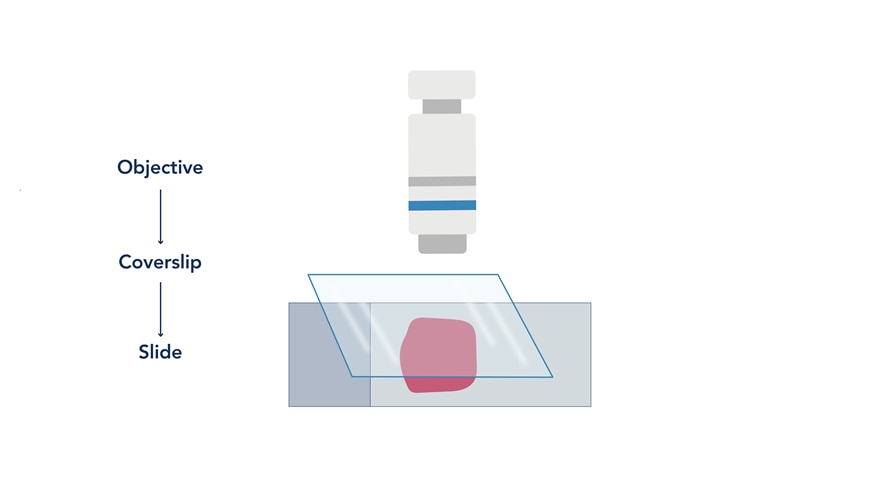
Figure 3: Schematic illustration of imaging setup: The coverslip forms the first optical barrier/interface after the objective, making it the critical surface for optimal imaging performance.
Experimental protocol: Cells and thin tissue sections
Although numerous immunofluorescence staining protocols exist, most follow a shared set of core steps. Understanding the purpose and optimization of each step is essential, particularly when planning multiplex experiments.
Fixation
Fixation preserves cellular and tissue architecture while maintaining antigen integrity. Methanol-based fixatives should generally be avoided for immunofluorescence, as they can denature proteins and destroy epitopes. A common choice is methanol-free paraformaldehyde (PFA, 2–4%) applied for 10–20 min at room temperature. For frozen OCT-embedded tissue sections, brief fixation in ice-cold acetone (~5 min) is frequently used and preserves many epitopes effectively.
Deparaffinization and rehydration (FFPE samples)
Formalin-fixed, paraffin-embedded (FFPE) sections must be deparaffinized before staining, so staining can penetrate. This is typically done using two xylene washes (10 min each), followed by rehydration through a graded ethanol series (100%, 95%, 80%, 60%), immersion in distilled water, and a final rinse in PBS.
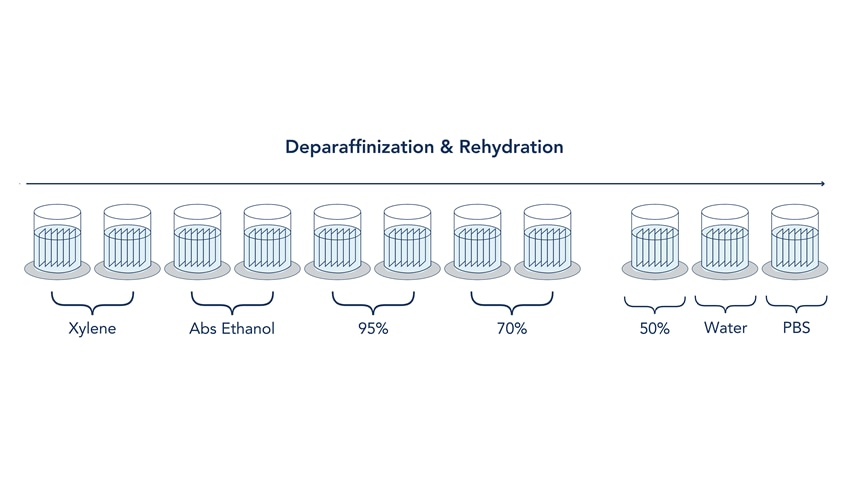
Figure 4: Schematic illustration of the deparaffinization and rehydration process.
Antigen retrieval
Prolonged formalin fixation causes cross-linking that can mask epitopes. Antigen retrieval reverses these effects and is essential for FFPE samples. The recommended method should always be verified in the antibody datasheet. Common approaches include heat-induced retrieval using citrate buffer (pH 6) for most antigens or Tris–EDTA (pH 9) for more resistant targets, as well as enzymatic methods such as protease or proteinase K treatment. Heating can be performed using a water bath, microwave, or pressure cooker, followed by gradual cooling. Sections should then be washed thoroughly to remove residual buffer.
Permeabilization
Permeabilization is required for antibody penetration and access to intracellular or nuclear antigens. Mild detergents such as Tween-20 (0.05–0.1%) provide reversible permeabilization but must be included in subsequent buffers, while Triton X-100 (0.1–0.2%) provides stronger, irreversible permeabilization. Conditions should be optimized to avoid morphological damage or increased background. Wash steps are essential after permeabilization.
Blocking
Blocking reduces non-specific antibody binding to Fc receptors and extracellular matrix components. This is commonly achieved using normal serum from the host species of the secondary antibody, often combined with 0.5–5% BSA in PBS. Incubation is typically performed for 30–60 min at room temperature or longer at 4°C.
Primary antibody staining
Primary antibodies should be diluted in blocking buffer according to the datasheet recommendations. Overnight incubation at 4°C generally provides optimal specificity and signal-to-noise ratio. Sections should be incubated in a humidified chamber to prevent drying, followed by thorough washing to remove unbound antibody.
Secondary antibody staining
If indirect detection is used, secondary antibodies are applied for 45–60 min at room temperature in the same blocking buffer. Proper washing afterward is critical to minimize background. Careful selection of secondary antibodies and fluorophores is essential for multiplexing, ensuring minimal spectral overlap, appropriate channel separation for co-localizing markers, and sufficient brightness for low-abundance targets.
Autofluorescence reduction
Autofluorescence is common in tissues rich in heme or lipofuscin and can obscure the true signal. Reduction strategies include chemical quenchers such as sodium borohydride or ammonium chloride, as well as commercial reagents like Sudan Black or TrueBlack. The choice depends on tissue type and autofluorescence source. This step may be performed before or after blocking.
Common challenge in multiplexing
Secondary antibodies are more often species-specific. For example, when multiple primary antibodies are derived from the same species (e.g., rabbit), using differently colored secondary antibodies is not feasible, as all secondaries (anti-rabbit) will bind to all primaries. While pre-conjugated primary antibodies offer a solution, they are not always available or offered in the required fluorophores.
An alternative approach is direct, user-controlled labeling of primary antibodies with distinct fluorophores. Proteintech’s FlexAble Antibody Labeling Kits enable rapid conjugation of unconjugated primary antibodies using minimal material, typically within ten minutes. This allows flexible fluorophore selection, supports complex multiplex designs, and reduces costs by eliminating the need to purchase multiple pre-conjugated variants.
For instance, multiple rabbit-derived primary antibodies targeting different antigens can be labeled with distinct fluorophores and applied simultaneously. Direct labeling is particularly advantageous for thick tissue samples, as it improves antibody penetration and results in more uniform staining.
Counterstaining and mounting
Following antibody labeling, nuclei are typically counterstained with DAPI or a comparable dye. Mounting media should be selected to match the RI of the objective to minimize optical aberrations and improve image quality. Autofluorescence of the mounting medium should be assessed using unstained controls. Coverslips of the correct thickness (typically #1.5, ~0.17 mm) are essential for optimal focusing and resolution.
Image acquisition: Sampling and exposure
Sampling describes how finely an image is divided into pixels and Z-steps relative to the microscope’s resolving power. Undersampling results in loss of detail and pixelation, while oversampling increases acquisition time, file size, and photobleaching without adding meaningful information.
According to the Nyquist sampling criterion, pixel size should be at least twofold smaller than the resolution limit. For example, resolving ~380 nm structures requires an XY pixel size of ≤190 nm, and resolving ~1 µm spacing in Z requires a Z-step of ≤500 nm. Most fluorescence and confocal microscopes allow direct adjustment of pixel size to meet these criteria.
Exposure, in contrast, refers to signal intensity rather than spatial sampling. Underexposure leads to low signal-to-noise ratios, whereas overexposure causes signal saturation and loss of intensity information. Most microscope software provides tools to highlight saturated or underexposed pixels, enabling rapid optimization of acquisition settings. Under- or over-exposure can be corrected by adjusting laser power, detector gain, and offset. Laser power controls excitation intensity but increases the risk of photobleaching at high levels. Gain amplifies a detected signal but can also increase noise, while offset shifts the baseline and, if set too high, may obscure weak signals.
Summary
High-quality images depend on careful experimental planning, appropriate sample preparation, and a solid understanding of resolution, RI matching, and fluorophore selection, well before image acquisition begins.
FAQs
Why does numerical aperture matter more than magnification for microscope resolution?
Numerical aperture (NA) directly affects microscope resolution, while magnification alone does not appear in the resolution equation. Higher-magnification objectives may improve resolution only if they also have a higher NA. NA also strongly influences image brightness, meaning increased magnification without increased NA can reduce signal brightness.
What factors must be considered for imaging beyond resolution?
Important additional factors are whether live-cell imaging is needed, if the system is fast and photostable enough to limit bleaching, the thickness and opacity of the sample, the abundance of the target antigen when selecting fluorophores, and whether the microscope’s lasers and filters can support multiplex imaging without crosstalk.
How can refractive index mismatch affect fluorescence microscopy images?
Refractive index mismatches at the interfaces between sample, mounting medium, coverslip, and immersion medium cause light to bend as it passes through, introducing blur and reducing image sharpness, contrast, and measurement accuracy.
What is the Nyquist sampling criterion in fluorescence microscopy?
The Nyquist sampling criterion states that pixel size should be at least twofold smaller than the microscope’s resolution limit. Sampling describes how finely an image is divided into pixels and Z-steps relative to the microscope’s resolving power. Undersampling results in loss of detail and pixelation, while oversampling increases acquisition time, file size, and photobleaching.
"I would like to acknowledge the Live Cell Imaging core facility/Nikon Center of Excellence, at Karolinska Institutet, Sweden, for their support and help to improve my microscopy knowledge." (Sadaf Fazeli, PhD in Hematology at Karolinska Institutet)

Related Content
Support
Newsletter Signup
Stay up-to-date with our latest news and events. New to Proteintech? Get 10% off your first order when you sign up.
Able™