
Recombinant Human FOLR3 protein (rFc Tag) (HPLC verified)
Species
Human
Purity
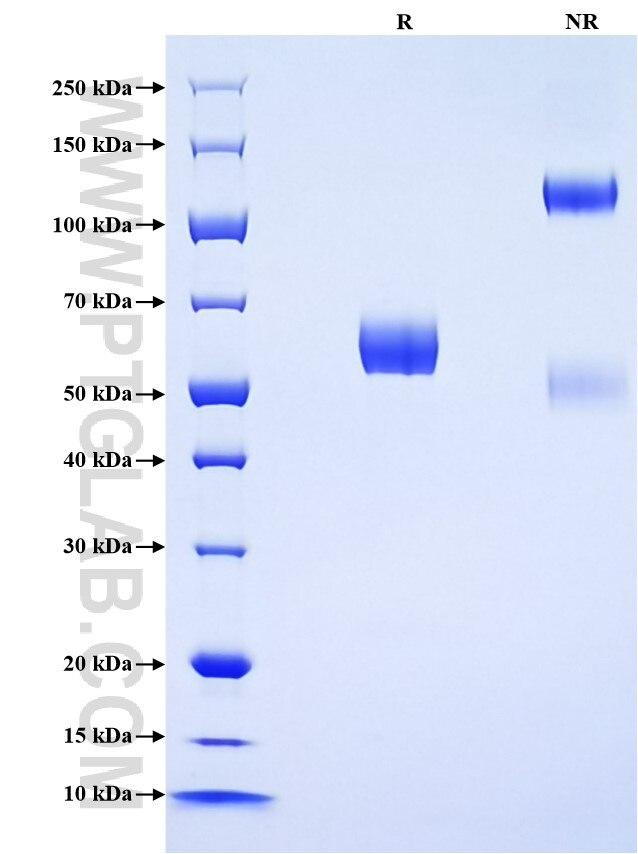
>90 %, SDS-PAGE
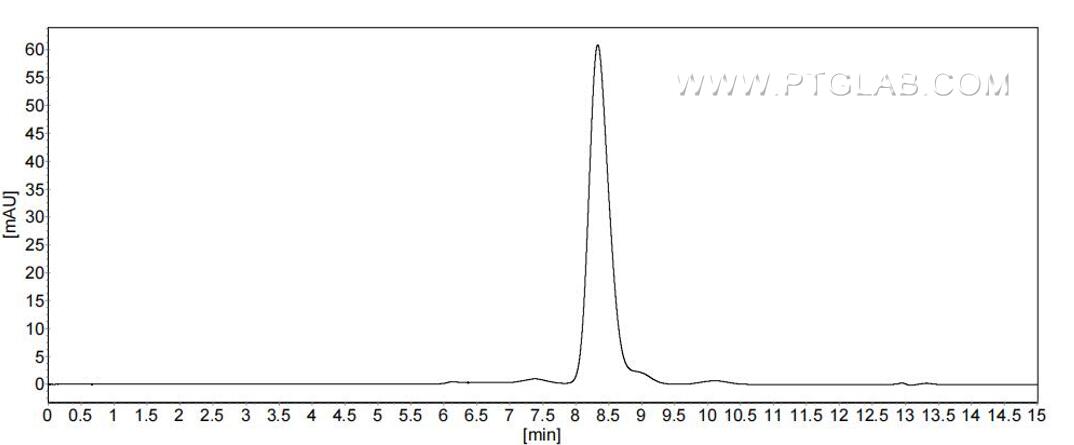
>90 %, SEC-HPLC
Tag
rFc Tag
Activity
not tested
Cat no : Eg3170
Validation Data Gallery
Product Information
| Purity | >90 %, SDS-PAGE >90 %, SEC-HPLC |
| Endotoxin | <0.1 EU/μg protein, LAL method |
| Activity |
Not tested |
| Expression | HEK293-derived Human FOLR3 protein Gln23-Ser245 (Accession# P41439-1) with a rabbit IgG Fc tag at the C-terminus. |
| GeneID | 2352 |
| Accession | P41439-1 |
| PredictedSize | 51.5 kDa |
| SDS-PAGE | 55-65 kDa, reducing (R) conditions |
| Formulation | Lyophilized from 0.22 μm filtered solution in PBS, pH 7.4. Normally 5% trehalose and 5% mannitol are added as protectants before lyophilization. |
| Reconstitution | Briefly centrifuge the tube before opening. Reconstitute at 0.1-0.5 mg/mL in sterile water. |
| Storage Conditions |
It is recommended that the protein be aliquoted for optimal storage. Avoid repeated freeze-thaw cycles.
|
| Shipping | The product is shipped at ambient temperature. Upon receipt, store it immediately at the recommended temperature. |
Background
Folate receptor 3 (FOLR3) belongs to the folate receptor family. The folic acid receptors (FOLRs) have three isotypes (FOLR1, FOLR2 and FOLR3) in human. FOLR1 and FOLR2 are located in the cell membrane surface and transported folic acid into cell membrane using glycosylphosphatidylinositol (GPI)-anchored membrane protein by endocytosis. FOLR3 is mainly expressed in haematopoietic tissues, such as spleen and bone marrow, and its protein products are primarily secreted. FOLR3, which is expressed in humans but not in rodents, is a secreted protein that is elevated in the livers of patients with MASH but not in those with metabolic dysfunction–associated steatotic liver disease, those with type II diabetes, or healthy individuals.
References:
1.Qu Y, et al. (2024) Respir Res. 25(1):59.
2.Shen F, et al. (1994) Biochemistry. 33(5):1209-15.
3.Shen F, et al. (1995) Biochemistry. 34(16):5660-5.
4.Quinn C, et al. (2023) Sci Transl Med. 15(715):eade2966.