
Recombinant Human LAIR2 protein (rFc Tag) (HPLC verified)
Species
Human
Purity
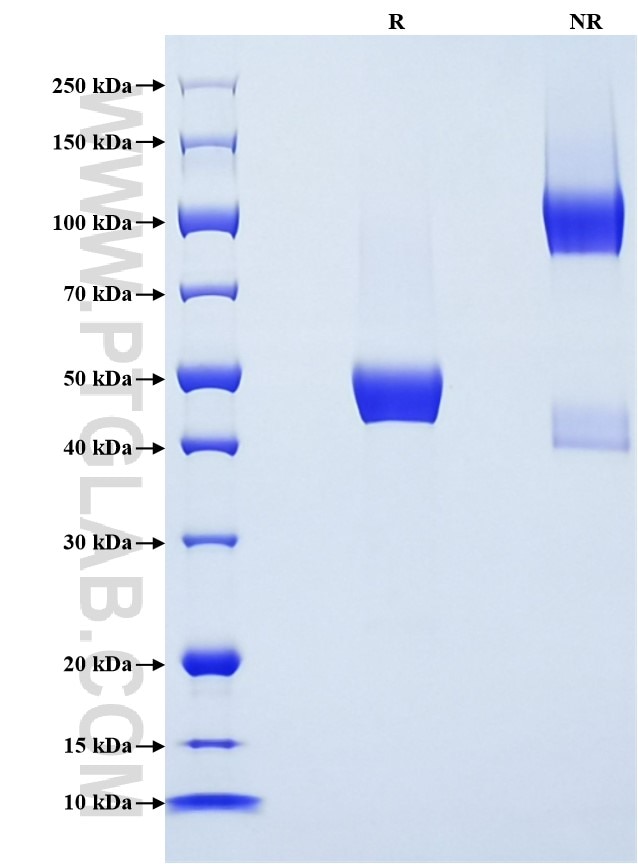
>90 %, SDS-PAGE
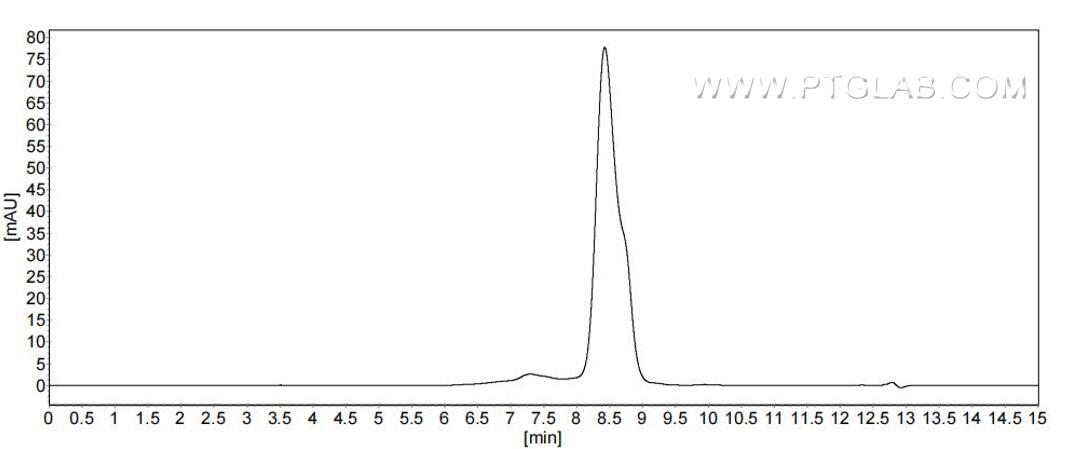
>90 %, SEC-HPLC
Tag
rFc Tag
Activity
not tested
Cat no : Eg4247
Validation Data Gallery
Product Information
| Purity | >90 %, SDS-PAGE >90 %, SEC-HPLC |
| Endotoxin | <0.1 EU/μg protein, LAL method |
| Activity |
Not tested |
| Expression | HEK293-derived Human LAIR2 protein Gln22-Pro152 (Accession# Q6ISS4-1) with a rabbit IgG Fc tag at the C-terminus. |
| GeneID | 3904 |
| Accession | Q6ISS4-1 |
| PredictedSize | 40.3 kDa |
| SDS-PAGE | 42-50 kDa, reducing (R) conditions |
| Formulation | Lyophilized from 0.22 μm filtered solution in PBS, pH 7.4. Normally 5% trehalose and 5% mannitol are added as protectants before lyophilization. |
| Reconstitution | Briefly centrifuge the tube before opening. Reconstitute at 0.1-0.5 mg/mL in sterile water. |
| Storage Conditions |
It is recommended that the protein be aliquoted for optimal storage. Avoid repeated freeze-thaw cycles.
|
| Shipping | The product is shipped at ambient temperature. Upon receipt, store it immediately at the recommended temperature. |
Background
LAIR2, or leukocyte-associated immunoglobulin-like receptor 2, is a protein that belongs to the immunoglobulin superfamily. It is highly expressed in the placenta, specifically in the extravillous trophoblasts (EVTs) at the leading edge of the anchoring cell columns invading the maternal decidua. LAIR2 expression has also been noted to be down-regulated in the first trimester of pregnancies destined for preeclampsia, suggesting a potential role in the etiology of this condition. LAIR2 has been implicated in cancer immunotherapy. A study suggests that LAIR-2 can act as a decoy receptor by binding collagen with higher affinity than LAIR-1, potentially releasing LAIR-1-mediated immune suppression. This could be a novel strategy for cancer immunotherapy, particularly for immune-excluded tumors.
References:
1. Founds SA. et al. (2013) Placenta. 34(3):248-55.
2. Ramos MIP. et al. (2021) Elife. 10:e62927.