

Tested Applications
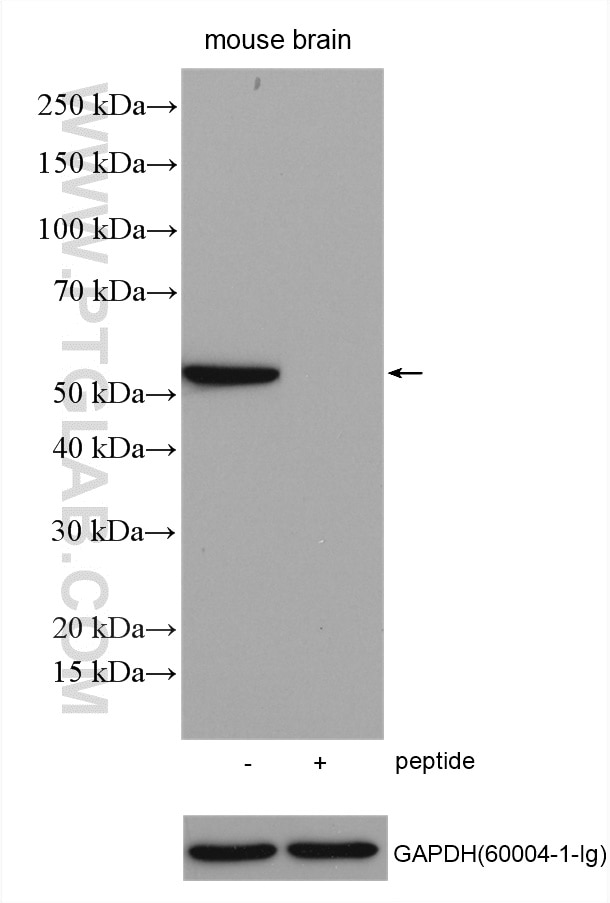
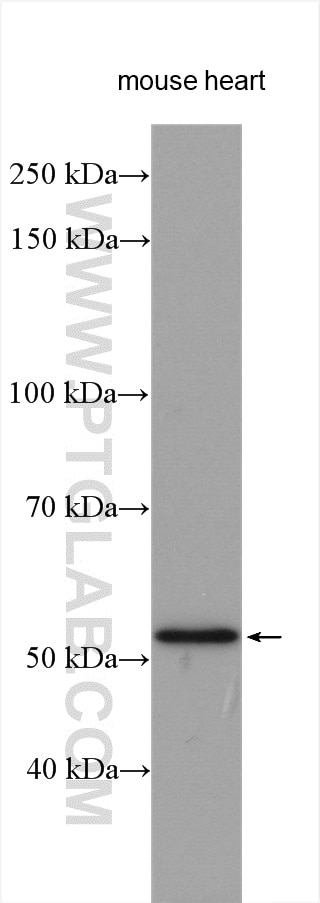
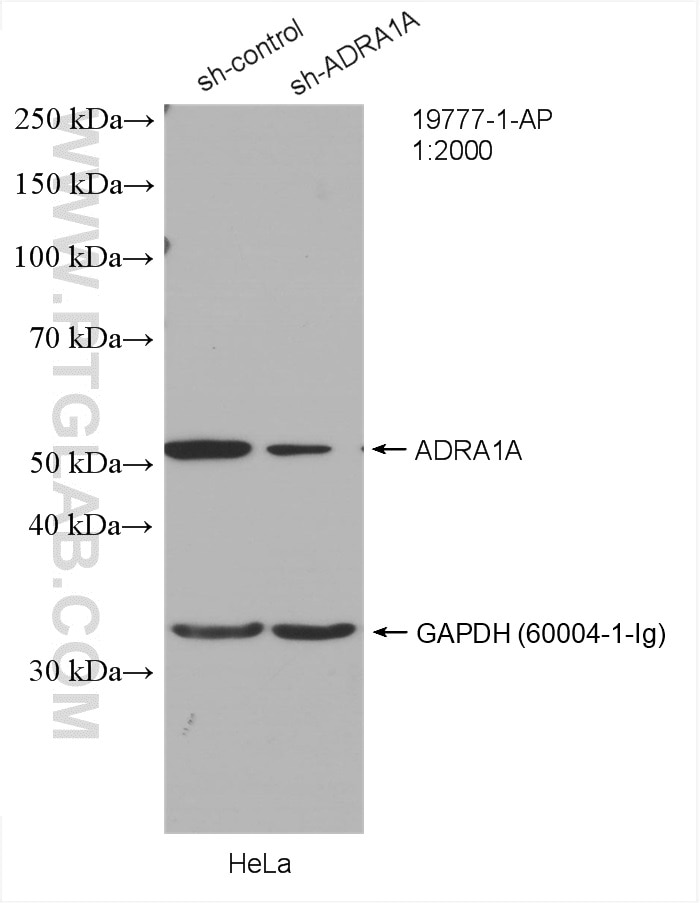
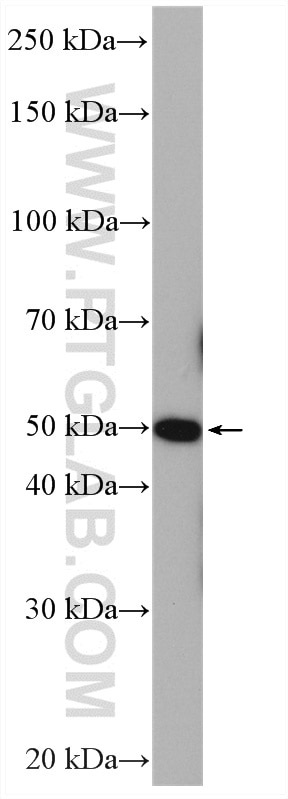
| Positive WB detected in | mouse heart tissue, HeLa cells, mouse brain tissue |
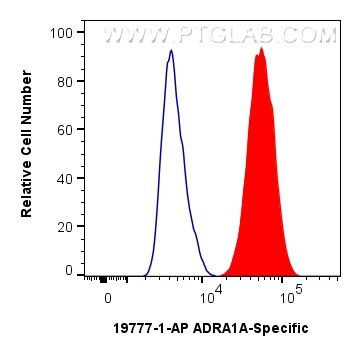
| Positive FC (Intra) detected in | HepG2 cells |
Recommended dilution
| Application | Dilution |
|---|---|
| Western Blot (WB) | WB : 1:500-1:2000 |
| Flow Cytometry (FC) (INTRA) | FC (INTRA) : 0.25 ug per 10^6 cells in a 100 µl suspension |
| It is recommended that this reagent should be titrated in each testing system to obtain optimal results. | |
| Sample-dependent, Check data in validation data gallery. | |
Product Information
19777-1-AP targets ADRA1A-Specific in WB, IHC, IF, ELISA applications and shows reactivity with human, mouse, rat samples.
| Tested Reactivity | human, mouse, rat |
| Cited Reactivity | human, mouse, rat |
| Host / Isotype | Rabbit / IgG |
| Class | Polyclonal |
| Type | Antibody |
| Immunogen |
Peptide Predict reactive species |
| Full Name | adrenergic, alpha-1A-, receptor |
| Calculated Molecular Weight | 51 kDa |
| Observed Molecular Weight | 52 kDa |
| GenBank Accession Number | NM_000680 |
| Gene Symbol | ADRA1A |
| Gene ID (NCBI) | 148 |
| RRID | AB_10643238 |
| Conjugate | Unconjugated |
| Form | Liquid |
| Purification Method | Antigen affinity purification |
| UNIPROT ID | P35348 |
| Storage Buffer | PBS with 0.02% sodium azide and 50% glycerol, pH 7.3. |
| Storage Conditions | Store at -20°C. Stable for one year after shipment. Aliquoting is unnecessary for -20oC storage. 20ul sizes contain 0.1% BSA. |
Background Information
ADRA1A, also named as ADRA1C, belongs to the G-protein coupled receptor 1 family. ADRA1A mediates its action by association with G proteins that activate a phosphatidylinositol-calcium second messenger system. Its effect is mediated by G(q) and G(11) proteins. The antibody is specific to ADRA1A.
Protocols
| Product Specific Protocols | |
|---|---|
| FC protocol for ADRA1A-Specific antibody 19777-1-AP | Download protocol |
| WB protocol for ADRA1A-Specific antibody 19777-1-AP | Download protocol |
| Standard Protocols | |
|---|---|
| Click here to view our Standard Protocols |
Publications
What published studies show
The ADRA1 antibody (Cat# 19777-1-AP) has 12 citations published in journals including Phytotherapy Research, Journal of Ethnopharmacology, Communications Biology, Pharmaceuticals, Biomolecules, iScience, European Journal of Immunology, Heliyon, Vascular Pharmacology, BMC Neuroscience, Biochemical and Biophysical Research Communications, and Neurobiology of Disease. Research fields span Alzheimer's disease and neuroinflammation, cardiovascular biology, uveal melanoma, heart failure, immunology, sepsis, vascular pharmacology, hearing loss, blood pressure regulation, and pain signaling.
| Species | Application | Title |
|---|---|---|
Phytother Res Gastrodin Ameliorates Tau Pathology and BBB Dysfunction in 3xTg-AD Transgenic Mice by Regulating the ADRA1/NF-κB/NLRP3 Pathway to Reduce Neuroinflammation | ||
J Ethnopharmacol Jiajian Shuyu pills effectively ameliorate cognitive impairment via regulating the inflammation of microglia in an Alzheimer's disease mouse model | ||
Commun Biol A paraventricular hypothalamic control of social stress susceptibility by targeting brown adipose tissue β3 adrenoceptor. | ||
Pharmaceuticals (Basel) Vascular α1A Adrenergic Receptors as a Potential Therapeutic Target for IPAD in Alzheimer's Disease. | ||
Biomolecules The Discovery of α-Adrenoceptor Antagonists as a Potential New Treatment Option for Uveal Melanoma. | ||
iScience Changes in transcriptomic landscape in human end-stage heart failure with distinct etiology. |






