
Product Information
| Tested Reactivity | human |
| IsoType | Mouse IgG2a, kappa |
| Class | Recombinant |
| Immunogen | Human T cells |
| Conjugate | Unconjugated |
| Format | Liquid |
| Formulation | 1XPBS |
| Storage Buffer | 1XPBS |
| Storage Conditions | Store at -20°C to -80°C |
| Shipping Condition | Blue ice |
Product Specifications
| Test | Method | Specification |
|---|---|---|
| Endotoxin | Tested in accordance with USP <85> | <0.1 EU/μg |
| Identity | SDS-PAGE | 25kDa and 50kDa bands in reducing conditions |
| Mycoplasma | tested in accordance with USP <63> | Not Detected |
| Purity | SDS-PAGE followed by denitometric analysis | >95% |
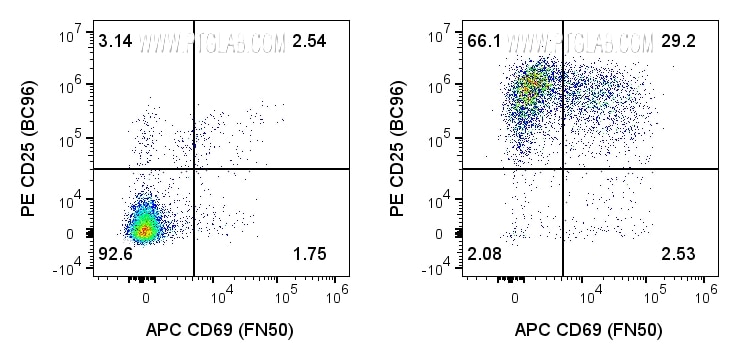
| Specificity | T cell activation | >5-fold over unactivated |
Background
OKT3, also known as muromonab-CD3, is a monoclonal antibody that targets the CD3ε component of the T-cell receptor (TCR) complex. CD3 is essential for T-cell activation, signal transduction, and immune effector functions. By binding CD3, OKT3 triggers receptor internalization and functional suppression of T cells. OKT3 became the first FDA-approved monoclonal antibody, originally used to treat acute rejection in solid organ transplantation. Its mechanism involves transient activation followed by depletion or paralysis of T cells, effectively dampening harmful allo-reactive responses. However, its clinical use was limited by cytokine release syndrome and anti-mouse antibody formation. Beyond clinical application, anti-CD3 antibodies, including OKT3, are widely used in research to stimulate T-cell activation in vitro and to modulate immune responses in vivo. These reagents help dissect signaling pathways, differentiation programs, and immunoregulatory circuits. Thus, OKT3 remains a landmark molecule in immunology—both as a therapeutic pioneer and as a powerful experimental tool to explore T-cell biology.