
Product Information
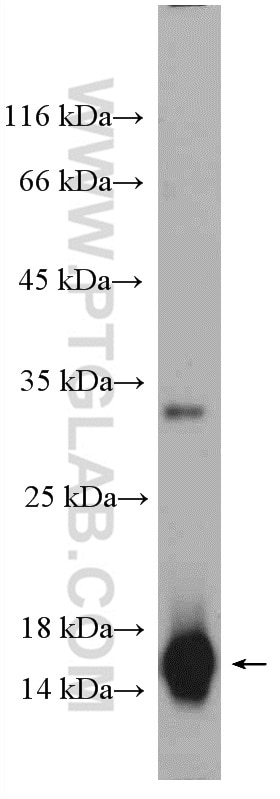
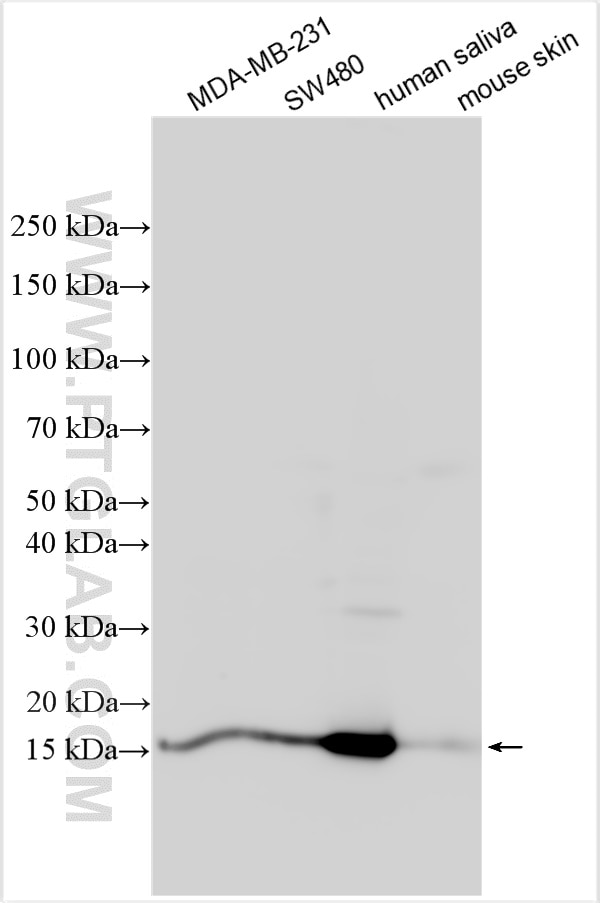
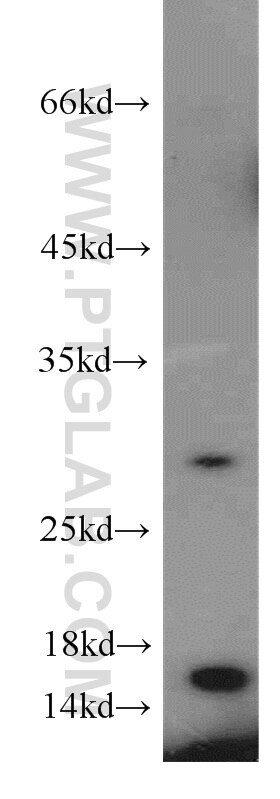
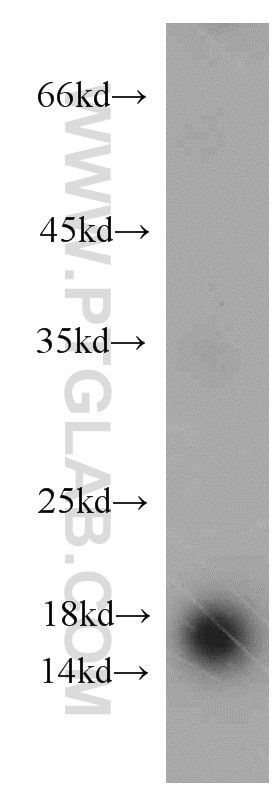
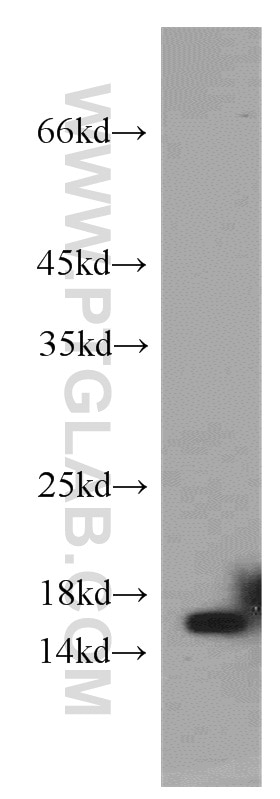
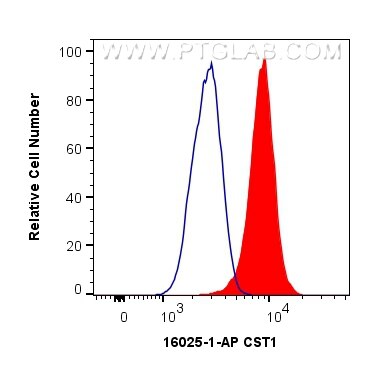
16025-1-PBS targets Cystatin SN/CST1 in WB, FC (Intra), ELISA applications and shows reactivity with human, mouse samples.
| Tested Reactivity | human, mouse |
| Host / Isotype | Rabbit / IgG |
| Class | Polyclonal |
| Type | Antibody |
| Immunogen |
CatNo: Ag8862 Product name: Recombinant human CST1 protein Source: e coli.-derived, PGEX-4T Tag: GST Domain: 24-141 aa of BC021225 Sequence: KEEDRIIPGGIYNADLNDEWVQRALHFAISEYNKATKDDYYRRPLRVLRARQQTVGGVNYFFDVEVGRTICTKSQPNLDTCAFHEQPELQKKQLCSFEIYEVPWENRRSLVKSRCQES Predict reactive species |
| Full Name | cystatin SN |
| Calculated Molecular Weight | 141 aa, 16 kDa |
| Observed Molecular Weight | 14-16 kDa |
| GenBank Accession Number | BC021225 |
| Gene Symbol | CST1 |
| Gene ID (NCBI) | 1469 |
| RRID | AB_10916385 |
| Conjugate | Unconjugated |
| Form | Liquid |
| Purification Method | Antigen affinity purification |
| UNIPROT ID | P01037 |
| Storage Buffer | PBS only, pH 7.3. |
| Storage Conditions | Store at -80°C. |
Background Information
CST1, or cystatin SN, is a gene in humans that encodes a secreted protein belonging to the type 2 cystatin superfamily, which includes CST1, CST2, CST3, CST4, and CST5. These proteins are cysteine proteinase inhibitors found in various human fluids and secretions, where they appear to provide protective functions. CST1 is specifically found in saliva, tears, urine, and seminal fluid, and it plays a role in inhibiting the activity of cysteine proteases. CST1 has been implicated in various pathological processes, including tumor invasion and metastasis. Overexpression of CST1 has been observed in several types of cancer, such as lung, breast, colorectal, and gastric cancer, suggesting its role in the proliferation, invasion, and metastasis of these tumors.







