

Tested Applications
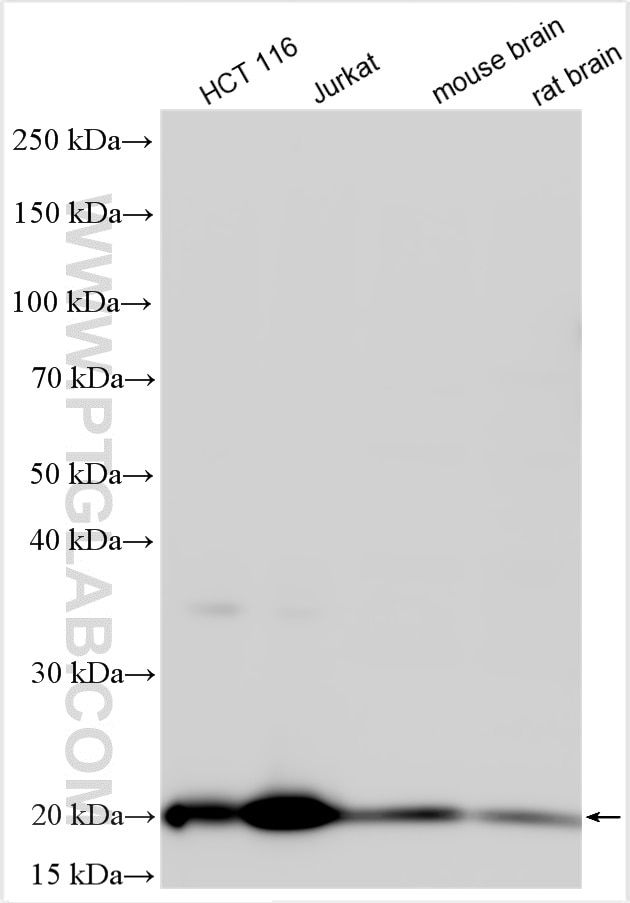
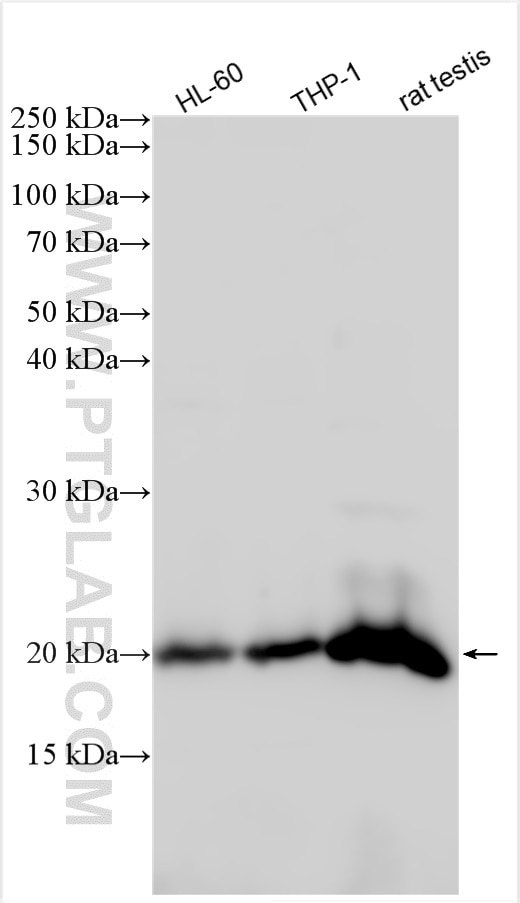
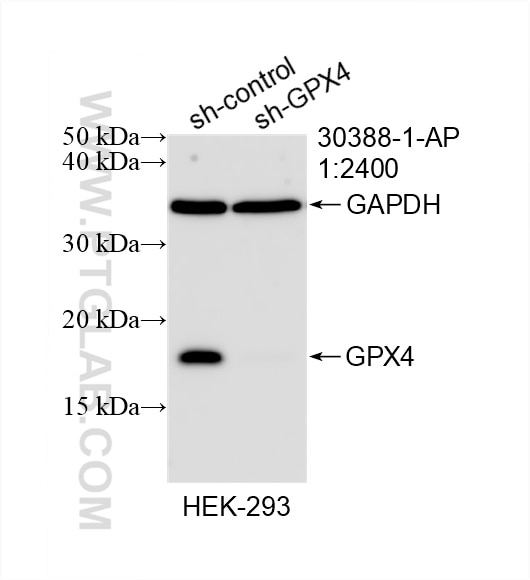
| Positive WB detected in | HCT 116 cells, HL-60 cells, HEK-293 cells, Jurkat cells, mouse brain tissue, rat brain tissue |
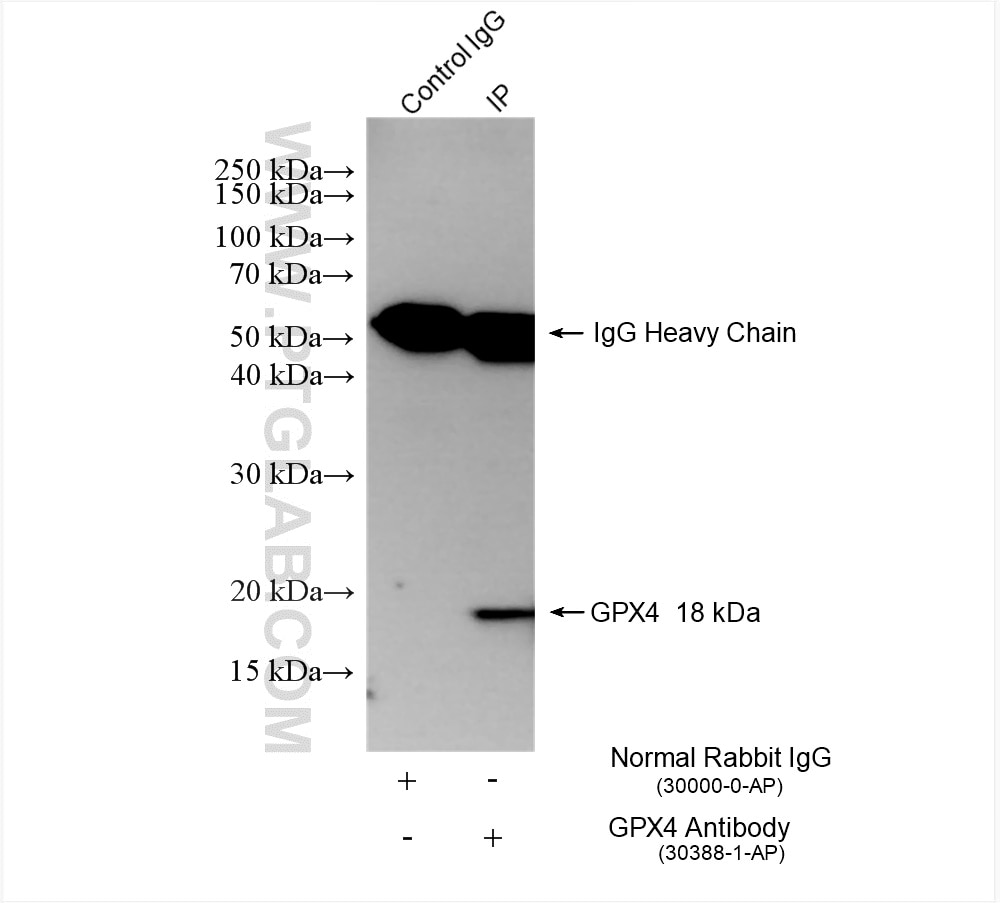
| Positive IP detected in | rat testis tissue |
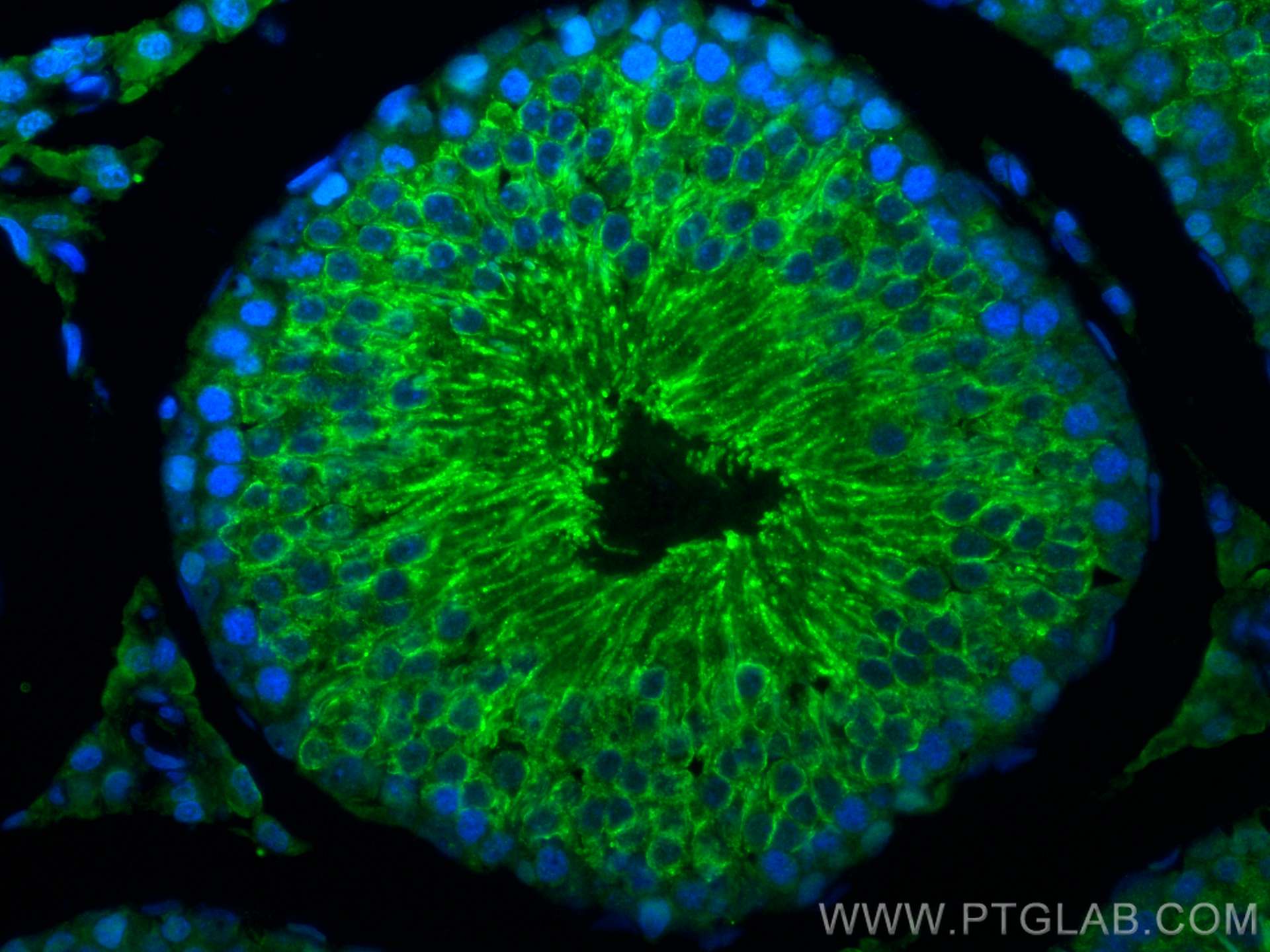
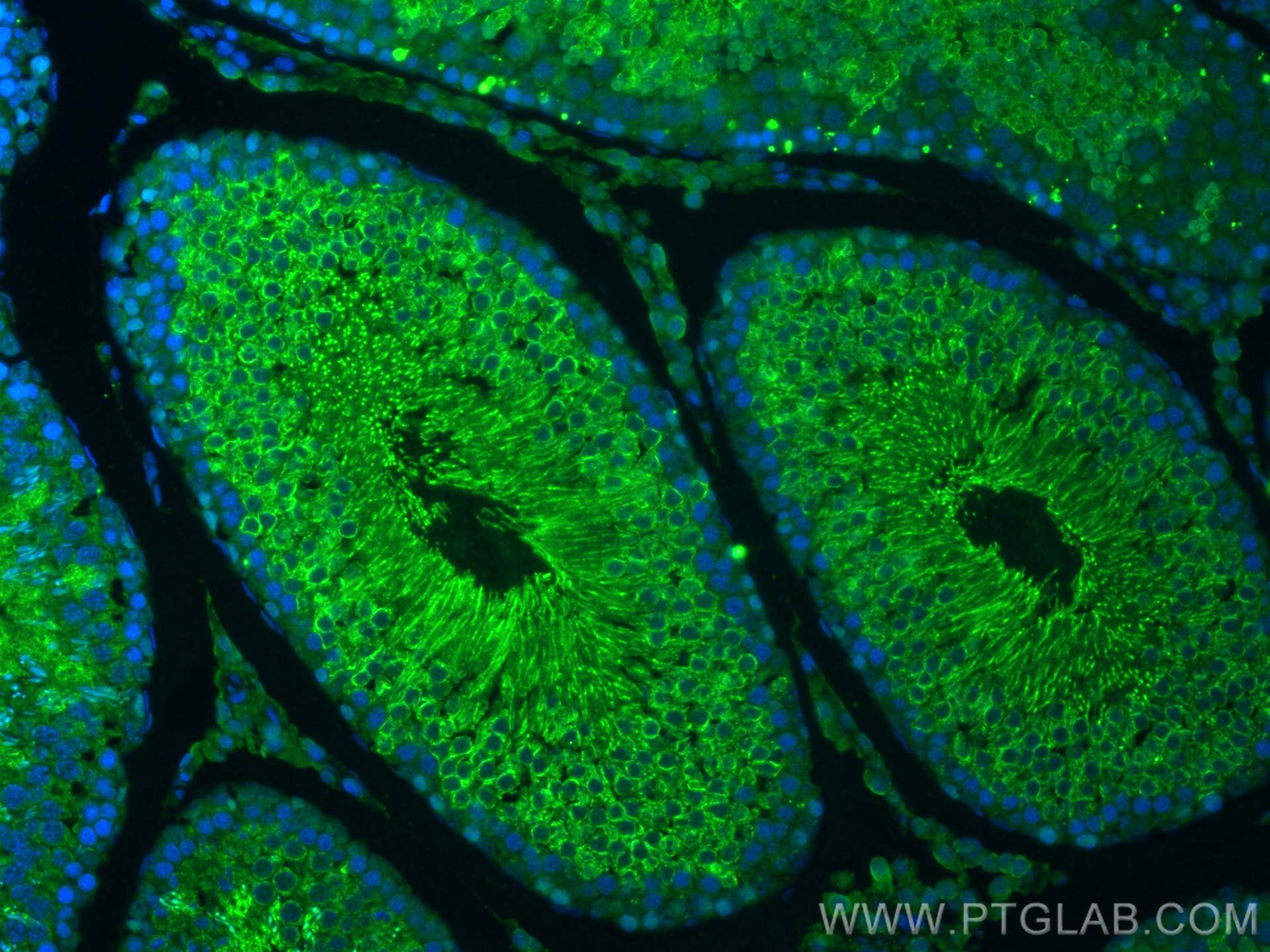
| Positive IF-P detected in | rat testis tissue |
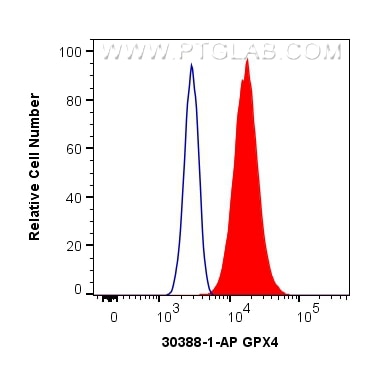
| Positive FC (Intra) detected in | HeLa cells |
Recommended dilution
| Application | Dilution |
|---|---|
| Western Blot (WB) | WB : 1:500-1:2000 |
| Immunoprecipitation (IP) | IP : 0.5-4.0 ug for 1.0-3.0 mg of total protein lysate |
| Immunofluorescence (IF)-P | IF-P : 1:50-1:500 |
| Flow Cytometry (FC) (INTRA) | FC (INTRA) : 0.40 ug per 10^6 cells in a 100 ul suspension |
| It is recommended that this reagent should be titrated in each testing system to obtain optimal results. | |
| Sample-dependent, Check data in validation data gallery. | |
Product Information
30388-1-AP targets GPX4 in WB, IHC, IF-P, FC (Intra), IP, ELISA applications and shows reactivity with human, mouse, rat samples.
| Tested Reactivity | human, mouse, rat |
| Cited Reactivity | human, mouse, rat, pig, bovine, sheep, goat, duck |
| Host / Isotype | Rabbit / IgG |
| Class | Polyclonal |
| Type | Antibody |
| Immunogen |
CatNo: Ag30650 Product name: Recombinant human GPX4 protein Source: e coli.-derived, PET28a Tag: 6*His Domain: 107-197 aa of BC021567 Sequence: KQEPGSNEEIKEFAAGYNVKFDMFSKICVNGDDAHPLWKWMKIQPKGKGILGNAIKWNFTKFLIDKNGCVVKRYGPMEEPLVIEKDLPHYF Predict reactive species |
| Full Name | glutathione peroxidase 4 (phospholipid hydroperoxidase) |
| Observed Molecular Weight | 18-23 kDa |
| GenBank Accession Number | BC021567 |
| Gene Symbol | GPX4 |
| Gene ID (NCBI) | 2879 |
| RRID | AB_3086304 |
| Conjugate | Unconjugated |
| Form | Liquid |
| Purification Method | Antigen affinity purification |
| UNIPROT ID | P36969 |
| Storage Buffer | PBS with 0.02% sodium azide and 50% glycerol, pH 7.3. |
| Storage Conditions | Store at -20°C. Stable for one year after shipment. Aliquoting is unnecessary for -20oC storage. 20ul sizes contain 0.1% BSA. |
Background Information
GPX4 (Phospholipid hydroperoxide glutathione peroxidase, mitochondrial) protects cells against membrane lipid peroxidation and cell death. Required for normal sperm development and male fertility.It has two isforms about 20KDa and 22KDa, respectively. GPX4 is a monomer,but it has a tendency to form higher mass oligomers (PMID:17630701). It presents primarily in testis.
Protocols
| Product Specific Protocols | |
|---|---|
| FC protocol for GPX4 antibody 30388-1-AP | Download protocol |
| IF protocol for GPX4 antibody 30388-1-AP | Download protocol |
| IP protocol for GPX4 antibody 30388-1-AP | Download protocol |
| WB protocol for GPX4 antibody 30388-1-AP | Download protocol |
| Standard Protocols | |
|---|---|
| Click here to view our Standard Protocols |
Publications
What published studies show
The GPX4 Polyclonal antibody (30388-1-AP) has 363 total citations (200 retrieved). Citations appear in leading journals including Advanced Materials, Advanced Science, Nature Cell Biology, Nature Communications, Redox Biology, ACS Nano, Science Advances, Biomaterials, Autophagy-related, Cell Death & Disease, Journal of Nanobiotechnology, Phytomedicine, and Theranostics. The dominant research field is ferroptosis regulation in cancer therapy, oxidative-stress injury, cardiovascular and neurological diseases, nanomaterials/nanomedicine, drug resistance, and natural-product pharmacology. Applications mainly include WB, with IHC, IF, and IP across human, mouse, rat, and bovine models.
| Species | Application | Title |
|---|---|---|
Adv Mater Eliminating Radioresistance With a Magnetic Ion-Generator by Simultaneously Augmenting DNA Damage and Diminishing Immunosuppression | ||
Bioact Mater A two-pronged approach to inhibit ferroptosis of MSCs caused by the iron overload in postmenopausal osteoporosis and promote osseointegration of titanium implant | ||
Bioact Mater Regulating SLC7A11/GSH/GPX4 axis by glucose dyshomeostasis to simultaneously promote disulfidptosis, cuproptosis and ferroptosis. | ||
Bioact Mater ADGRG1-targeted hypoxia preconditioned extracellular vesicles ameliorate intervertebral disc degeneration by delivering taurine to disrupt the oxidative stress feedback loop-driven ferroptosis in nucleus pulposus cells. | ||
Bioact Mater Fe(3+)-based nanovesicle mediated transferrin hijacking for glioblastoma stem cell tumoricidal treatment and postoperative recurrence inhibition. |








