
Recombinant Human BTLA protein (rFc Tag)
Species
Human
Purity
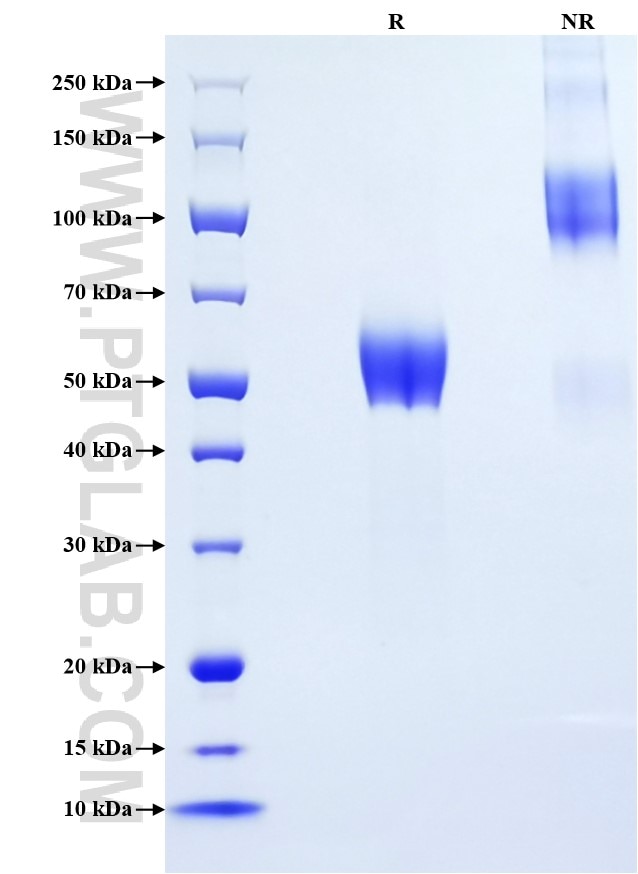
>90 %, SDS-PAGE
Tag
rFc Tag
Activity
not tested
Cat no : Eg1919
Validation Data Gallery
Product Information
| Purity | >90 %, SDS-PAGE |
| Endotoxin | <0.1 EU/μg protein, LAL method |
| Activity |
Not tested |
| Expression | HEK293-derived Human BTLA protein Lys31-Ser150 (Accession# Q7Z6A9-1) with a rabbit IgG Fc tag at the C-terminus. |
| GeneID | 151888 |
| Accession | Q7Z6A9-1 |
| PredictedSize | 40.0 kDa |
| SDS-PAGE | 47-60 kDa, reducing (R) conditions |
| Formulation | Lyophilized from 0.22 μm filtered solution in PBS, pH 7.4. Normally 5% trehalose and 5% mannitol are added as protectants before lyophilization. |
| Reconstitution | Briefly centrifuge the tube before opening. Reconstitute at 0.1-0.5 mg/mL in sterile water. |
| Storage Conditions |
It is recommended that the protein be aliquoted for optimal storage. Avoid repeated freeze-thaw cycles.
|
| Shipping | The product is shipped at ambient temperature. Upon receipt, store it immediately at the recommended temperature. |
Background
BTLA, or B and T lymphocyte attenuator, is a member of the CD28 superfamily and is a type I membrane glycoprotein identified as an inhibitory receptor. BTLA is extensively expressed in lymph nodes, thymus, and spleen, with little or no expression in organs such as the heart, kidney, brain, and liver. Among immune cells, BTLA is primarily expressed in B and T cells, with higher expression in B cells compared to T cells in the mouse spleen. BTLA plays a crucial role in regulating stimulatory and inhibitory signals in immune responses.
References:
1. Zhaochen N, et al. (2021) Front Immunol.12:654960
2. Christian S, et al. (2023) Cancer Immunol Immunother.72(7):2529-2539.