
Recombinant Human G-CSFR protein (rFc Tag)
Species
Human
Purity
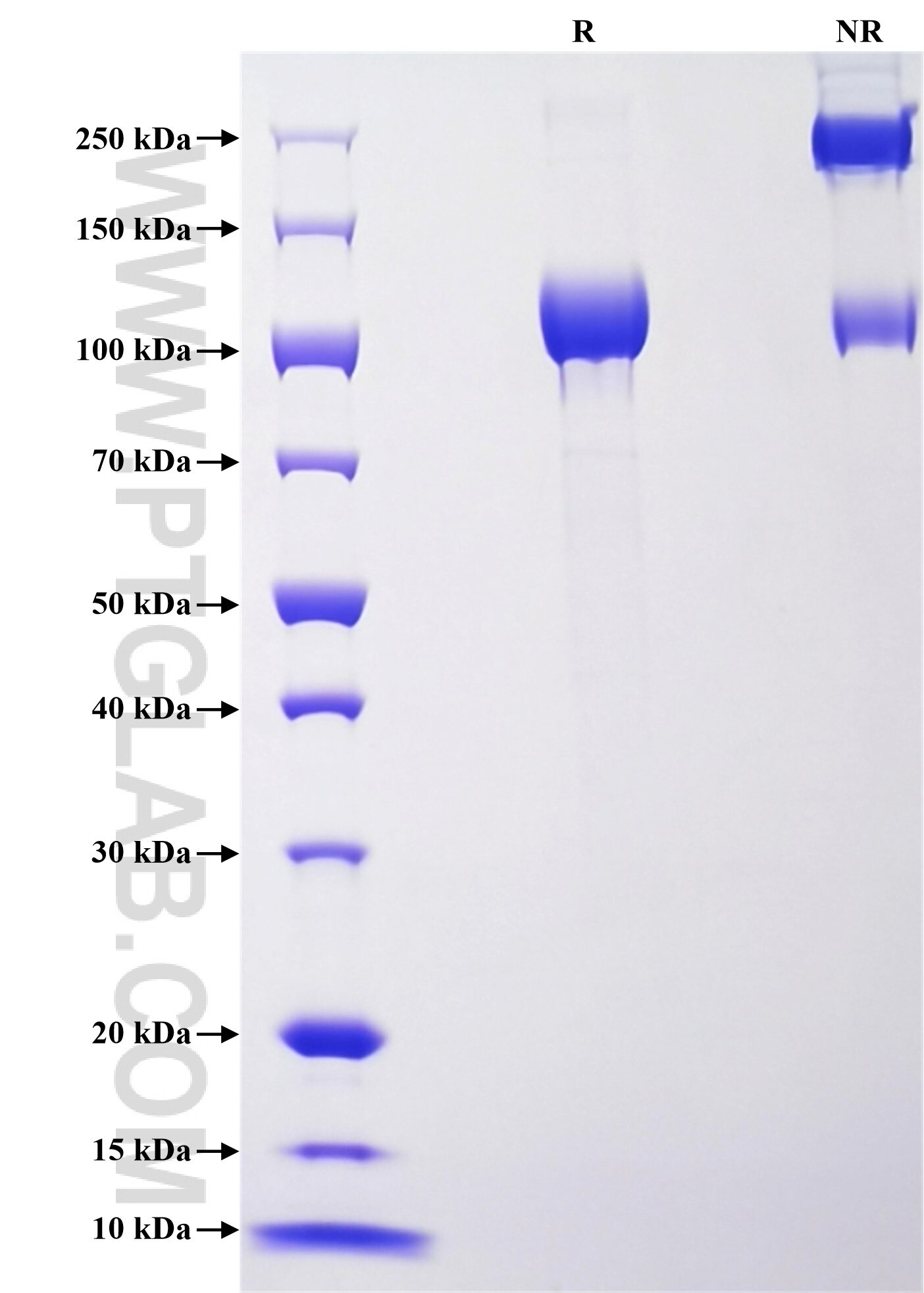
>90 %, SDS-PAGE
Tag
rFc Tag
Activity
not tested
Cat no : Eg2821
Validation Data Gallery
Product Information
| Purity | >90 %, SDS-PAGE |
| Endotoxin | <0.1 EU/μg protein, LAL method |
| Activity |
Not tested |
| Expression | HEK293-derived Human G-CSFR protein Glu25-Pro621 (Accession# Q99062-1) with a rabbit IgG Fc tag at the C-terminus. |
| GeneID | 1441 |
| Accession | Q99062-1 |
| PredictedSize | 92.1 kDa |
| SDS-PAGE | 100-130 kDa, reducing (R) conditions |
| Formulation | Lyophilized from 0.22 μm filtered solution in PBS, pH 7.4. Normally 5% trehalose and 5% mannitol are added as protectants before lyophilization. |
| Reconstitution | Briefly centrifuge the tube before opening. Reconstitute at 0.1-0.5 mg/mL in sterile water. |
| Storage Conditions |
It is recommended that the protein be aliquoted for optimal storage. Avoid repeated freeze-thaw cycles.
|
| Shipping | The product is shipped at ambient temperature. Upon receipt, store it immediately at the recommended temperature. |
Background
Csf3r, or the colony-stimulating factor 3 receptor (CSF3R), is a protein that is vital for the regulation of granulopoiesis, neutrophil function, and hematopoietic stem cell mobilization. CSF3R is also expressed in various tissues, with biased expression in the bone marrow, appendix, and other tissue.Mutations in the CSF3R gene can lead to various hematological disorders. Acquired activating heterozygous variants in CSF3R are the main cause of chronic neutrophilic leukemia, a hyperproliferative disorder, while biallelic germ line hypomorphic variants in CSF3R are a rare cause of severe congenital neutropenia, a hypoproliferative condition. Additionally, heterozygous germ line CSF3R variants have been identified as risk alleles for developing both myeloid and lymphoid malignancies .
References:
1. Zhang H. et al. (2018). J Biol Chem. 293(19):7387-7396.
2. Trottier AM. (2020). Blood Adv. 4(20):5269-5284.