
Recombinant Human MICB protein (rFc Tag)
Species
Human
Purity
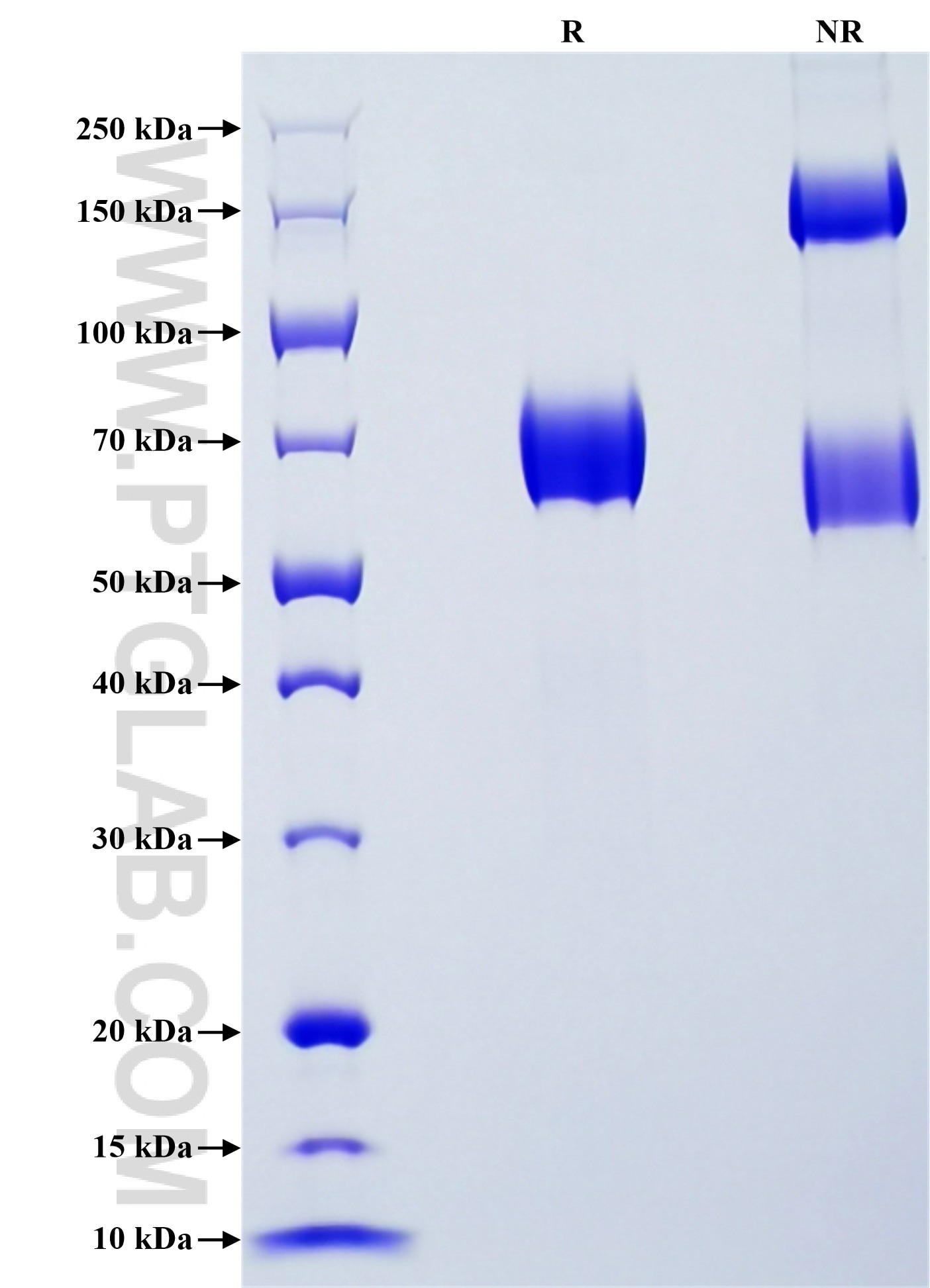
>90 %, SDS-PAGE
Tag
rFc Tag
Activity
not tested
Cat no : Eg6138
Validation Data Gallery
Product Information
| Purity | >90 %, SDS-PAGE |
| Endotoxin | <0.1 EU/μg protein, LAL method |
| Activity |
Not tested |
| Expression | HEK293-derived Human MICB protein Ala23-Asp309 (Accession# Q29980) with a rabbit IgG Fc tag at the C-terminus. |
| GeneID | 4277 |
| Accession | Q29980 |
| PredictedSize | 58.3 kDa |
| SDS-PAGE | 60-85 kDa, reducing (R) conditions |
| Formulation | Lyophilized from 0.22 μm filtered solution in PBS, pH 7.4. Normally 5% trehalose and 5% mannitol are added as protectants before lyophilization. |
| Reconstitution | Briefly centrifuge the tube before opening. Reconstitute at 0.1-0.5 mg/mL in sterile water. |
| Storage Conditions |
It is recommended that the protein be aliquoted for optimal storage. Avoid repeated freeze-thaw cycles.
|
| Shipping | The product is shipped at ambient temperature. Upon receipt, store it immediately at the recommended temperature. |
Background
The MHC class I chain-related B molecule, also commonly known as MICB, is one of the ligands of NKG2D receptor. NKG2D receptors exist in NK cells and CD8+ T cells, which mediate antitumor response and immune surveillance. MICB is expressed by the intestinal epithelium and epithelial tumors as well. MICA and MICB are closely related and functionally indistinguishable. Both are recognized by cytotoxic γδ T cells expressing the TCR variable region Vδ1. In cancer patients, elevated MICB levels correlated significantly with cancer stage and metastasis.
References:
1. Schrambach, Stéphanie et al. PLoS One. 2007;2(6):e518.
2. Groh, V et al. Proc Natl Acad Sci U S A. vol. 96,12 (1999): 6879-84.
3. Feng Q, et al. J Cancer Res Clin Oncol. 2020;146(6):1405-1413.