
Recombinant Human PLA2G1B protein (rFc Tag) (HPLC verified)
Species
Human
Purity
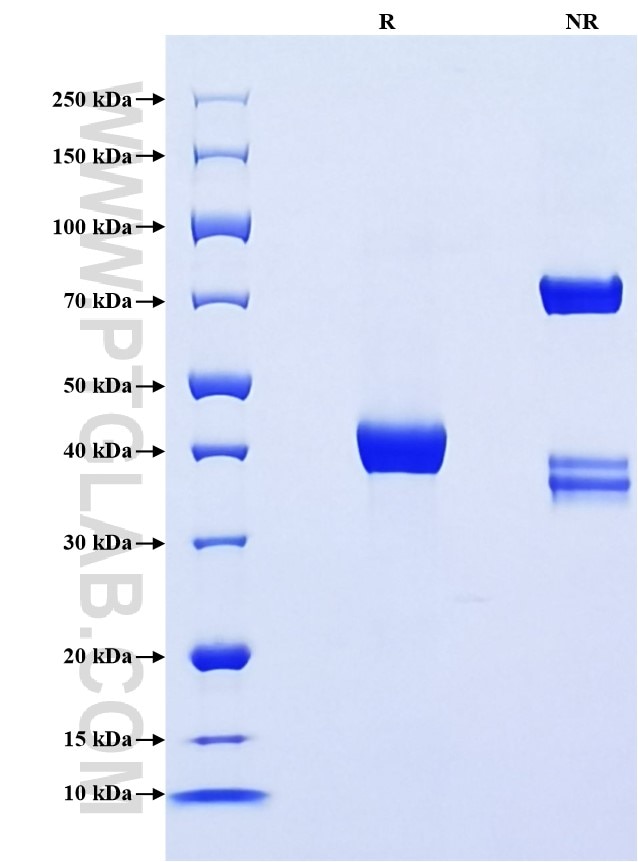
>90 %, SDS-PAGE
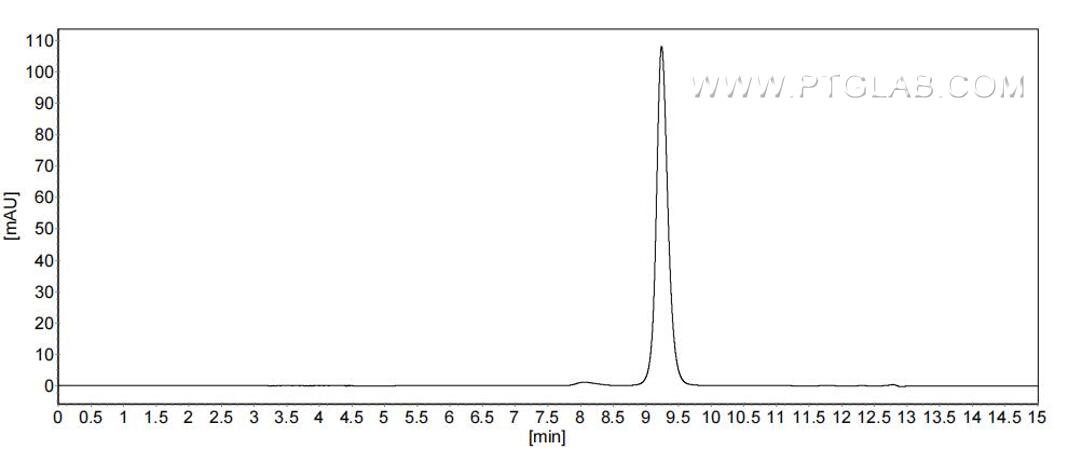
>90 %, SEC-HPLC
Tag
rFc Tag
Activity
not tested
Cat no : Eg3075
Validation Data Gallery
Product Information
| Purity | >90 %, SDS-PAGE >90 %, SEC-HPLC |
| Endotoxin | <0.1 EU/μg protein, LAL method |
| Activity |
Not tested |
| Expression | HEK293-derived Human PLA2G1B protein Asp16-Ser148 (Accession# P04054) with a rabbit IgG Fc tag at the C-terminus. |
| GeneID | 5319 |
| Accession | P04054 |
| PredictedSize | 40.9 kDa |
| SDS-PAGE | 38-45 kDa, reducing (R) conditions |
| Formulation | Lyophilized from 0.22 μm filtered solution in PBS, pH 7.4. Normally 5% trehalose and 5% mannitol are added as protectants before lyophilization. |
| Reconstitution | Briefly centrifuge the tube before opening. Reconstitute at 0.1-0.5 mg/mL in sterile water. |
| Storage Conditions |
It is recommended that the protein be aliquoted for optimal storage. Avoid repeated freeze-thaw cycles.
|
| Shipping | The product is shipped at ambient temperature. Upon receipt, store it immediately at the recommended temperature. |
Background
PLA2G1B was initially named pancreatic PLA2 due to its primary production in pancreatic tissue. Two forms of PLA2G1B are present in the pancreas, the intestinal tract, and human plasma. It is expressed as an inactive precursor called proPLA2G1B, which contains a propeptide in the N-terminal part that masks the active site of PLA2G1B and blocks the access of the lipid substrate to the catalytic site of the protein. Upon digestion by a trypsin protease, the propeptide is removed to generate the active form of PLA2G1B (active PLA2G1B). PLA2G1B is a secreted enzyme regulating lipid metabolism through the hydrolysis of phospholipids.
References:
1.Palma M. et al. (2017) Cell Host Microbe. 22(5):717.
2.Ewers M. et al. (2022) Pancreatology. 22(2):244-247.
3.Pothlichet J. et al. (2022) Front Immunol. 13:824746.