
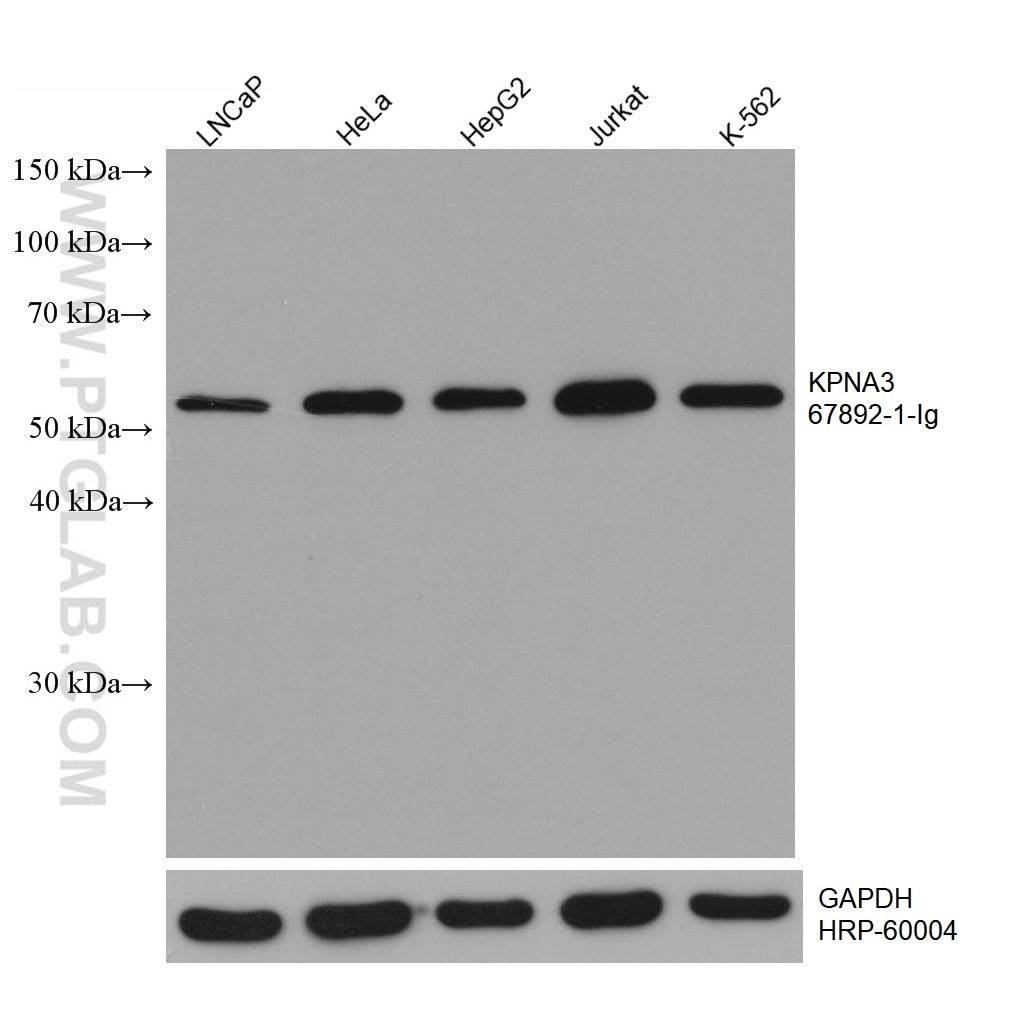
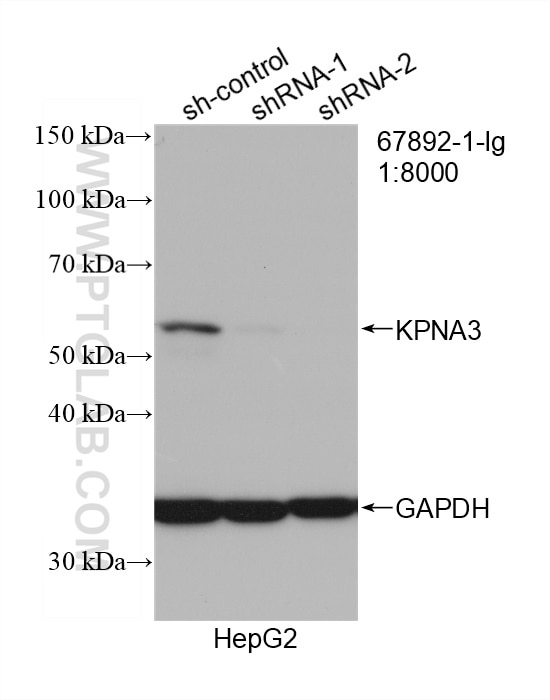
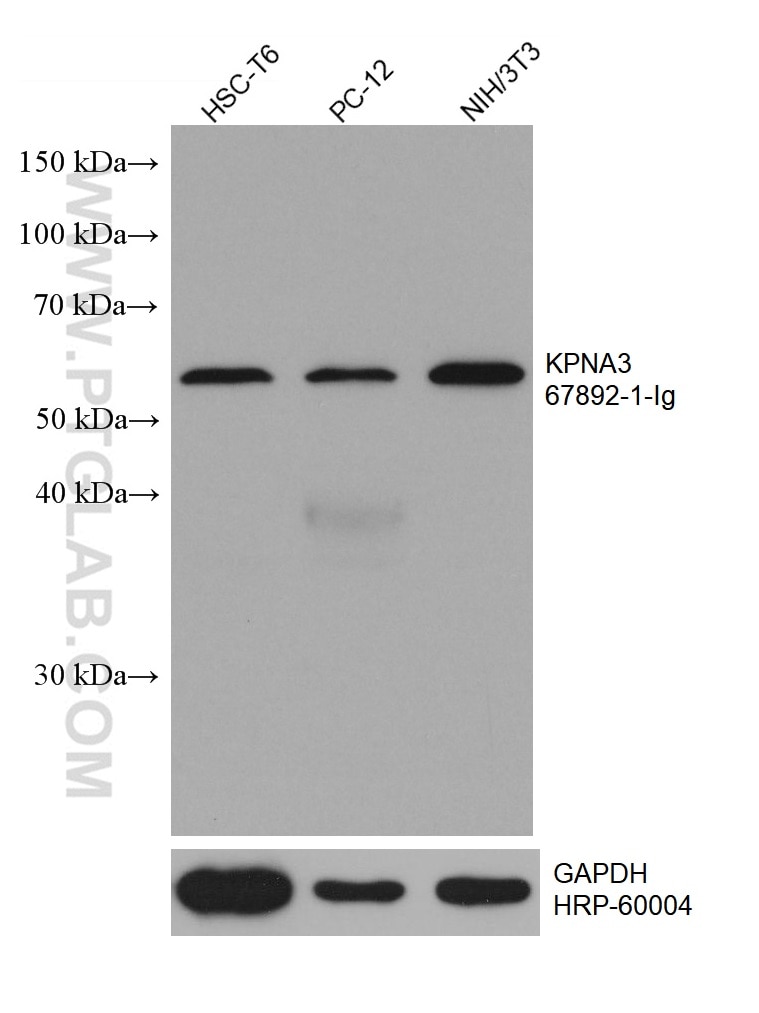
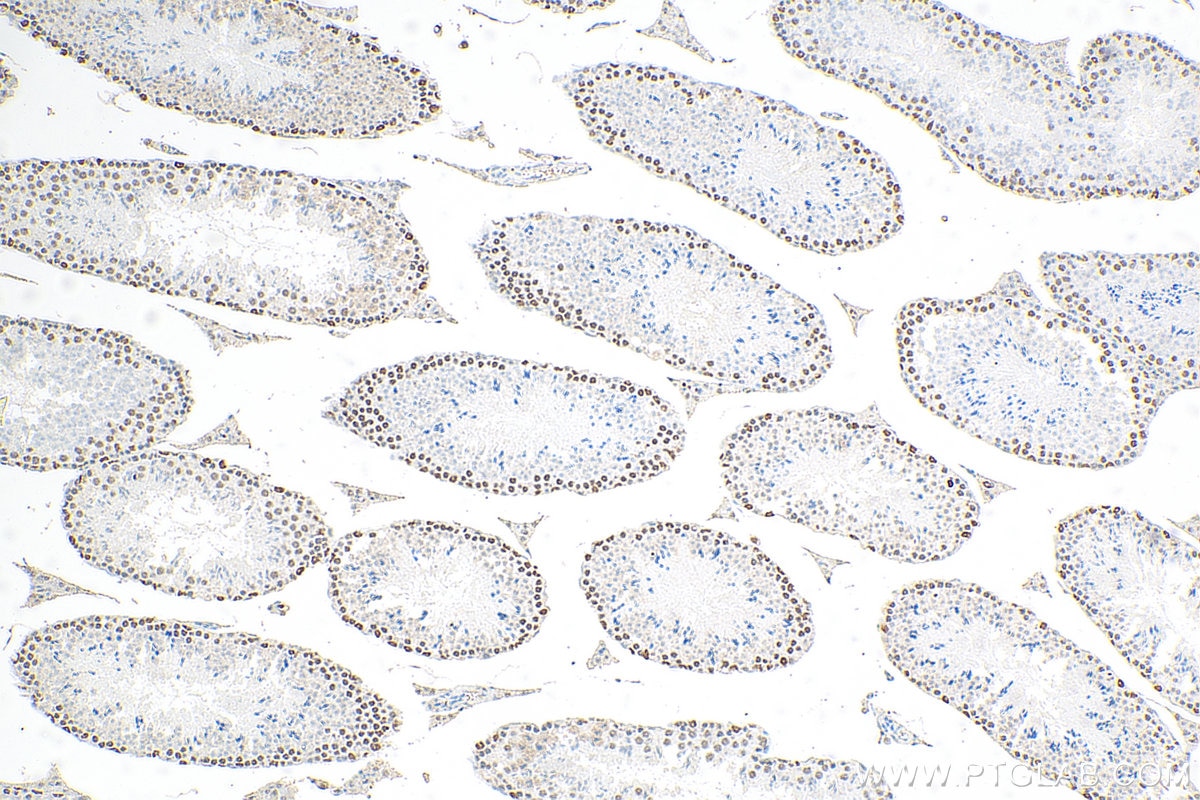
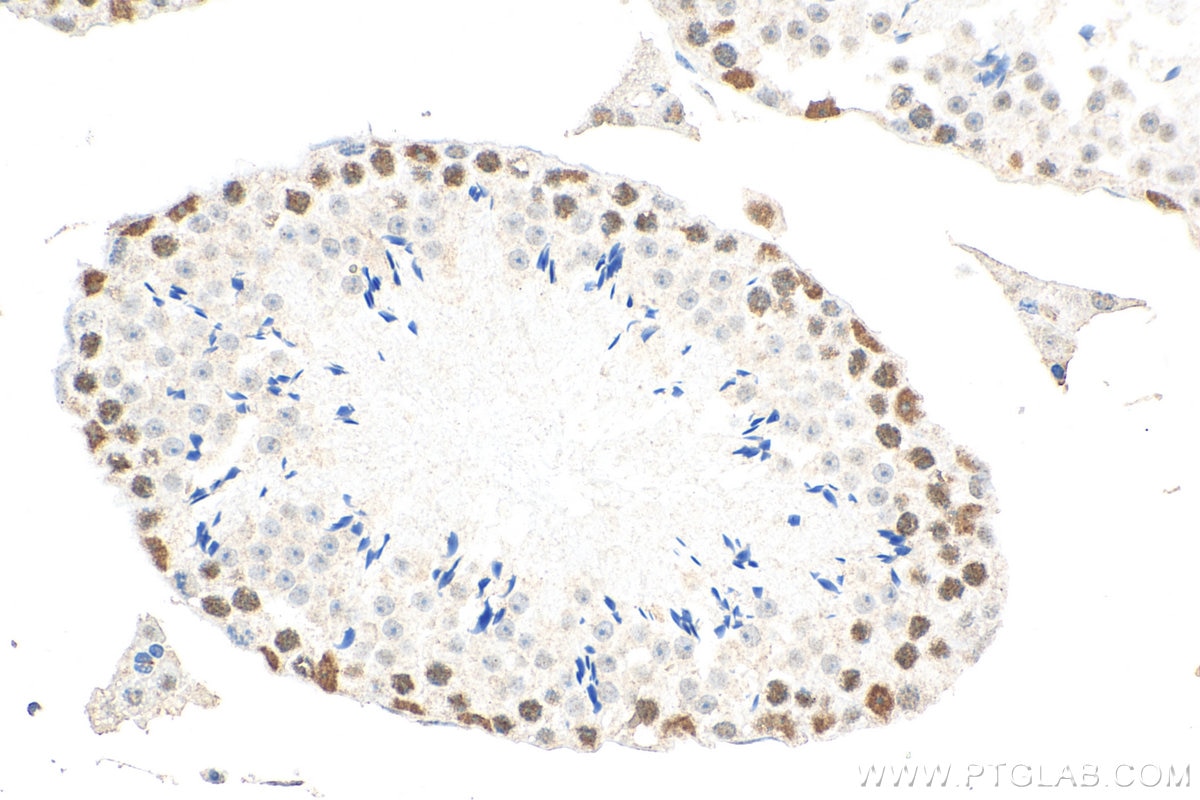

Tested Applications
| Positive WB detected in | LNCaP cells, HSC-T6 cells, HepG2 cells, HeLa cells, Jurkat cells, K-562 cells, PC-12 cells, NIH/3T3 cells |
| Positive IHC detected in | mouse testis tissue Note: suggested antigen retrieval with TE buffer pH 9.0; (*) Alternatively, antigen retrieval may be performed with citrate buffer pH 6.0 |
Recommended dilution
| Application | Dilution |
|---|---|
| Western Blot (WB) | WB : 1:5000-1:50000 |
| Immunohistochemistry (IHC) | IHC : 1:1500-1:6000 |
| It is recommended that this reagent should be titrated in each testing system to obtain optimal results. | |
| Sample-dependent, Check data in validation data gallery. | |
Product Information
67892-1-Ig targets KPNA3 in WB, IHC, IF, CoIP, ELISA applications and shows reactivity with Human, rat, mouse samples.
| Tested Reactivity | Human, rat, mouse |
| Cited Reactivity | human, mouse, rat |
| Host / Isotype | Mouse / IgG2a |
| Class | Monoclonal |
| Type | Antibody |
| Immunogen |
CatNo: Ag27767 Product name: Recombinant human KPNA3 protein Source: e coli.-derived, PET28a Tag: 6*His Domain: 322-453 aa of BC017355 Sequence: VLNCDVLSHFPNLLSHPKEKINKEAVWFLSNITAGNQQQVQAVIDAGLIPMIIHQLAKGDFGTQKEAAWAISNLTISGRKDQVEYLVQQNVIPPFCNLLSVKDSQVVQVVLDGLKNILIMAGDEASTIAEII Predict reactive species |
| Full Name | karyopherin alpha 3 (importin alpha 4) |
| Calculated Molecular Weight | 58 kDa |
| Observed Molecular Weight | 58 kDa |
| GenBank Accession Number | BC017355 |
| Gene Symbol | KPNA3 |
| Gene ID (NCBI) | 3839 |
| RRID | AB_2918648 |
| Conjugate | Unconjugated |
| Form | Liquid |
| Purification Method | Protein A purification |
| UNIPROT ID | O00505 |
| Storage Buffer | PBS with 0.02% sodium azide and 50% glycerol, pH 7.3. |
| Storage Conditions | Store at -20°C. Stable for one year after shipment. Aliquoting is unnecessary for -20oC storage. 20ul sizes contain 0.1% BSA. |
Background Information
karyopherin subunit alpha 3 (KPNA3) is a member of the importin alpha family which can transport molecules between the mucleus and cytoplasm. It is ubiquitous expressed in brain,testis and esophagus. KPNA3 is associated with many severe diseases such as hepatocellular Carcinoma (PMID: 31417635) , schizophrenia, major depression and opiate dependence (PMID: 22960338) . The molecular weight of KPNA3 is about 58 kDa.
Protocols
| Product Specific Protocols | |
|---|---|
| IHC protocol for KPNA3 antibody 67892-1-Ig | Download protocol |
| WB protocol for KPNA3 antibody 67892-1-Ig | Download protocol |
| Standard Protocols | |
|---|---|
| Click here to view our Standard Protocols |
Publications
What published studies show
The KPNA3 Monoclonal antibody (1D3D2), catalog number 67892-1-Ig, has 4 citations published in Cell Mol Life Sci, Experimental Neurology, Journal of Biological Chemistry, and mSphere. The associated research fields span virology and innate immunity (MERS-CoV and RNA virus–induced IRF3 signaling), neurology and diabetic Schwann cell dysfunction (SDF2L1/TFEB/CREB pathway), axonal transport and schizophrenia-related importin biology, and YWHAZ-mediated regulation of antiviral responses. Applications cited include WB, IF, and CoIP in human, mouse, and rat samples.
| Species | Application | Title |
|---|---|---|
Cell Mol Life Sci MERS-CoV-nsp5 expression in human epithelial BEAS 2b cells attenuates type I interferon production by inhibiting IRF3 nuclear translocation | ||
Exp Neurol SDF2L1 downregulation mediates high glucose-caused Schwann cell dysfunction by inhibiting nuclear import of TFEB and CREB via KPNA3 | ||
J Biol Chem Direct Observation of Importin α Family Member KPNA1 in Axonal Transport With or Without a Schizophrenia-Related Mutation | ||
mSphere YWHAZ downregulated innate immune responses to RNA viruses by inhibiting the IRF3 signaling pathway. |
Reviews
What customers say
The single review for this product is a 5-star rating from a Western Blot application. The reviewer used it on SH-SY5Y cell lysates and reported that it worked well, recommending it for that specific sample type. They noted that successful results may depend on sample treatment and other protocol details. Overall, the feedback is positive, with the antibody performing as expected in the tested application.
The reviews below have been submitted by verified Proteintech customers who received an incentive for providing their feedback.
Daulet (Verified Customer) (02-09-2022) | It worked on the lysates of SH-SY5Y cells. So, if you are going to use it on this sample, then I can recommend it. However, bear in mind, that whether it will work or not depends on how you treat your samples and other protocol niceties.
|






