
Recombinant Mouse CD93 protein (rFc Tag) (HPLC verified)
Species
Mouse
Purity
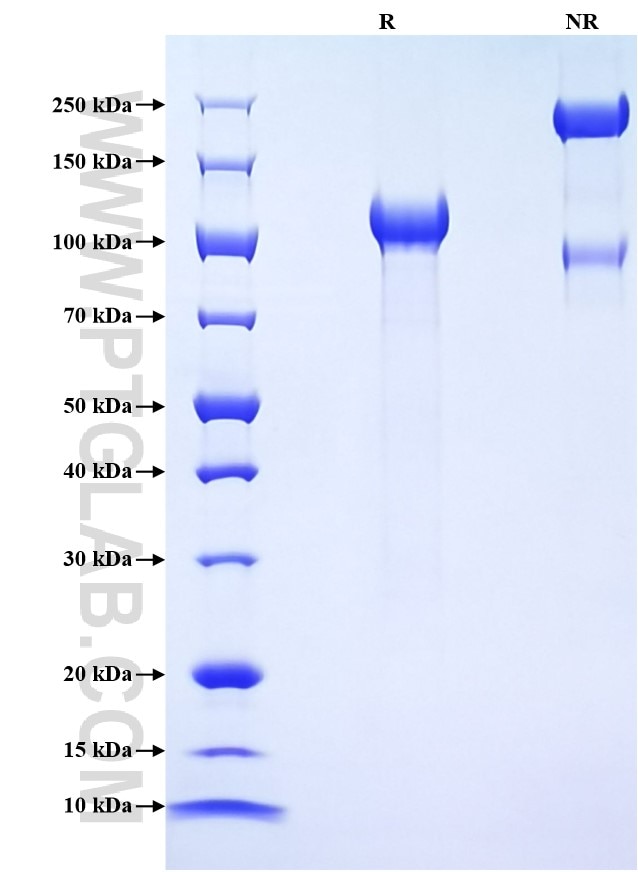
>90 %, SDS-PAGE
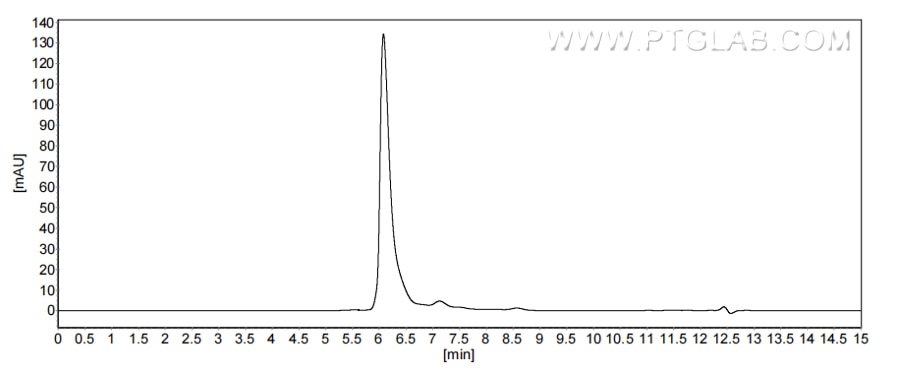
>90%, SEC-HPLC
Tag
rFc Tag
Activity
not tested
Cat no : Eg3116
Validation Data Gallery
Product Information
| Purity | >90 %, SDS-PAGE >90%, SEC-HPLC |
| Endotoxin | <0.1 EU/μg protein, LAL method |
| Activity |
Not tested |
| Expression | HEK293-derived Mouse CD93 protein Ala23-Asn572 (Accession# O89103) with a rabbit IgG Fc tag at the C-terminus. |
| GeneID | 17064 |
| Accession | O89103 |
| PredictedSize | 85.1 kDa |
| SDS-PAGE | 110-120 kDa, reducing (R) conditions |
| Formulation | Lyophilized from 0.22 μm filtered solution in PBS, pH 7.4. Normally 5% trehalose and 5% mannitol are added as protectants before lyophilization. |
| Reconstitution | Briefly centrifuge the tube before opening. Reconstitute at 0.1-0.5 mg/mL in sterile water. |
| Storage Conditions |
It is recommended that the protein be aliquoted for optimal storage. Avoid repeated freeze-thaw cycles.
|
| Shipping | The product is shipped at ambient temperature. Upon receipt, store it immediately at the recommended temperature. |
Background
CD93 (also known as complement protein 1 q subcomponent receptor C1qR1 or C1qRp) is a transmembrane glycoprotein consisting of 652 amino acids. CD93 can exist in two forms: soluble (sCD93) and membrane-bound (CD93). CD93 is expressed predominantly on endothelial cells, where it plays a key role in the promotion of angiogenesis in physiology and disease. CD93 is also highly expressed in tumor-associated blood vessels, and its presence is associated with poor prognosis, poor response to immunotherapy, immune cell infiltration, and high tumor, lymph node, and metastasis (TNM) stages in many cancer types. (PMID: 37443812) Targeting CD93-related signaling pathways in the tumor microenvironment may be a novel therapeutic strategy for tumor immunotherapy.
References:
1. Tossetta G, et al. Cells. 2023;12(13):1778.
2. Sun Y, et al. Sci Transl Med. 2021;13(604):eabc8922.
3. Guo A, et al. Front Immunol. 2022;13:907182.
4. Wu B,et al. Front Immunol. 2023;14:984816.