




Tested Applications
| Positive WB detected in | THP-1 cells, LPS treated THP-1 cells |
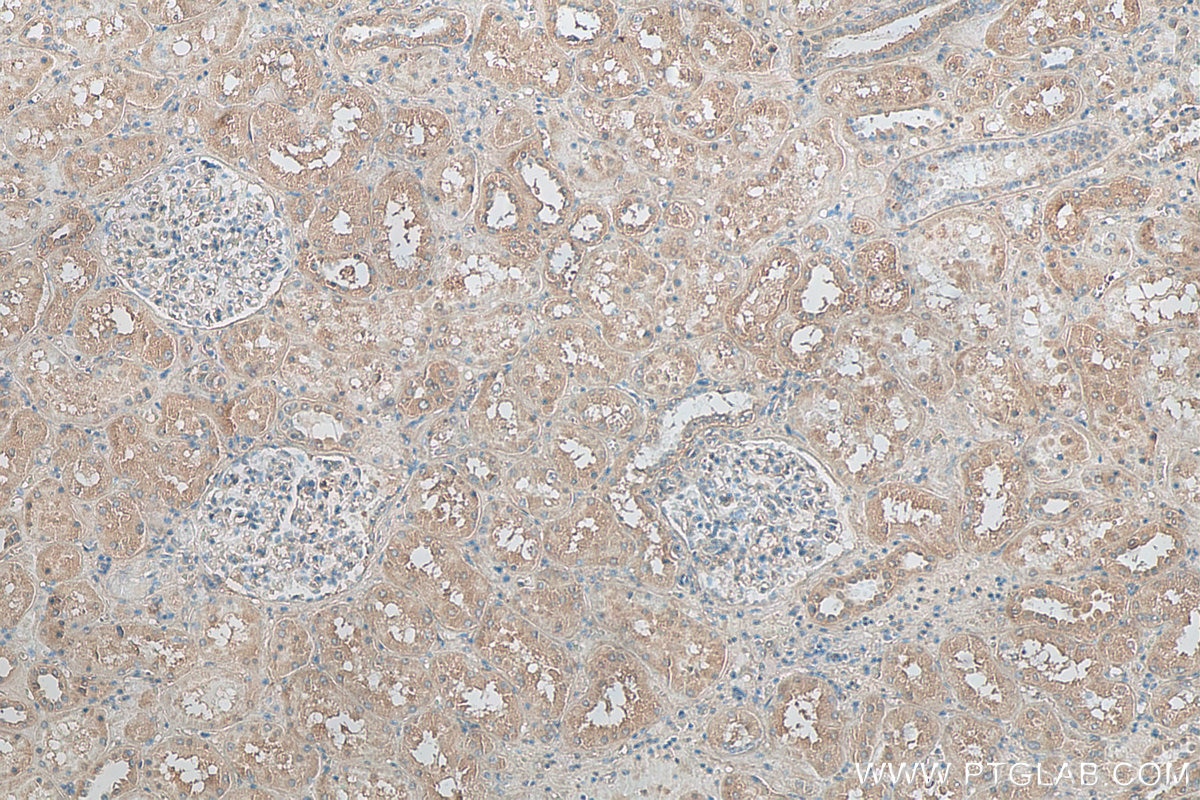
| Positive IHC detected in | human kidney tissue Note: suggested antigen retrieval with TE buffer pH 9.0; (*) Alternatively, antigen retrieval may be performed with citrate buffer pH 6.0 |
| Positive IF/ICC detected in | HepG2 cells |
NLRP3 expression is relatively low in normal tissues(PMID: 33538177, 35676979, 25524927, 24166187)
Recommended dilution
| Application | Dilution |
|---|---|
| Western Blot (WB) | WB : 1:2000-1:10000 |
| Immunohistochemistry (IHC) | IHC : 1:50-1:500 |
| Immunofluorescence (IF)/ICC | IF/ICC : 1:200-1:800 |
| It is recommended that this reagent should be titrated in each testing system to obtain optimal results. | |
| Sample-dependent, Check data in validation data gallery. | |
Product Information
68102-1-Ig targets NLRP3 in WB, IHC, IF/ICC, IP, CoIP, ELISA, Cell treatment applications and shows reactivity with human samples.
| Tested Reactivity | human |
| Cited Reactivity | human, chicken, zebrafish, bovine |
| Host / Isotype | Mouse / IgG2a |
| Class | Monoclonal |
| Type | Antibody |
| Immunogen |
CatNo: Ag26289 Product name: Recombinant human NLRP3 protein Source: e coli.-derived, PET28a Tag: 6*His Domain: 937-1036 aa of NM_001079821 Sequence: MLHPDCKLQVLELDNCNLTSHCCWDLSTLLTSSQSLRKLSLGNNDLGDLGVMMFCEVLKQQSCLLQNLGLSEMYFNYETKSALETLQEEKPELTVVFEPSW Predict reactive species |
| Full Name | NLR family, pyrin domain containing 3 |
| Calculated Molecular Weight | 118 kDa |
| Observed Molecular Weight | 110 kDa |
| GenBank Accession Number | NM_001079821 |
| Gene Symbol | NLRP3 |
| Gene ID (NCBI) | 114548 |
| RRID | AB_2923634 |
| Conjugate | Unconjugated |
| Form | Liquid |
| Purification Method | Protein A purification |
| UNIPROT ID | Q96P20 |
| Storage Buffer | PBS with 0.02% sodium azide and 50% glycerol, pH 7.3. |
| Storage Conditions | Store at -20°C. Stable for one year after shipment. Aliquoting is unnecessary for -20oC storage. 20ul sizes contain 0.1% BSA. |
Background Information
NALP3, also named as C1orf7, CIAS1 and PYPAF1, belongs to the NLRP family. NLRP3, a key and eponymous component of the NLRP3 inflammasome, plays a crucial role in innate immunity and inflammation. NALP3 may function as an inducer of apoptosis. It interacts selectively with ASC and this complex may function as an upstream activator of NF-kappa-B signaling.NALP3 inhibits TNF-alpha induced activation and nuclear translocation of RELA/NF-KB p65. Also inhibits transcriptional activity of RELA. NALP3 activates caspase-1 in response to a number of triggers including bacterial or viral infection which leads to processing and release of IL1B and IL18. Defects in NLRP3 are the cause of familial cold autoinflammatory syndrome type 1 (FCAS1) which also known as familial cold urticaria. Defects in NLRP3 are a cause of Muckle-Wells syndrome (MWS) which is urticaria-deafness-amyloidosis syndrome. Defects in NLRP3 are the cause of chronic infantile neurologic cutaneous and articular syndrome (CINCA) which also known as neonatal onset multisystem inflammatory disease (NOMID). NLRP3 has some isoforms with the MW of 106-118 kDa and 75-83 kDa(PMID: 17164409, 34680443).
Protocols
| Product Specific Protocols | |
|---|---|
| IF protocol for NLRP3 antibody 68102-1-Ig | Download protocol |
| IHC protocol for NLRP3 antibody 68102-1-Ig | Download protocol |
| WB protocol for NLRP3 antibody 68102-1-Ig | Download protocol |
| Standard Protocols | |
|---|---|
| Click here to view our Standard Protocols |
Publications
What published studies show
The anti-NLRP3 antibody (Cat# 68102-1-Ig) has 316 total citations. Citations appear in high-impact journals including Nature Communications, Molecular Cell, Science Advances, Advanced Science, Theranostics, Redox Biology, Journal of Nanobiotechnology, and Phytomedicine, among 70+ others. Research fields span NLRP3 inflammasome biology, pyroptosis, neuroinflammation, cardiovascular disease, liver and kidney injury, cancer immunotherapy, metabolic disorders, autoimmune diseases, and traditional Chinese medicine pharmacology.
| Species | Application | Title |
|---|---|---|
Cancer Commun (Lond) Targeting SPHK1 in macrophages remodels the tumor microenvironment and enhances anti-PD-1 immunotherapy efficacy in colorectal cancer liver metastasis. | ||
Bioact Mater Dual-pathway targeted therapy for Parkinson's disease: Biomimetic nanosomes inhibit ferroptosis and pyroptosis through NLRP3 inflammasome regulation | ||
Bioact Mater Dental pulp stem cells alleviate Schwann cell pyroptosis via mitochondrial transfer to enhance facial nerve regeneration | ||
Bone Res IGF2BP3-mediated m6A modification of RASGRF1 promoting joint injury in rheumatoid arthritis | ||
Nat Commun LTBP4 deficiency inhibits NLRP3 inflammasome activation in cardiomyocytes and attenuates heart failure in male mice | ||
Nat Commun Mast cells boost anti-tumor potency of MAIT cells via inflammasome-dependent secretion of IL-18 |
Reviews
What customers say
Both reviewers rated this antibody 5 out of 5 stars. One user tested it for immunohistochemistry on rat brain tissue at a 1:600 dilution and described it as a "very good product." The other used it for Western blot on NRVCM cells at a 1:1000 dilution, reporting that it "worked fine." Overall, the feedback is consistently positive, with users highlighting reliable performance across different applications and sample types.
The reviews below have been submitted by verified Proteintech customers who received an incentive for providing their feedback.
Marion (Verified Customer) (10-27-2025) | Very good product
 |
Marco (Verified Customer) (07-19-2024) | Worked fine.
|




