
Product Information
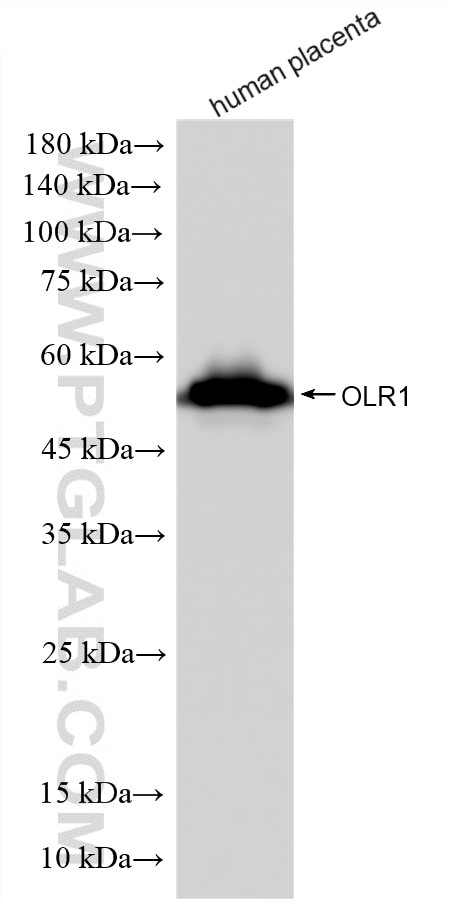
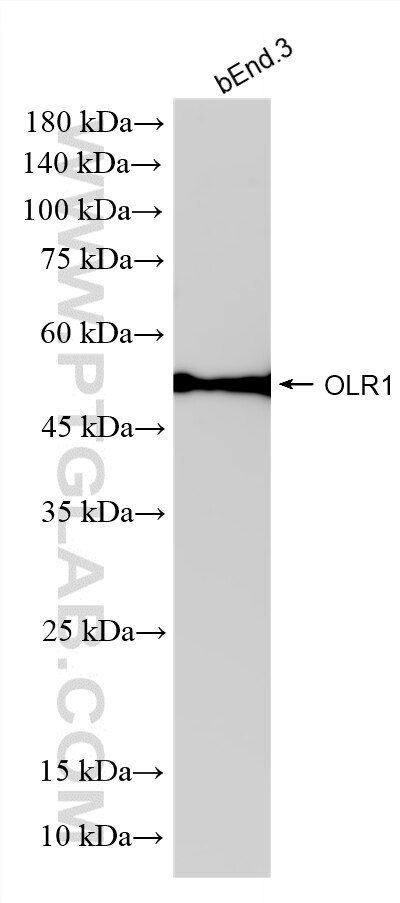
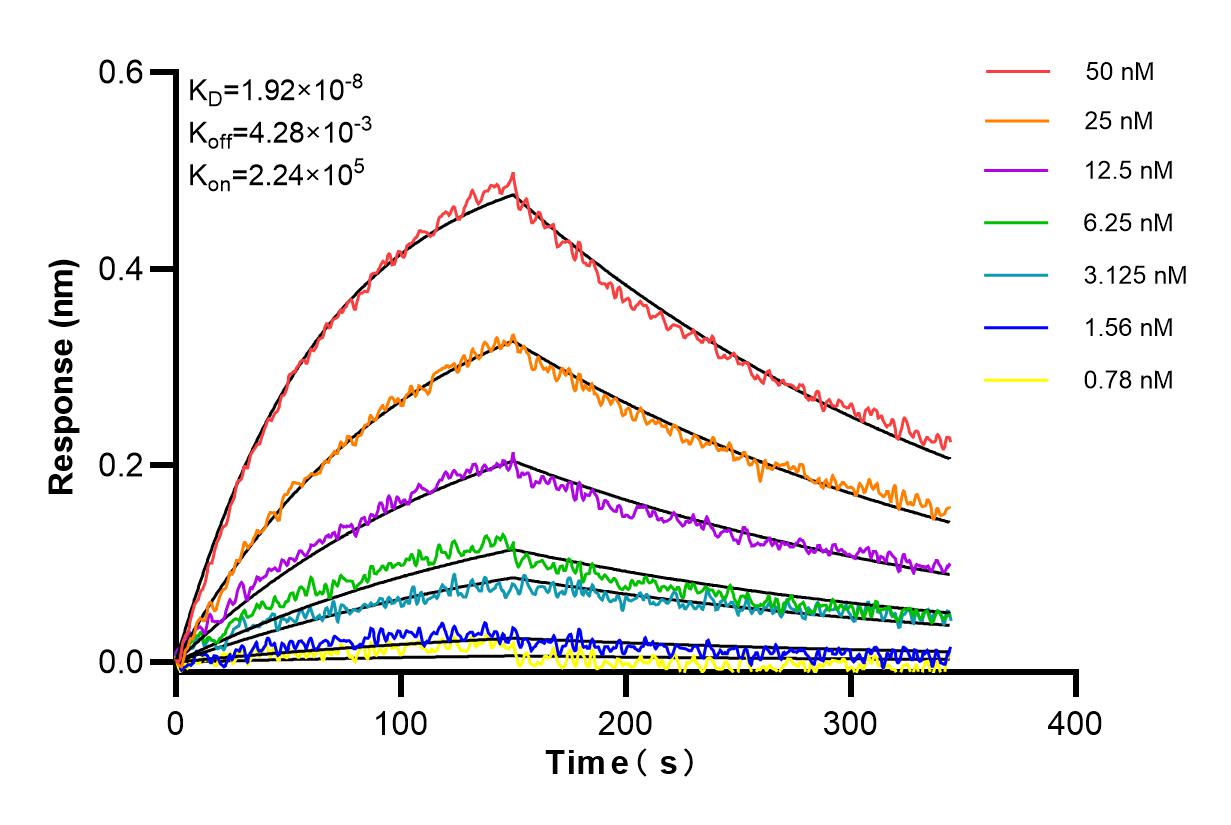
86194-3-PBS targets OLR1/LOX1 in WB, Indirect ELISA applications and shows reactivity with human, mouse samples.
| Tested Reactivity | human, mouse |
| Host / Isotype | Rabbit / IgG |
| Class | Recombinant |
| Type | Antibody |
| Immunogen |
CatNo: Eg2911 Product name: Recombinant Human OLR1/LOX1 protein (rFc Tag) Source: mammalian cells-derived, V37 Tag: C-rFc Domain: 61-273 aa of NM_002543.3 Sequence: SQVSDLLTQEQANLTHQKKKLEGQISARQQAEEASQESENELKEMIETLARKLNEKSKEQMELHHQNLNLQETLKRVANCSAPCPQDWIWHGENCYLFSSGSFNWEKSQEKCLSLDAKLLKINSTADLDFIQQAISYSSFPFWMGLSRRNPSYPWLWEDGSPLMPHLFRVRGAVSQTYPSGTCAYIQRGAVYAENCILAAFSICQKKANLRAQ Predict reactive species |
| Full Name | oxidized low density lipoprotein (lectin-like) receptor 1 |
| Calculated Molecular Weight | 31 kDa |
| Observed Molecular Weight | 50-55 kDa |
| GenBank Accession Number | NM_002543.3 |
| Gene Symbol | OLR1 |
| Gene ID (NCBI) | 4973 |
| RRID | AB_3744703 |
| Conjugate | Unconjugated |
| Form | Liquid |
| Purification Method | Protein A purification |
| UNIPROT ID | P78380-1 |
| Storage Buffer | PBS only, pH 7.3. |
| Storage Conditions | Store at -80°C. |
Background Information
OLR1/LOX-1 acts as a receptor, in the form of a homodimer, that mediates the recognition, internalization, and degradation of oxidatively modified low density lipoprotein (oxLDL) (PMID: 9052782, 15695803). ORL1 is predominantly expressed in endothelial cells and vascular-rich organs such as the placenta, lung, liver, and brain (PMID: 9828121). OLR1 is a protein containing 273 amino acids with a calculated molecular mass of 31 kDa but an apparent molecular mass of 50 kDa, which may result from the glycosylation of four potential N-linked glycosylation sites located at the C-terminal domain (PMID: 9052782).




