

Product Information
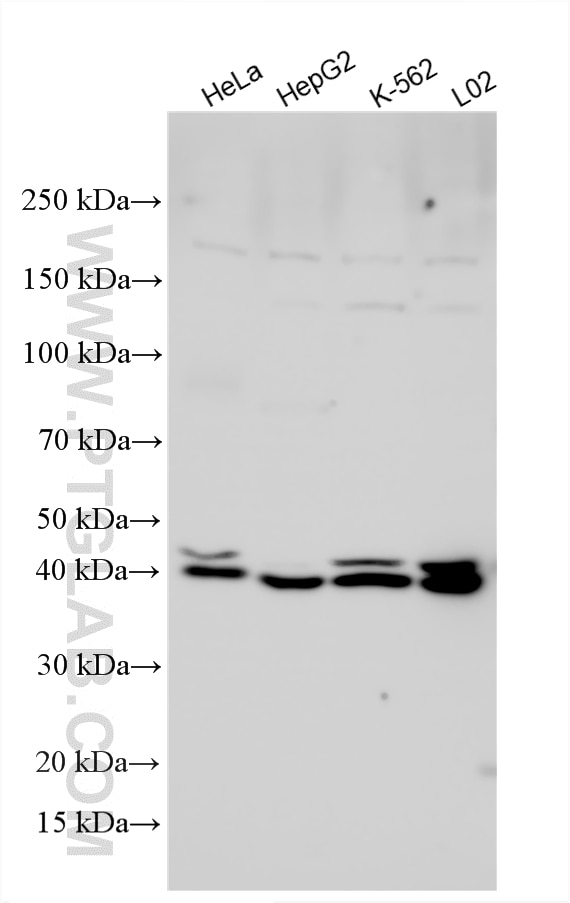
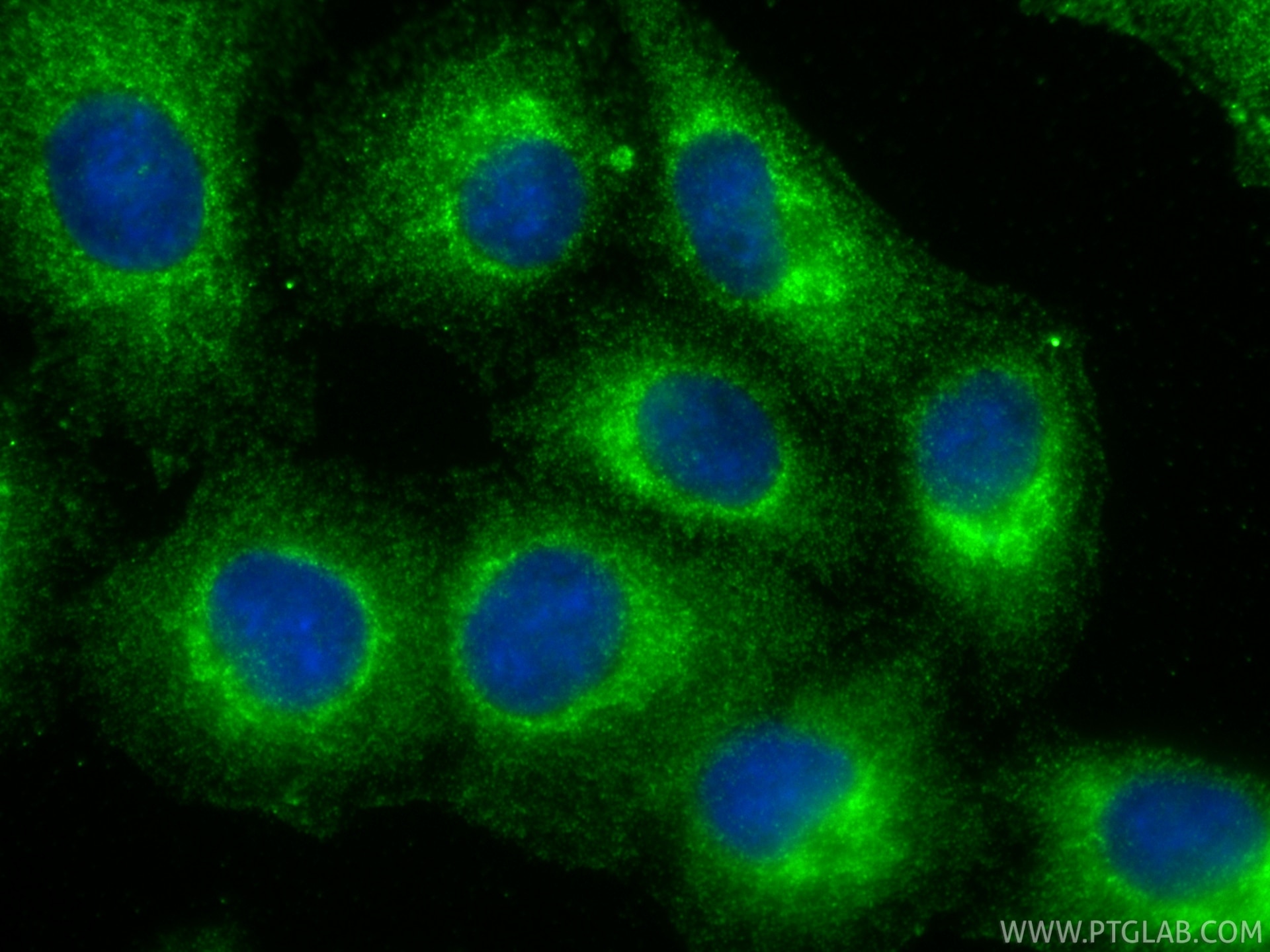
33109-1-PBS targets PDSS1 in WB, IF/ICC, Indirect ELISA applications and shows reactivity with human samples.
| Tested Reactivity | human |
| Host / Isotype | Rabbit / IgG |
| Class | Polyclonal |
| Type | Antibody |
| Immunogen |
CatNo: Ag38975 Product name: Recombinant human PDSS1 protein Source: e coli.-derived, PGEX-4T Tag: GST Domain: 319-415 aa of NM_014317.4 Sequence: MGKPTSADLKLGLATGPVLFACQQFPEMNAMIMRRFSLPGDVDRARQYVLQSDGVQQTTYLAQQYCHEAIREISKLRPSPERDALIQLSEIVLTRDK Predict reactive species |
| Full Name | prenyl (decaprenyl) diphosphate synthase, subunit 1 |
| Calculated Molecular Weight | 46kDa,415aa |
| Observed Molecular Weight | 34-46 kDa |
| GenBank Accession Number | NM_014317.4 |
| Gene Symbol | PDSS1 |
| Gene ID (NCBI) | 23590 |
| RRID | AB_3742859 |
| Conjugate | Unconjugated |
| Form | Liquid |
| Purification Method | Antigen affinity Purification |
| UNIPROT ID | Q5T2R2 |
| Storage Buffer | PBS only, pH 7.3. |
| Storage Conditions | Store at -80°C. |
Background Information
PDSS1 is also known as DPS1 or TPRT. The protein encoded by this gene is an enzyme that elongates the prenyl side-chain of coenzyme Q (also known as ubiquinone), one of the key elements in the respiratory chain. It catalyses the formation of all-trans polyprenyl pyrophosphates from isopentyl diphosphate during the assembly of polyisoprenoid side chains - the first step in coenzyme Q biosynthesis. PDSS1 forms a functional heterodimer with the PDSS2 subunit, which is responsible for catalysing the chain elongation reaction of isopentenyl diphosphate to generate isoprenoid precursors of varying lengths, such as farnesyl diphosphate and geranylgeranyl diphosphate. These products are fundamental to the synthesis of essential molecules such as cholesterol, ubiquinone, heme A and protein isoprenylation modifications, as well as being vital for other biological processes. Therefore, PDSS1 directly influences key physiological processes in cells by regulating isoprenoid synthesis, including energy metabolism, membrane stability, signal transduction, and antioxidant defence.



